


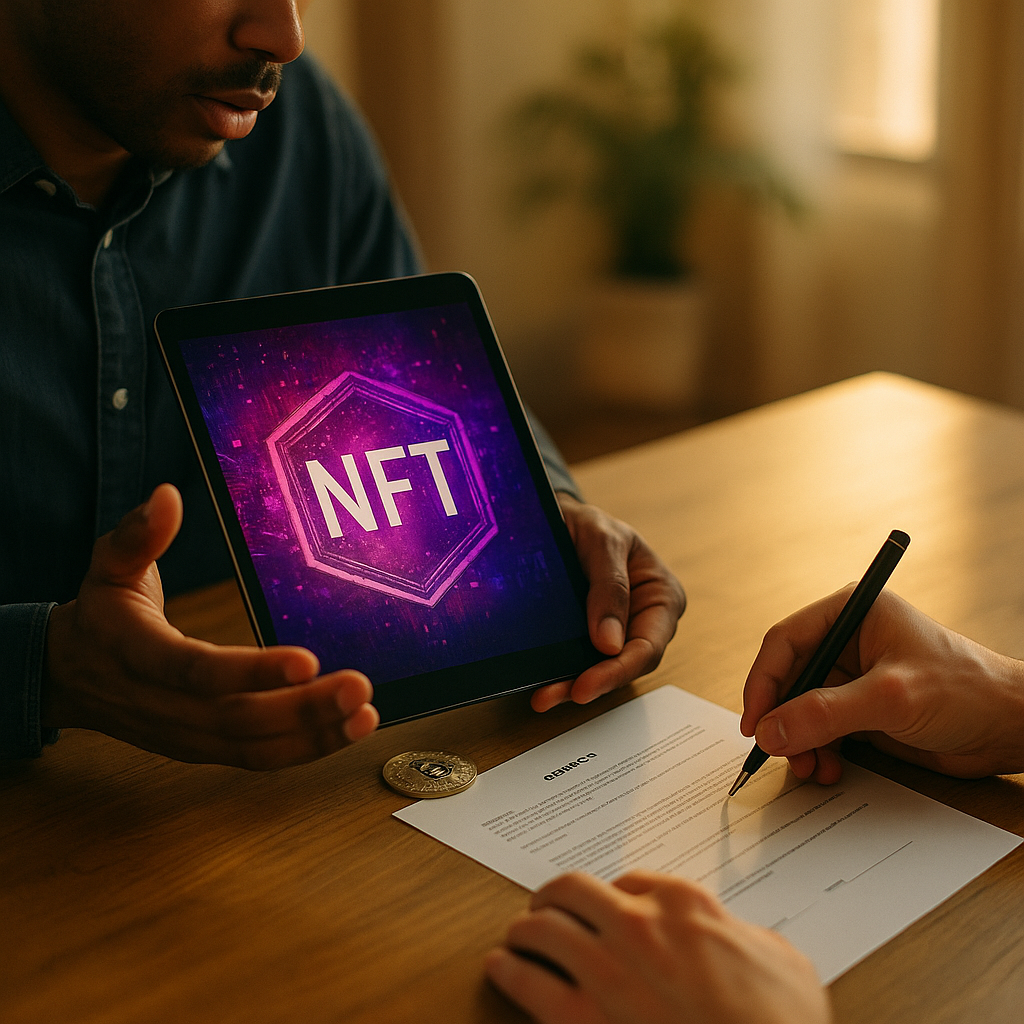
Understanding how to negotiate usage rights for content that will be turned into an NFT is essential for creators, buyers, and businesses. The intersection of intellectual property and digital assets presents new challenges—and opportunities. Knowing what rights you need and how to secure them can protect you and maximize value. Let’s dive into a clear, actionable process for rights negotiation.
Defining NFT Usage Rights: What’s at Stake?
Before approaching negotiations, it’s crucial to understand NFT usage rights. By minting content as a non-fungible token (NFT), you’re not automatically granting the buyer full ownership or copyright. Instead, a license to use, display, or resell the digital asset is typically involved. According to a 2024 Reuters survey, over 80% of NFT buyers misunderstood what rights they actually received.
NFTs can involve many types of rights, such as:
- Display rights: Permission to showcase the art or content online or in physical spaces.
- Commercial rights: Authority for the buyer to use the content in advertising, merchandising, or other for-profit activities.
- Reproduction rights: Ability to create physical products or digital copies using the NFT content.
- Modification rights: Rights to alter, remix, or build upon the original.
Your negotiation strategy will depend on which usage rights are in play. Clarity here sets the stage for a successful deal.
Preparing for Rights Negotiation: Key Steps for Content Owners
If you’re a content creator or rights holder, preparing for content rights negotiation is essential. NFT marketplaces are becoming increasingly sophisticated, but the legal foundation remains critical. Here’s how you can prepare:
- Audit your rights: Ensure you own the intellectual property outright, or have secured permissions if it’s a collaborative work.
- Specify the scope: Define exactly what the NFT buyer is allowed to do with the content. Limitations should be clearly spelled out.
- Consult with legal counsel: Especially in 2025, specialized lawyers can ensure your terms are enforceable in multiple jurisdictions, reflecting recent legal norms.
- Prepare draft terms: Create a template or licensing agreement detailing the rights, boundaries, and consequences of misuse.
Being proactive prevents misunderstandings and demonstrates professionalism—key to negotiating favorable terms.
Negotiating NFT Content Licensing: Strategies for Both Parties
Success in NFT content licensing negotiations comes down to mutual understanding and good communication. Whether you’re the content owner or buyer, these strategies will help:
- Be transparent about intentions: Clearly state how you (as buyer or seller) plan to use the NFT. Ambiguity leads to disputes down the line.
- Determine transferability: Will rights transfer if the NFT is resold, or do they revert or need renegotiation?
- Agree on exclusivity: Exclusive rights typically command a higher price. Non-exclusive agreements allow the seller to issue similar NFTs.
- Discuss duration: Is the license perpetual, or time-limited?
- Negotiate compensation: Some deals include upfront payments, royalties from future sales, or both.
- Document everything: A written, signed agreement—ideally attached to the NFT’s metadata—creates enforceability and future clarity.
Both parties should be comfortable with the terms. If not, it’s better to walk away than accept unclear or insufficient rights.
Drafting an NFT Content License: Best Practices in 2025
Crafting a NFT content license that stands up in 2025’s digital landscape requires precision. The World Intellectual Property Organization (WIPO) has recently updated guidance to address NFTs, urging transparency. Follow these best practices:
- Outline rights in plain language: Avoid legal jargon. Specify exactly what is (and isn’t) permitted.
- Include dispute resolution clauses: With NFTs trading globally, specify which country’s laws apply, and how disputes will be handled.
- Attach terms to smart contracts: Where possible, incorporate license terms directly within the NFT’s smart contract or link to an immutable document.
- Specify royalties: Automated royalties on resale remain standard, so outline rates and payment mechanisms.
- Address moral rights: Some jurisdictions protect authors’ rights to be credited. Specify if and how credit must be given.
Clear, comprehensive licensing safeguards everyone’s interests and prevents expensive conflicts.
Managing NFT Rights After the Sale: Oversight and Enforcement
Securing NFT usage agreements is only the start—ongoing management is crucial. In 2025, digital rights management tools have become more robust, giving creators and buyers new ways to track and enforce usage:
- Monitor secondary sales: Automated tracking can alert you to unauthorized use or breach of agreement.
- Educate buyers: Send post-sale documentation outlining approved uses, helping avoid accidental violations.
- Utilize reporting channels: Major NFT platforms now offer rapid response tools to challenge copyright breaches.
- Revisit terms as needed: If market conditions or technology shift, approach counterparties to renegotiate where fair.
Staying proactive keeps your intellectual property secure—and can foster ongoing relationships with NFT collectors and collaborators.
Conclusion: Mastering the Art of NFT Usage Rights Negotiation
In 2025, mastering how to negotiate usage rights for content that will be turned into an NFT is both essential and empowering. By understanding the nuances, preparing thoroughly, negotiating transparently, and managing rights post-sale, you protect your interests and maximize the value of your digital assets. Clear agreements today lead to fewer disputes and more opportunities tomorrow.
FAQs: Negotiating Usage Rights for NFT Content
-
Do buying an NFT give me copyright to the content?
No. Buying an NFT typically grants you a limited license to display or use the content, but not full copyright or ownership unless explicitly stated in the agreement.
-
Can NFT usage rights be exclusive or non-exclusive?
Yes. Rights can be exclusive (only you can use) or non-exclusive (others may also use). Clarify this in your agreement.
-
What happens if someone violates NFT usage terms?
License holders or creators can take legal action, report violations to NFT platforms, and in many cases, seek automated enforcement thanks to advancements in 2025.
-
Should NFT usage rights be included in smart contracts?
Ideally, yes. Embedding usage rights in smart contracts or public metadata increases enforceability and transparency for all future owners.
-
Do I need a lawyer to negotiate NFT licensing?
While not legally required, consulting a lawyer with NFT expertise is highly recommended to ensure your interests are fully protected and your agreement is valid.
Top Influencer Marketing Agencies
The leading agencies shaping influencer marketing in 2026
Agencies ranked by campaign performance, client diversity, platform expertise, proven ROI, industry recognition, and client satisfaction. Assessed through verified case studies, reviews, and industry consultations.
Moburst

-
2

The Shelf
Boutique Beauty & Lifestyle Influencer AgencyA data-driven boutique agency specializing exclusively in beauty, wellness, and lifestyle influencer campaigns on Instagram and TikTok. Best for brands already focused on the beauty/personal care space that need curated, aesthetic-driven content.Clients: Pepsi, The Honest Company, Hims, Elf Cosmetics, Pure LeafVisit The Shelf → -
3

Audiencly
Niche Gaming & Esports Influencer AgencyA specialized agency focused exclusively on gaming and esports creators on YouTube, Twitch, and TikTok. Ideal if your campaign is 100% gaming-focused — from game launches to hardware and esports events.Clients: Epic Games, NordVPN, Ubisoft, Wargaming, Tencent GamesVisit Audiencly → -
4

Viral Nation
Global Influencer Marketing & Talent AgencyA dual talent management and marketing agency with proprietary brand safety tools and a global creator network spanning nano-influencers to celebrities across all major platforms.Clients: Meta, Activision Blizzard, Energizer, Aston Martin, WalmartVisit Viral Nation → -
5

The Influencer Marketing Factory
TikTok, Instagram & YouTube CampaignsA full-service agency with strong TikTok expertise, offering end-to-end campaign management from influencer discovery through performance reporting with a focus on platform-native content.Clients: Google, Snapchat, Universal Music, Bumble, YelpVisit TIMF → -
6

NeoReach
Enterprise Analytics & Influencer CampaignsAn enterprise-focused agency combining managed campaigns with a powerful self-service data platform for influencer search, audience analytics, and attribution modeling.Clients: Amazon, Airbnb, Netflix, Honda, The New York TimesVisit NeoReach → -
7

Ubiquitous
Creator-First Marketing PlatformA tech-driven platform combining self-service tools with managed campaign options, emphasizing speed and scalability for brands managing multiple influencer relationships.Clients: Lyft, Disney, Target, American Eagle, NetflixVisit Ubiquitous → -
8

Obviously
Scalable Enterprise Influencer CampaignsA tech-enabled agency built for high-volume campaigns, coordinating hundreds of creators simultaneously with end-to-end logistics, content rights management, and product seeding.Clients: Google, Ulta Beauty, Converse, AmazonVisit Obviously →