


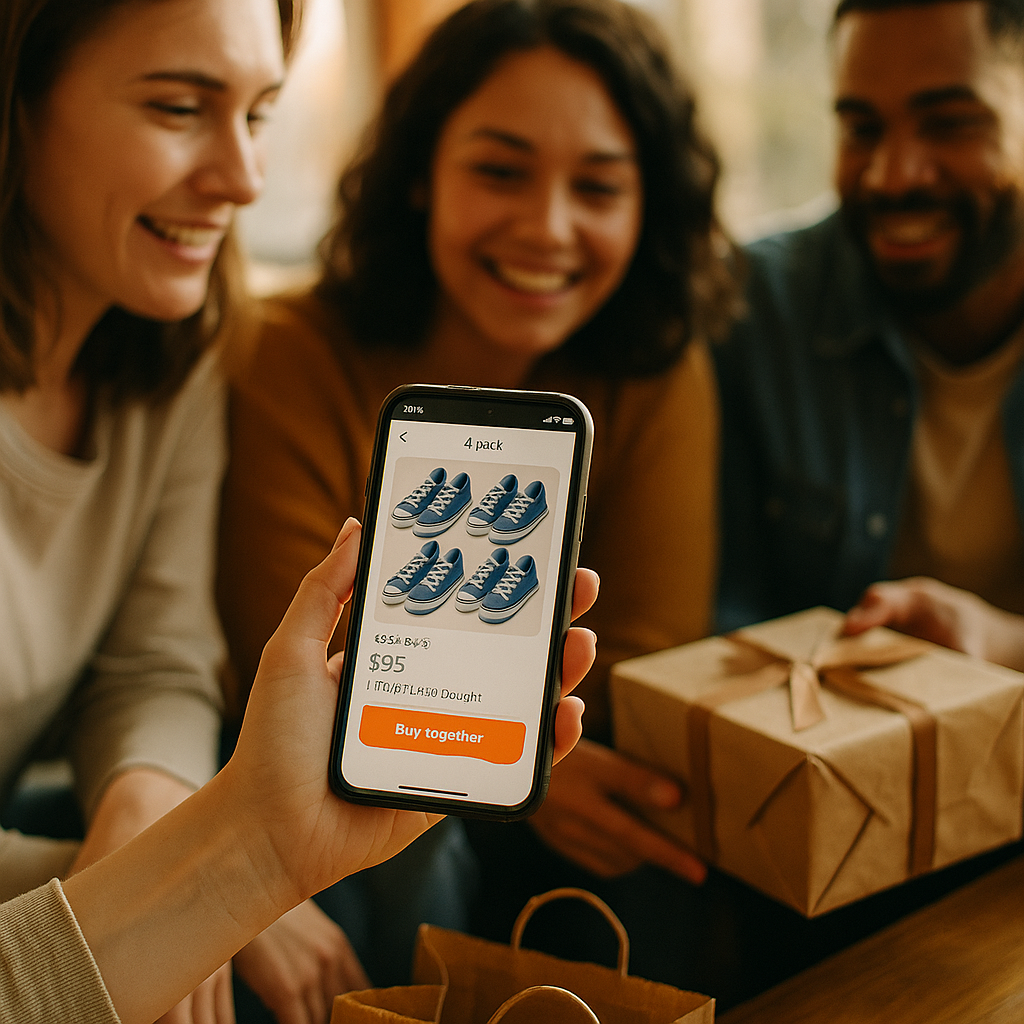
The Neo Collectivism Trend is reshaping how people discover products, split costs, and decide what to buy together. In 2025, consumers increasingly shop as micro-communities: friends, families, co-workers, neighbors, and creator-led groups that bundle purchases for better value and lower risk. Brands that understand group dynamics can win trust faster and reduce acquisition costs. But what makes bundled group buying stick?
What “neo collectivism” means for group buying behavior
Neo collectivism describes a modern return to shared decision-making and shared ownership—powered by mobile commerce, private messaging, and social proof. Unlike traditional collectivism rooted in long-term institutions, today’s version forms quickly around shared interests, tight budgets, or a trusted organizer (a friend, a community admin, or a creator).
For marketers and product teams, the practical shift is visible in group buying behavior:
- Buying is social again: People ask, “Who else is getting this?” before they ask, “Do I need this?”
- Risk is distributed: A group purchase makes trying a new brand feel safer because the group validates the choice.
- Value is negotiated: Consumers expect better pricing, free shipping thresholds, or exclusive bundles when they coordinate.
- Decision-making becomes faster: Once a trusted group signals approval, individuals often convert quickly.
This is not just “social commerce” in the public-feed sense. Much of the action happens in private channels: group chats, community platforms, and invite-only deal groups. That matters because it changes attribution, messaging, and the tone brands should use. People do not want to feel “sold to” inside their community; they want brands to support the group’s goal: saving money, reducing waste, or getting a better outcome.
Why consumers prefer bundled purchasing in 2025
Bundled purchasing works because it aligns with how consumers manage uncertainty and budgets. In 2025, shoppers face elevated price sensitivity, subscription fatigue, and choice overload across categories. Bundles simplify decisions and make the math clearer.
Key drivers behind bundled purchasing include:
- Better unit economics: Groups can unlock tiered discounts, wholesale-like pricing, or waived fees. Even modest savings feel meaningful when paired with the satisfaction of “beating the system” together.
- Lower friction: One organizer coordinates the bundle, and others join with a few taps. When the experience is smooth, the bundle becomes a habit.
- Reduced returns and regret: People feel more confident when a group validates sizing, quality, or fit-for-purpose.
- Shared utility: Some products are naturally shareable (bulk groceries, household essentials, event supplies). Others become shareable when brands package them for the group (variety packs, family kits, multi-user plans).
Consumers also use bundles as a form of self-control. A pre-set kit limits endless browsing and prevents “add-to-cart drift.” For brands, that means bundles are not only a pricing tool; they are a decision architecture tool.
If you’re wondering whether this trend applies outside low-cost categories, it does. Premium categories increasingly see group dynamics via “try together” kits, referral-triggered bundle upgrades, and community pre-orders that de-risk inventory and signal demand.
How social commerce bundling changes discovery, trust, and conversion
Social commerce bundling blends three forces: community validation, coordinated purchasing, and frictionless checkout. The result is a different conversion path than the classic funnel.
In a bundled context, discovery often starts with a person—not an ad. A group organizer might post, “I’m putting together an order; who wants in?” The “call to action” is relational. That alters what convinces buyers:
- Trust transfers from people to products: A friend’s endorsement carries more weight than a brand’s claim.
- Proof needs to be group-ready: Clear specs, comparative charts, and authentic reviews matter because organizers need to justify the pick to others.
- Delivery certainty becomes central: When multiple people rely on one shipment, shipping timelines, tracking, and support quality are part of the value proposition.
Brands that perform well in social commerce bundling typically provide “shareable clarity.” That includes concise product pages, transparent pricing, straightforward return policies, and images that help groups agree (for example, size references and real-life use cases).
To meet Google’s helpful content expectations and EEAT principles, keep claims grounded and verifiable. If you reference performance (“lasts twice as long”), include test conditions and disclaimers. If you highlight social proof, avoid vague phrases like “customers love it” and instead show the review distribution, the number of reviewers, and what problems were solved.
Winning strategies for brands using community-led bundles
Community-led bundles succeed when brands design for the organizer and the group, not just the end buyer. The organizer is your operational partner: they coordinate payments, preferences, timing, and delivery expectations. Make them look good.
High-performing approaches to community-led bundles include:
- Build bundles around outcomes: “Starter kit for meal prep,” “cold-season home kit,” or “new apartment essentials” converts better than random discount packing because it reduces decision load.
- Offer mix-and-match flexibility: Fixed bundles feel restrictive. Let groups choose from a set of items, sizes, or flavors while still qualifying for a threshold discount.
- Create an organizer toolkit: Provide a share link, a one-page product summary, shipping dates, and a simple “who’s in” tracker. Even better: a unique group cart that updates in real time.
- Use transparent tiering: Display clear steps: “3+ participants: free shipping; 5+: 10% off; 10+: 15% off.” People will recruit others to unlock tiers.
- Make support proactive: Group purchases amplify small issues. Offer an easy way to report missing items, manage substitutions, and handle split returns without penalizing the whole group.
Brands should also anticipate follow-up questions that groups ask before they commit:
- How is payment handled? Let participants pay individually while shipping together, or offer a secure “organizer pays” flow with receipts for reimbursement.
- What if someone drops out? Allow a buffer window and show how pricing tiers change if headcount shifts.
- Can we ship to multiple addresses? Offer optional split-shipping for a fee, or provide pickup coordination features for urban groups.
From an EEAT perspective, publish clear policies and make them easy to find. Add contact options that work (not just a form), and ensure your help content explains edge cases. Trust is operational, not just reputational.
Measuring impact: group purchasing economics and KPIs that matter
Traditional eCommerce metrics can miss what’s actually happening in group-based commerce. To understand group purchasing economics, track performance at the group level and at the participant level.
Useful KPIs include:
- Group formation rate: Percentage of visitors or community members who start a group cart or share a bundle invite.
- Join rate: How many invitees convert into participants. This reflects clarity, trust, and friction.
- Group size distribution: Average participants per order and the percentage that reach each discount tier.
- Incremental AOV and margin: Compare group orders against comparable solo orders, accounting for discounts and shipping cost changes.
- Customer acquisition cost by organizer: Organizers can behave like micro-affiliates. Measure their downstream impact and retention.
- Return and support rates: Track return rates per bundle type and support tickets per participant, not just per order.
- Repeat group cycle time: How long until the same group (or organizer) initiates another bundled purchase.
Attribution is a common challenge because group buys often begin offsite in private channels. A practical approach is to use:
- Shareable links with participant tagging (organizer ID + group ID)
- Post-purchase “how did you hear?” prompts that include “friend organizing a group order” as a distinct option
- Holdout tests to measure incremental lift from bundle offers versus standard promotions
Finally, protect long-term economics. Bundles can train shoppers to wait for discounts if overused. Counter this by offering value in forms that do not erode brand equity: early access, extended warranties, bonus accessories, or community-only education that improves product outcomes.
Risks, ethics, and compliance in collective consumption
Collective consumption can create pressure, exclusion, and privacy risks if brands are careless. A group dynamic that helps people save money can also enable manipulation if incentives are designed to trigger guilt or urgency without transparency.
To operate responsibly in collective consumption:
- Avoid dark patterns: Do not hide tier thresholds, inflate “limited spots,” or auto-enroll participants into subscriptions through bundle checkout.
- Protect participant data: If multiple people are tied to one order, minimize what participants can see about others. Use privacy-by-default settings and clear consent.
- Make terms understandable: Explain who is the “buyer of record,” how refunds work, and how disputes are handled.
- Ensure accessibility: Group commerce should not punish shoppers who cannot join a group. Offer equivalent value paths such as loyalty points, student pricing, or occasional solo bundles.
- Be careful with regulated categories: In categories involving health claims, age restrictions, or controlled products, ensure group flows maintain compliance at the participant level.
Consumers reward brands that act like trustworthy partners. In 2025, trust is built through clear communication, reliable fulfillment, and respectful incentives. If your group buying program increases confusion or support burdens, the community will move on fast—and they will take the story with them.
FAQs about the neo collectivism trend and bundled group buying
What is the neo collectivism trend in consumer behavior?
It is a shift toward shared decision-making and shared purchasing in small, flexible groups—often organized through private chats or communities—where trust and value are created collectively rather than individually.
What products work best for bundled group buying?
Products with predictable use and low personalization perform best: household essentials, beauty refills, pantry staples, pet supplies, and event items. Higher-consideration categories can also work when bundles are outcome-based (trial kits, starter sets) and include strong guidance.
How do brands enable bundled purchases without hurting margins?
Use tiered incentives tied to volume, reduce fulfillment costs through consolidated shipping, and add non-discount value (exclusive items, education, early access). Track incremental profit per participant, not only order-level revenue.
Do consumers prefer one organizer paying, or split payments?
Most groups prefer split payments because it reduces friction and trust concerns. Offering both options is ideal: split payments for convenience and an organizer-pay option for informal groups that already reimburse each other.
How can smaller brands compete in group buying?
Start with simple tools: shareable bundle pages, transparent tiers, and reliable customer support. Partner with community leaders, local groups, or creators who can organize purchases, and focus on clear product proof that helps them advocate confidently.
How can you measure group buying when it happens in private channels?
Use group-specific share links, participant tagging, post-purchase attribution questions, and controlled experiments. Combine quantitative metrics (join rate, group size, repeat cycles) with qualitative feedback from organizers to understand friction points.
Are there ethical concerns with group-based discounts?
Yes. If incentives create social pressure or hide true costs, trust erodes. Ethical programs use transparent pricing tiers, protect personal data, and offer reasonable alternatives for shoppers who cannot or do not want to join groups.
What is the biggest operational challenge in bundled group buying?
Customer support and fulfillment complexity. Brands need clear policies for substitutions, missing items, partial returns, and shipping delays—because any issue affects multiple people and spreads quickly through the group.
How do bundles affect customer loyalty?
When executed well, bundles increase loyalty because groups form routines around replenishment and trust. Poor execution—late shipping, confusing terms, or aggressive discounting—can reduce loyalty by making the brand feel unreliable or transactional.
Should every brand adopt group buying?
No. It works best when products can be explained quickly, delivered reliably, and purchased repeatedly or in bulk. If your offering is highly bespoke or requires complex onboarding, focus first on community building and referral programs before launching group bundles.
In 2025, the neo collectivism shift turns buying into a coordinated activity, not a solitary decision. Bundled group purchases help consumers lower costs, reduce risk, and move faster when they trust the organizer and the offer is clear. Brands win by designing for group dynamics: transparent tiers, flexible bundles, reliable fulfillment, and privacy-first support. Make joining easy, make outcomes predictable, and groups will return.