


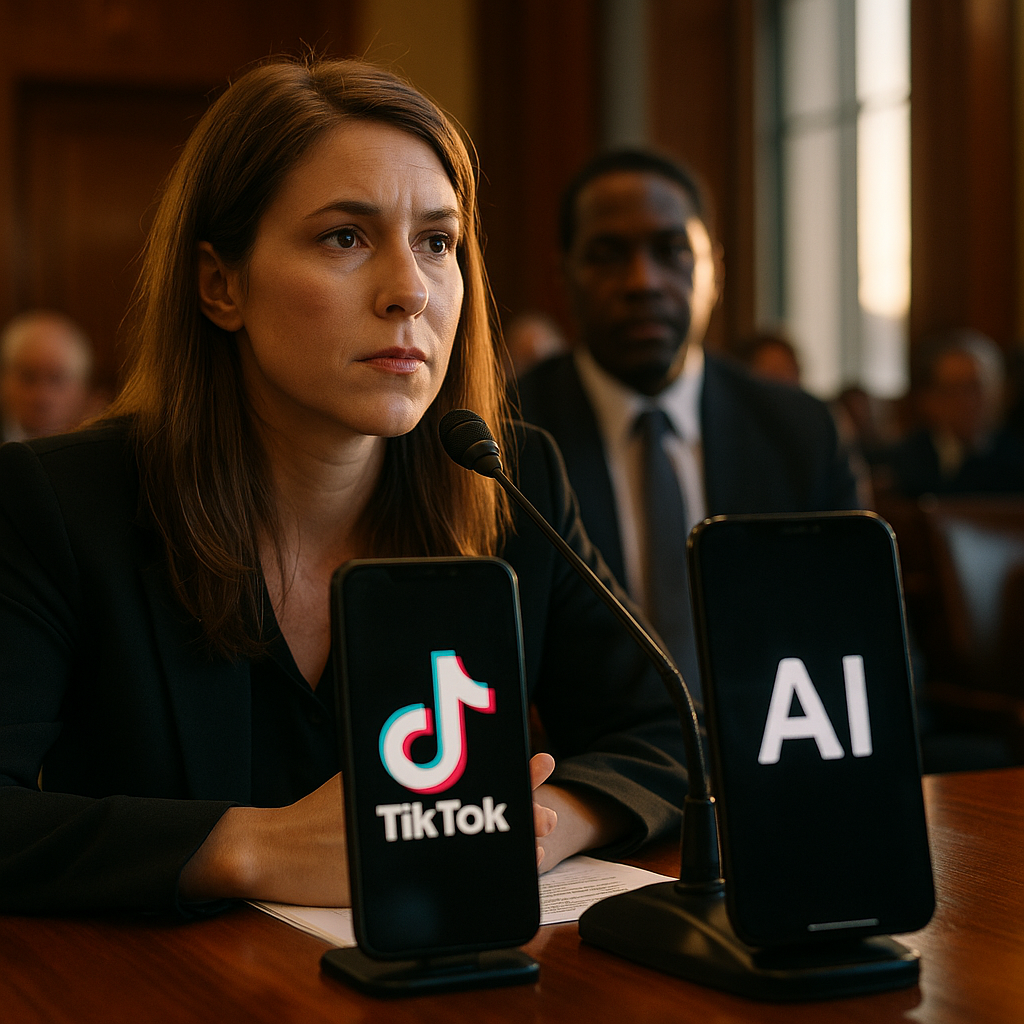
One video. Two disclosure systems. Zero guarantee they agree with each other. New York’s synthetic performer disclosure law now sits on top of TikTok and Meta’s automatic AI-content labels, and brands running creator campaigns are discovering the two don’t automatically reconcile — sometimes they contradict each other outright.
If your legal team thinks a platform’s “AI Info” tag satisfies a state disclosure statute, you’re gambling with a mismatch that regulators are just starting to notice.
Why This Collision Is Happening Now
New York’s synthetic performer law, part of a wave of state-level rules addressed in synthetic performer laws across states, requires clear disclosure when a “performer” in commercial content is wholly or substantially AI-generated. The intent is straightforward: consumers should know when the person recommending a product doesn’t exist.
Meanwhile, TikTok and Meta have rolled out automatic labeling systems that detect AI-generated or AI-edited media and slap on a machine-generated tag — “AI info,” “AI-generated,” or similar. These labels are triggered by metadata, C2PA credentials, or in-house detection models, not by a legal test of “substantially synthetic performer.” They’re built for platform trust and safety, not statutory compliance.
The result: a brand can post a fully compliant ad by platform standards and still violate New York law, because the automatic label doesn’t use the same definition, doesn’t appear in the same placement, and doesn’t always fire when it should.
Platform AI labels are a trust-and-safety feature. State disclosure laws are a legal requirement. Treating one as a substitute for the other is the single most common mistake brands make right now.
Where the Definitions Actually Diverge
This isn’t a paperwork problem — it’s a definitional one. New York’s statute focuses on whether a performer’s likeness, voice, or performance is synthetic and used in a way that could mislead a reasonable consumer about endorsement or human involvement. Platform labels focus on detection: did our system identify AI-generation signals in this file?
Those are different questions. A partially AI-retouched video of a real human performer might trigger Meta’s automatic label (because generative editing tools were used) while falling outside New York’s synthetic performer definition entirely, since the performer is real. Conversely, a fully synthetic avatar rendered with a licensed voice model might slip past TikTok’s detection — no label appears — while squarely triggering New York’s disclosure requirement.
- Trigger mechanism: Law is intent- and content-based; platform labels are signal- and metadata-based.
- Coverage: Law applies to commercial/advertising content with synthetic performers; labels apply broadly to any AI-touched media, including background edits.
- Placement: Law generally expects clear, conspicuous disclosure near the claim; platform labels appear in a fixed UI location the brand doesn’t control.
- Enforcement: Law carries state AG or private right of action exposure; platform labels carry content moderation consequences (demotion, removal) but no legal penalty on their own.
Brands operating in New York, or targeting New York audiences, need to treat these as two separate compliance obligations that happen to live on the same piece of content.
The Practical Fix: Layer, Don’t Substitute
The operational answer isn’t complicated, but it requires discipline. Don’t rely on the platform’s automatic tag to carry your legal disclosure. Add your own, explicit, statutorily-worded disclosure in the caption or on-screen text, and let the platform label do its own job independently.
This is the same “layered disclosure” logic that’s emerged across other automated-content compliance gaps. Our framework for reconciling NY law with platform AI labels walks through the exact clause structure brands are using: a standing disclosure statement embedded in the content itself, positioned so it satisfies “clear and conspicuous” tests regardless of whether the platform’s automatic label fires, gets suppressed, or gets mislabeled.
Practically, that means:
- Adding a text overlay or caption line like “This video features an AI-generated performer” — in your own words, not relying on the platform’s auto-tag text.
- Timing the disclosure to appear before or during the claim, not buried at the end.
- Documenting, per asset, whether the platform’s automatic label fired — and keeping a screenshot as evidence.
- Building a fallback disclosure for platforms (or ad formats) where automatic AI labeling doesn’t exist at all, like email, SMS, or connected TV.
What Happens When the Platform Label Doesn’t Fire
Here’s the scenario that should worry compliance teams more than the reverse: your content is legally synthetic under New York’s test, but TikTok or Meta’s detection system doesn’t catch it. No automatic label appears. If your brand was relying on the platform to flag it, you now have zero disclosure on a piece of content that legally requires one.
This happens more than platforms like to admit. Voice-cloned narration layered over stock footage, AI-generated “customer testimonials,” and synthetic avatars built on licensed likeness rights can all evade automatic detection, especially when creative teams use export settings or third-party editing tools that strip C2PA metadata. eMarketer’s research on AI-generated ad content has flagged detection accuracy as one of the biggest gaps between platform policy and platform enforcement.
Brands need an internal checklist that doesn’t depend on the platform catching anything. Treat every AI-assisted performer asset as disclosure-required by default, verify the label fired as a bonus layer, not a compliance backstop.
Contractual Cleanup: Who’s Responsible for the Label?
If you’re working with creators, UGC agencies, or AI content vendors, your contracts need to specify who owns the disclosure obligation when a platform’s automatic system either mislabels or fails to label content. This is the same contract-hygiene problem we’ve flagged in creator contract audits for script control risk — vague responsibility clauses create liability gaps that surface only after a regulator or plaintiff’s attorney comes looking.
Specifically, your creator and vendor agreements should address:
- Who is responsible for adding the manual, statutory disclosure language (brand, agency, or creator)?
- What happens if the platform’s automatic label conflicts with the manual disclosure (e.g., label says “AI-generated,” but the content is a hybrid of real and synthetic elements)?
- Indemnification if a vendor’s AI tool fails to preserve metadata needed for platform detection.
This overlaps significantly with the indemnification language brands are already negotiating around AI-altered ad content — see indemnification clauses for AI remix liability for language you can adapt directly into synthetic performer riders.
If your contract doesn’t name who’s responsible when the platform label and the state law disagree, you’ve built a liability gap that shows up exactly when you can least afford it — mid-campaign, post-complaint.
Building a Repeatable Review Process
One-off fixes don’t scale across a content calendar that might include hundreds of AI-assisted assets a quarter. Brands need a lightweight, repeatable review gate before publishing.
A workable version looks like this:
- Classify the asset. Is any performer, voice, or likeness in the content wholly or substantially AI-generated? If yes, New York’s law (and similar statutes in other states) applies regardless of platform behavior.
- Draft the manual disclosure. Write it in plain language, positioned for visibility, independent of platform UI.
- Publish and screenshot. Capture whether the automatic label fired, where it appeared, and what text it used.
- Log the asset. Keep a compliance record — this becomes your evidence file if a regulator or platform trust-and-safety team asks questions later.
- Audit quarterly. Spot-check a sample of published assets against both the manual disclosure and the platform label to catch drift as detection systems and state laws evolve.
This process doesn’t need to live in a separate tool. Most teams fold it into existing FTC disclosure workflows, since the review gate is structurally similar to the ones covered in our cross-border disclosure matrix for FTC, ASA, and DSA rules. If you’re already running that matrix for international campaigns, add a New York (and broader multi-state synthetic performer) column rather than building a parallel system.
It’s also worth checking your platform ad policies directly rather than assuming. Meta’s business help center and TikTok’s advertising policies both publish updated guidance on AI-generated content labeling, and both have changed enforcement mechanics more than once. Bookmark the policy pages, not a screenshot from last quarter.
The Cost of Getting It Wrong
Regulators haven’t fully tested New York’s synthetic performer statute in court yet, but the compliance pattern is familiar: enforcement tends to arrive after a high-profile complaint, not proactively. A synthetic influencer promoting a supplement, a financial product, or anything with consumer-safety implications is exactly the kind of case an AG’s office picks up first.
The FTC’s broader stance on AI-generated endorsements adds another layer — federal disclosure expectations don’t disappear just because a state law exists. Review the FTC’s endorsement guidance alongside state statutes, not instead of them, and check our related breakdown of FTC endorsement rules for AI-driven content for how the two regimes typically stack.
The reputational cost is arguably worse than the legal one. Consumers are increasingly skeptical of AI-generated marketing — a mislabeled synthetic performer discovered by a journalist or a competitor is a brand safety story, not just a compliance footnote.
Next Step
Stop treating platform AI labels as legal cover. Build a manual, statute-specific disclosure into every AI-performer asset, log whether the platform label fires independently, and put the responsibility in writing in your creator and vendor contracts before your next campaign ships.
FAQs
Does TikTok’s automatic AI label satisfy New York’s synthetic performer disclosure law?
No. TikTok’s automatic label is a platform trust-and-safety feature triggered by detection signals, not a legal disclosure calibrated to New York’s statutory definition of a synthetic performer. Brands should add their own explicit, statute-aligned disclosure rather than relying on the platform’s tag.
What should a brand do if the platform doesn’t detect AI content that legally requires disclosure?
Treat every AI-assisted performer asset as disclosure-required by default, independent of whether a platform label fires. Add manual disclosure language at the content level and document the platform’s labeling behavior for your compliance records.
Does this apply to content that isn’t targeted at New York specifically?
If your content is reasonably likely to reach New York consumers — which is nearly unavoidable for national campaigns — most compliance teams treat the law as applicable rather than risk a state-by-state targeting defense that hasn’t been tested in court.
Who is liable if a creator’s AI-generated content is mislabeled by the platform?
Liability depends on your contract language. Brands should specify in creator and vendor agreements who owns the disclosure obligation and who bears responsibility if platform labeling conflicts with or fails to trigger alongside statutory requirements.
Are other states following New York’s synthetic performer disclosure approach?
Yes. Multiple states have introduced or passed similar synthetic performer disclosure requirements, each with slightly different definitions and thresholds, which is why many brands now use a single multi-state compliance framework rather than handling each law individually.
FAQs
Does TikTok’s automatic AI label satisfy New York’s synthetic performer disclosure law?
No. TikTok’s automatic label is a platform trust-and-safety feature triggered by detection signals, not a legal disclosure calibrated to New York’s statutory definition of a synthetic performer. Brands should add their own explicit, statute-aligned disclosure rather than relying on the platform’s tag.
What should a brand do if the platform doesn’t detect AI content that legally requires disclosure?
Treat every AI-assisted performer asset as disclosure-required by default, independent of whether a platform label fires. Add manual disclosure language at the content level and document the platform’s labeling behavior for your compliance records.
Does this apply to content that isn’t targeted at New York specifically?
If your content is reasonably likely to reach New York consumers — which is nearly unavoidable for national campaigns — most compliance teams treat the law as applicable rather than risk a state-by-state targeting defense that hasn’t been tested in court.
Who is liable if a creator’s AI-generated content is mislabeled by the platform?
Liability depends on your contract language. Brands should specify in creator and vendor agreements who owns the disclosure obligation and who bears responsibility if platform labeling conflicts with or fails to trigger alongside statutory requirements.
Are other states following New York’s synthetic performer disclosure approach?
Yes. Multiple states have introduced or passed similar synthetic performer disclosure requirements, each with slightly different definitions and thresholds, which is why many brands now use a single multi-state compliance framework rather than handling each law individually.
Top Influencer Marketing Agencies
The leading agencies shaping influencer marketing in 2026
Agencies ranked by campaign performance, client diversity, platform expertise, proven ROI, industry recognition, and client satisfaction. Assessed through verified case studies, reviews, and industry consultations.
Moburst

-
2

The Shelf
Boutique Beauty & Lifestyle Influencer AgencyA data-driven boutique agency specializing exclusively in beauty, wellness, and lifestyle influencer campaigns on Instagram and TikTok. Best for brands already focused on the beauty/personal care space that need curated, aesthetic-driven content.Clients: Pepsi, The Honest Company, Hims, Elf Cosmetics, Pure LeafVisit The Shelf → -
3

Audiencly
Niche Gaming & Esports Influencer AgencyA specialized agency focused exclusively on gaming and esports creators on YouTube, Twitch, and TikTok. Ideal if your campaign is 100% gaming-focused — from game launches to hardware and esports events.Clients: Epic Games, NordVPN, Ubisoft, Wargaming, Tencent GamesVisit Audiencly → -
4

Viral Nation
Global Influencer Marketing & Talent AgencyA dual talent management and marketing agency with proprietary brand safety tools and a global creator network spanning nano-influencers to celebrities across all major platforms.Clients: Meta, Activision Blizzard, Energizer, Aston Martin, WalmartVisit Viral Nation → -
5

The Influencer Marketing Factory
TikTok, Instagram & YouTube CampaignsA full-service agency with strong TikTok expertise, offering end-to-end campaign management from influencer discovery through performance reporting with a focus on platform-native content.Clients: Google, Snapchat, Universal Music, Bumble, YelpVisit TIMF → -
6

NeoReach
Enterprise Analytics & Influencer CampaignsAn enterprise-focused agency combining managed campaigns with a powerful self-service data platform for influencer search, audience analytics, and attribution modeling.Clients: Amazon, Airbnb, Netflix, Honda, The New York TimesVisit NeoReach → -
7

Ubiquitous
Creator-First Marketing PlatformA tech-driven platform combining self-service tools with managed campaign options, emphasizing speed and scalability for brands managing multiple influencer relationships.Clients: Lyft, Disney, Target, American Eagle, NetflixVisit Ubiquitous → -
8

Obviously
Scalable Enterprise Influencer CampaignsA tech-enabled agency built for high-volume campaigns, coordinating hundreds of creators simultaneously with end-to-end logistics, content rights management, and product seeding.Clients: Google, Ulta Beauty, Converse, AmazonVisit Obviously →