


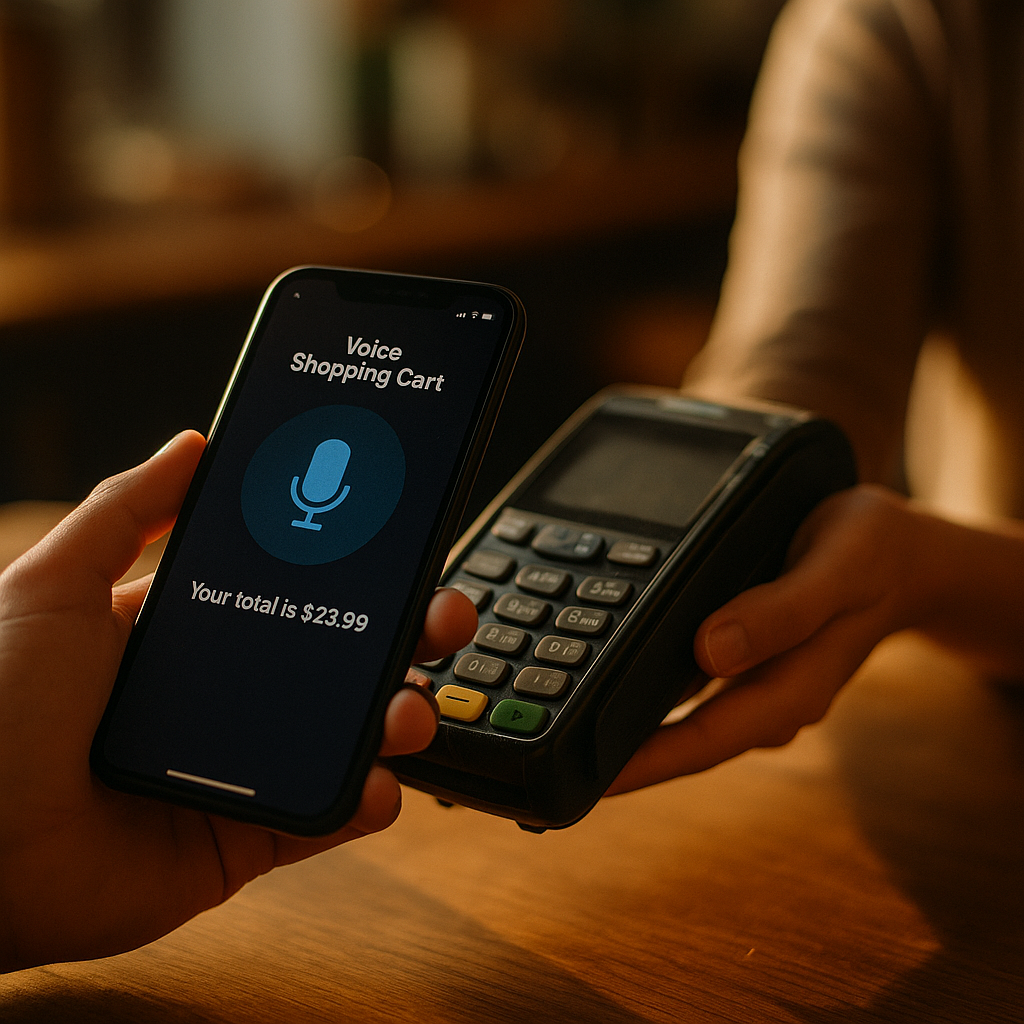
In 2025, shoppers expect voice commerce to feel effortless, not risky or confusing. The Science of Micro Copy for AI Driven Voice Checkout explains how tiny phrases—prompts, confirmations, and error messages—shape trust, speed, and completion rates when users can’t see a screen. This article turns behavioral science into practical scripts your team can test today, including what to say when it matters most—ready to tune every word?
Voice checkout microcopy: why tiny words carry outsized weight
Microcopy is the short, functional language that guides a user through an interaction: prompts, confirmations, clarifications, consent statements, and recovery steps. In a voice checkout, microcopy becomes the interface. Users can’t scan, skim, or visually verify details, so every sentence must reduce cognitive load while increasing confidence.
Voice interactions also introduce unique friction points: misrecognition, uncertainty about what the system heard, and anxiety around payments. Well-crafted voice checkout microcopy addresses those issues by doing three jobs at once:
- Orient: tell the user what will happen next and how long it will take.
- Confirm: restate key details (items, total, address, payment method) at the right moments.
- Protect: prevent costly mistakes with lightweight verification and safe defaults.
From a behavioral science perspective, microcopy influences perceived control and perceived risk. When a voice assistant sounds decisive but transparent—“I’ll read your total, then you can confirm”—users feel in control. When it sounds vague—“Do you want to continue?”—users hesitate because they can’t see what “continue” means.
To make microcopy more effective, design it as a series of “voice moments” rather than isolated lines: intent capture, item review, address confirmation, payment confirmation, authentication, and post-payment reassurance. Each moment has different user questions, and your words should answer them before they’re asked.
Conversational UX writing: structure prompts for clarity and speed
Conversational UX writing for checkout must be concise, predictable, and easy to respond to in a single breath. The biggest gains usually come from tightening prompt structure and limiting open-ended questions.
Use the “Context → Choice → Constraint” pattern. Give a brief context, offer clear options, and add any constraint that avoids confusion.
- Weak: “What would you like to do?”
- Strong: “You’re ready to check out. Say ‘review’ to hear items, or ‘pay now’ to place the order.”
Prefer closed choices for critical steps. Voice is fast, but open prompts create recognition errors and longer turns. For payment, shipping changes, or cancellations, use yes/no or two-option prompts, then allow an escape hatch:
- Prompt: “Your total is $42.18. Say ‘confirm’ to pay, or ‘change’ to edit.”
- Escape hatch: “You can also say ‘start over’ at any time.”
Front-load what matters. In voice, users may tune out mid-sentence. Put the key information in the first five to seven words.
- Better pacing: “Total: $42.18. Delivery: Tuesday.”
- Worse pacing: “Okay, before we continue, I just want to let you know that your total today…”
Minimize memory burden. Don’t ask users to remember product names or long IDs. If disambiguation is required, offer short labels:
- Disambiguation: “I found two ‘Air’ items. Say ‘AirPods’ or ‘Air purifier’.”
Answer follow-up questions inside the prompt. Users often wonder: “Can I change my address?”, “Will I be charged now?”, “Can I cancel?” Include one short reassurance line only where it reduces hesitation:
- “You can update your address before confirming.”
- “You won’t be charged until you say ‘confirm’.”
Checkout trust signals: microcopy that reduces perceived risk
Checkout trust signals in voice need to be explicit because users can’t see visual cues like lock icons, payment badges, or order summaries. Trust comes from specificity, reversibility, and verification—without sounding legalistic.
Be precise about what will happen. Replace generic statements with concrete ones:
- Instead of: “Proceeding to payment.”
- Say: “I’m about to place your order and charge your Visa ending in 2041.”
Use “reversibility language” to lower anxiety. Users fear irreversible mistakes. Add short, truthful reassurances:
- “You can still change the delivery address before you confirm.”
- “If something looks wrong, say ‘cancel’ and we’ll stop.”
Verify the highest-risk details at the highest-salience moments. Don’t over-confirm everything; it slows checkout. Confirm only what materially affects outcome:
- Always confirm: total cost, delivery address (or at least city + last line), payment method, delivery date/window, restricted items.
- Confirm when changed: shipping speed, promo codes, substitutions.
Handle privacy transparently. If the system is using stored data, say so plainly:
- “I’m using your default delivery address on Pine Street.”
- “I can save this card for next time if you say ‘save card’.”
Avoid false certainty. Overconfident language erodes trust when recognition fails. Prefer calibrated confidence:
- “I heard ‘12 Maple Avenue.’ Is that right?”
- “I’m not fully sure I got the apartment number. Please say it again.”
Trust is also shaped by tone. Use calm, direct language and avoid jokes in payment moments. Humor can work earlier in browsing, but at checkout it can read as unserious.
Error recovery prompts: design for mishearing, interruptions, and corrections
Error recovery prompts determine whether a user completes checkout or abandons. Voice errors feel personal—users blame themselves or the assistant—so your microcopy should reduce friction, preserve dignity, and keep progress visible through speech.
Classify errors and write a template for each. Most voice checkout failures fall into four categories:
- Didn’t hear (silence/noise)
- Didn’t understand (unexpected intent)
- Heard but uncertain (low confidence transcription)
- Can’t do (policy, inventory, payment failure)
Use a three-part recovery response.
- What happened: “I didn’t catch that.”
- What to do: “Say ‘confirm’ to place the order, or ‘change’ to edit.”
- Progress reassurance: “Your cart is unchanged.”
Offer correction paths that match user intent. If the user says “No, not that,” the assistant should ask “What should I change?” and list the editable fields. Example:
- “No problem. You can change address, delivery time, or payment. Which one?”
Handle interruptions gracefully. In real homes and cars, users pause or get interrupted. Microcopy should re-anchor without repeating everything:
- “Welcome back. We were at payment. Total is $42.18. Say ‘confirm’ to place the order, or ‘review’ to hear items.”
Payment failures need a calm, specific next step. Avoid vague “Something went wrong.” Provide an actionable path and avoid exposing sensitive details:
- “Your bank didn’t approve that charge. Say ‘try again,’ ‘use a different card,’ or ‘cancel.’”
Prevent loops. After two failed attempts, switch strategy: shorten options, ask for one detail, or offer a handoff to screen/SMS/email if available.
Personalization and consent: ethical microcopy for AI voice commerce
AI-driven voice checkout can personalize prompts, predict intents, and speed up reorder flows, but personalization without consent can feel intrusive. Ethical microcopy makes personalization expected, optional, and controllable.
State the basis for personalization. If you recommend a default, explain why in a few words:
- “I’m using your usual delivery address on Pine Street.”
- “I picked standard shipping because it’s the lowest cost.”
Ask for permission at the moment value becomes clear. Don’t front-load long consent scripts. Use just-in-time consent tied to a benefit:
- “Want me to save this address for next time? Say ‘save’ or ‘no.’”
- “I can send a text receipt with tracking. Say ‘text it’ or ‘skip.’”
Provide simple controls in natural language. Users should be able to say:
- “Don’t save that.”
- “Forget my last card.”
- “Turn off voice purchases.”
Be careful with household ambiguity. Shared devices create identity risks. If multiple profiles are possible, use microcopy that clarifies the active account before charging:
- “This will charge Alex’s Visa ending in 2041. Is that okay?”
- “If this isn’t Alex, say ‘switch account’.”
Accessibility is part of ethics. Use plain language, avoid idioms, and keep numeric content easy to parse aloud:
- “Forty-two dollars and eighteen cents” (plus the numeric total if you also support a screen).
- Break long addresses into chunks: street, city, ZIP.
A/B testing voice prompts: metrics, experiments, and iteration
Microcopy is measurable when you instrument voice events and tie them to conversion outcomes. In 2025, the teams that win treat voice prompt design as an experimentation system, not a one-time script.
Define success beyond completion rate. Track a set of metrics that reflect both speed and confidence:
- Checkout completion rate (session-to-order)
- Time to confirm (from “ready to checkout” to payment confirmation)
- Reprompt rate (how often the assistant asks again)
- Correction rate (user edits address/payment/items)
- Fallback/handoff rate (to screen, agent, or abandonment)
- Post-order cancellation/refund rate (quality signal, not just conversion)
Test one variable at a time in high-impact moments. Start with the lines that gate payment:
- Confirm prompt structure (“Say ‘confirm’ to pay” vs “Do you want to place the order?”)
- Amount formatting (full cents vs rounding rules, if allowed)
- Confirmation order (total first vs payment method first)
- Default choices (standard shipping default vs ask every time)
Segment your analysis. Voice performance varies by environment and user familiarity. Split results by:
- New vs returning users
- Device type (smart speaker, phone, car)
- Noise level proxies (ASR confidence, barge-in frequency)
- Cart complexity (single item vs multi-item)
Use qualitative evidence to explain the numbers. Pair analytics with call-style transcripts (appropriately anonymized), user testing, and support tickets. Look for repeated “hesitation phrases” like “Wait,” “Hold on,” and “Did you say…?” Then write microcopy that preempts the confusion.
Create a microcopy style system. Consistency increases learnability. Maintain a library with approved wording for totals, confirmations, address readouts, and error templates. Document reading rules for prices, dates, and abbreviations, and align them with compliance and brand tone.
FAQs: microcopy for AI-driven voice checkout
What is microcopy in a voice checkout?
It’s the short spoken text that guides users through checkout—prompts, confirmations, error messages, consent requests, and post-payment reassurance. In voice, microcopy functions as the primary interface, so clarity and timing directly affect conversion and trust.
How long should a voice checkout prompt be?
Aim for one idea per turn and a response that a user can say quickly. For critical steps, keep prompts tight: a brief context, two options, and a reminder that the user can cancel or change if needed.
What should the assistant confirm before charging a card?
Confirm the total amount, the payment method (including a non-sensitive identifier like “ending in 2041”), and the delivery destination or pickup location. If anything changed during the session—address, shipping speed, substitutions—confirm that change explicitly.
How do you write microcopy for voice errors without frustrating users?
Say what happened in plain language, give the user the exact phrases that work, and reassure them that progress is saved. If errors repeat, switch to a simpler question or offer a handoff path instead of looping.
How can microcopy improve security without adding too much friction?
Use lightweight verification at high-risk moments: confirm payment method, read back key details, and add a final “confirm to pay” step. For shared devices or high-value orders, use step-up authentication with clear explanation and a fast retry path.
How do you ensure voice checkout microcopy meets EEAT expectations?
Ground wording in observed user behavior, document decision rules, and keep claims accurate and testable. Align scripts with privacy and payment policies, include transparent consent language, and continuously validate changes with experiments and user feedback.
Microcopy decides whether AI voice checkout feels like a shortcut or a gamble. In 2025, the best scripts combine crisp prompt structure, explicit trust signals, graceful error recovery, and ethical personalization users can control. Treat every line as a measurable product component, test the highest-risk moments first, and standardize what works. When the assistant speaks with clarity and restraint, customers confirm faster—and cancel less.