


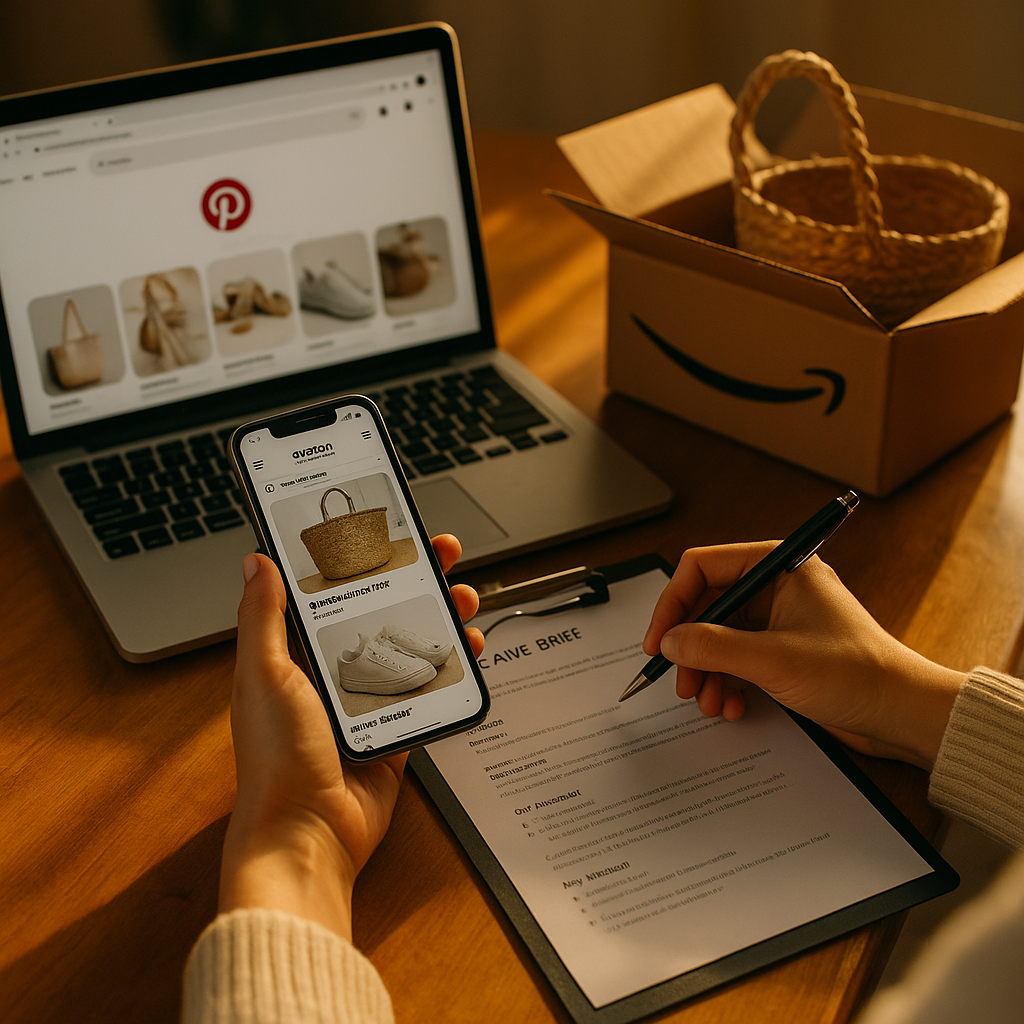
Pinterest now drives purchase intent at a rate that embarrasses most paid social channels, and the platform’s direct integration with Amazon creator storefronts has quietly changed the math for every DTC and e-commerce brand running influencer programs. If you haven’t restructured your Pinterest creator briefs around this shoppable link architecture yet, you’re leaving closed-loop attribution on the table.
What the Pinterest-Amazon Integration Actually Does
The mechanics matter before the strategy does. When a creator on Pinterest links their Amazon storefront to their Pinterest profile, their product pins can now resolve directly to Amazon product detail pages, with full purchase functionality intact. No redirect friction. No broken attribution chain. The user taps a pin, lands on the Amazon listing, and buys without ever leaving the purchase intent moment.
For brands selling on Amazon, this is a structural shift. Pinterest’s discovery engine (443 million monthly active users, per Statista) now functions as top-of-funnel creative paired with Amazon’s conversion infrastructure at the bottom. The two were always complementary. Now they’re connected.
Pinterest users are planners, not scrollers. Over 80% of weekly Pinners say they’ve discovered a new brand or product on the platform. That intent signal, now wired directly to Amazon checkout, creates a conversion pathway that most social channels still can’t replicate.
Why This Changes Creator Brief Architecture
Most Pinterest creator briefs were built for awareness: beautiful imagery, brand aesthetic, soft CTAs. That made sense when the best you could offer was a link in bio or a swipe-up to a branded landing page. The conversion pathway was long and leaky.
The Amazon storefront connection collapses that funnel. Your brief now needs to reflect the fact that a single pin can carry a buyer from discovery to checkout. That changes three things immediately: the creative directive, the compliance requirements, and the commission structure you negotiate.
On creative: pins linking to Amazon listings need product context that closes, not just inspires. The image or video should answer the buyer’s objection, not just the aesthetic question. Think “why this product” not “what this brand feels like.” If you’re running shoppable creator content on Instagram in parallel, your Pinterest brief should be briefed as a separate unit, not repurposed from Reels scripts.
On compliance: the FTC’s disclosure requirements apply here at full force. Creators linking to Amazon storefronts through affiliate programs must disclose the relationship clearly on the pin itself, not buried in a profile bio. Your brief must specify exact disclosure language and placement. Review the FTC endorsement guidelines and build disclosure specs into your contract deliverables, not as an afterthought.
Structuring the Partnership Model
There are three viable commercial structures for Pinterest-Amazon creator partnerships, and each carries different risk and reward profiles.
The affiliate-first model treats the creator primarily as a commission-earning channel. You seed products to Amazon Associates-eligible creators, they build storefronts featuring your catalog, and you negotiate an elevated commission rate (above the standard Amazon Associates rate) in exchange for guaranteed pin volume or content exclusivity. Low cash outlay, high attribution clarity. The downside: creators optimizing purely for commission tend to prioritize high-ticket SKUs over brand narrative.
The hybrid retainer plus affiliate model is where most mid-market DTC brands should operate. A flat monthly fee guarantees a minimum number of shoppable pins with specific creative requirements. Affiliate commission sits on top as performance upside. This gives you creative control while aligning the creator’s financial incentive with your sales goals. It also makes content planning more predictable, which matters when you’re coordinating Pinterest activity with Amazon Prime events or seasonal campaigns.
The exclusive storefront co-op model is more sophisticated and reserved for brands with significant Amazon presence. Here, you co-fund the creator’s Amazon storefront curation in exchange for category exclusivity. The creator doesn’t link competing products in your category for a defined period. You get a curated, brand-controlled environment inside Amazon’s ecosystem, surfaced through Pinterest’s organic discovery engine. The contracts here require careful legal review around exclusivity scope and competitor definitions.
Creator Selection Criteria Have Shifted
Pinterest follower counts are a weak proxy for what you actually need in this integration model. The variables that matter now:
- Amazon storefront quality: Does the creator already maintain an organized, shoppable storefront? A creator with 40,000 Pinterest followers and a well-curated Amazon storefront is more valuable than one with 200,000 followers and a dormant storefront.
- Pinterest save rate, not just impression volume: Saves indicate planning intent. A pin saved to a “home renovation” or “gift ideas” board is a high-intent signal that compounds over time. Ask creators for their average save rate per pin, not just reach.
- Category authority: Pinterest’s algorithm rewards subject matter coherence. A creator whose boards are tightly organized around a single category (beauty, kitchen, fitness) will surface your product pins to more relevant audiences than a lifestyle generalist.
- Amazon review history: Creators who already have organic reviews or Q&A activity on Amazon listings you care about are pre-validated. Their audience trusts them in that purchase environment.
Vetting tools like Sprout Social and affiliate network dashboards (Impact, ShareASale) can surface Amazon storefront performance data alongside social metrics. Build a combined scorecard before you shortlist.
Attribution and Measurement Setup
Closed-loop attribution is the whole point of this integration, so don’t squander it with lazy tracking setup. You need three data layers running simultaneously.
First, Amazon Attribution tags on every product link the creator shares. These are free to set up through Amazon’s brand registry and give you pin-level conversion data: clicks, add-to-cart events, purchases, and revenue directly traced back to each creator’s pins.
Second, Pinterest’s native analytics for downstream engagement signals: saves, close-ups, and outbound clicks. These tell you which creative formats and product categories are generating planning-stage interest, even when conversion happens days or weeks later.
Third, your own CRM or CDP layer to track any buyers who convert via Amazon and then appear in your first-party data through post-purchase flows (email captures, account creation, subscription enrollment). This bridges the Amazon walled garden with your own customer database.
For brands also running live commerce campaigns on TikTok or other channels, running these attribution layers in parallel lets you model channel contribution more accurately than last-click attribution ever could.
Amazon Attribution is free and underused. If your creators are driving traffic to Amazon listings without tagged links, you have no visibility into what’s converting. Fix this before you scale anything.
Contract Clauses Brands Frequently Miss
The legal architecture of Pinterest-Amazon creator deals has specific gaps that standard influencer contracts don’t cover. Watch for these.
Storefront persistence clauses: What happens if the creator removes your products from their Amazon storefront mid-campaign? Your contract should specify minimum storefront inclusion duration and a cure period for removal.
Pin longevity requirements: Unlike Instagram Stories, Pinterest pins have indefinite shelf life. A pin from a campaign that ended eight months ago can still drive clicks. Define in the contract whether the creator can archive or delete campaign pins after the deal term expires, and whether they retain the right to reuse or modify the content.
Competing product provisions: If the creator is also an affiliate for a competing brand on Amazon, your pin traffic may directly benefit a competitor’s storefront. Carve out exclusivity at the category level, not just the brand level.
Standard influencer contract templates from platforms like HubSpot are reasonable starting points, but they won’t have these Pinterest-Amazon specifics baked in. Have legal review the storefront and attribution clauses specifically.
The broader principle here applies across shoppable channels: if you’re also managing Instagram shoppable post programs, the concentration risk of over-relying on any single creator-to-platform combination is real. Pinterest-Amazon is powerful, but it belongs inside a diversified creator portfolio, not as a standalone bet.
The Operational Playbook
Start with a pilot cohort of five to eight creators. Mix one high-follower account with several mid-tier creators who have high save rates and tidy Amazon storefronts. Run a six-week sprint tied to a single product line or collection. Track Amazon Attribution data at the pin level weekly, not monthly.
At week three, cut creators whose pins are generating clicks but zero add-to-cart events. Reallocate budget to the ones converting. At week six, evaluate whether the hybrid retainer plus affiliate model is working or whether the affiliate-only structure is delivering sufficient pin volume and quality.
Before you scale, audit your creator roster diversification to ensure Pinterest-Amazon isn’t cannibalizing performance from your other channels. Then build quarterly campaign calendars around Amazon shopping events (Prime Day, major gifting seasons) with creator briefing cycles that start six weeks before each event window.
Your next step: pull your current Amazon Attribution report, identify which traffic sources have zero creator-attributed conversion data, and use that gap as the business case to fund your first Pinterest creator pilot cohort. The infrastructure is already there. The only missing piece is structured creator partnerships built for it.
Frequently Asked Questions
What is the Pinterest Creator Amazon Storefront Integration?
It is a shoppable link architecture that allows Pinterest creators to connect their Amazon storefronts directly to their Pinterest profiles and pins. When a user clicks a product pin, they are taken directly to the corresponding Amazon product page with full purchase functionality, eliminating redirect friction and enabling closed-loop attribution from Pinterest discovery to Amazon checkout.
Do creators need to be Amazon Associates to use this integration?
Yes. Creators must be enrolled in the Amazon Associates affiliate program to link their Amazon storefront to Pinterest. For brands, this means your creator selection process should verify active Amazon Associates status and storefront quality as a prerequisite, not an afterthought.
How should brands track conversions from Pinterest creator pins to Amazon purchases?
Brands should use Amazon Attribution tags, which are free through Amazon’s brand registry, on every product link shared by creators. These tags provide pin-level conversion data including clicks, add-to-cart events, and purchases. This should be layered with Pinterest’s native analytics for save and engagement data, and with first-party CRM data for post-purchase tracking.
What FTC disclosure requirements apply to Pinterest-Amazon creator content?
Creators must clearly disclose their affiliate relationship on the pin itself, not in a profile bio or hidden caption. Brands should specify exact disclosure language and placement in their creator contracts. The FTC’s endorsement guidelines require that disclosures be clear, conspicuous, and located where viewers will see them before engaging with the content.
Which commercial structure works best for DTC brands new to this integration?
Most mid-market DTC brands benefit most from a hybrid retainer plus affiliate model: a flat monthly fee guarantees a minimum number of shoppable pins with defined creative requirements, while an affiliate commission layer aligns the creator’s incentives with sales performance. This provides creative control and predictable content planning while keeping creator motivation tied to conversion outcomes.
How is creator selection different for Pinterest-Amazon campaigns versus standard influencer programs?
Follower count is a weak proxy for this use case. Brands should prioritize creators with high Pinterest save rates (which signal purchase planning intent), well-maintained Amazon storefronts, tight subject-matter authority across their boards, and an existing audience that engages with Amazon listings. A creator with 40,000 followers and a strong storefront often outperforms a larger creator with a dormant Amazon presence.
Top Influencer Marketing Agencies
The leading agencies shaping influencer marketing in 2026
Agencies ranked by campaign performance, client diversity, platform expertise, proven ROI, industry recognition, and client satisfaction. Assessed through verified case studies, reviews, and industry consultations.
Moburst

-
2

The Shelf
Boutique Beauty & Lifestyle Influencer AgencyA data-driven boutique agency specializing exclusively in beauty, wellness, and lifestyle influencer campaigns on Instagram and TikTok. Best for brands already focused on the beauty/personal care space that need curated, aesthetic-driven content.Clients: Pepsi, The Honest Company, Hims, Elf Cosmetics, Pure LeafVisit The Shelf → -
3

Audiencly
Niche Gaming & Esports Influencer AgencyA specialized agency focused exclusively on gaming and esports creators on YouTube, Twitch, and TikTok. Ideal if your campaign is 100% gaming-focused — from game launches to hardware and esports events.Clients: Epic Games, NordVPN, Ubisoft, Wargaming, Tencent GamesVisit Audiencly → -
4

Viral Nation
Global Influencer Marketing & Talent AgencyA dual talent management and marketing agency with proprietary brand safety tools and a global creator network spanning nano-influencers to celebrities across all major platforms.Clients: Meta, Activision Blizzard, Energizer, Aston Martin, WalmartVisit Viral Nation → -
5

The Influencer Marketing Factory
TikTok, Instagram & YouTube CampaignsA full-service agency with strong TikTok expertise, offering end-to-end campaign management from influencer discovery through performance reporting with a focus on platform-native content.Clients: Google, Snapchat, Universal Music, Bumble, YelpVisit TIMF → -
6

NeoReach
Enterprise Analytics & Influencer CampaignsAn enterprise-focused agency combining managed campaigns with a powerful self-service data platform for influencer search, audience analytics, and attribution modeling.Clients: Amazon, Airbnb, Netflix, Honda, The New York TimesVisit NeoReach → -
7

Ubiquitous
Creator-First Marketing PlatformA tech-driven platform combining self-service tools with managed campaign options, emphasizing speed and scalability for brands managing multiple influencer relationships.Clients: Lyft, Disney, Target, American Eagle, NetflixVisit Ubiquitous → -
8

Obviously
Scalable Enterprise Influencer CampaignsA tech-enabled agency built for high-volume campaigns, coordinating hundreds of creators simultaneously with end-to-end logistics, content rights management, and product seeding.Clients: Google, Ulta Beauty, Converse, AmazonVisit Obviously →