


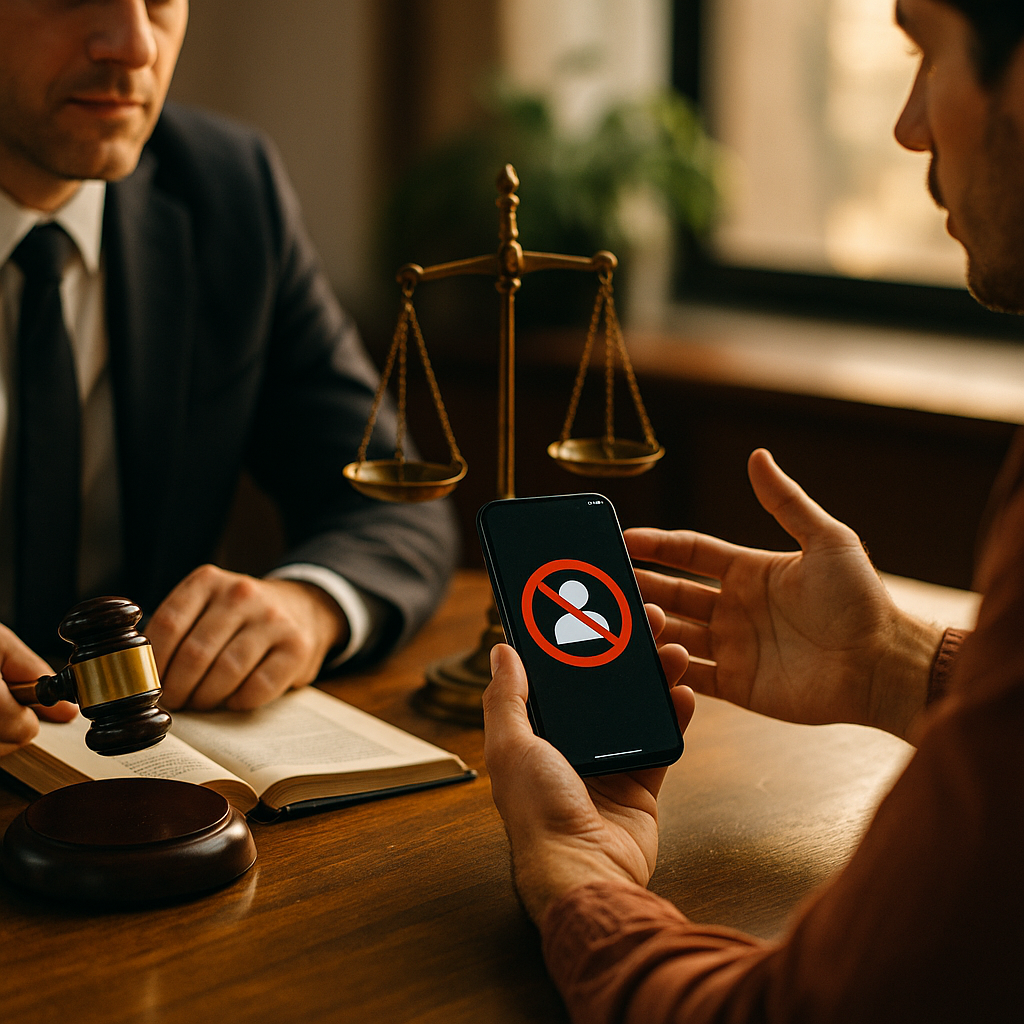
Brands now rely on visibility inside closed platforms, yet hidden distribution limits can quietly erase reach, leads, and revenue. Understanding the Legal Risks of Platform Shadow Banning for Brands matters in 2026 because reduced exposure may trigger contract disputes, compliance questions, and reputational harm. If a platform suppresses content without clear notice, what legal options does a brand actually have?
What shadow banning means in social media law
Shadow banning usually refers to a platform limiting the visibility, discoverability, or distribution of an account or content without a clear public suspension. A brand may still be able to post, but fewer followers see those posts, hashtags stop surfacing content, search visibility drops, or ad account signals deteriorate without an obvious explanation.
From a legal perspective, the term itself is less important than the underlying conduct. Courts, regulators, and counsel typically focus on questions such as:
- Did the platform make representations about reach, neutrality, or enforcement transparency?
- Did the platform apply its terms of service consistently?
- Was the suppression connected to moderation, safety, algorithmic ranking, or a commercial dispute?
- Did the brand suffer measurable business harm?
Brands often assume they have a legal claim the moment engagement collapses. In practice, that is rarely enough. Most platforms reserve broad discretion in their terms to rank, moderate, remove, or deprioritize content. The legal risk emerges when there is a gap between those rights and the platform’s actual behavior, disclosures, contractual promises, or regulatory obligations.
That distinction matters for EEAT. A useful analysis does not promise easy lawsuits. It explains that a brand’s position depends on evidence, platform terms, jurisdiction, the commercial relationship, and whether the account issue involves paid media, organic content, marketplace access, or app store distribution.
Key platform terms and contract law risks
The first place counsel should look is the governing contract. For most brands, that means terms of service, advertising terms, developer agreements, marketplace seller policies, and any enterprise-level insertion order or managed service agreement. These documents shape nearly every dispute involving reduced visibility.
Common contract law issues include:
- Broad moderation discretion: Platforms usually reserve the right to remove, restrict, rank, or demonetize content at their sole discretion.
- Limitation of liability clauses: Even if a brand can show harm, damages may be capped or excluded.
- Mandatory arbitration: Many disputes cannot go directly to court.
- Choice of law and forum clauses: A brand may have to pursue claims in a distant venue.
- Notice provisions: Contracts may require internal appeal steps before legal action.
If a brand has a negotiated enterprise agreement, the analysis changes. Custom contracts may include service levels, account management commitments, ad delivery standards, escalation rights, or representations about policy enforcement. In that setting, a hidden restriction can create a stronger breach-of-contract argument than under standard click-through terms.
Brands should also examine whether a platform induced spending based on visibility expectations. For example, if a platform encouraged a creator-brand partnership program or ad investment while internally restricting account distribution, that mismatch may raise misrepresentation or unfair dealing concerns, depending on the facts.
The practical takeaway is simple: before alleging shadow banning, preserve the contract record. Save policy versions, screenshots, account notices, support tickets, spend commitments, campaign reports, and correspondence with platform representatives. Legal claims weaken quickly when the evidentiary trail is incomplete.
Consumer protection and unfair competition exposure
When shadow banning affects a brand’s ability to reach customers, legal issues can extend beyond private contracts. Regulators may care if a platform’s practices are deceptive, unfair, discriminatory, or anticompetitive in effect. In 2026, transparency around algorithmic systems and moderation remains a major compliance theme across multiple jurisdictions.
A consumer protection theory may arise when a platform markets itself as offering open access, equal treatment, or performance-based distribution, but quietly suppresses business accounts without clear disclosure. The legal question is not whether every drop in reach is unlawful. It is whether the platform’s statements, omissions, or design choices misled business users in a material way.
Unfair competition concerns become sharper when platform conduct appears selective. Consider these scenarios:
- A platform suppresses one brand while promoting its own competing commerce features.
- Visibility restrictions follow a billing dispute unrelated to content policy.
- A marketplace deprioritizes a seller after the seller declines new paid services.
- An app distribution platform reduces discovery in ways that disadvantage certain business models.
These facts do not automatically create a winning claim. Platforms still have strong defenses tied to safety, relevance, quality control, and editorial judgment. But selective suppression can invite scrutiny under unfair competition, business tort, or platform regulation frameworks, especially if the conduct affects market access rather than ordinary content ranking.
Brands should also remember their own exposure. If a company publicly accuses a platform of shadow banning without reliable evidence, it could create defamation, investor-relations, or disclosure problems. For public companies and heavily regulated sectors, statements about platform retaliation should be carefully reviewed by legal and communications teams before publication.
Algorithmic transparency and content moderation compliance
One reason shadow banning is difficult to challenge is that algorithmic ranking and moderation systems are complex by design. A decline in visibility may result from policy enforcement, content quality signals, user feedback, technical errors, account integrity flags, or ordinary ranking changes. That ambiguity makes evidence critical.
In 2026, algorithmic transparency expectations are higher than they were a few years ago. Depending on the platform and jurisdiction, companies may face duties tied to notice, appeals, explanation of significant restrictions, risk assessment, or documentation of automated decisions. Brands should ask these practical questions:
- Did the platform provide a reason for the restriction?
- Was there a meaningful appeal process?
- Did support confirm a policy violation, technical issue, or automated flag?
- Was the restriction account-wide or limited to certain content types, hashtags, audiences, or regions?
- Did the suppression begin after a specific event such as a policy change, payment issue, mass reporting campaign, or controversial post?
For brands, a documented transparency failure can matter as much as the suppression itself. If a platform gives no explanation, ignores appeals, and cannot distinguish between safety enforcement and ranking changes, that may strengthen claims under applicable digital services, business-user fairness, or advertising transparency rules.
At the same time, brands need internal rigor. Many apparent shadow bans stem from preventable triggers: undeclared sponsored content, repetitive posting, misleading claims, prohibited targeting, trademark misuse, manipulated engagement, or agency access mismanagement. In-house teams should audit content operations before assuming wrongful platform conduct.
A strong internal review includes legal, paid media, social, and analytics stakeholders. That cross-functional approach improves credibility with regulators, outside counsel, and the platform itself because it shows the brand tested operational explanations before escalating.
Brand reputation management during a shadow ban dispute
The legal problem is only one layer. A hidden distribution restriction can damage customer trust, partner confidence, and investor perception long before a claim is resolved. For that reason, brands need a reputation management plan that supports the legal strategy instead of undermining it.
Start by controlling internal messaging. Teams should know what they can say publicly, what remains under investigation, and who approves statements. Mixed messages create discoverable inconsistencies and weaken negotiation leverage.
Next, quantify the business impact. Helpful evidence includes:
- Traffic and conversion declines tied to the affected platform
- Campaign underdelivery against contracted goals
- Loss of creator partnerships or affiliate revenue
- Customer service complaints about missing updates or inaccessible content
- Comparative data showing abrupt visibility changes after a specific trigger
Brands should avoid framing every reach decline as censorship. That language can alienate customers and distract from stronger commercial facts, such as unexplained distribution changes, inconsistent enforcement, or failure to honor business-user protections. Clear, evidence-based language is more persuasive in demand letters, regulatory submissions, and executive briefings.
It is also wise to reduce single-platform dependence. If one account drives a disproportionate share of demand generation, any suppression event becomes existential. Diversifying email, search, owned communities, retail media, and other social channels is not just smart marketing. It is legal risk mitigation because it lowers provable damages concentration and reduces pressure to make impulsive public accusations.
How brands should respond to platform enforcement actions
When a brand suspects shadow banning, speed matters, but discipline matters more. The best response combines evidence preservation, contractual review, technical diagnosis, and measured escalation.
Use this response framework:
- Document the event: Capture screenshots, dates, support responses, analytics, ranking changes, and affected content.
- Check for policy triggers: Review recent posts, ad creatives, landing pages, disclosures, payment issues, access changes, and account permissions.
- Compare channels: Determine whether the decline is isolated to one feature, region, or audience segment.
- Review governing terms: Identify appeal routes, notice requirements, arbitration clauses, and any custom contractual protections.
- Escalate through official processes: Use support tickets, account managers, policy appeals, and partner channels before threatening litigation.
- Assess legal theories realistically: Focus on breach, misrepresentation, unfairness, discrimination, or business interference only where facts support them.
- Prepare an external communication plan: Align legal, PR, and leadership teams before going public.
For larger brands, outside counsel may recommend a litigation-hold style approach for relevant records. That does not mean a lawsuit is certain. It means preserving evidence early, especially if revenue loss is substantial or the platform relationship is strategically important.
Another common follow-up question is whether a brand should involve regulators immediately. Usually, that depends on scale and pattern. A single unexplained visibility drop may be a support issue. A repeated, unexplained, commercially harmful restriction affecting multiple markets or business lines may justify a regulatory complaint or formal demand.
Finally, brands should treat platform governance as a board-level issue when the business relies heavily on app stores, marketplaces, major ad networks, or dominant social channels. The legal risk is not just one hidden restriction. It is structural dependence on systems where enforcement, ranking, and access are controlled by third parties.
FAQs about shadow banning legal risks
Is shadow banning illegal by itself?
No. Hidden or reduced visibility is not automatically illegal. The legal issue depends on the platform’s terms, disclosures, enforcement consistency, regulatory duties, and the evidence showing commercial harm.
Can a brand sue a platform for loss of reach?
Sometimes, but it is difficult. Most platforms have broad contractual rights and liability limits. A stronger claim usually requires specific evidence of breach, deception, discrimination, bad-faith enforcement, or violation of business-user protections.
What evidence helps prove a shadow ban claim?
Useful evidence includes analytics showing abrupt distribution changes, screenshots, support records, copies of relevant platform policies, ad spend history, campaign commitments, account notices, and proof tying the suppression to measurable business loss.
Does a drop in engagement mean a platform restricted the account?
No. Engagement can fall for many reasons, including ranking changes, audience fatigue, content quality issues, seasonality, or technical setup problems. Brands should rule out operational causes before asserting wrongful suppression.
Are enterprise customers in a better legal position than ordinary business users?
Often yes. Negotiated agreements may provide stronger rights, clearer commitments, named contacts, escalation paths, and service expectations that support a breach claim more effectively than standard click-through terms.
Should brands publicly accuse platforms of shadow banning?
Not without evidence and legal review. Public accusations can damage negotiations, create reputational risks, and expose the brand to its own legal issues if the claim is overstated or inaccurate.
What internal teams should be involved in a response?
Legal, social, paid media, analytics, IT or product as needed, communications, and executive leadership if the platform is strategically important. A coordinated response improves both factual accuracy and legal positioning.
How can brands reduce future risk?
Diversify traffic sources, maintain strict content and disclosure compliance, preserve platform communications, negotiate stronger enterprise terms where possible, and build internal escalation protocols before a crisis happens.
Platform shadow banning can create real legal and commercial exposure, but brands need proof, not assumptions. The strongest response starts with contracts, evidence, and a disciplined internal review of policy, analytics, and communications. In 2026, smart brands treat platform visibility as a governed business risk: diversify dependence, document every restriction, and escalate with facts that support action.