


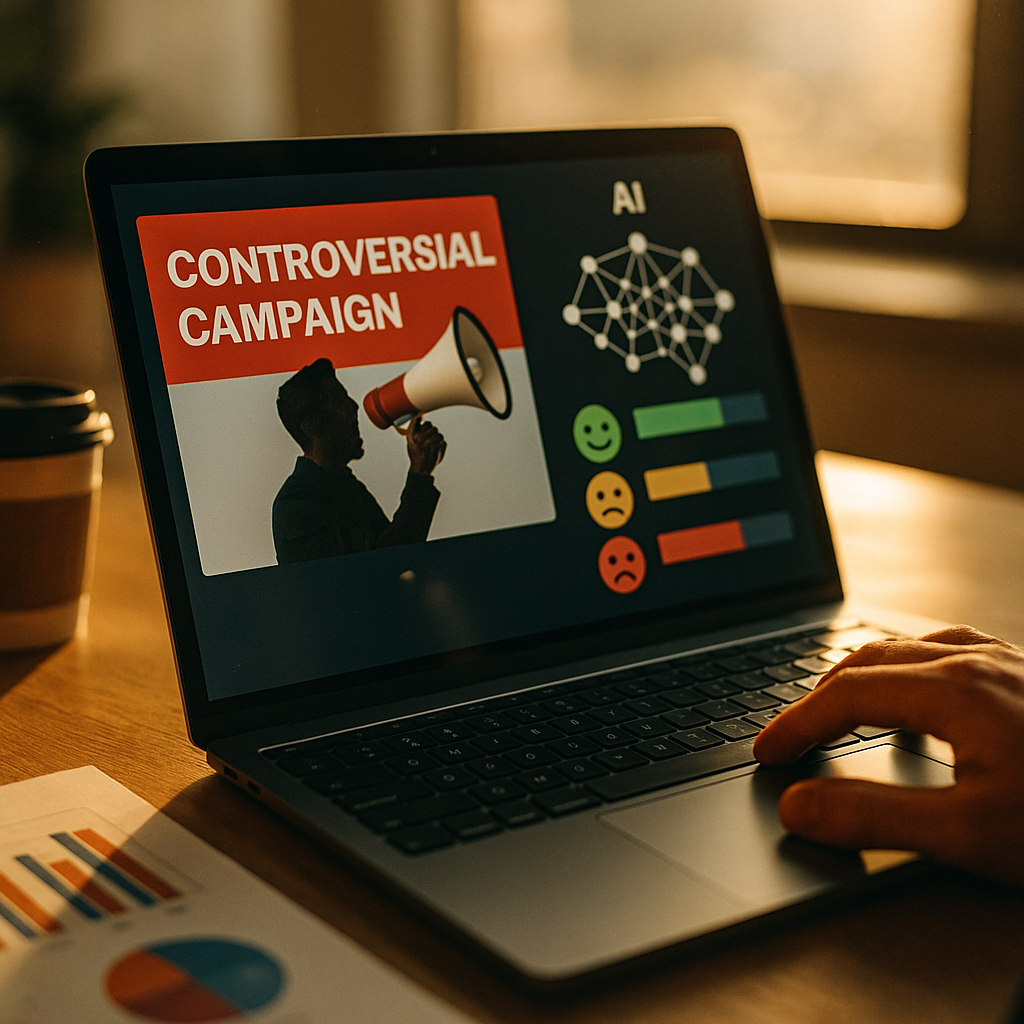
In 2025, brands face faster backlash cycles, fragmented communities, and algorithmic amplification that can turn a risky message into a crisis overnight. Using Swarm AI To Predict Audience Reactions To Controversial Campaigns helps teams test ideas with real people in real time and quantify the likelihood of outrage, support, or indifference. The goal isn’t safety—it’s foresight—so you can decide: launch, revise, or walk away?
What Is Swarm AI and why it matters for controversial marketing
Swarm AI is a decision technology that gathers a group of participants online and lets them “push” toward answers together in real time, creating a collective signal that often outperforms simple polls. Unlike traditional surveys where people respond in isolation, swarm systems capture social dynamics—hesitation, confidence, consensus, and polarization—while participants react to prompts simultaneously.
That difference matters most when a campaign touches identity, politics, public health, religion, gender, or social justice—topics where people form opinions not just from personal belief, but from perceived group norms and fear of judgment. Standard questionnaires can hide that because respondents may choose “safe” answers. In a swarm, the interaction reveals where the crowd truly leans and how strongly.
For controversial campaigns, the practical advantage is speed and clarity. You can test multiple concepts, taglines, visuals, spokesperson choices, and apology statements quickly—then see which ones produce:
- Consensus: participants converge quickly on the same judgment.
- Polarization: the group splits and stays split.
- Volatility: the swarm oscillates, suggesting confusion or susceptibility to framing.
- Confidence: strong directional pull vs weak, uncertain drift.
Swarm AI doesn’t replace human judgment or brand values. It reduces blind spots by showing how real audiences coordinate their reactions—exactly what happens on social platforms when controversy hits.
Audience reaction prediction: what you can realistically forecast (and what you can’t)
Audience reaction prediction is not a promise that you can foresee every headline or influencer pile-on. What you can forecast reliably is the probability distribution of reactions across defined audiences, plus the drivers behind those reactions. Done correctly, you can anticipate how a message will land before it is algorithmically amplified.
Swarm-based prediction is strongest for questions such as:
- Perceived offensiveness: “How likely is this to be seen as insulting or dismissive?”
- Intent attribution: “Do people think the brand is sincere, opportunistic, or ignorant?”
- Share/criticize intent: “Would you share this positively, criticize it, or ignore it?”
- Boycott likelihood: “Would this make you stop buying, and for how long?”
- Press framing: “If this goes wrong, what headline would you expect?”
Where Swarm AI is weaker (and how to handle it):
- Rare events: A single viral clip can distort outcomes. Mitigate by running multiple swarms and stress-testing “worst-case edits.”
- Unknown unknowns: If a creative accidentally references a niche controversy, a general audience swarm may miss it. Mitigate with targeted micro-audiences and expert reviews.
- Platform-specific dynamics: A concept can be fine in long-form and disastrous in short video. Mitigate by testing platform-native cuts and captions.
The most helpful mindset is “forecast and prepare.” If the swarm predicts high polarization but low boycott intent, you may still launch—with tighter community management, a Q&A page, and a spokesperson briefing ready.
Controversial campaigns testing: a step-by-step Swarm AI workflow
Controversial campaigns testing needs structure. Teams often make two mistakes: they test too late (after production is locked) or they test the wrong thing (a polished ad instead of the underlying claim). A practical Swarm AI workflow avoids both.
Step 1: Define the decision you’re actually making
Examples: “Which creative is least likely to trigger backlash?” “Can we make this claim without sounding dismissive?” “If criticized, which response restores trust fastest?” Clarity here prevents the swarm from becoming an expensive opinion session.
Step 2: Segment the audiences that will shape the narrative
At minimum, include:
- Core customers (highest revenue impact)
- Adjacent audiences (growth targets)
- At-risk groups most likely to feel targeted or harmed
- High-amplification users (socially active, media-attentive)
Controversy often starts in a smaller group and then expands. Swarm results are most useful when you can see which segment ignites and which segment follows.
Step 3: Test concepts early, then test executions later
Run a first swarm on the premise and language (headline, key line, stance). Then iterate. Only after narrowing options should you test visuals, casting, music, and edits. This saves time and reduces “pretty but risky” lock-in.
Step 4: Use scenario prompts, not just like/dislike
For controversy, “Do you like it?” is a weak predictor. Better prompts:
- “What is the most likely criticism in one sentence?”
- “How would a skeptical friend interpret this?”
- “Rate the brand’s intent: sincere vs opportunistic.”
- “Which group will be most upset, and why?”
Step 5: Add a response-playbook swarm
Before launch, test 3–5 potential responses: clarification, apology, content edit, spokesperson statement, donation/repair action, or “hold the line.” Swarm the responses against trust recovery and perceived accountability. This turns prediction into preparedness.
Step 6: Decide with thresholds
Set go/no-go rules in advance, such as “If boycott likelihood exceeds X in any key segment, we revise,” or “If polarization is high, we require an owned-media explainer at launch.” Pre-commitment reduces panic when stakeholders disagree.
Real-time collective intelligence: measuring outrage, polarization, and trust
Real-time collective intelligence is valuable because controversy is emotional and social. People calibrate their reactions by watching others—exactly what swarm interaction captures. To make swarm outputs actionable, translate them into metrics you can track and compare across concepts.
Key metrics to extract from Swarm AI sessions
- Outrage probability: share of swarm energy directed toward “offensive,” “harmful,” or “should be pulled.”
- Polarization index: degree to which the group splits into stable camps.
- Trust delta: change in stated trust before vs after exposure.
- Intent confidence: how quickly the swarm converges on “sincere” or “opportunistic.”
- Action likelihood: boycott, complaint, negative post, or supportive share.
Translate metrics into business outcomes
Leadership usually needs a bridge between sentiment and impact. Build a simple mapping:
- High outrage + high action likelihood = crisis risk (prepare rapid response, consider stopping)
- High polarization + low action likelihood = reputation debate (prepare moderation, FAQ, spokesperson training)
- Low outrage + high confusion = clarity problem (revise message, simplify claim, add context)
- Low outrage + high supportive share = advocacy opportunity (enable sharing assets, community partnerships)
Answering the likely follow-up: “Isn’t this just groupthink?”
A well-run swarm is not an unmoderated chat. Participants are responding to structured prompts, and the system captures the push-and-pull of competing views. You also reduce groupthink by running multiple swarms across segments, comparing patterns, and combining swarm outputs with qualitative interviews and expert review.
Brand safety analytics: integrating Swarm AI with social listening and experimentation
Brand safety analytics improves when Swarm AI is part of a larger measurement system. Swarms provide fast, human-grounded forecasting; social listening and experimentation provide ongoing validation once content is live or in limited release.
A practical integration model
- Before launch: Swarm AI for forecast + message stress tests
- Soft launch / geo test: A/B testing of headlines, captions, thumbnails, landing page framing
- After launch: Social listening for emerging narratives, plus rapid swarms on new criticisms
How to set up a “narrative radar”
- Monitor for spikes in negative emotion, calls to action (boycott/report), and identity-based terms tied to harm.
- Track the first 50–200 high-reach posts that mention the campaign; classify frames (e.g., “hypocrisy,” “exploitation,” “tone-deaf”).
- Run a swarm within hours on the leading criticism and proposed responses to choose the best countermeasure.
Answering the likely follow-up: “Can this reduce legal or regulatory risk?”
Swarm AI can flag misunderstanding and perceived deception, which often correlate with complaints. It does not replace legal review. The best practice is to involve legal and compliance early, share the swarm findings, and use them to tighten claims, disclosures, and accessibility—especially when a campaign touches health, finance, safety, or protected classes.
Ethical AI in advertising: avoiding manipulation while improving foresight
Ethical AI in advertising is central to credibility. Predicting reactions to controversy can drift into “engineering consent” if you treat audiences as obstacles. In 2025, that approach backfires. The more durable approach is to use Swarm AI to identify harm, reduce misinterpretation, and make deliberate choices aligned with your values.
EEAT-aligned best practices
- Experience: Include participants who have lived experience with the issue you’re addressing, not only general consumers.
- Expertise: Pair swarm results with domain experts (e.g., public health communicators, cultural strategists, accessibility specialists) to interpret risks responsibly.
- Authoritativeness: Document your methodology: recruitment criteria, sample sizes per segment, prompts used, and decision thresholds. Share the summary internally and with partners.
- Trustworthiness: Get informed consent, protect participant data, and avoid targeting vulnerable groups with manipulative framing.
Bias and representation: the failure mode to prevent
If your swarm excludes the people most affected, you may “predict” safety while creating real harm. Build representation intentionally, and run separate swarms when power dynamics differ (e.g., employees vs customers, affected communities vs general market). Treat divergence as signal, not noise.
Operational safeguards
- Maintain a cross-functional review board (brand, comms, legal, DEI, product, customer support).
- Require “harm checks” alongside performance checks.
- Establish a decision log so choices are auditable, not improvised.
FAQs
What is the main advantage of Swarm AI over traditional polls for controversial topics?
Swarm AI captures real-time social influence and confidence levels, not just isolated answers. That makes it better at detecting polarization, moral judgments, and the likelihood that criticism will spread.
How many people do you need in a Swarm AI session to predict reactions?
It depends on the decision and segmentation, but teams typically run multiple swarms per audience segment rather than relying on one large group. The goal is repeatable patterns across sessions, not a single “perfect” number.
Can Swarm AI tell me if my campaign will go viral for the wrong reasons?
It can estimate the probability of outrage, misinterpretation, and action intent (complaints, boycott, negative sharing). It cannot guarantee whether a specific post will trigger virality, so combine it with scenario planning and rapid-response readiness.
How do you test the best apology or response plan with Swarm AI?
Prepare several realistic response options (clarification, accountability, corrective action, content change) and run a swarm on trust recovery and sincerity. Choose the option that performs best across key segments, then refine language and timing.
Is it ethical to use Swarm AI to shape messaging around sensitive issues?
Yes, if you use it to reduce harm, improve clarity, and make value-consistent choices. It becomes unethical when used to exploit vulnerabilities, silence affected groups, or obscure material facts.
How should Swarm AI fit into a brand safety program?
Use it before launch to forecast reactions and refine creative, during soft launches to validate changes, and after launch to test responses to emerging narratives alongside social listening and customer support insights.
Swarm AI offers a practical way to forecast how different communities will interpret and react to sensitive marketing decisions in 2025. It surfaces polarization, intent attribution, and action likelihood faster than surveys alone, especially when stakes are high. Use it early, segment carefully, and pair results with expert review and strong ethics. The takeaway: predict reactions to prevent harm and choose controversy deliberately.