


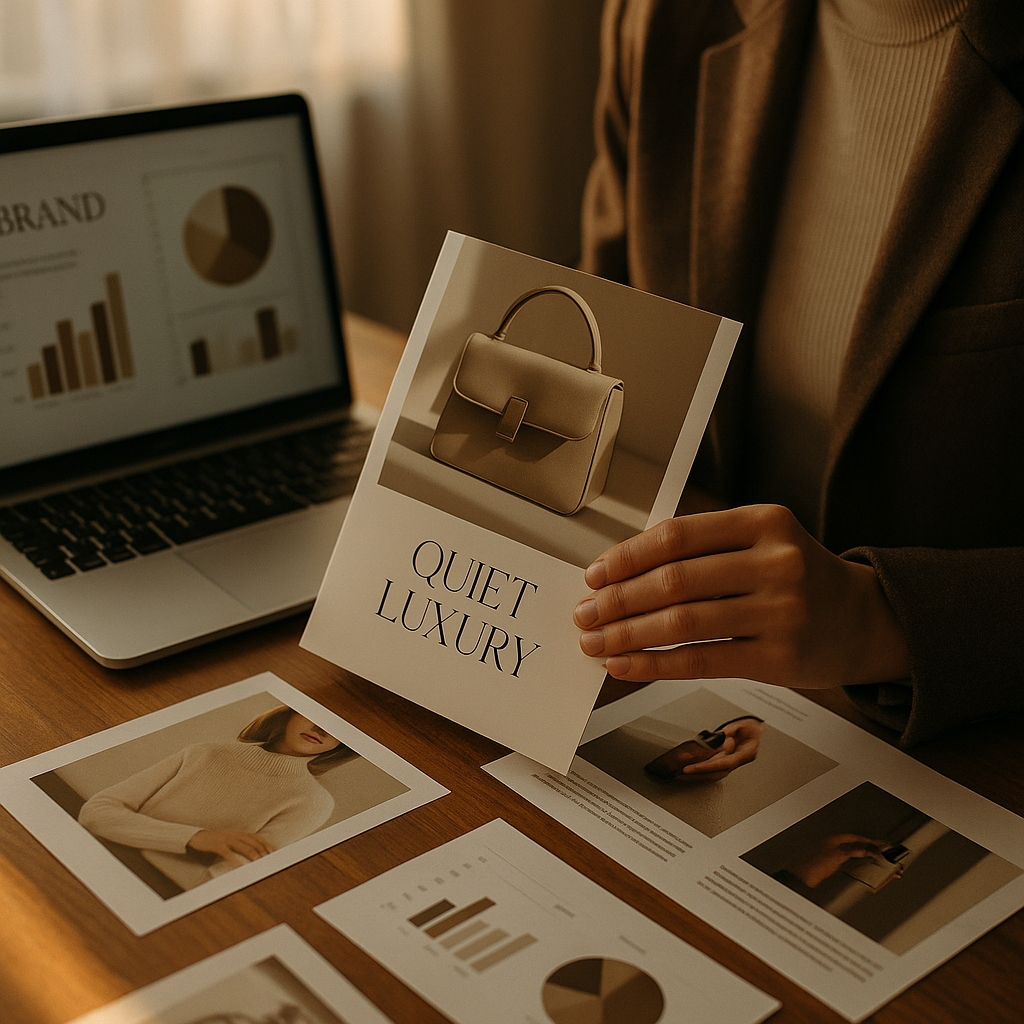
In 2025, consumers have become more fluent at spotting hype, pushing brands toward restraint, craft, and credibility. The rise of Quiet Luxury branding reflects that shift: fewer logos, better materials, cleaner design, and a stronger focus on experience than spectacle. This movement is changing how marketing looks, feels, and performs across channels—so what exactly should you change next?
Quiet luxury marketing: what it is and why it’s rising
Quiet luxury marketing is the strategic choice to communicate premium value through subtle cues rather than overt status signals. Instead of large monograms, loud colorways, and aggressive discounting, the brand emphasizes craft, heritage, fit, materials, and service. Visually, it shows up as restrained palettes, negative space, tactile close-ups, and minimal copy that assumes the audience is informed.
The rise is tied to three forces shaping buyer behavior in 2025:
- Logo fatigue: Audiences who grew up with constant brand saturation often interpret loud visuals as trying too hard. Subtlety reads as confident.
- Value scrutiny: Premium pricing demands proof. Quiet luxury supports a “show the making” approach that justifies cost through evidence.
- Platform evolution: Short-form video and high-resolution mobile screens reward detail—stitching, texture, weight, drape—more than distant glamour shots.
Importantly, quiet luxury isn’t “less marketing.” It’s more precise marketing: fewer claims, stronger substantiation, and visuals designed to communicate quality without shouting.
Minimalist brand design: the visual language that signals premium
Minimalist brand design is often misunderstood as simply using fewer elements. In quiet luxury, minimalism is not emptiness—it’s curation. Every visual choice does a job: reduce noise, increase perceived quality, and create a calm environment where product detail becomes the hero.
Key visual principles that consistently map to quiet luxury positioning:
- Restrained color systems: Neutrals, muted tones, and limited accent colors reduce cognitive load and increase coherence across touchpoints.
- Type with authority: Serif or refined sans-serif families, generous leading, and disciplined hierarchy. The goal is readability and poise, not novelty.
- Spacing as a signal: White space implies confidence and control. Crowding often reads as value-retail behavior.
- Material-first photography: Macro shots that show grain, weave, patina, edge paint, and hardware finishing.
- Calm motion: Slow pans, stable framing, natural sound, and minimal transitions outperform flashy edits for this aesthetic.
Readers often ask: “Won’t minimal visuals get ignored in busy feeds?” The answer is that minimalism works when it is paired with contrast (light vs. dark, texture vs. smooth surfaces, stillness vs. chaotic timelines) and when the creative gives viewers something to examine up close—craft details, fit, functionality, and materials.
Luxury brand storytelling: show proof, not posture
Luxury brand storytelling in the quiet era shifts from aspirational fantasy to verifiable excellence. The audience still wants emotion, but they also want evidence: who made it, what it’s made of, why it lasts, and how it fits into real life.
To align visuals with EEAT expectations (experience, expertise, authoritativeness, trustworthiness), build story arcs around:
- Process transparency: Behind-the-scenes imagery, atelier footage, pattern drafting, prototyping, quality checks, and repair services.
- Material credibility: Clear naming (e.g., full-grain leather, extra-long staple cotton), sourcing standards, and care guidance presented visually.
- Human expertise: Portraits and interviews of craftspeople, designers, and technicians. Show hands, tools, and decisions.
- Longevity outcomes: Before/after wear stories, patina over time, modular parts, refurbishment, and warranties communicated without gimmicks.
Effective quiet luxury visuals answer follow-up questions inside the creative: “What am I paying for?” “How will this look in my life?” “What makes this better than alternatives?” Instead of adding more adjectives, add more proof—close-ups, demonstrations, and comparisons grounded in measurable attributes (construction method, weight, stitch density, finish type, fit geometry).
Premium visual identity: translating subtlety across every channel
A premium visual identity must stay consistent across product pages, ads, email, retail environments, packaging, and social content. Quiet luxury fails when it’s treated as a campaign look rather than a full system.
Here’s how the aesthetic changes by channel without losing cohesion:
- Website and e-commerce: Fewer competing banners, clearer navigation, high-resolution product imagery, zoom that reveals detail, and concise copy paired with specifications. Add a dedicated “Materials & Care” and “Craft & Warranty” module for trust.
- Paid social: Use negative space and a single focal point. Lead with tactile detail in the first second of video. Keep on-screen text minimal and specific (e.g., “Hand-finished edge paint” vs. “Luxury feel”).
- Email: One message per email. Strong typography, calm layout, and a product story that reads like a knowledgeable associate rather than a megaphone.
- Packaging and unboxing: Texture, weight, and restrained branding create memory. Include care cards, repair options, and provenance details that reinforce expertise.
- Retail and events: Museum-like spacing, intentional lighting, and guided touchpoints that invite customers to feel material and construction.
To keep identity disciplined, create a “quiet luxury visual kit”: lighting rules, texture standards, model styling guidelines, composition templates, and a list of banned behaviors (over-retouching, cluttered sets, excessive callouts, countdown urgency). This makes production scalable and consistent.
Subtle branding trends 2025: what’s changing in visuals right now
Subtle branding trends 2025 are not only aesthetic—they reflect shifts in platform behavior, customer expectations, and brand risk management. In practice, the biggest changes in marketing visuals include:
- Less logo, more “signature”: Brands rely on recognizable design codes—silhouette, stitching pattern, hardware shape, print scale, color temperature—rather than large marks.
- Texture as the new headline: Grain, weave, knit structure, brushed finishes, and natural imperfections are highlighted instead of smoothed away. This increases perceived authenticity.
- Naturalistic lighting: Soft daylight and controlled shadows replace glossy flash aesthetics, helping products feel real and touchable.
- Short, calm video loops: Slow rotations, drape tests, zipper pulls, strap adjustments, and sound-on moments replace jump-cut montages.
- Measured claims: Visuals and copy avoid absolute hype. “Designed to last” becomes “Lifetime repair available” or “Backed by a 5-year warranty,” supported by clear terms.
- Editorial realism: Less “perfect life,” more composed reality—clean spaces, practical styling, and situations where the product’s design choices matter.
A frequent concern is whether subtle branding reduces memorability. It can—if you remove distinctiveness. The fix is to define 3–5 non-logo assets that remain consistent: a signature crop style, a recognizable lighting temperature, a unique material close-up angle, or a product “hero pose.” Quiet luxury succeeds when it is understated but unmistakable.
High-end marketing visuals: measuring performance without cheapening the brand
High-end marketing visuals still need to perform. The difference is that optimization must protect brand equity. Instead of chasing short-term clicks with loud creative, measure outcomes that match premium buying behavior: qualified traffic, time on product pages, repeat visits, saved items, consultation bookings, and lower return rates.
Practical ways to test and improve without breaking the aesthetic:
- A/B test content density: Same hero image, different levels of supporting proof (materials panel, craftsmanship video, sizing guide). Look for lifts in add-to-cart and reduced returns.
- Test detail-first vs. lifestyle-first: For some categories, leading with texture close-ups improves conversion because it communicates value faster.
- Optimize for trust signals: Visual placement of warranty, repairs, certifications, and shipping transparency can increase confidence without adding noise.
- Measure creative wear-out: Quiet visuals can fatigue if they’re too similar. Rotate scenes, textures, and story angles while keeping the same system.
- Use creator partnerships carefully: Choose creators with genuine product literacy. Brief them on lighting, framing, and claims. Authenticity matters more than reach.
To align with EEAT, document your claims internally: material specs, supplier standards, testing methods, and warranty terms. Then reflect that documentation in visuals and on-page modules. Quiet luxury is persuasive when it is verifiable.
FAQs
What is quiet luxury branding in marketing?
It’s a premium positioning approach that communicates quality through restraint—minimal logos, disciplined design, craft and material proof, and calm storytelling. The visuals aim to feel confident and timeless rather than attention-seeking.
How does quiet luxury affect marketing visuals?
It shifts creative toward neutral palettes, generous white space, tactile close-ups, natural lighting, slower video pacing, and fewer on-image claims. Product construction and materials become the focal point.
Does quiet luxury branding work for small brands without heritage?
Yes, if you replace heritage with evidence: transparent sourcing, clear specs, maker expertise, warranties, repair programs, and consistent design codes. Quiet luxury is earned through proof, not history alone.
Will removing prominent logos hurt brand recognition?
It can, unless you build recognizable non-logo assets—signature silhouettes, recurring composition, distinctive hardware, a consistent color temperature, or a unique texture style that customers learn to associate with you.
What mistakes make quiet luxury visuals look generic?
Overusing beige without contrast, copying competitor layouts, over-retouching texture, vague copy (“elevated,” “premium”), and inconsistent photography standards. Quiet luxury needs distinctiveness and detail.
How do you maintain EEAT in quiet luxury content?
Show real expertise and experience: demonstrate making and testing, name materials accurately, explain care and longevity, publish clear warranty/repair terms, and avoid inflated claims. Use visuals as evidence, not decoration.
Quiet luxury is reshaping brand visuals in 2025 by making restraint a competitive advantage. When you replace loud signals with craft proof, you earn attention from customers who value discernment. The winning approach combines minimalist design with distinct brand codes, transparent storytelling, and measurable performance standards. Build a visual system that shows materials, process, and longevity—and your marketing will look calmer while converting with confidence.