


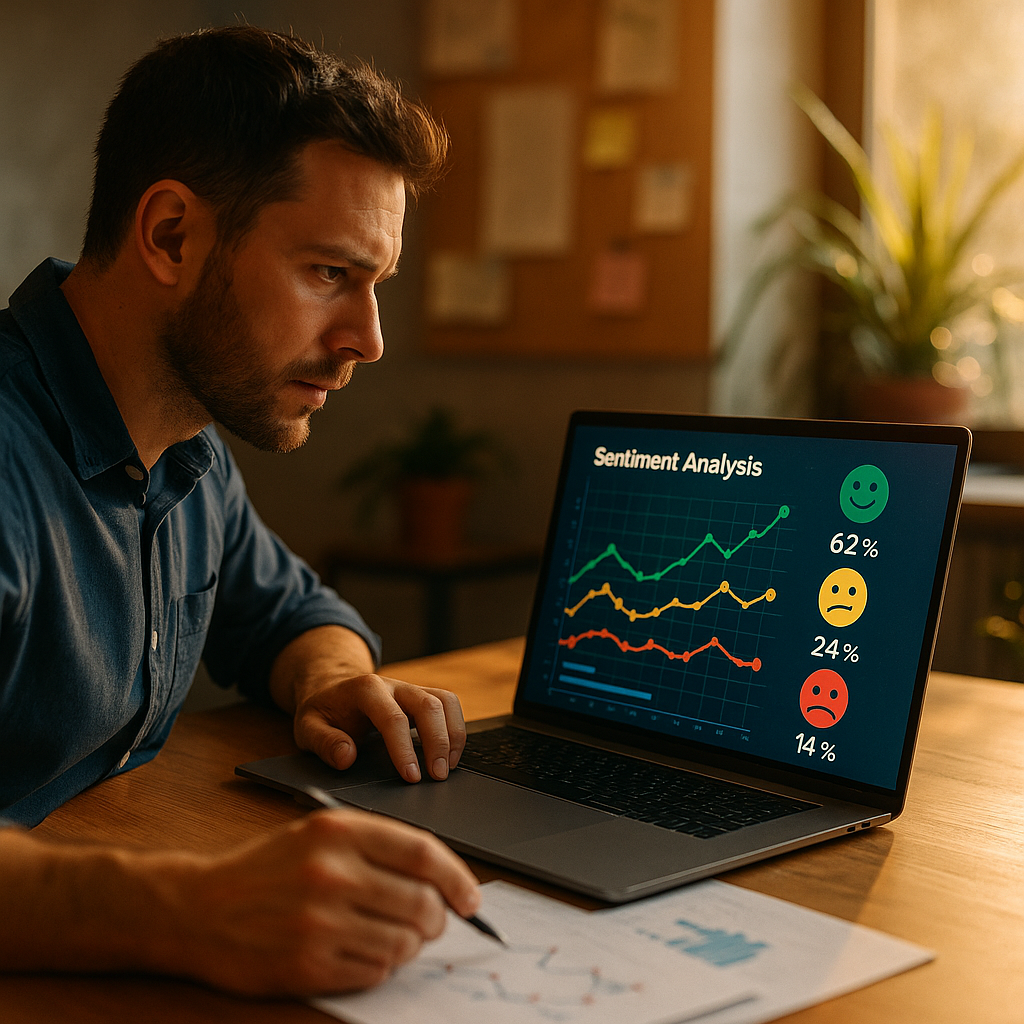
Sentiment analysis is rapidly transforming how marketers understand public response. By leveraging real-time emotional insights, brands can fine-tune campaigns as they unfold and make data-driven decisions that amplify success. Dive in to learn how to use sentiment analysis to gauge public reaction to a campaign in real-time, empowering your next strategy for maximal engagement and results.
What Is Sentiment Analysis & How Does It Enhance Campaign Monitoring?
Sentiment analysis refers to the use of artificial intelligence (AI) algorithms to assess emotion and opinion in text, audio, or visual content. Modern sentiment analysis tools scan social media, forums, news sites, and more to interpret whether mentions about your campaign are positive, negative, or neutral. Leveraging this technology, marketers gain nuanced, quantifiable insights into public mood as a campaign progresses.
This method enhances campaign monitoring by highlighting both broad trends and sudden shifts, revealing audience sentiment in real-time. For example, an unexpected spike in negative feedback immediately alerts teams to potential issues, enabling swift, targeted responses that protect brand reputation. Real-time feedback is invaluable for optimizing ongoing campaigns, allowing brands to pivot their approach based on live audience reactions.
Setting Up Real-Time Sentiment Analysis for Campaign Feedback
To gauge campaign success in real-time using sentiment analysis, you’ll first need the right tools and a clear workflow. Begin by choosing a reputable sentiment analysis platform—options in 2025 include advanced solutions such as Brandwatch, Sprout Social, or Talkwalker, which offer integrated machine learning and natural language processing for the most reliable insights.
- Define your tracked keywords and hashtags. Include branded terms, official campaign slogans, related industry phrases, and direct competitor references.
- Connect your analytics platform to relevant channels—X, Facebook, Instagram, TikTok, YouTube, and review sites are crucial for most campaigns.
- Set up real-time alerts for significant sentiment changes and volume spikes.
- Establish a monitoring team or designate responsible personnel for rapid analysis and response.
Testing your sentiment analysis setup before the campaign ensures accuracy and timely results when it matters most.
Interpreting Data: Making Informed, Real-Time Decisions
Receiving a steady influx of sentiment data is only valuable if it’s actionable. Focus on sentiment scores (often expressed on a scale from negative to positive), keyword context, and volume fluctuations. Tools in 2025 increasingly offer emotion detection, identifying subtleties such as anger, joy, or fear within mentions.
Best practice is to:
- Monitor trendlines — Is sentiment improving, declining, or remaining stable in response to campaign activity?
- Analyze root causes: Drill down to posts and comments influencing sentiment scores at key moments. Are users reacting to the message, product, influencer, or external events?
- Segment your audience — Break down responses by geography, demographics, or platform to tailor further actions.
- Assess share of voice — How does your sentiment compare to direct competitors or relevant topics?
By combining these data points, your marketing team moves from raw analytics to clear, in-the-moment decisions. For instance, a wave of confusion might signal the need for clarification content or adjustments to campaign messaging.
Case Study: Improving Campaign Outcomes with Sentiment Analysis
In early 2025, a major consumer electronics brand launched a global product campaign. Using real-time sentiment analysis, their marketing team noticed a sudden spike in negative sentiment on social media within the first day. On closer investigation, they discovered the issue stemmed from unclear product specifications in influencer posts.
Armed with this insight, the team updated influencer briefs, released targeted explanatory content, and responded directly to user concerns on key platforms. Within 48 hours, negative sentiment dropped by 35%, and overall campaign engagement rebounded. This swift, data-driven response not only protected brand reputation but also improved campaign ROI.
This example demonstrates the practical value of using sentiment analysis to inform agile decision-making, rather than relying on post-campaign reviews.
Best Practices and Ethical Considerations in Sentiment Monitoring
As organizations increasingly incorporate real-time campaign feedback into marketing strategies, adhering to ethical and effective practices is crucial. Here are key recommendations for 2025:
- Respect Data Privacy: Use only publicly available data and comply with evolving digital privacy laws across regions.
- Validate Model Accuracy: Routinely audit sentiment models for biases, especially regarding slang, cultural nuances, or emerging uses of language, to ensure accurate representation.
- Human Oversight: Pair automated insights with human analysts to catch errors and contextualize ambiguous results.
- Transparent Communication: Inform your audience if you’re using their feedback for campaign improvement, fostering trust and transparency.
- Continuous Improvement: Iterate on your approach as new AI advances and audience behaviors shift, maintaining relevance and effectiveness.
Following these best practices not only strengthens the reliability of sentiment analysis but also safeguards brand integrity and customer trust.
Leveraging Sentiment Insights for Ongoing Campaign Optimization
The real-time nature of sentiment analysis enables marketing teams to refine, adapt, and enhance campaigns as they unfold. Here’s how leading brands are using these insights in 2025:
- Message Tuning: Adjust messaging or creative elements based on what drives the most positive or negative reactions.
- Responsive Support: Proactively address concerns as they emerge, turning potential crises into brand-building moments.
- Influencer Strategy: Reassess partnerships or adjust influencer content to minimize risk and optimize impact.
- Targeted Amplification: Identify and amplify content, offers, or messages that generate exuberant sentiment, maximizing campaign reach.
Continuous sentiment tracking transforms campaigns into dynamic, adaptive efforts—driven by authentic audience feedback rather than static, preplanned strategies.
Conclusion: Transform Campaigns with Real-Time Sentiment Analysis
Integrating real-time sentiment analysis is no longer optional for high-impact marketing in 2025. This technology empowers brands to quickly understand public reaction, optimize campaigns moment-to-moment, and stay ahead of reputation risks. Adopting these tools and best practices ensures each campaign remains responsive, relevant, and truly audience-centric from start to finish.
FAQs: Sentiment Analysis for Campaign Monitoring in 2025
-
What is sentiment analysis and why is it important for campaigns?
Sentiment analysis uses AI to interpret the emotions behind online mentions of your brand or campaign. By measuring public opinion in real-time, marketers can respond promptly, adjust strategy, and maximize campaign impact.
-
How accurate are sentiment analysis tools in 2025?
Modern platforms utilize advanced AI models with accuracy rates above 85% for standard use cases. However, human oversight remains vital to catch context, sarcasm, or linguistic nuances AI may miss.
-
Which channels can be tracked in real-time?
Most leading sentiment analysis tools cover X, Facebook, Instagram, TikTok, YouTube, forums, blogs, news sites, and some review platforms, giving a comprehensive view of the digital conversation around your campaign.
-
Can sentiment analysis detect complex emotions beyond positive and negative?
Yes, the latest AI-powered solutions can differentiate emotions like anger, joy, sadness, or fear, offering deeper understanding of how audiences feel—not just whether they feel good or bad.
-
Is it ethical to use sentiment analysis on customer feedback?
Absolutely, provided you only use public data, respect privacy regulations, and are transparent about your monitoring activities. Ethical practices ensure trust and long-term value from sentiment analysis efforts.
Top Influencer Marketing Agencies
The leading agencies shaping influencer marketing in 2026
Agencies ranked by campaign performance, client diversity, platform expertise, proven ROI, industry recognition, and client satisfaction. Assessed through verified case studies, reviews, and industry consultations.
Moburst

-
2

The Shelf
Boutique Beauty & Lifestyle Influencer AgencyA data-driven boutique agency specializing exclusively in beauty, wellness, and lifestyle influencer campaigns on Instagram and TikTok. Best for brands already focused on the beauty/personal care space that need curated, aesthetic-driven content.Clients: Pepsi, The Honest Company, Hims, Elf Cosmetics, Pure LeafVisit The Shelf → -
3

Audiencly
Niche Gaming & Esports Influencer AgencyA specialized agency focused exclusively on gaming and esports creators on YouTube, Twitch, and TikTok. Ideal if your campaign is 100% gaming-focused — from game launches to hardware and esports events.Clients: Epic Games, NordVPN, Ubisoft, Wargaming, Tencent GamesVisit Audiencly → -
4

Viral Nation
Global Influencer Marketing & Talent AgencyA dual talent management and marketing agency with proprietary brand safety tools and a global creator network spanning nano-influencers to celebrities across all major platforms.Clients: Meta, Activision Blizzard, Energizer, Aston Martin, WalmartVisit Viral Nation → -
5

The Influencer Marketing Factory
TikTok, Instagram & YouTube CampaignsA full-service agency with strong TikTok expertise, offering end-to-end campaign management from influencer discovery through performance reporting with a focus on platform-native content.Clients: Google, Snapchat, Universal Music, Bumble, YelpVisit TIMF → -
6

NeoReach
Enterprise Analytics & Influencer CampaignsAn enterprise-focused agency combining managed campaigns with a powerful self-service data platform for influencer search, audience analytics, and attribution modeling.Clients: Amazon, Airbnb, Netflix, Honda, The New York TimesVisit NeoReach → -
7

Ubiquitous
Creator-First Marketing PlatformA tech-driven platform combining self-service tools with managed campaign options, emphasizing speed and scalability for brands managing multiple influencer relationships.Clients: Lyft, Disney, Target, American Eagle, NetflixVisit Ubiquitous → -
8

Obviously
Scalable Enterprise Influencer CampaignsA tech-enabled agency built for high-volume campaigns, coordinating hundreds of creators simultaneously with end-to-end logistics, content rights management, and product seeding.Clients: Google, Ulta Beauty, Converse, AmazonVisit Obviously →