


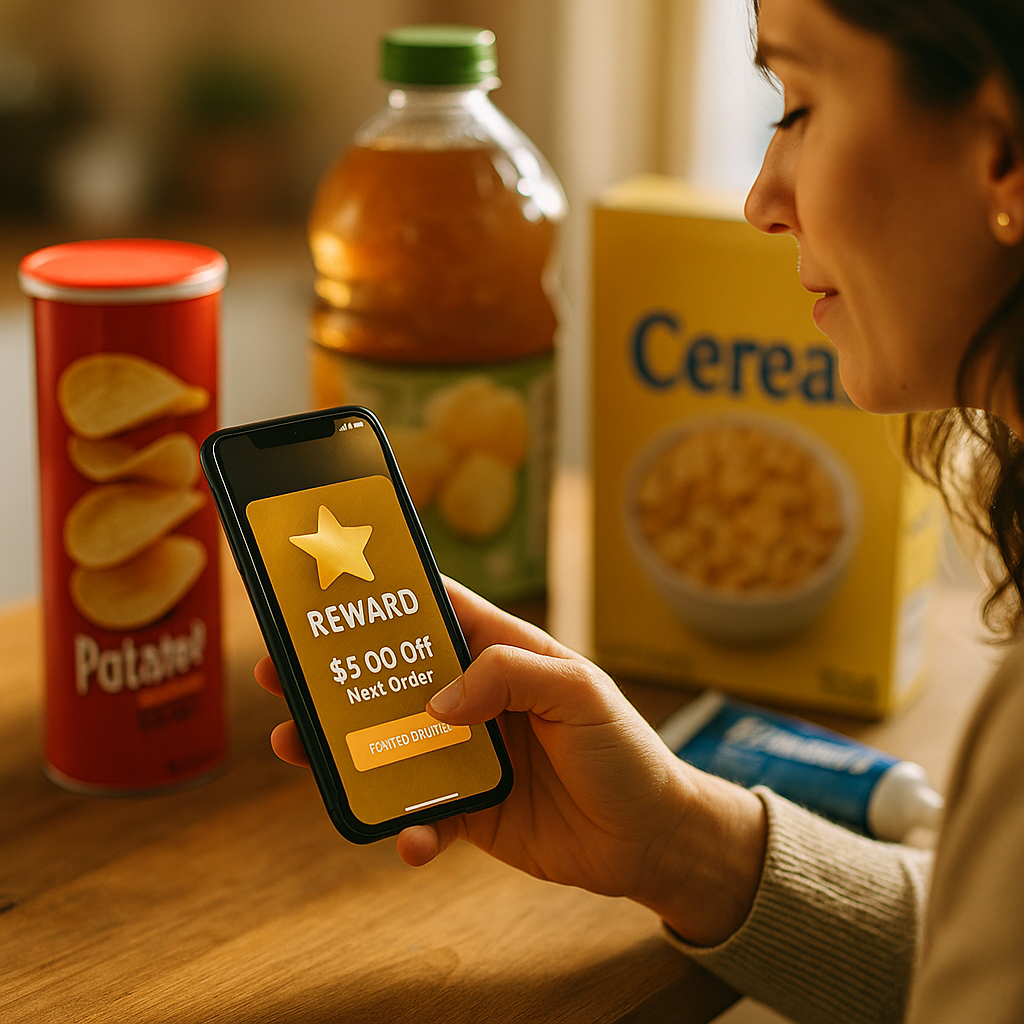
In 2025, subscription churn is a profit killer for consumer brands, especially when acquisition costs keep rising and attention spans keep shrinking. This case study shows how a fast-growing CPG brand used Inchstone Rewards to reduce churn without discounting itself into a corner. You’ll see the strategy, the mechanics, and the results—plus what to copy and what to avoid to keep customers coming back.
Customer churn reduction strategy: the challenge and goals
The brand—an omnichannel CPG company selling functional beverages and pantry staples—had built a healthy subscription base through paid social, retail trial, and influencer sampling. Growth looked strong on the surface, but retention told a different story.
Problem: churn spiked after the second order. Customers liked the product, yet many didn’t form a habit. The team also noticed that coupon-driven acquisition delivered volume but produced “deal-only” subscribers who canceled quickly when incentives stopped.
Baseline symptoms (last 90 days before the change):
- High cancellation rate between orders two and three
- Low engagement with the subscription portal (skips and swaps were underused)
- Support tickets dominated by “pause/cancel” requests and delivery timing issues
- Minimal differentiation between one-time and subscription customers beyond a small discount
Goals:
- Reduce churn without increasing blanket discounts
- Increase repeat purchase behavior and subscription self-service actions (swap, delay, add-on)
- Improve customer experience by rewarding helpful behaviors (not just spending)
- Create a retention system that could scale across DTC and retail
Before choosing any platform, the team aligned on a principle: retention should be earned through better value and better experiences, not only price cuts. That set the stage for a rewards-led approach.
CPG loyalty program: why Inchstone Rewards fit the use case
The brand evaluated several loyalty options. They needed something that could support subscriptions, encourage repeat routines, and create measurable lift—without forcing the business into perpetual promotions.
Why Inchstone Rewards was selected:
- Behavior-based earning: the program could reward actions that correlate with long-term retention (account creation, subscription enrollment, swap instead of cancel, add-ons, reviews, referrals).
- Tiering and milestones: customers could unlock benefits for consistency, not just spend—important for everyday CPG where basket sizes are modest.
- Personalized offers: targeted rewards could be triggered by churn risk signals (e.g., first skipped shipment, low reorder cadence) rather than sent to everyone.
- Operational control: the team could cap reward liability, set expiration windows, and avoid runaway “points inflation.”
Risk the team wanted to avoid: a points program that simply replicates discounting, trains customers to wait for deals, and erodes margin. Inchstone’s flexibility made it easier to design benefits that felt premium—early access, limited drops, bundle upgrades—alongside selective monetary rewards.
From an EEAT perspective, the brand’s retention lead and finance partner co-authored the program rules and guardrails, ensuring rewards were both customer-friendly and economically sound.
Subscription retention tactics: program design that attacked churn at its source
Rather than “launch points and hope,” the team mapped churn drivers to specific interventions. They focused on the first 60 days of the subscription lifecycle because that window contained the highest cancellation risk and the greatest opportunity to build habit.
1) Replace blanket discounts with a “consistency ladder”
- Customers earned points for each successful subscription renewal, with a larger milestone reward at month two and month three.
- Rewards emphasized getting to the next delivery rather than signing up once.
- Benefits were structured to feel meaningful without heavy margin loss: bonus product samples, free shipping credits, and “double points” on add-ons.
2) Reward actions that prevent cancellations
The data showed many cancellations were actually “timing problems.” Customers didn’t want to quit; they wanted to adjust. The program rewarded self-serve behaviors that solved timing friction:
- Points for using “delay shipment” instead of canceling
- Points for swapping flavors/SKUs (helping customers find a better fit)
- A small “rescue” reward for converting a cancel attempt into a pause
This approach answered a common follow-up question: Won’t rewarding pauses encourage people to pause more? The team prevented that by limiting the pause reward to once per quarter and tying it to an educational message about optimal cadence.
3) Build habit through content and product education
Retention wasn’t only about incentives; it was about outcomes. Inchstone rewards were paired with usage education to help customers experience the product’s benefits sooner:
- Points for completing a short “how to use” quiz (which also captured preferences)
- Points for leaving a review after the second order (timed to when customers had enough experience)
- Early access to new flavors for customers who hit the two-renewal milestone
4) Protect margin with controlled redemption
- Rewards were skewed toward value-add (samples, shipping credits, access) versus direct percentage-off discounts.
- Discount rewards, when used, had minimum order thresholds and excluded certain best-selling bundles.
- Points expired to reduce long-tail liability and encourage timely engagement.
By design, the program created a clear exchange: customers received better experiences and perks when they behaved like loyal subscribers—without the brand paying for loyalty that didn’t exist.
Rewards personalization: segmentation, triggers, and lifecycle messaging
The brand’s biggest retention leap came from making rewards feel relevant. Instead of running a single campaign, they built segments aligned to churn risk and customer intent, then used Inchstone triggers to deliver the right message at the right moment.
Key segments:
- New subscribers (0–45 days): high education needs, high churn risk
- At-risk subscribers: first skip, long gap between logins, low consumption signals (measured by delayed shipments)
- Flavor explorers: high swap behavior; rewarded for trying variety packs
- High-LTV loyalists: consistent renewals; rewarded with access and surprise-and-delight gifts
Trigger-based campaigns that mattered:
- Post-delivery check-in: a message that combined a quick usage tip with “earn points for completing your routine checklist.”
- Skip intercept: when a customer attempted to skip, the portal offered alternatives: swap, delay, or reduce frequency—each with a small points incentive.
- Second-order milestone: a “you’re on track” message that unlocked a premium reward (free sample pack) rather than a discount.
- Win-back window: if a customer canceled, they received a time-bound offer focused on fit (e.g., a starter bundle swap) plus points for reactivating.
How the team avoided spam: frequency caps were strict, and each message had a single job—education, self-service, or milestone reinforcement. That kept engagement high and protected trust, which is central to EEAT and long-term retention.
Churn analytics for CPG: measurement framework and results
To ensure credibility and decision-quality reporting, the brand set up a measurement framework before launch. The retention lead partnered with analytics and finance to define metrics, attribution logic, and acceptable trade-offs.
What they measured:
- Subscription churn rate: overall and cohort-based (especially first-to-third order)
- Save rate: percentage of cancel attempts converted to pause, delay, or swap
- Repeat purchase rate: across DTC orders and retail-linked accounts
- Redemption rate and reward cost: to manage margin impact
- Customer support volume: cancellation-related tickets and “how do I change my order?” tickets
Testing approach:
- A/B test on the cancellation flow (standard cancel vs. Inchstone-powered save options with rewards)
- Cohort comparison for new subscribers pre- and post-launch
- Holdout group for selected lifecycle messages to isolate incremental lift
Outcomes after the initial rollout:
- Churn decreased materially in the second-to-third order window, driven by higher swap and delay adoption.
- Save rate increased because customers were given better options than “cancel or continue,” and the points provided a rational reason to choose flexibility.
- Support tickets dropped for subscription changes as customers used self-serve tools more often.
- Margins held steady because rewards emphasized value-add and thresholds, not sitewide discounts.
In practical terms, the brand didn’t “buy” retention. It engineered it by aligning incentives with behaviors that predict long-term value. The Inchstone dashboard made it easy to see which rewards were driving renewal versus which were simply being redeemed.
Reader follow-up: What if you don’t have sophisticated data? This program did not require a data science team. The highest-impact signals were simple: renewal count, skips, cancel attempts, swaps, and time since last engagement. Most subscription stacks already track these, and Inchstone can use them as triggers.
Implementation roadmap: what the brand did in 30, 60, and 90 days
Speed mattered. The brand needed churn relief without a six-month rebuild. They treated Inchstone as a retention operating system and rolled it out in phases.
First 30 days: foundation
- Defined reward economics (cost per point, redemption limits, expirations)
- Built the core earn actions: subscribe, renew, review, refer, swap, delay
- Updated the subscription portal to make rewards visible at the moment of decision
Days 31–60: lifecycle campaigns
- Launched onboarding milestones and second-order “habit builder” rewards
- Added cancel-intercept flow with alternatives and capped incentives
- Trained support to use rewards as a service recovery tool (e.g., shipping issue goodwill points)
Days 61–90: optimization and scale
- Introduced tiers focused on consistency (renewal streaks) rather than spend
- Created segmented offers based on product preferences gathered via quizzes and swaps
- Expanded into retail by encouraging account linking and rewarding receipt-based proof of purchase where applicable
What to copy if you’re a CPG operator:
- Start with churn moments (skip/cancel) and fix the decision environment
- Reward the behaviors that reduce operational friction (self-serve changes)
- Use milestones to build identity: “I’m the kind of person who sticks with this”
What to avoid: launching a points program with only “spend more, get more.” That approach can lift revenue temporarily but often fails to change the customer’s routine—where subscription retention is won or lost.
FAQs about Inchstone Rewards and reducing churn for CPG brands
-
How does Inchstone Rewards help slash churn without heavy discounting?
It lets brands reward retention-driving behaviors (renewals, swaps, delays, reviews, referrals) and offer value-add benefits (samples, access, shipping credits). This reduces reliance on percentage-off promotions that can erode margin and attract short-term customers.
-
Which churn moment should a CPG subscription brand focus on first?
Start with the highest-volume churn point—often the period between the second and third order—and the cancel/skip flow. Improving that single decision path with better options and a small, capped incentive can produce outsized impact.
-
What rewards work best for everyday CPG where order values are smaller?
Free shipping credits, bonus samples, early access to new flavors, bundle upgrades, and milestone gifts typically outperform large discounts. They feel premium, protect margin, and reinforce product discovery—key for habit formation.
-
How do you prevent customers from gaming pause or delay rewards?
Use guardrails: limit the reward to once per quarter, require a minimum time since last pause reward, and pair it with cadence guidance. Also track repeat pausers and route them to fit-improvement options (swap, lower frequency) rather than repeated incentives.
-
Do you need advanced analytics to run a rewards-driven retention program?
No. You can achieve strong results with basic signals: renewal count, skip attempts, cancel attempts, swaps, and time since last engagement. As the program matures, add segmentation based on product preferences and support history.
-
How long does it take to see churn improvements after launching Inchstone Rewards?
Brands often see early indicators quickly—higher portal engagement, more swaps/delays, and improved save rates—followed by clearer churn reduction as cohorts reach the second and third renewal milestones.
Churn dropped because the brand treated loyalty as a system, not a campaign. Inchstone Rewards helped them reward consistency, make subscription changes easier than canceling, and personalize value without leaning on constant discounts. The takeaway is simple: map incentives to retention behaviors, cap costs with clear guardrails, and optimize the churn moments that matter most to protect revenue.