


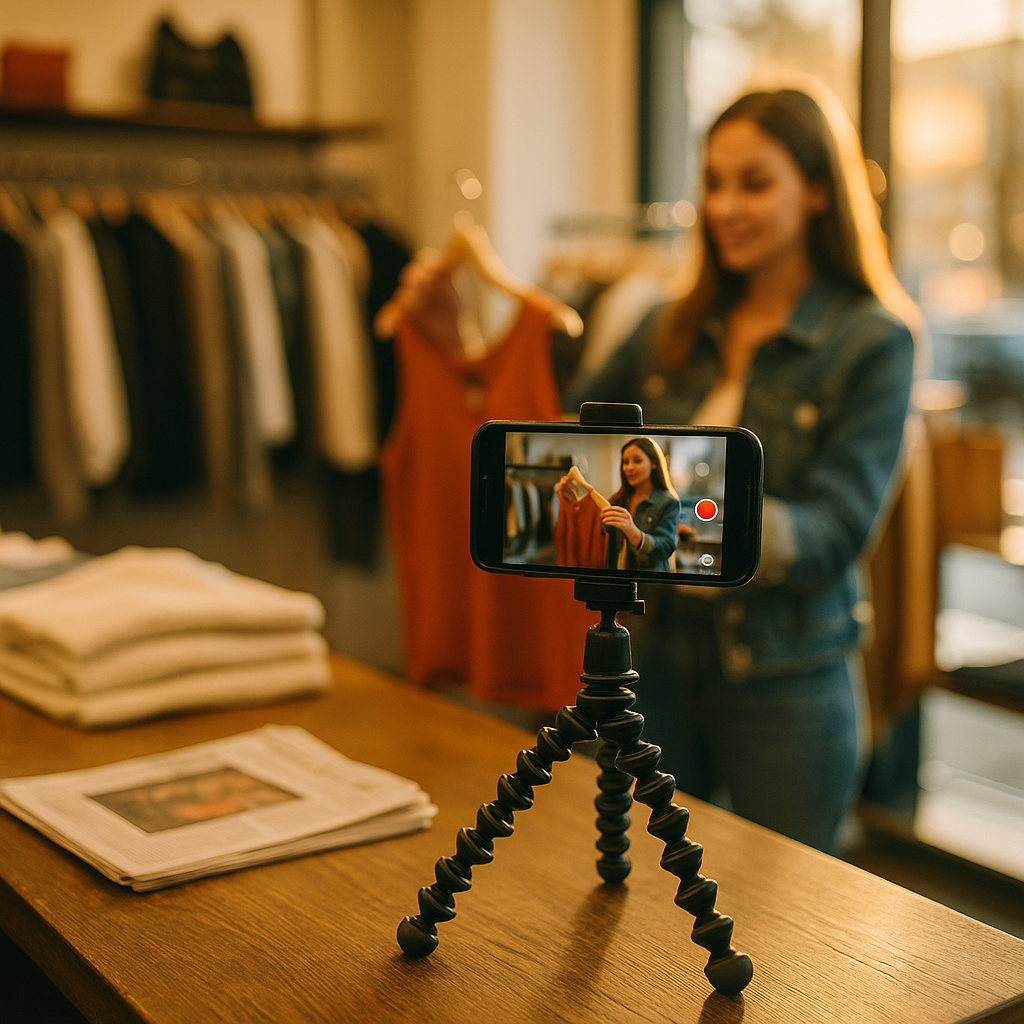
In 2025, retailers face a clear reality: attention has shifted from paper to platforms. This case study shows how one mid-market home and lifestyle brand made the leap, using transition from print to social video to protect revenue, modernize creative, and measure outcomes with precision. The results weren’t accidental—they came from disciplined testing, clear accountability, and customer-first storytelling. Want the playbook?
Print marketing decline: Why the retailer made the shift
The retailer in this case study—an established regional chain with a strong catalog heritage—relied on seasonal print mailers and in-store circulars for decades. The model worked when households planned shopping around delivery cycles and when printing and postage costs remained predictable. By 2025, both assumptions broke.
Three pressures forced a decision:
- Rising distribution costs: Print became harder to justify as paper and postage expenses increased, shrinking the margin the campaigns could generate.
- Attribution limits: The team could estimate lift using coupon codes and in-store surveys, but couldn’t reliably connect creative choices to sales across channels.
- Audience behavior: Shoppers increasingly discovered products through short-form video and creator recommendations, then bought online or reserved items for pickup.
The leadership team did not treat print as “bad.” They treated it as less measurable and less scalable for how customers actually shopped. Their goal was to protect brand equity built through print—clarity, warmth, product education—while moving that value into a faster, trackable channel.
They set a non-negotiable constraint: the new approach had to deliver the same two things print delivered well—consistent product storytelling and predictable promotional cadence—without sacrificing profitability.
Social video strategy: Objectives, audience, and platform choices
The retailer built a social video strategy around business outcomes, not trends. The plan started with three measurable objectives:
- Revenue efficiency: Maintain or improve return on ad spend compared with the prior print-led baseline.
- New customer growth: Increase first-time buyers without discounting deeper than print promotions.
- Faster learning cycles: Reduce the time needed to validate a creative idea from weeks to days.
Next, they defined the audience in practical terms. Instead of broad demographics, they used purchase signals and intent:
- “Refreshers”: Customers making small home updates, likely to respond to how-to styling videos.
- “Event buyers”: Shoppers preparing for hosting and gifting, responsive to bundles and urgency.
- “Value optimizers”: Deal-aware customers who need proof of quality and price justification.
Platform selection followed the audience and content style. The brand prioritized TikTok and Instagram Reels for discovery, plus YouTube Shorts for searchable, evergreen demonstrations. They treated each platform as a separate storefront with its own “shelf rules,” rather than copying the same edit everywhere.
To prevent wasted spend, they mapped every video to a stage of the customer journey:
- Awareness: Lifestyle hooks and quick transformations.
- Consideration: Side-by-side comparisons, “what’s in the box,” and durability tests.
- Conversion: Offer-led videos, store pickup reminders, and limited-time bundles.
- Retention: Care tips, seasonal refresh series, and customer feature clips.
This structure answered a common follow-up question from executives: “How does a fun video turn into sales?” The answer was built into the system—each creative format had a job and a metric.
Video content production: From circulars to creator-led storytelling
The retailer’s biggest operational change was not buying ads—it was changing how creative got made. Print production had been linear: plan, design, approve, print, distribute. Social video required an always-on content engine with frequent iteration.
They built a hybrid production model with clear roles:
- In-house brand team: Owned messaging, product priorities, and guardrails (claims, pricing, tone).
- Creator partners: Produced authentic demos, unboxings, and home styling content in their own voice.
- Performance editors: Recut raw footage into multiple hooks, lengths, and captions for rapid testing.
To protect brand trust (a core EEAT requirement), the retailer implemented strict standards:
- Evidence-based claims: Any performance claim (e.g., “scratch-resistant”) required product documentation or testing footage.
- Transparent sponsorship labeling: All paid creator posts were disclosed and aligned with platform policies.
- Pricing accuracy controls: A “price and promo” checklist ensured offers in videos matched live promotions and inventory constraints.
The team also translated what print did best—structured product education—into video-friendly formats:
- “3 reasons this works” product explainers (benefits first, specs second).
- Before/after room refresh clips with a clear, repeatable template.
- Bundle builder videos that showed complementary items in one shot, reducing decision fatigue.
Importantly, they avoided overproducing. They used clean lighting, real homes, and hands-on demonstrations. The goal was credibility and clarity, not glossy perfection. That choice increased volume and made the content feel closer to how customers actually lived.
Paid social and measurement: Tracking ROI beyond vanity metrics
Shifting from print to social video created a measurement opportunity—and a risk. Social platforms can generate views quickly, but views alone do not pay the bills. The retailer designed a measurement framework that connected creative to profit.
They used a layered approach:
- Platform reporting: Video retention, hook rate (3-second view), and click-through rate to diagnose creative performance.
- On-site analytics: Landing page engagement, add-to-cart rate, and checkout conversion to validate intent.
- Incrementality testing: Geo holdouts and lift tests to estimate sales that would not have happened without the campaigns.
They also adopted a simple but powerful rule: every video had one primary KPI. For awareness content, it was qualified reach and retention. For conversion content, it was cost per purchase and contribution margin. This prevented teams from celebrating the wrong outcome.
To answer the next likely question—“What about customers who see a video and buy later in-store?”—the retailer improved offline tracking through:
- Store locator clicks and directions from video-driven landing pages.
- Digital coupons tied to social campaigns (redeemable in-store and online).
- Customer surveys at checkout that included social platforms as discovery options.
They didn’t pretend attribution would be perfect. Instead, they combined multiple signals and prioritized decision-grade clarity: which hooks, creators, and product categories reliably increased profitable sales.
Retail case study results: Sales lift, cost efficiency, and brand impact
The retailer treated the transition as a phased rollout, not a sudden cutoff. They reduced print frequency and reinvested savings into content production and paid distribution. Within two quarters, they reached a stable operating rhythm: weekly content themes, daily creative testing, and monthly performance reviews.
Key outcomes the retailer reported internally after the transition:
- Faster campaign cycles: Promotions that used to take weeks to deploy through print could be launched, tested, and optimized in days.
- Higher creative productivity: One day of creator shooting produced dozens of usable variations, compared with a single print layout per product set.
- More resilient demand generation: When a category underperformed, the team could adjust messaging and targeting quickly without waiting for the next print drop.
The strongest lift came from videos that combined three elements:
- A clear problem (e.g., clutter, small spaces, guest prep)
- A proof moment (demo, test, comparison, or real customer result)
- A direct next step (shop link, bundle, pickup option, or limited offer)
Brand impact mattered as much as direct response. Social video increased the volume of real customer comments and questions, giving the merchandisers and store teams immediate feedback. The retailer used that feedback loop to refine product pages, adjust assortments, and train staff on the top questions customers asked online.
The biggest internal win was alignment: merchandising, brand, and performance teams worked from the same data and saw the same creative. Print had often split the organization—brand owned aesthetics, sales owned numbers. Social video forced shared accountability and improved decision speed.
Digital marketing transformation: Lessons learned and a repeatable framework
This transition worked because the retailer built a repeatable system. If you want to apply it, focus on the following framework rather than copying specific tactics.
1) Start with what print did well—then rebuild it in video.
- Print is strong at structured storytelling and product education. Convert those strengths into series-based video templates.
2) Build a testing pipeline, not a one-off campaign.
- Test hooks, formats, creators, and CTAs in small budgets weekly. Scale only what proves profitable.
3) Protect trust with documented claims and consistent governance.
- Use a simple review checklist for pricing, inventory notes, and product claims to avoid eroding credibility.
4) Treat measurement as a product.
- Combine platform metrics, on-site behavior, and incrementality tests. Make reporting useful for decisions, not just visibility.
5) Connect content to commerce.
- Landing pages should match the video’s promise, load fast, and make the purchase path obvious (including pickup and returns).
A final operational lesson: the retailer stopped debating “brand vs performance.” Social video can do both, but only if you design the content intentionally and measure the outcome honestly.
FAQs: Transitioning from print to social video
-
How do you know when it’s time to reduce print marketing?
Reduce print when distribution costs rise faster than revenue, when attribution limits block smart optimization, and when your target customers increasingly discover products on social platforms. Start by trimming frequency rather than eliminating print overnight, then reallocate budget into controlled social video tests.
-
What types of social videos replace the role of a retail circular?
Use short “new arrivals” roundups, bundle-focused clips, and weekly deal videos with clear terms. Add demo-driven product explainers to replace the educational role of catalogs. Keep templates consistent so customers recognize your cadence, similar to how they recognized a weekly circular.
-
Do we need professional production to compete in short-form video?
No. You need clear lighting, clean audio, and a strong first two seconds. Authentic demos often outperform glossy edits because they feel credible. Invest more in volume and testing than in expensive sets, while maintaining brand and legal review for claims and pricing.
-
How should retailers measure ROI from social video?
Track performance in layers: platform engagement for creative diagnostics, on-site conversion metrics for intent, and incrementality tests to estimate true sales lift. For stores, add trackable offers and measure store-locator actions. Judge success by contribution margin, not views.
-
What’s the biggest mistake when shifting budget from print to social?
The biggest mistake is copying print thinking into video—listing features without showing proof, or running the same creative too long without testing. Another common error is optimizing for cheap clicks instead of profitable purchases, which can inflate traffic but reduce overall efficiency.
The retailer’s shift succeeded because it treated social video as a disciplined operating system, not a trend. By converting print’s strengths into repeatable video formats, building a creator-enabled production engine, and measuring incrementality, the team protected trust while improving speed and efficiency. The takeaway is simple: make video accountable to profit, and make measurement accountable to decisions—then scale what customers prove they value.