


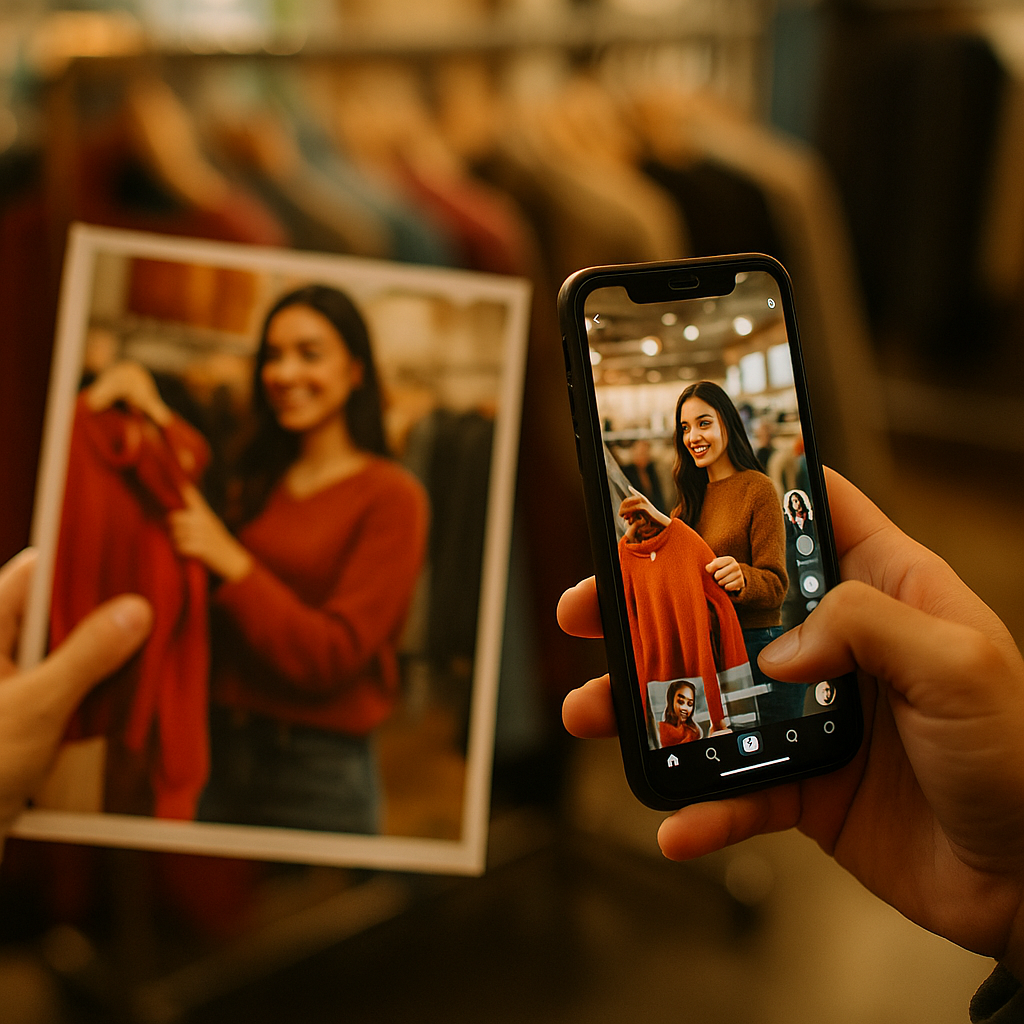
In 2025, brands that once relied on circulars and glossy mailers face a new reality: customers discover products in feeds, not flyers. This case study tracks one mid-sized retailer’s move from print to social video, including the decisions, budgets, workflows, and metrics that made it work. You’ll see what changed, what stayed, and why it scaled—ready to apply?
Print advertising decline: Why the retailer pivoted
The retailer in this case study—“Harbor & Home,” a 70-store home-and-lifestyle chain—built its growth on direct mail, newspaper inserts, and seasonal catalogs. Those channels still delivered reach, but leadership noticed three problems that compounded quarter after quarter:
- Rising costs per response: Printing and postage increased while response rates became less predictable, especially among younger households.
- Measurement gaps: The team could attribute redemptions from coupons, but it struggled to understand how print influenced consideration, repeat visits, and product discovery.
- Speed limits: Print locked promotions weeks in advance. When supply chain availability shifted or a competitor undercut pricing mid-campaign, Harbor & Home had limited ability to react.
At the same time, store associates reported a consistent in-store behavior shift: shoppers arrived with screenshots and short videos saved from social platforms. The retailer’s merchandising team saw more “I saw this online” conversations than “I saw this in the mailer.” This qualitative insight mattered because it came directly from the front line—an EEAT-aligned signal that real customer behavior had changed.
Leadership decided that the core goal wasn’t to “stop print” overnight. It was to replace the discovery role of print with a more measurable, faster channel—then keep only the print placements that still delivered incremental value.
Social video marketing strategy: Goals, audience, and channel selection
Harbor & Home treated social video as a performance and brand channel, not a vanity project. The marketing director set three clear objectives:
- Drive measurable store and site traffic tied to featured products and weekly offers.
- Increase new-customer reach in the 25–44 age range without losing the existing core audience.
- Build a repeatable content system that store teams could support without slowing operations.
Next, the team clarified audiences by intent rather than demographics alone:
- Project planners: People researching home refreshes, organizing, seasonal décor, and gift ideas.
- Deal checkers: Shoppers comparing prices and waiting for promotions.
- Inspiration browsers: Users who save ideas and shop later, often via wish lists.
Channel selection followed the behavior of those groups:
- Short-form vertical video on Instagram Reels, TikTok, and YouTube Shorts for discovery and reach.
- Longer product explainers on YouTube for higher-consideration categories (storage systems, small appliances, furniture).
- Paid social retargeting to convert viewers into site visits, store visits, and coupon saves.
To avoid chasing trends, Harbor & Home defined a simple content promise: “Show it in a real home, price it clearly, and teach one useful tip per video.” That promise anchored every creative brief and helped keep messaging consistent across creators, stores, and seasons.
Video content production workflow: From monthly catalogs to weekly shoots
The biggest operational change was cadence. Print required monthly or seasonal planning; social video required weekly execution. The retailer created a lean production model that reduced bottlenecks:
- One in-house producer-editor to maintain quality, templates, and brand standards.
- Two on-camera creators (one corporate, one store-based) trained on product storytelling and compliance.
- A rotating “store spotlight” program that let local teams contribute without needing filming expertise.
They standardized formats so production stayed fast:
- “3 Ways to Use It” (15–25 seconds): quick use cases for a single item.
- “Cart Test” (20–35 seconds): creator picks 5 items under a price cap and explains why.
- “Before/After” (20–30 seconds): organizing and décor transformations using in-stock products.
- “Associate Picks” (10–20 seconds): staff recommendation with one practical tip.
To keep product availability honest—an important trust factor—the merchandising team provided a weekly “in-stock and promo” list with:
- Top 30 SKUs with strong inventory depth
- 5–10 “hero deals” with clear pricing guidance
- Substitutes for any item at risk of selling out
The team also created a lightweight compliance checklist to protect customers and the brand:
- Show total price or a clear “starting at” range when applicable
- Disclose sponsored creator partnerships in paid collaborations
- Avoid exaggerated claims; demonstrate real outcomes
- Use captions for accessibility and silent viewing
This workflow answered a question many retailers have: Do we need a studio? Harbor & Home proved they didn’t. They filmed most content in-store aisles, a model room vignette, and occasional staff homes—with consistent lighting, templates, and tight editing to maintain professionalism.
Retail marketing KPIs: Measurement framework and attribution
To replace print responsibly, Harbor & Home needed measurement that executives trusted. The team implemented a three-layer KPI system aligned to the funnel:
1) Discovery and engagement metrics
- 3-second views and video completion rate
- Saves and shares (treated as “intent signals”)
- Follower growth from non-followers (incremental reach)
2) Consideration and conversion metrics
- Click-through rate to product pages or curated landing pages
- Add-to-cart rate on video-driven sessions
- Coupon saves and digital offer activations
3) Business outcomes
- Store visit lift in geo-tested markets using paid social exposure
- Sales of featured SKUs compared to baseline weeks
- New customer rate (first-time purchasers) from tracked campaigns
Because print historically relied on broad reach, the retailer used geo holdout tests to prove incrementality. They selected matched store clusters and ran paid social video heavily in test regions while keeping control regions at minimal spend. They also reduced print distribution in test clusters first—carefully—to isolate impact.
To close the loop between video and in-store purchases, Harbor & Home used:
- Unique offer codes displayed in-video and at checkout
- QR codes on shelf tags for “featured on social” items
- POS tagging for promoted SKUs to track lift and margin
This measurement approach built executive confidence because it balanced platform metrics with outcomes finance teams care about: sales, margin, and incremental traffic.
Customer engagement growth: Creative testing, community, and trust signals
As the first campaigns ran, Harbor & Home discovered that social video rewarded clarity and authenticity more than polish. The brand improved performance by treating every post as an experiment.
Creative testing system
- Tested 3 hooks per concept (problem-first, result-first, price-first)
- Rotated thumbnail text styles for readability
- Compared creator-led vs. hands-only demonstrations
- Adjusted pacing to keep the first 2 seconds visually decisive
They also answered likely customer objections directly in videos and comments:
- “Is it sturdy?” Show weight tests, close-ups, and assembly steps.
- “Will it fit?” Include dimensions on-screen and show it next to common objects.
- “Is it really in stock?” Add “available online/in most stores” language and offer substitutes.
Community management as a conversion lever
The retailer trained a small response team to reply within business hours using a consistent, helpful voice. They pinned top questions, updated links when items sold out, and posted “restock alerts.” This built credibility and reduced negative sentiment that often arises when viral products disappear.
EEAT trust signals
- Expertise: Associate tips and demos showed real product knowledge.
- Experience: Videos featured real homes and real use cases, not only staged sets.
- Authoritativeness: The brand cited internal testing (e.g., “assembled in 12 minutes”) instead of vague claims.
- Trustworthiness: Clear pricing, clear disclosures, clear return information.
By month three, Harbor & Home’s strongest videos were not the flashiest. They were the ones that saved shoppers time: fast comparisons, practical setups, and transparent pricing.
Omnichannel retail transformation: Results, budget shift, and what they’d do differently
Harbor & Home transitioned in phases rather than declaring a dramatic cutover:
- Phase 1: Add social video while maintaining print levels; establish benchmarks.
- Phase 2: Reduce print distribution in select regions; increase paid social video and measure lift.
- Phase 3: Keep print only for high-performing seasons and loyalty segments; make video the primary discovery engine.
By the end of the transition, the retailer shifted a meaningful portion of its promotional budget from broad print drops into a blended model of organic social video + paid amplification + retargeting. Leadership valued three outcomes:
- Faster merchandising response: Campaigns moved from weeks to days, helping the team align marketing with inventory reality.
- Improved accountability: Weekly reporting tied content to store traffic, coupon activations, and SKU lift.
- Stronger customer feedback loop: Comments and saves became real-time research for product selection and store displays.
What they would do differently
- Start with fewer formats: Early on, they tried too many series at once. Performance improved after standardizing on four repeatable formats.
- Build landing pages sooner: Linking viewers to curated pages (“featured in this video”) reduced friction and improved conversion.
- Plan for operational spikes: Viral content created surges; they later added store signage and associate scripts to handle demand.
The key lesson: the transition succeeded because Harbor & Home treated social video as an operating system—creative, merchandising, inventory, and store execution working together—rather than a marketing side project.
FAQs: Print to social video transition
-
How fast can a retailer replace print with social video?
Most retailers can begin shifting budget within 6–12 weeks, but full replacement depends on proving incremental sales lift. Start with regional tests, keep print in control markets, and scale only after you can link video exposure to store and site outcomes.
-
What types of products perform best in social video?
Products with a visible transformation or clear “problem/solution” angle perform well: organization, seasonal décor, small appliances, beauty, and trend-led items. Higher-consideration products can work too if you include dimensions, setup steps, and comparisons.
-
Do we need influencers, or can we use employees?
Employee-led content often performs strongly because it signals real experience and builds trust. Influencers can expand reach quickly, but you should provide a product brief, pricing guidance, disclosure rules, and inventory checks to avoid disappointing customers.
-
How do we track in-store sales from social video?
Use a mix of methods: unique offer codes shown in-video, QR codes on shelf tags, POS tagging for promoted SKUs, and geo holdout tests for paid campaigns. No single method is perfect, but combined they provide reliable direction and incrementality.
-
What budget should we allocate to paid amplification?
Allocate enough to test consistently for at least four weeks per market. Many retailers start by boosting proven organic videos, then add retargeting to convert engaged viewers. The right amount depends on store count, average order value, and how quickly you need results.
-
What are the biggest risks in moving away from print?
The main risks are weak attribution, stockouts from viral spikes, and inconsistent creative quality. Reduce risk by keeping some print during testing, building an inventory-informed content calendar, and standardizing video templates and approval steps.
Harbor & Home’s shift from print to social video worked because it replaced print’s best job—product discovery—with faster, measurable storytelling tied to inventory and offers. The retailer proved lift through controlled tests, standardized production, and built trust with clear pricing and real demonstrations. The takeaway: treat video as a system, not a campaign, and you can scale without losing control.