


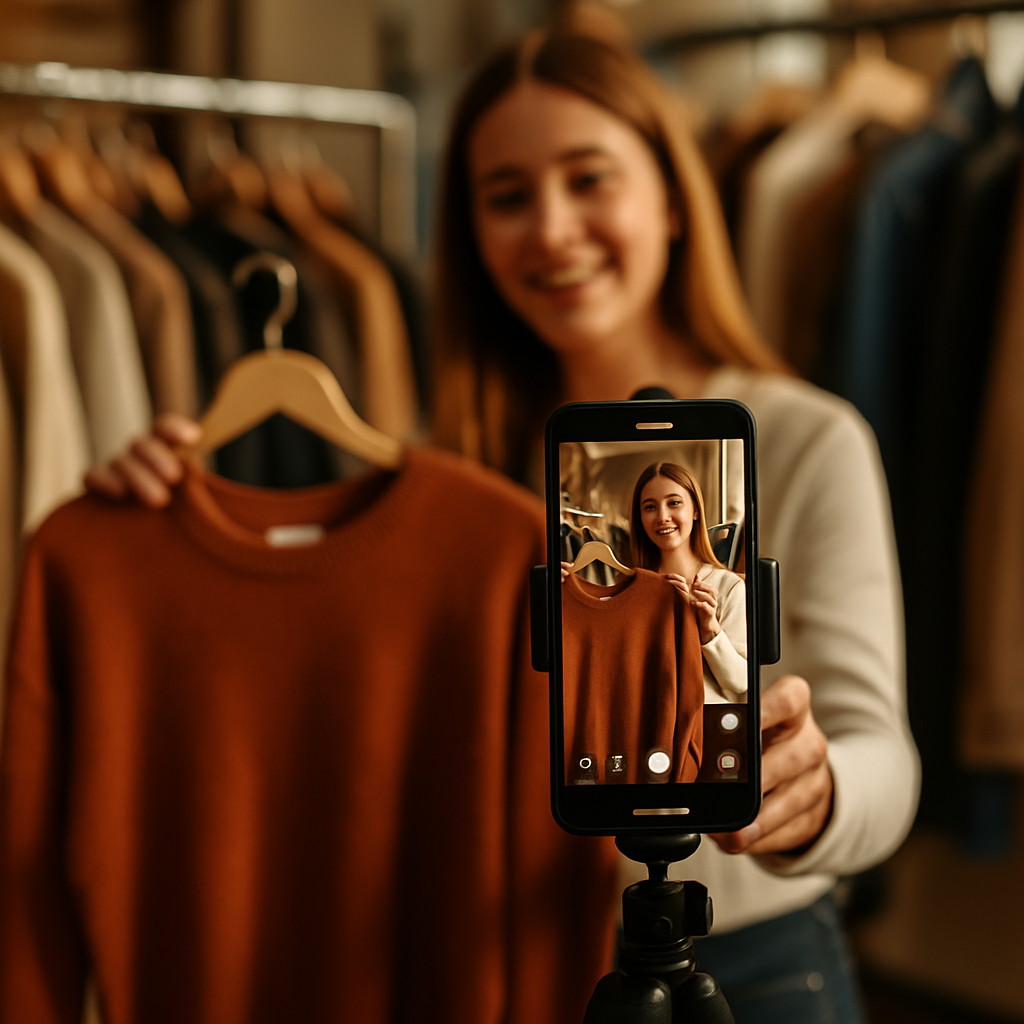
Many retail brands still rely on circulars, catalogs, and in-store print to drive sales, yet audience behavior has shifted to short-form platforms. This case study on print to social video shows how one mid-sized retailer replaced declining print performance with measurable video results. The transition was not instant, but the payoff reshaped acquisition, loyalty, and revenue in surprising ways.
Retail marketing strategy: Why print stopped delivering efficient growth
By 2026, the retailer in this case study, a regional home and lifestyle chain with more than 80 stores and a growing ecommerce business, faced a familiar problem. Print had been central to its marketing mix for years. Seasonal lookbooks, newspaper inserts, direct mail flyers, and point-of-sale materials helped maintain brand visibility. However, several signals showed the model was losing efficiency.
Distribution costs kept rising. Attribution remained weak. Creative production cycles were slow, often locking the team into messaging weeks before promotions launched. Most importantly, customer attention had moved elsewhere. The brand’s target audience, especially younger households and first-time home buyers, increasingly discovered products through social feeds rather than mailboxes.
The retailer’s leadership team did not abandon print because it had no value. They made the shift because the data showed an imbalance between cost and impact. Internal reporting found that print-driven campaigns were producing broad awareness but weak engagement and limited digital conversion lift. Store teams also noted that customers frequently arrived already familiar with trends they had seen in creator videos, not in catalog photography.
This insight changed the planning process. Instead of asking how to make print perform slightly better, the brand asked a more strategic question: what would happen if social video became the lead storytelling channel and print became a supporting tool?
That question framed the transition. The goal was not simply to post more videos. The goal was to build a measurable retail marketing strategy around the way people now browse, compare, and buy.
Social video marketing: The retailer’s pivot from static assets to platform-native content
The retailer began with a 90-day pilot focused on three platforms where its audience was already active: Instagram, TikTok, and YouTube Shorts. Rather than repurposing print layouts into animated slides, the team built a content system designed for social video marketing from the start.
They organized content into four repeatable formats:
- Product demo videos showing how items looked and functioned in real homes
- Styling and how-to clips that solved practical customer problems
- Behind-the-scenes videos featuring store staff, merchandisers, and buyers
- Promotion-led videos tied to launches, seasonal drops, and limited offers
This structure mattered because it linked audience intent to creative execution. Shoppers who needed inspiration saw styling content. People closer to purchase saw demos and offer-based videos. The retailer also moved away from polished studio perfection. It kept brand standards high, but deliberately adopted a more authentic visual approach. Handheld shots, employee appearances, customer comments, and creator partnerships made the brand feel more current and credible.
The team also adjusted production workflows. Print had required long approvals and large asset packages. Video required speed. A small internal content studio was created with a social strategist, a videographer-editor, a paid media manager, and a merchandising lead. They worked from a rolling monthly content calendar with weekly optimization.
One practical lesson emerged early: platform-native content outperformed adapted ad creative. Videos that opened with a product use case in the first two seconds consistently beat brand-intro openings. Clips with captions, clear hooks, and visible human presence held attention longer. Content that answered one question at a time delivered stronger completion rates than videos trying to showcase entire collections.
The retailer was not chasing trends without structure. It set creative rules, testing windows, and performance thresholds. This balance between experimentation and discipline made the shift sustainable.
Video content strategy: How the team used audience insights, testing, and creators
A strong video content strategy depends on more than filming products. The retailer built its program around customer questions and shopping friction points. This is where the transition became a true growth engine rather than a branding exercise.
First, the team pulled insights from customer service logs, ecommerce search terms, store associate feedback, and social comments. They found recurring questions such as:
- How does this item fit in a small space?
- Is it easy to assemble?
- What colors work together?
- How durable is the material?
- What are the best options under a certain budget?
Each question became a content prompt. Instead of generic product promotion, the brand produced specific answer-driven videos. This improved relevance and trust because the content reflected actual customer needs.
Second, the retailer adopted a formal testing model. Every week, the team reviewed hooks, video length, thumbnail text, call-to-action language, and creator formats. It tracked metrics by funnel stage. For awareness, it looked at thumb-stop rate, watch time, and reach efficiency. For consideration, it measured profile visits, saves, comments, and product page views. For conversion, it focused on click-through rate, add-to-cart rate, and attributed revenue.
Third, the retailer added carefully selected creator partnerships. It did not choose influencers only by follower count. It prioritized fit, credibility, and content style. Local creators, DIY enthusiasts, small-space decorators, and family-lifestyle voices proved especially effective. Their videos often outperformed branded content because they demonstrated products in lived-in environments, which reduced uncertainty for buyers.
To preserve brand trust, the retailer created clear briefing standards. Creators had to show real use, state honest opinions, and avoid exaggerated claims. This approach aligns with EEAT principles: experience, expertise, authoritativeness, and trust. The content showed products in realistic contexts, featured knowledgeable staff and creators, and linked claims to product details customers could verify on-site.
The team also learned that not every video should sell immediately. Some of the highest-value content simply built familiarity and confidence. Over time, that familiarity lowered the cost of conversion in paid campaigns and increased the efficiency of retargeting.
Omnichannel retail: Connecting social video to ecommerce and store performance
The biggest concern from leadership was predictable: could social video do more than generate views? The answer depended on integration. The retailer treated video as a core part of its omnichannel retail engine, not as a standalone social tactic.
Every piece of content linked to a next step. Product videos connected to shoppable pages. Styling clips linked to curated bundles. Local store videos drove map actions and in-store event signups. Paid social retargeting was built around video engagement, allowing the brand to follow up with more conversion-focused messages after initial exposure.
The ecommerce team also changed product page design. Pages began embedding short videos that matched social creative themes. This continuity reduced friction. A shopper who saw a product demonstrated on social landed on a page that reinforced the same value proposition with movement, context, and proof. Bounce rate improved on key categories because the landing experience matched the ad promise.
In stores, associates were given access to top-performing videos on tablets and internal displays. This served two purposes. First, it gave staff practical selling tools. Second, it ensured the brand story remained consistent across channels. Customers who had seen a chair styled online could watch the same setup ideas in-store before purchasing.
The loyalty team joined the effort as well. Instead of sending static promotional emails alone, it incorporated short clips into member communications and post-purchase flows. This extended the life of content and increased return on production spend.
What made the omnichannel retail model effective was clear measurement. The retailer set up unified reporting across paid social, organic social, ecommerce analytics, coupon code use, and location-level traffic indicators. While no attribution model is perfect, the company gained far better visibility than it had with print-heavy campaigns. Leadership could now see which content themes moved awareness, which ones influenced consideration, and which directly supported revenue.
Social media ROI: The measurable results of the transition
Within two quarters, the retailer had enough data to compare the new mix against its previous print-first model. The most important outcome was not that video replaced every traditional tactic. It was that social video delivered stronger social media ROI across both direct and assisted performance metrics.
The retailer reported several gains:
- Lower content-to-launch time, with campaign assets going live in days instead of weeks
- Higher engagement rates on seasonal campaigns compared with static social posts
- Improved product page conversion on items supported by demonstration videos
- Reduced paid acquisition costs when retargeting audiences who had watched video content
- Lift in store visits in markets where local video campaigns ran alongside promotional offers
One standout campaign centered on a small-space furniture collection. In print, this category had underperformed because static imagery failed to show flexibility and scale. On social video, the team used before-and-after room transformations, assembly clips, and creator walkthroughs. The content generated above-average completion rates and drove a clear increase in both online sales and store inquiries.
Another success came from employee-led videos. Store associates explained product features, compared options, and shared styling tips. These clips built trust because they felt informed rather than scripted. The retailer found that comments often included purchase-intent questions, giving the team fresh content ideas and stronger signals for retargeting.
Leadership also noticed softer but important effects. Brand perception improved. Customers described the company as more helpful, modern, and relevant. Internal teams collaborated more closely because merchandising, ecommerce, paid media, and store operations were now aligned around shared content goals.
There were challenges. Not every platform behaved the same way. Some videos that drove high reach produced limited conversion. Some polished campaigns underperformed simple employee walkthroughs. The lesson was clear: performance comes from consistency, testing, and audience understanding, not from assuming one production style will always win.
By the end of the transition phase, print still existed, but in a narrower role. It supported key store events, high-value loyalty segments, and select local promotions. Social video had become the primary discovery and engagement channel, with direct links to commerce outcomes.
Digital transformation in retail: Lessons other brands can apply in 2026
This case study offers practical guidance for any brand planning digital transformation in retail. The shift from print to social video works best when it is treated as an operational change, not just a creative experiment.
Here are the retailer’s most transferable lessons:
- Start with customer behavior, not channel preference. If discovery has moved to video, budget should follow attention.
- Design for the platform. Do not turn print layouts into moving ads and expect strong results.
- Answer real questions. The best retail video content removes uncertainty and supports buying decisions.
- Build a repeatable production system. Speed matters, but speed without standards leads to inconsistency.
- Measure full-funnel impact. Views alone do not prove value. Connect engagement to site behavior, store activity, and revenue.
- Use credible voices. Employees, specialists, and aligned creators often build more trust than polished brand scripts.
- Keep print only where it remains efficient. Transition does not need to be absolute to be successful.
Retailers often ask whether they need large budgets to make this work. This case suggests otherwise. The bigger requirement is organizational clarity. Teams need shared goals, clear reporting, and permission to test creative quickly. A smaller, steady stream of useful videos usually outperforms a few expensive campaigns with weak audience relevance.
Another common question is whether brand quality suffers with more authentic content. In practice, quality improves when content is useful, truthful, and context-rich. Customers do not need every frame to look like a catalog cover. They need confidence that the product solves their problem.
That is the core takeaway from this retailer’s shift. Social video succeeded because it combined experience-led storytelling with practical commerce integration. It met audiences where they were, answered what they needed to know, and created a faster feedback loop than print ever could.
FAQs about print to social video for retailers
What is the main advantage of moving from print to social video for retailers?
The main advantage is better alignment with current customer behavior. Social video allows retailers to show products in action, respond faster to trends, measure engagement more accurately, and connect discovery directly to ecommerce or store visits.
Does social video completely replace print in retail marketing?
No. In many cases, print still has value for local promotions, direct mail to high-intent segments, in-store signage, or special events. The most effective approach is to reduce print where it underperforms and expand video where it drives stronger returns.
What types of retail videos perform best?
Product demos, problem-solving tutorials, comparison videos, styling ideas, employee explainers, and creator-led use cases often perform well. The strongest videos usually answer a specific customer question instead of trying to showcase everything at once.
How can retailers measure social video success?
They should track both engagement and business impact. Key metrics include watch time, completion rate, click-through rate, product page visits, add-to-cart rate, store locator actions, coupon redemptions, and attributed revenue. Measuring only views gives an incomplete picture.
Do small or regional retailers need an internal studio?
Not necessarily. A lean internal team or trusted external partner can produce effective content if workflows are clear. What matters most is consistency, speed, platform knowledge, and access to product and customer insights.
How do EEAT principles apply to retail social video?
Retailers can demonstrate experience by showing real product use, expertise by featuring knowledgeable staff or specialists, authoritativeness through accurate product information, and trust by avoiding exaggerated claims and aligning video messaging with the onsite buying experience.
What is a realistic first step for brands still heavily invested in print?
Start with one category or campaign. Build a 60- to 90-day pilot using a few repeatable video formats, define success metrics in advance, and compare results against the current print-led approach. This creates evidence before a wider budget shift.
The retailer in this case study did not win by chasing novelty. It won by matching content to how customers actually shop in 2026. Replacing a print-first mindset with a disciplined social video system improved speed, trust, and measurable performance. For retailers weighing the same move, the clearest takeaway is simple: start small, test rigorously, and build around customer questions.