


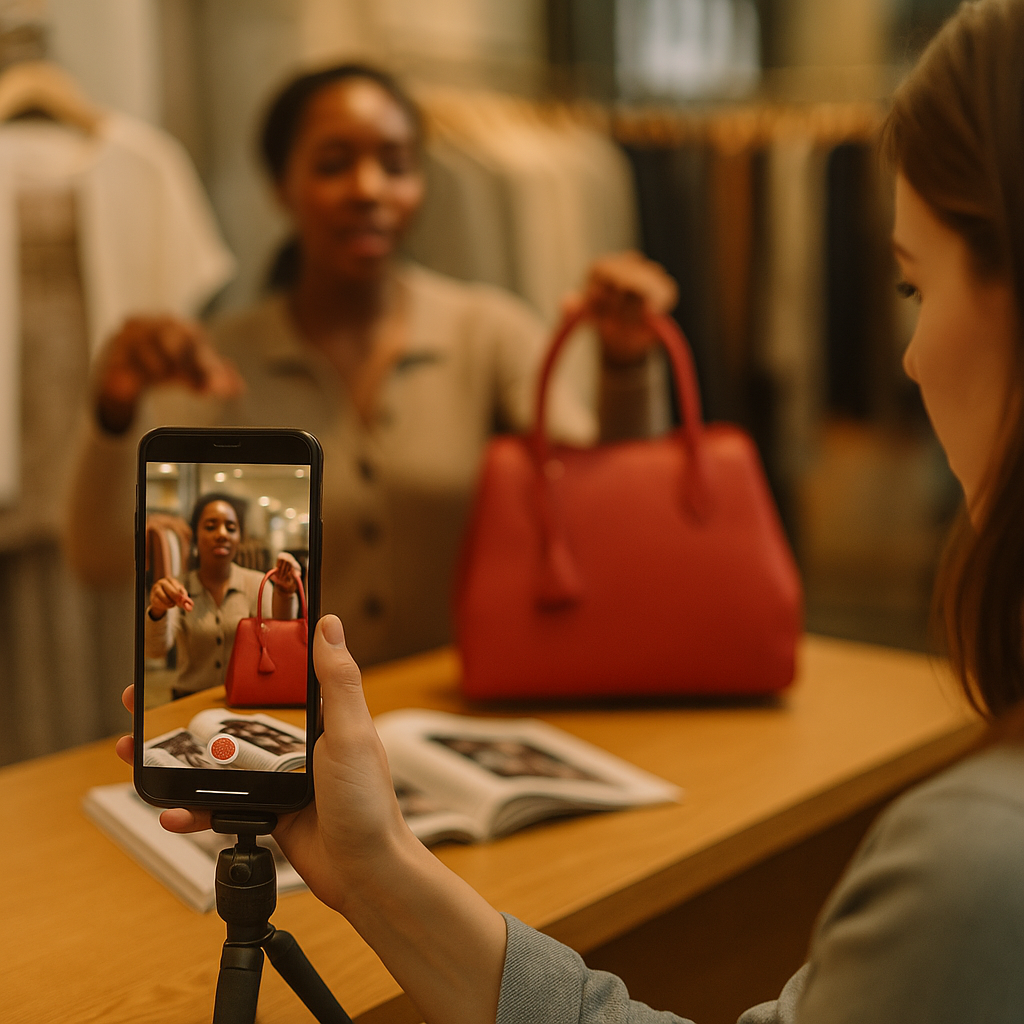
In 2025, many retailers are rethinking legacy channels as audiences shift from paper to platforms. This case study examines a retailer’s successful transition from print to social video, showing how clear strategy, disciplined testing, and measurable creative improved reach and revenue without sacrificing brand trust. You’ll see the decisions, timelines, budgets, and metrics that made the change stick—and why it worked.
Print advertising decline: Why the retailer changed course
Company profile (anonymized): A mid-sized specialty retailer with 85 stores across three regions and a growing eCommerce channel. For a decade, the brand relied on quarterly glossy catalogs, co-op newspaper inserts, and direct-mail postcards to drive store traffic and seasonal promotions.
By early 2025, leadership noticed a consistent pattern: print continued to generate some high-intent visits, but it became harder to scale profitably. Costs were rising (paper, postage, production), lead times limited agility, and attribution was increasingly fuzzy as shoppers researched online before visiting stores.
The business problem wasn’t that print “stopped working.” It was that print alone could no longer support three key goals:
- Speed: Launching a new promotion took 6–10 weeks end-to-end, which made competitive response slow.
- Precision: Targeting was broad. Even with list segmentation, creative couldn’t personalize at the pace customers expected.
- Proof: Store-level lift was difficult to isolate from seasonality and local factors, weakening confidence in budget decisions.
At the same time, internal customer research (post-purchase surveys and loyalty-member interviews) showed a shift: shoppers were discovering products through short-form video demonstrations, “how it fits” try-ons, and creator-led reviews—especially for new arrivals. The marketing team proposed a reallocation: reduce print dependence and build a social video engine that could deliver weekly creative, learn quickly, and support both store and online sales.
Social video strategy: Setting goals, audience, and channel mix
The retailer treated the move as a business transformation, not a creative experiment. They defined a single north-star outcome: profitable demand generation across store and online. Then they set supporting objectives and measurement rules that prevented “vanity metrics” from taking over.
Primary goals:
- Increase new-customer revenue share while protecting margin.
- Raise store visit intent in key trade areas (without relying on coupons alone).
- Reduce creative cycle time from months to days for promotional content.
Audience approach: Instead of replicating print’s broad reach, they built three clear segments using first-party data (loyalty, email engagement, on-site behavior) and platform signals:
- “Routine buyers”: Repeat purchasers who respond to replenishment reminders and product updates.
- “Seasonal switchers”: Shoppers who buy during key periods and need timely inspiration plus a reason to choose this retailer.
- “New-to-category”: People exploring the product type who need education, fit guidance, and social proof.
Channel mix: The plan focused on short-form video where discovery is strong, then used retargeting and search to capture intent. The team prioritized:
- Primary: TikTok, Instagram Reels, YouTube Shorts
- Support: YouTube long-form for deeper explainers, plus paid social retargeting to site visitors
- Bridge to stores: Location-based creative and “nearby availability” messaging for top markets
Creative thesis: Print excelled at curated brand storytelling; social video would win by showing products in real use. The team anchored content around three repeatable formats:
- Demo: “How it works / what’s included / why it’s different” in under 20 seconds.
- Comparison: “Good / better / best” options to support different budgets.
- Proof: Staff picks, customer Q&A, and creator reviews with clear disclosures.
To align with EEAT expectations, the retailer documented product claims, required creators to use approved talking points for safety and accuracy, and built a review checklist to prevent misleading statements.
Video content production: Building an agile system that scales
The biggest operational change was production. Print had one major “drop” per quarter; social video needed consistent output. The retailer built a hybrid model that combined internal expertise with external creators.
Team structure:
- In-house lead: Brand and messaging owner, responsible for guidelines and approvals.
- Performance marketer: Owns testing plan, budgets, and reporting.
- Content producer/editor: Edits to platform-native best practices and manages templates.
- Store associates: Appear on camera for authenticity; trained with simple filming standards.
- Creator partners: A roster of micro-creators, chosen for category credibility and audience fit.
Production workflow:
- Weekly planning: 60-minute meeting to pick 6–10 video ideas tied to inventory, promotions, and FAQs.
- Two shoot days per month: Captured 40–60 raw clips in batch, including variations for hooks and angles.
- Rapid editing: Cut into 15–30 second versions for short-form, plus 45–90 second explainers when needed.
- Creative versioning: Each concept produced at least 3 hook variants and 2 CTA variants for testing.
Brand safety and accuracy: The retailer created a “truth sheet” per product line: verified specs, warranty terms, pricing rules, and common misconceptions. If a creator spoke about performance outcomes, the claim had to map to a verified statement. This reduced returns from mismatched expectations and supported trust signals that platforms and customers reward.
Answering a common concern: “Will social video cheapen a premium brand?” The retailer avoided over-editing and used consistent lighting, store sets, and on-screen typography. The result looked native to social platforms while remaining unmistakably on-brand.
Paid social media optimization: Turning views into measurable sales
Organic reach helped validate ideas, but profitability came from disciplined paid distribution. The retailer established a test-and-scale system that respected attribution limitations while still producing decision-grade insights.
Measurement stack:
- Platform reporting: Video views, hold rate, CTR, and attributed conversions.
- Site analytics: Landing-page performance and assisted conversions.
- Store impact: Market-level lift tests using geo-based holdouts in top regions.
- First-party capture: Email/SMS sign-ups from video traffic with clear consent prompts.
Testing framework (what they tested and why):
- Hook: First 2 seconds determined cost efficiency; they tested questions vs. bold statements vs. quick demos.
- Offer framing: “Limited drop” vs. “Everyday value” vs. bundles to protect margin.
- Landing path: Product page vs. collection page vs. quiz; quizzes often improved conversion for complex products.
- Creator vs. employee: Creators drove discovery; employees improved trust for in-store availability and service.
Budget reallocation: Rather than cutting print overnight, the retailer moved spend in stages:
- Stage 1: Reduce catalog frequency and use print to support only top seasonal launches.
- Stage 2: Reinvest savings into always-on social video and retargeting.
- Stage 3: Shift remaining print funds into high-performing video formats and local store campaigns.
Optimization decisions that changed outcomes:
- Creative refresh cadence: New ads every 10–14 days prevented fatigue in core markets.
- Inventory-aware ads: Ads paused automatically when local stock dipped below thresholds, reducing wasted spend and negative customer experiences.
- Mixed objective strategy: They balanced conversion campaigns with video-view campaigns that built retargeting pools efficiently.
Key performance results (aggregated): Over two quarters, the retailer reported a clear pattern: social video lowered the cost to acquire first-time customers versus prior prospecting tactics, and geo-lift testing showed measurable store traffic increases in markets with consistent video presence. Importantly, returns did not rise, which signaled that the content set expectations accurately.
Omnichannel retail marketing: Connecting social video to stores and loyalty
The transition succeeded because the retailer didn’t treat social as a separate world. They built tight links between video discovery and the in-store experience.
Store integration tactics:
- “Seen on social” endcaps: Featured the exact items from top-performing videos, updated weekly.
- Associate enablement: Staff received short internal clips explaining the product benefits customers were referencing.
- Local creator days: Creators filmed in-store with managers to highlight selection and service (with clear disclosures).
Loyalty integration: Print had been the main loyalty touchpoint. Social video replaced it with:
- Member-only video drops: Early access announcements using short, direct video.
- FAQ-based content: Videos answered shipping, returns, and “how to choose” questions, reducing support tickets.
- Post-purchase video: Care tips and setup guides improved satisfaction and repeat purchase behavior.
Answering a likely follow-up: “What about older customers who still prefer print?” The retailer kept a smaller, higher-quality print program for high-LTV segments and used social video to reach new and lapsed audiences. The shift wasn’t about abandoning customers; it was about matching channel investment to behavior while keeping core service consistent.
Marketing ROI measurement: What proved the transition worked
Leadership required proof that the transition improved profitability, not just engagement. The retailer used a scorecard that combined short-term conversion signals with longer-term brand health indicators.
ROI scorecard (what they tracked weekly):
- Contribution margin by channel: Including product margin, discounts, shipping, and returns.
- New vs. returning customer mix: To ensure social video wasn’t simply harvesting existing demand.
- Incremental lift tests: Geo holdouts for store traffic and online conversion lift.
- Creative performance: Hook rate, watch time, and click quality (bounce rate and time on page).
- Brand trust signals: Review sentiment, customer service contacts per order, and return reasons.
What they learned:
- Not all views are equal: Videos that answered a specific buying question (“Which model fits my space?”) converted better than purely aesthetic montages.
- Creators need constraints: The best creator content had freedom in delivery but strict accuracy rules and clear CTAs.
- Print still has a role: The remaining print budget performed best when used as a premium reminder for high-value segments, not as the primary acquisition engine.
Risk management: The retailer established review and compliance steps: disclosure requirements, claim verification, and approval for sensitive categories. This protected reputation while allowing speed.
FAQs: Transitioning from print to social video
How long does a transition from print to social video usually take?
For a mid-sized retailer, a practical timeline is 8–12 weeks to build the workflow, produce initial creative, and launch paid testing. Expect another 8–12 weeks of iteration before results stabilize, especially if you add geo-lift tests for store impact.
Should a retailer stop print immediately?
No. Gradual reallocation reduces risk. Keep print where it has proven incremental value (often high-LTV segments or major seasonal events) and move the rest into video testing until you can prove incremental lift and profitability.
What types of social videos drive sales best for retailers?
Videos that reduce purchase uncertainty typically win: quick demos, comparisons, fit/size guidance, “what’s in the box,” and staff or creator reviews that address common objections. Make sure the first 2 seconds show the product and the problem it solves.
How do you measure store sales from social video?
Use a combination of geo-based holdout tests, location-focused campaigns, and store-level KPIs (foot traffic proxies, redemption-free visit intent signals, and SKU sell-through in promoted markets). Avoid relying only on last-click attribution for in-store impact.
How much content does a retailer need each month?
Many teams see consistent performance with 12–25 new short-form videos per month, plus variations for hooks and CTAs. The exact number depends on audience size, frequency, and how quickly creative fatigue appears in your markets.
Do micro-influencers outperform brand accounts?
They often outperform for discovery and trust in niche categories, but brand and employee content can convert well for availability, service, and promotions. The strongest approach is a blended program with shared guidelines and measurable deliverables.
In 2025, this retailer proved that moving budget from print to social video can increase agility and improve measurable demand when the shift is managed like a system, not a one-off campaign. The winning formula combined verified product claims, repeatable video formats, disciplined testing, and omnichannel execution in stores. The takeaway: build a scalable content engine, measure incrementality, and reallocate spend based on profit—not habit.