


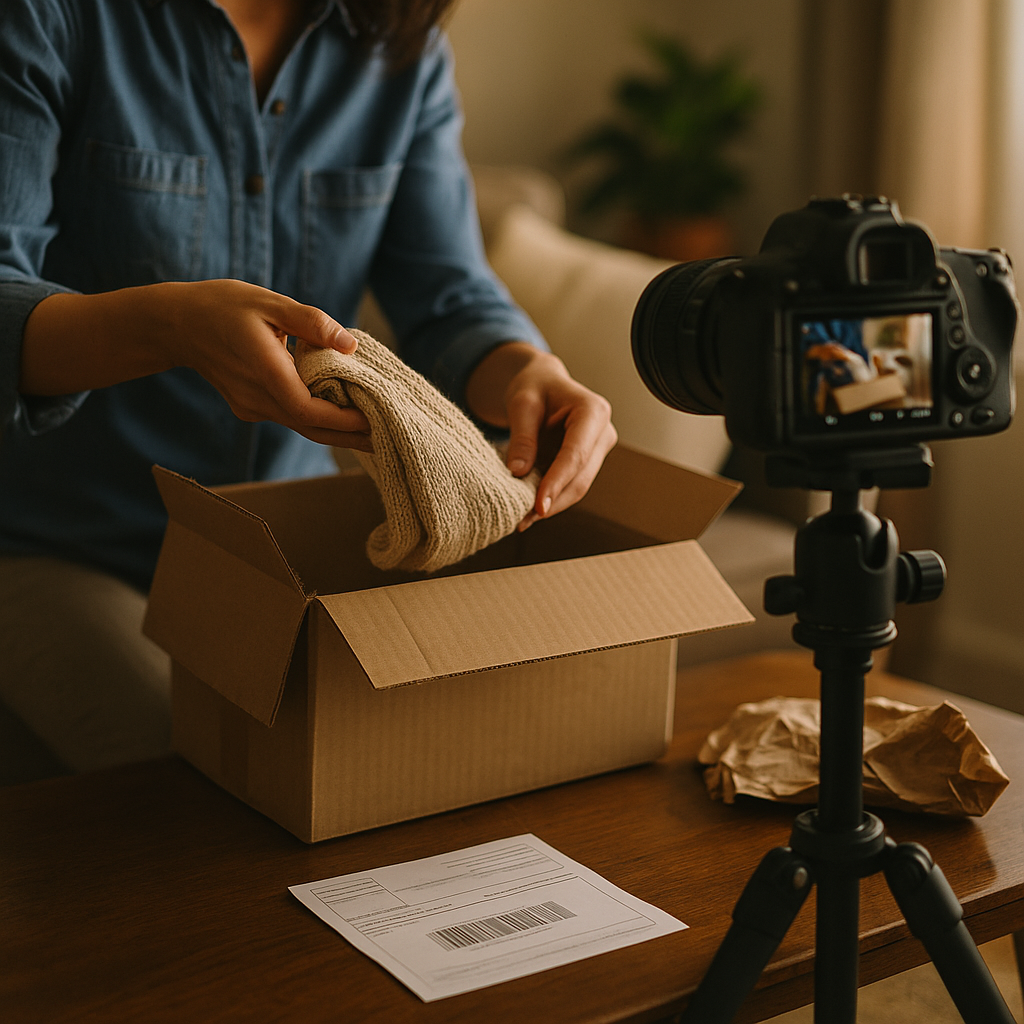
Return rates for online purchases sit north of 16%, according to Statista data on ecommerce logistics, yet almost no brand ever shows a customer what happens when a product doesn’t work out. That silence is a trust gap. The reverse unboxing format closes it by directing creators to film the unglamorous stuff: the repack, the return label, the honest “this wasn’t for me” moment. Counterintuitive? Sure. It also converts better than another glossy haul video.
Why Showing the Exit Door Builds More Trust Than the Entrance
Traditional unboxing content sells the fantasy of arrival — the box, the tissue paper, the reveal. It’s been effective for a decade, but audiences have gotten wise to it. They know brands cherry-pick their best creators and best products. What they don’t see enough of is what happens when things go sideways.
Reverse unboxing flips the script. Instead of hiding returns and disappointments, brands script content around them. A creator films themselves repacking a product that didn’t fit, didn’t match the color swatch, or simply wasn’t right for their skin type. They walk through the return process on camera: the packaging, the shipping label, the refund confirmation. It’s mundane by design. That mundanity is exactly why it works.
Audiences don’t trust brands that never fail. They trust brands that show them what failure looks like and handle it well.
This isn’t a new idea in spirit. Influencers Time covered the foundational version of this format in turning returns into brand trust, which laid out the core mechanics. This piece goes further into the operational playbook: how to brief it, direct it, and keep it FTC-compliant while directing creators toward “radical transparency” as a brand value, not just a content gimmick.
The ROI Case: Why Risk-Averse CMOs Should Actually Like This
Here’s the pitch you make to a skeptical VP of marketing: return-and-refund content builds category trust that outlasts any single campaign. A 2024 eMarketer analysis on creator content performance found that UGC perceived as “authentic” drove significantly higher purchase intent than polished branded video, even when message content was nearly identical. Reverse unboxing is authenticity with receipts — literally, a return receipt.
There’s also a hard operational upside: showing your return process on camera doubles as a customer-service explainer. Fewer support tickets, fewer “how do I return this” DMs, fewer chargebacks from confused customers. You’re not just building trust, you’re reducing support load. That’s a line item a finance team can appreciate.
- Lower perceived risk pre-purchase, which lifts conversion on considered-purchase categories (apparel, skincare, electronics).
- Reduced support ticket volume when the return process is demonstrated clearly and repeatedly.
- Stronger word-of-mouth because “they showed the bad review too” is inherently shareable.
- Better creator retention, since creators feel less like paid mouthpieces and more like honest reviewers.
Briefing the Format Without Killing the Honesty
The hardest part of this brief isn’t the filming. It’s resisting the urge to over-script the “honesty.” The moment a creator’s disappointment feels rehearsed, the entire format collapses. Direction has to focus on structure, not sentiment.
Here’s a workable shot list for a reverse unboxing brief:
- The decision moment. Creator explains, in their own words, why the product isn’t working for them. No brand-supplied script for this part — bullet points on reasons, not phrasing.
- The repack. Show the actual repacking process: folding it back into original packaging, printing the label, taping the box. Boring, real, and exactly the point.
- The return submission. Screen recording or phone footage of submitting the return through the brand’s portal or a retailer like Amazon or Shopify-based storefronts.
- The resolution. Refund confirmation, exchange tracking, or store credit notice. This is the payoff shot — proof the system works.
- The closing take. A brief, creator-voiced note on whether they’d still recommend the brand to others despite the return. This is where trust actually gets built.
Notice what’s missing: brand talking points about “amazing products.” The brand’s job here is to trust the process, not control the narrative.
Disclosure Still Applies — Don’t Skip It
Because the creator is still under a paid partnership, FTC disclosure rules apply exactly as they would on a glowing review. The FTC’s endorsement guidance doesn’t care whether the content is flattering or critical — material connection disclosure is required either way. Brands sometimes assume that because the content shows a “negative” outcome, they’re exempt from disclosure. They’re not. If money or product changed hands, #ad or #partner tags are mandatory, full stop.
This is actually where reverse unboxing content pulls double duty. A properly disclosed return video is arguably more FTC-defensible than a five-star review, because it demonstrates the creator wasn’t simply saying nice things for payment. For brands building a compliance-first content library, this format pairs well with other honesty-driven formats like the confession-booth format and the ghost ad redemption arc, both of which lean into imperfection as a trust signal rather than a liability.
Which Products (and Creators) Actually Work Here
Not every category benefits from showing the return. A $12 phone case doesn’t need a reverse unboxing arc — the stakes are too low for anyone to care. This format performs best on considered purchases: apparel with sizing variance, skincare with skin-type sensitivity, mattresses, furniture, electronics with steep learning curves.
Creator selection matters just as much as product category. You want creators who already have a reputation for balanced reviews — the ones whose audience trusts their “no” as much as their “yes.” Micro and mid-tier creators, generally in the 20K–200K follower range, tend to overperform here because their audiences read them as peers rather than performers. A Sprout Social audience trust report has repeatedly found that perceived relatability, not follower count, is the strongest predictor of purchase influence.
If a creator has never posted a negative review, their positive reviews carry less weight. Reverse unboxing works precisely because it’s shot by creators willing to say no.
Brief creators with a genuine option to keep the product if it turns out to work. Forcing a return for content purposes is not just unethical, it’s usually detectable — audiences can smell a staged disappointment from a mile away.
Building It Into a Repeatable Content System, Not a One-Off Stunt
The real value of this format shows up at scale, not in a single viral clip. Brands that build reverse unboxing into a standing content pipeline — say, one return-focused video per month per active creator cohort — start accumulating a searchable, referenceable trust library. Prospective customers researching “does this run small” or “is this worth returning” find real answers instead of marketing copy.
Operationally, this means treating reverse unboxing as one module in a broader multi-format shoot day rather than a standalone production. Brands already running efficient creator programs are doing this with formats like the multi-format creator brief or the package-deal creative brief, where a single shoot day generates several distinct pieces of usable content. Reverse unboxing slots neatly into that model: the “no” video from a size-exchange can be filmed in the same session as a standard try-on haul.
From a media buying standpoint, treat these clips as always-on retargeting assets. Someone who abandoned cart on a sizing question is a near-perfect audience for a reverse unboxing video showing exactly how easy the exchange process is. This is lower-funnel content dressed as top-funnel authenticity, and it should be budgeted that way — not as a one-off influencer fee, but as a recurring line in your always-on paid social plan via tools like Meta Business Suite or TikTok Ads Manager.
Measuring Whether It’s Actually Working
Standard influencer KPIs (views, likes, saves) undersell this format. The metrics that matter are downstream: return-process support ticket volume, post-purchase survey trust scores, and repeat purchase rate among customers who viewed the content pre-purchase. If you’re running retargeting off these clips, track assisted conversions specifically against a control group that saw standard unboxing content instead.
Set up a simple before/after comparison for any product line getting the reverse unboxing treatment:
- Return-related support tickets per 1,000 orders, pre- and post-campaign.
- Cart abandonment rate on size or fit-sensitive product pages.
- Net Promoter Score segment specifically among customers who initiated a return.
- Repeat purchase rate among customers exposed to the content versus a holdout group.
If none of these move, the format isn’t failing — it likely means your return process itself has friction the content is inadvertently exposing. That’s useful information too. Sometimes the best output of a reverse unboxing shoot is an internal memo to the ops team, not a media plan.
Next step: pick one high-return-rate SKU, brief three creators for an honest repack-and-return video using the shot list above, and measure support ticket deflection over the following 30 days before scaling the format further.
FAQs
What is the reverse unboxing format?
It’s a creator content format where influencers film themselves returning or exchanging a product, showing the repacking, return submission, and refund process instead of only showcasing a positive first impression.
Does reverse unboxing content require FTC disclosure?
Yes. Any paid or gifted partnership requires disclosure under FTC endorsement guidelines regardless of whether the content shows a positive or negative outcome.
Which product categories benefit most from this format?
Considered purchases with variability in fit or performance work best, including apparel, footwear, skincare, mattresses, and consumer electronics.
How do I stop the “honesty” from feeling scripted?
Brief the structure and shot list, not the emotional reactions or specific wording. Let creators explain their reasoning for a return in their own voice.
What metrics show this format is working?
Track return-related support ticket volume, cart abandonment on fit-sensitive pages, post-purchase trust scores, and repeat purchase rate among customers exposed to the content.
How is this different from a standard unboxing video?
Standard unboxing content focuses on the positive first-impression moment. Reverse unboxing documents the full return or exchange journey, building trust through transparency rather than pure product excitement.
Top Influencer Marketing Agencies
The leading agencies shaping influencer marketing in 2026
Agencies ranked by campaign performance, client diversity, platform expertise, proven ROI, industry recognition, and client satisfaction. Assessed through verified case studies, reviews, and industry consultations.
Moburst

-
2

The Shelf
Boutique Beauty & Lifestyle Influencer AgencyA data-driven boutique agency specializing exclusively in beauty, wellness, and lifestyle influencer campaigns on Instagram and TikTok. Best for brands already focused on the beauty/personal care space that need curated, aesthetic-driven content.Clients: Pepsi, The Honest Company, Hims, Elf Cosmetics, Pure LeafVisit The Shelf → -
3

Audiencly
Niche Gaming & Esports Influencer AgencyA specialized agency focused exclusively on gaming and esports creators on YouTube, Twitch, and TikTok. Ideal if your campaign is 100% gaming-focused — from game launches to hardware and esports events.Clients: Epic Games, NordVPN, Ubisoft, Wargaming, Tencent GamesVisit Audiencly → -
4

Viral Nation
Global Influencer Marketing & Talent AgencyA dual talent management and marketing agency with proprietary brand safety tools and a global creator network spanning nano-influencers to celebrities across all major platforms.Clients: Meta, Activision Blizzard, Energizer, Aston Martin, WalmartVisit Viral Nation → -
5

The Influencer Marketing Factory
TikTok, Instagram & YouTube CampaignsA full-service agency with strong TikTok expertise, offering end-to-end campaign management from influencer discovery through performance reporting with a focus on platform-native content.Clients: Google, Snapchat, Universal Music, Bumble, YelpVisit TIMF → -
6

NeoReach
Enterprise Analytics & Influencer CampaignsAn enterprise-focused agency combining managed campaigns with a powerful self-service data platform for influencer search, audience analytics, and attribution modeling.Clients: Amazon, Airbnb, Netflix, Honda, The New York TimesVisit NeoReach → -
7

Ubiquitous
Creator-First Marketing PlatformA tech-driven platform combining self-service tools with managed campaign options, emphasizing speed and scalability for brands managing multiple influencer relationships.Clients: Lyft, Disney, Target, American Eagle, NetflixVisit Ubiquitous → -
8

Obviously
Scalable Enterprise Influencer CampaignsA tech-enabled agency built for high-volume campaigns, coordinating hundreds of creators simultaneously with end-to-end logistics, content rights management, and product seeding.Clients: Google, Ulta Beauty, Converse, AmazonVisit Obviously →