


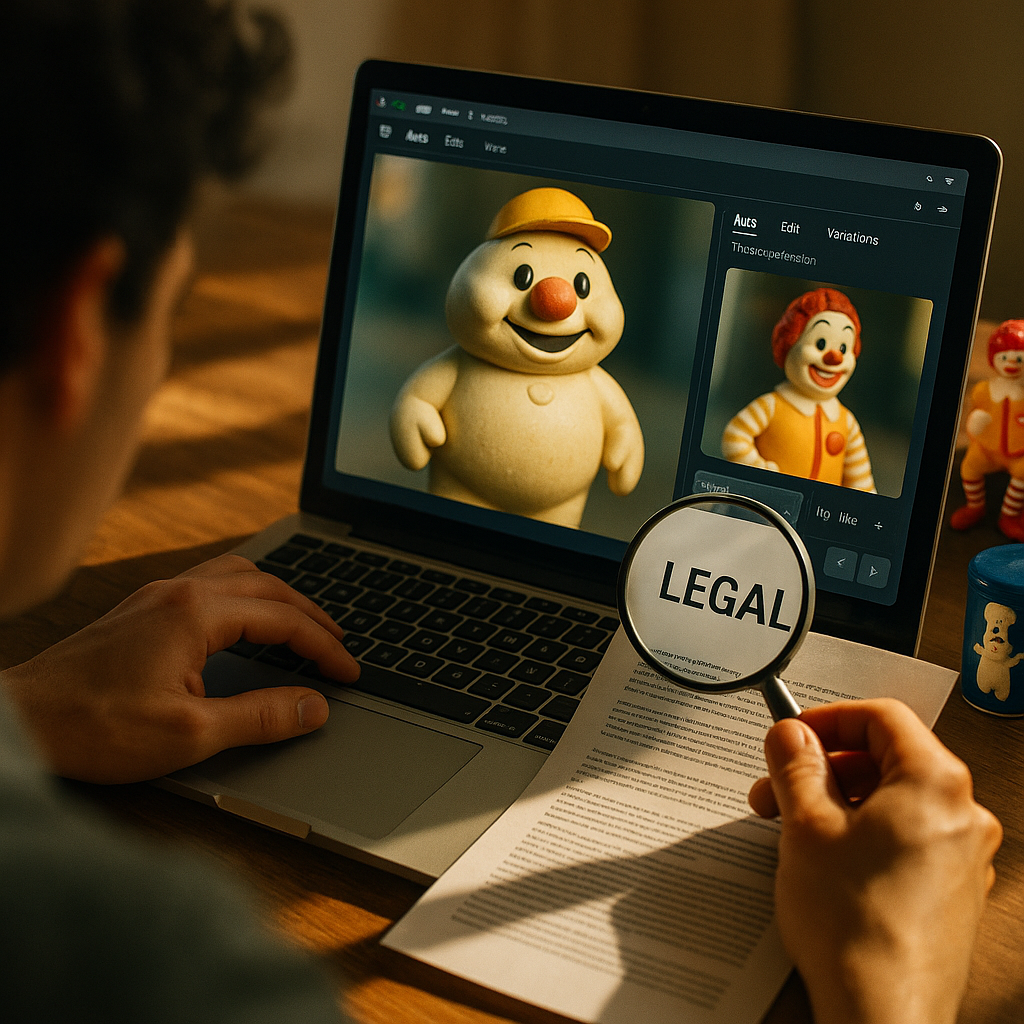
In 2025, brands increasingly rely on AI to revive iconic mascots, logos, jingles, and packaging from earlier eras. Legal considerations for using AI to resurrect historical brand symbols go beyond simple “can we do it?” questions: they involve trademark clearance, copyright ownership, publicity rights, consumer protection, and platform rules. Treat legal review as a design constraint, not an afterthought—because one misstep can turn nostalgia into litigation.
Trademark clearance for revived brand symbols
When you “resurrect” a historical brand symbol, trademark law is often the first and most decisive checkpoint. Trademarks protect source identifiers—names, logos, slogans, colors, shapes, even characters—when they signal who makes the goods or services. Using AI does not change that analysis; it can, however, increase the risk of creating something confusingly similar to an active mark without realizing it.
Start with a clearance search. Before you generate or deploy any revived symbol, run a structured search that covers:
- Identical and similar marks in relevant classes and related goods/services.
- Design marks (logo and character searches), not just word marks.
- Common-law use (unregistered but still enforceable rights), including online marketplaces and social channels.
- Geographic scope where you will sell, advertise, or ship.
Confirm chain of title. Many “historical” symbols have complex ownership histories: mergers, asset sales, bankruptcies, or licensing deals can leave unclear who owns what. AI teams often assume the current brand owner automatically owns every legacy creative asset. Legal teams should verify assignments, renewals, and any encumbrances (security interests, reversion clauses, or expired licenses).
Watch for abandonment and residual goodwill. A mark can become vulnerable if it has not been used, but “abandonment” is fact-specific and can be contested. Even if a mark appears inactive, others may hold residual rights or related registrations that create risk. In practice, the safer approach is to treat legacy marks as potentially enforceable until counsel confirms otherwise.
Avoid “confusingly similar” outputs. Generative models may converge on familiar design features (e.g., a certain pose, typography style, or color palette). Put guardrails in the creative brief: specify what features are protected, what must be avoided, and what must be newly created to reduce confusion. Build an internal review step where trademark counsel assesses “likelihood of confusion” before launch.
Copyright ownership and AI-generated adaptations
Copyright covers original creative expression: illustrations, character drawings, package art, jingles, and certain advertising copy. Resurrecting a historical symbol often requires reusing, restoring, or adapting copyrighted works. The key question is not whether AI made it, but whether your final output reproduces or is derivative of protected expression you do not control.
Determine what you own. Many legacy designs were created by agencies, freelancers, or studios. If work-for-hire terms were missing or incomplete, the creator (or heirs) may still own rights. If the symbol appears in old ads, catalog art, or signage, do not assume it is “public.” Confirm:
- Original commissioning contracts and any work-for-hire language
- Assignments and re-assignments over time
- Territory, duration, and media scope of any licenses
- Whether you have rights to create derivative works (critical for modernized versions)
Separate input rights from output rights. AI workflows introduce two distinct risk zones:
- Training and fine-tuning inputs: Using scanned vintage art, character sheets, or old packaging to fine-tune a model can implicate reproduction rights and contract restrictions (especially if assets were licensed rather than owned).
- Generated outputs: Even if you do not fine-tune, prompting a model to recreate a specific legacy illustration can yield an output that is substantially similar to copyrighted art.
Use “clean-room” recreation when appropriate. If you want the feel of a historical symbol without copying specific protected elements, consider a documented clean-room process: one team describes non-protected attributes (era, mood, general style constraints) while another team designs new art without access to the original files. This can help demonstrate independent creation if a dispute arises.
Clarify authorship and licensing with vendors. For agencies and AI vendors, contract terms should address:
- Who owns final artwork and intermediate outputs
- Indemnities for IP claims and their limits
- Whether the vendor’s model terms restrict commercial use
- Whether the vendor can reuse your prompts or outputs to train models
Don’t overlook music and sound marks. “Historical symbols” include jingles and sonic branding. These can involve multiple rights layers (composition and recording). If you “recreate” a jingle with AI audio, clear both layers or create an original composition that avoids substantial similarity.
Right of publicity and personality-based brand icons
Some historical brand symbols are closely tied to real people: founders, spokespeople, models, announcers, or celebrity endorsers. AI-driven “resurrection” can trigger right of publicity claims—especially when it simulates a person’s face, voice, or recognizable persona.
Assess whether a living or deceased person is implicated. If the brand symbol is a stylized character that clearly references an identifiable person (even indirectly), you may need permission. Risk increases when your campaign:
- Uses an AI-generated voice that imitates a specific speaker
- Recreates an actor’s likeness from old commercials
- Suggests endorsement or affiliation
- Targets markets where posthumous rights are recognized
Get explicit, written consent. Relying on old contracts is risky because older endorsement deals often did not contemplate synthetic media or perpetual digital reuse. Seek updated grants that cover:
- Synthetic voice and likeness (including “sound-alike” and “look-alike” restrictions)
- All digital and interactive media, including social and AR
- Territory, term, and approval rights
- Morals clauses and brand-safety controls
Plan for estates and successor rights. If the person is deceased, determine whether an estate controls publicity rights in the relevant jurisdictions. Treat this as a clearance item alongside trademark and copyright, not as a last-minute “PR check.”
Reduce deception risk with transparent labeling. Even where publicity rights are unclear, consumer deception can become the practical enforcement route. If a reasonable viewer could believe the person participated in the campaign, add clear disclosures that synthetic media was used and that no endorsement is implied unless you have a signed deal.
Advertising law, consumer protection, and AI disclosures
Revived symbols trade on trust and recognition, so regulators and consumers pay close attention to whether the campaign misleads. Your legal analysis should include advertising substantiation, endorsements, comparative claims, and disclosure practices—especially when AI makes content feel “authentic” or “archival.”
Do not imply false heritage or continuity. If you reintroduce a symbol to suggest a product is “the original” or “unchanged,” you must support that claim. Common pitfalls include:
- Suggesting a discontinued product formula is identical when it is not
- Implying a legacy manufacturer still makes the product after an acquisition
- Presenting AI-generated “vintage footage” as genuine historical footage
Handle endorsements carefully. If the historical symbol resembles a real spokesperson, or if you reference old testimonials, ensure endorsements reflect honest opinions and typical experiences. If an AI-generated “voice” delivers a testimonial, the audience may interpret it as a real person speaking. Disclose synthetic use and avoid overstating consumer results.
Disclose synthetic media where it matters. Not every AI-assisted edit needs a banner, but disclosures become important when AI affects a material consumer takeaway—such as authenticity, endorsement, or documentary-style claims. Keep disclosures:
- Clear: plain language, not buried in terms
- Conspicuous: visible on the same screen or audible in audio
- Consistent: aligned across paid ads, organic posts, and landing pages
Account for platform and marketplace rules. Social and ad platforms increasingly impose synthetic media policies and political-content rules, and marketplaces may restrict certain nostalgic packaging that resembles regulated products. Build a compliance checklist for each channel so creative does not get rejected at launch.
Data, provenance, and model governance for brand archives
Legal risk is not only about what you publish; it’s also about how you build the system that creates it. Brand archives often contain third-party materials, confidential documents, and personal data. If you feed these into AI tools without governance, you can create IP leakage, privacy issues, and contract breaches that are difficult to unwind.
Classify your archive before using it. Treat historical assets as a dataset requiring rights and sensitivity tagging. At minimum, label items as:
- Owned (clear rights and assignments)
- Licensed (restricted use; check scope and term)
- Third-party / unknown (needs investigation)
- Contains personal data (employees, customers, minors)
- Confidential (trade secrets, unreleased product plans)
Choose tooling that supports confidentiality. If a vendor’s terms allow retention of prompts, reuse of outputs, or training on your data, that may conflict with your obligations to licensors and talent. For sensitive archives, consider:
- Enterprise plans with no-training guarantees
- On-prem or private-cloud deployments
- Access controls and audit logs
- Data minimization (only ingest what is necessary)
Document provenance and approvals. If you ever need to defend your campaign, documentation helps. Maintain records of:
- Source files used and their rights status
- Prompts and iteration history for final assets
- Human review and sign-off (legal, brand, compliance)
- Changes made to avoid similarity or confusion
Set internal AI policies for brand teams. A practical policy answers the questions teams actually face: which tools are approved, what data can be uploaded, when legal must review, and what “do not prompt” topics apply (e.g., “make it identical to the 1950s label”). This reduces ad-hoc experimentation that creates avoidable exposure.
Contracts, licensing, and risk management for AI reissues
Even with strong clearance work, resurrecting a symbol is a commercial project with multiple stakeholders. Contracts should convert legal analysis into enforceable obligations: who does what, who owns what, and who pays if something goes wrong.
Update licensing for modern channels. If you license a historical symbol (or parts of it) from another party, ensure the license covers current realities: global e-commerce, influencer campaigns, in-app use, and synthetic variants. Key clauses include:
- Scope: specific uses, media, derivative rights, AI-generated variants
- Exclusivity: whether others can run similar nostalgia campaigns
- Quality control: especially for trademark licenses to avoid weakening rights
- Approvals: timelines that match campaign production schedules
- Termination: what happens to inventory, digital assets, and model artifacts
Build an indemnity strategy. Indemnities are only valuable if the indemnitor can pay and the scope matches your risk. Align indemnities across agencies, AI vendors, and licensors. Consider:
- IP infringement indemnities that cover defense costs
- Caps and carve-outs for willful misconduct
- Insurance requirements (media liability, cyber)
- Remedies: takedowns, re-creation obligations, and replacement assets
Plan a “fast off-ramp.” Nostalgia campaigns move quickly, and disputes often arrive after launch. Prepare:
- A takedown and substitution plan for ads and packaging
- Pre-approved alternative assets that do not rely on the contested elements
- Customer support scripts if confusion or backlash emerges
Answer the practical question: can we register the revived symbol? If your goal is to re-establish strong protection, discuss new trademark filings early. Registration strategy affects the design itself (distinctiveness, disclaimers, and how you depict the mark). For AI-generated variants, decide whether you will standardize on a single “official” version to avoid fragmenting your rights.
FAQs about resurrecting historical brand symbols with AI
Do we need permission if the symbol is old and no longer used?
Possibly. Trademarks can remain enforceable even after periods of nonuse, and copyright can still apply to historical artwork. Treat “old” as a research prompt, not a legal conclusion. Run trademark and copyright clearance and confirm chain of title before publishing.
If AI generates a similar logo from a text prompt, is it automatically safe?
No. Trademark risk depends on consumer confusion, and copyright risk depends on substantial similarity to protected expression. AI can unintentionally reproduce recognizable features. Use review gates, similarity checks, and redesign iterations guided by counsel.
Can we fine-tune a model on scans of our vintage packaging?
Only if you own the underlying rights or have licenses that allow that kind of reproduction and derivative use, and if your vendor terms do not conflict with confidentiality or licensing restrictions. Many teams choose private deployments and no-training vendor terms for archive-based fine-tuning.
What if the historical symbol resembles a real spokesperson from old commercials?
Then right of publicity and endorsement rules may apply, especially if you recreate the person’s face or voice or imply endorsement. Get explicit consent (or estate permission where applicable) and use disclosures to prevent deception.
Should we disclose that the revived symbol or “archival” footage is AI-generated?
Disclose when AI affects a material takeaway, such as authenticity, documentary reality, or endorsement. Clear, conspicuous disclosures reduce regulatory and reputational risk and help audiences understand what they are seeing.
Who owns the AI-generated version created by an agency or vendor?
Ownership depends on your contract and the vendor’s tool terms. Put IP ownership, permitted reuse, and training restrictions in writing before production. Also address who owns intermediate outputs and whether you can register the final mark.
What is the fastest way to reduce risk without killing creativity?
Use a repeatable workflow: rights tagging of archive materials, trademark and copyright clearance, a clean-room option for sensitive recreations, documented approvals, and pre-negotiated vendor terms. This keeps teams moving while preventing avoidable legal surprises.
Resurrecting legacy icons with AI can strengthen brand equity, but the legal work decides whether the revival is durable. In 2025, the safest approach treats trademarks, copyrights, publicity rights, and advertising rules as interconnected—not separate checklists. Build governance into your archive and vendor contracts, document provenance, and disclose synthetic elements when they change consumer understanding. The takeaway: revive the symbol, not the risk.