


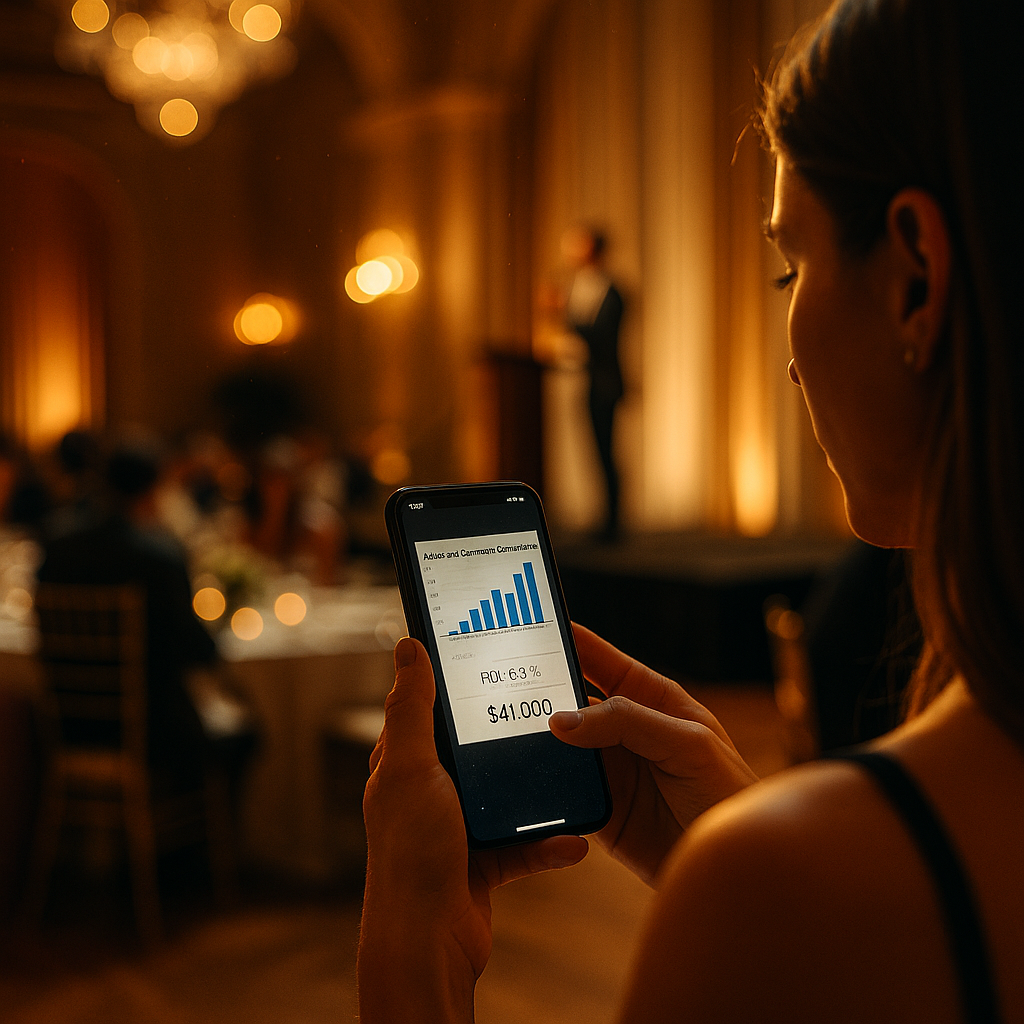
Brands cut travel and event budgets to zero in 2020. Six years later, in person influencer events are pulling bigger checks than ever, and some marketing teams are shifting double digit percentages of their creator spend into physical activations. Why would anyone trade a scalable feed post for a room that holds 150 people? Because the room converts better, and the data finally proves it.
The Numbers Behind the Shift
Ask any brand marketer who ran a 2020 vintage influencer program what changed, and they’ll tell you the same thing: audiences got numb to polished content. Feeds are saturated with sponsored posts, AI generated visuals, and near identical unboxing videos. A creator standing in a physical space, interacting with a product in real time, cuts through that noise in a way a static grid post rarely does anymore.
Event and experiential marketing budgets have been climbing steadily, and influencer specific activations are a growing slice of that pie. Industry data from eMarketer has tracked experiential spend recovering past pre pandemic levels, and much of that recovery is now earmarked specifically for creator driven events rather than traditional trade show booths or press junkets.
Brands running hybrid programs, IRL activations paired with digital amplification, report engagement rates two to three times higher than digital only campaigns covering the same launch.
That stat matters because it reframes the conversation. This isn’t nostalgia for pre digital marketing tactics. It’s a recognition that physical proximity generates content assets, relationship depth, and word of mouth that a paid post simply cannot replicate at the same cost per impression.
Why Rooms Beat Feeds for ROI
Here’s the uncomfortable truth for anyone who built their entire influencer strategy around reach: reach is cheap and getting cheaper, but trust is expensive and getting more expensive. An in person event compresses the trust building timeline. A creator who attends a three day retreat with a skincare brand doesn’t just post once. They post before, during, and after, often unprompted, because they had an actual experience worth sharing.
That behavior shows up directly in the content output math. A single flown in creator at a well run activation can generate eight to fifteen pieces of organic content across formats, Stories, Reels, long form YouTube vlogs, without the brand paying per post. Compare that to a standard sponsored content deal where the deliverable is fixed at two or three posts, and the cost per asset flips dramatically in favor of the event model once you factor in the full content haul.
This lines up with a broader trend our newsroom has covered: brands are done paying for vanity reach and want proof of conversion. Our reporting on how follower count loses grip as a decision metric shows the same underlying shift. Marketers want assets and outcomes, not impressions. In person events happen to produce both in volume.
What Counts as an IRL Activation Now?
The category has expanded well past the old model of flying ten creators to a resort for a weekend. Brands are now running:
- Product seeding dinners for 15 to 30 micro creators in a single city, repeated across multiple markets
- Pop up retail experiences where creators film content on site during public hours
- Backstage or behind the scenes access at owned events, concerts, sporting sponsorships, product launches
- Regional creator houses that rotate cohorts weekly instead of a one off retreat
- Trade show adjacent activations timed to industry events like CES or NRF, blending B2B and creator audiences
The common thread is scale efficiency. Instead of one massive, expensive retreat, brands are running smaller, repeatable formats across more markets, which lowers the per event cost while multiplying the total creator touchpoints.
The Budget Conversation CMOs Are Actually Having
Every CFO asks the same question when a line item labeled “influencer travel and lodging” shows up: what’s the payback? This is where the ROI case gets specific rather than vibes based.
Brands running structured attribution now tie event attendance to downstream sales lift, affiliate code usage, and post event search volume. Our coverage of a 100 creator regional program that delivered a 6 to 1 return illustrates the pattern: concentrated, in market activations with clear tracking mechanisms outperform diffuse, always on gifting programs. When brands add an in person component to that kind of structured program, they see the content velocity spike in the first 72 hours after the event, then a longer tail of organic mentions for weeks afterward.
Attribution is easier than it used to be, too. Since third party cookies became unreliable, marketers have leaned on identity graph based attribution and unique affiliate codes issued per event cohort. That means a brand can now say, with reasonable confidence, that the creators who attended a specific dinner or pop up drove a measurable spike in trackable revenue, not just impressions.
Sales lift, not engagement rate, has become the default KPI creator teams report to finance, and in person events are producing some of the cleanest lift data brands have seen.
That shift toward sales lift as the primary metric is well documented in our piece on how sales lift overtakes engagement as the default reporting standard. IRL activations fit neatly into that framework because the spend is concentrated, the timeline is bounded, and the resulting content surge is easy to isolate against a control period.
Compliance and Risk: The Part Nobody Wants to Budget For
In person events carry a different risk profile than a standard content deal, and brand and legal teams are catching up. Every creator at a physical event is generating content in real time, often unscripted, which means disclosure compliance has to happen on site rather than in a contract review weeks later. The FTC’s endorsement guidelines apply just as strictly to a Story posted from a branded dinner as they do to a paid feed post, and regulators have shown no patience for “but it was just a gifted experience” as a defense.
Smart brands are now briefing creators on disclosure requirements before they board the plane, not after the content goes live. That briefing typically covers hashtag placement, verbal disclosure for video, and platform specific labeling tools like Meta’s branded content tools or TikTok’s Creator Marketplace disclosure settings. Skipping this step is the single most common compliance failure at events, mostly because content gets posted faster than legal can review it.
There’s also a sourcing and safety dimension that’s easy to overlook. Product demos at pop ups and retreats need the same rigor brands apply to any public facing claim, and our reporting on how AI generated content erodes trust when sourcing isn’t verified applies here too. If a creator demos a product incorrectly on camera at your own event, that clip lives online long after the activation ends.
Operational Efficiency: Making the Room Scalable
The knock against IRL events has always been scale. You can’t fly 500 creators to a villa. But brands have solved this by decoupling the physical event from the content distribution.
The playbook that’s working: run a smaller, high production physical event with a curated group of 20 to 40 creators, then license and amplify that content through paid distribution to reach the audience the physical guest list couldn’t. This matches the broader industry move toward paid amplification, which now accounts for the majority of creator content distribution according to our analysis showing paid amplification hitting 62.6 percent of total spend. The event generates the raw, authentic footage. Paid media gives it reach. Organic posting from attendees adds the trust layer that paid alone can’t buy.
Staffing has adjusted accordingly. Brands that used to hire a single influencer marketing manager now build out creator partnership functions with dedicated event producers, a trend visible in recent creator partnership hiring patterns that treat retention and relationship depth as infrastructure rather than a one off campaign cost. Running a good event requires logistics skill that a typical social media manager doesn’t have and shouldn’t be expected to have.
Tools like Sprout Social and HubSpot now offer campaign tracking that ties event attendance data to content performance and downstream conversion, which makes the reporting loop tighter than it was even two years ago. That reporting infrastructure is a big part of why finance teams are approving these budgets again. It’s no longer a leap of faith. It’s a line item with a dashboard attached.
Who Should Actually Run These Programs?
Not every brand needs an in house event team. Agencies that specialize in experiential creator work are seeing demand climb specifically because clients want the judgment layer, venue selection, creator fit, on site compliance oversight, that a generalist team can’t provide reliably. Our coverage of how agency judgment holds value even as platforms consolidate tooling applies directly here. Software can automate outreach and contracts. It can’t tell you which 25 creators will actually gel at a dinner table and produce content that doesn’t feel staged.
What This Means for Next Year’s Planning
If you’re building next year’s creator budget, the question isn’t whether to include an IRL component. It’s how to size it so the risk and compliance overhead don’t outpace the return. Start small: one regional activation, tight attribution through unique codes, a documented disclosure briefing, and a paid amplification plan for the content it generates. Measure sales lift against a control period before scaling to multiple markets, and don’t greenlight a second event until the first one has clean data behind it.
Frequently Asked Questions
Why are in person influencer events becoming a bigger part of marketing budgets?
Audiences have grown numb to standard sponsored posts, and in person activations generate higher volumes of authentic, unscripted content while producing measurable sales lift that’s easier to attribute than diffuse digital only gifting programs.
How do brands measure ROI on influencer events?
Most brands now use unique affiliate codes issued per event cohort, identity graph based attribution, and post event search or sales spikes tracked against a control period to calculate return rather than relying on engagement metrics alone.
What size event delivers the best return, a large retreat or a small dinner format?
Smaller, repeatable formats with 15 to 40 creators generally deliver better cost efficiency than one large annual retreat, because brands can run them across multiple markets and compare performance data between activations.
What compliance risks come with influencer events?
The main risk is disclosure timing. Creators often post from an event in real time, so brands need to brief attendees on FTC disclosure requirements before the event starts rather than reviewing content after it’s already live.
Should brands handle events in house or work with an agency?
Brands without dedicated event logistics experience typically get better results from agencies that specialize in experiential creator work, since venue selection, creator fit, and on site compliance oversight require judgment that generalist teams often lack.
Top Influencer Marketing Agencies
The leading agencies shaping influencer marketing in 2026
Agencies ranked by campaign performance, client diversity, platform expertise, proven ROI, industry recognition, and client satisfaction. Assessed through verified case studies, reviews, and industry consultations.
Moburst

-
2

The Shelf
Boutique Beauty & Lifestyle Influencer AgencyA data-driven boutique agency specializing exclusively in beauty, wellness, and lifestyle influencer campaigns on Instagram and TikTok. Best for brands already focused on the beauty/personal care space that need curated, aesthetic-driven content.Clients: Pepsi, The Honest Company, Hims, Elf Cosmetics, Pure LeafVisit The Shelf → -
3

Audiencly
Niche Gaming & Esports Influencer AgencyA specialized agency focused exclusively on gaming and esports creators on YouTube, Twitch, and TikTok. Ideal if your campaign is 100% gaming-focused — from game launches to hardware and esports events.Clients: Epic Games, NordVPN, Ubisoft, Wargaming, Tencent GamesVisit Audiencly → -
4

Viral Nation
Global Influencer Marketing & Talent AgencyA dual talent management and marketing agency with proprietary brand safety tools and a global creator network spanning nano-influencers to celebrities across all major platforms.Clients: Meta, Activision Blizzard, Energizer, Aston Martin, WalmartVisit Viral Nation → -
5

The Influencer Marketing Factory
TikTok, Instagram & YouTube CampaignsA full-service agency with strong TikTok expertise, offering end-to-end campaign management from influencer discovery through performance reporting with a focus on platform-native content.Clients: Google, Snapchat, Universal Music, Bumble, YelpVisit TIMF → -
6

NeoReach
Enterprise Analytics & Influencer CampaignsAn enterprise-focused agency combining managed campaigns with a powerful self-service data platform for influencer search, audience analytics, and attribution modeling.Clients: Amazon, Airbnb, Netflix, Honda, The New York TimesVisit NeoReach → -
7

Ubiquitous
Creator-First Marketing PlatformA tech-driven platform combining self-service tools with managed campaign options, emphasizing speed and scalability for brands managing multiple influencer relationships.Clients: Lyft, Disney, Target, American Eagle, NetflixVisit Ubiquitous → -
8

Obviously
Scalable Enterprise Influencer CampaignsA tech-enabled agency built for high-volume campaigns, coordinating hundreds of creators simultaneously with end-to-end logistics, content rights management, and product seeding.Clients: Google, Ulta Beauty, Converse, AmazonVisit Obviously →