


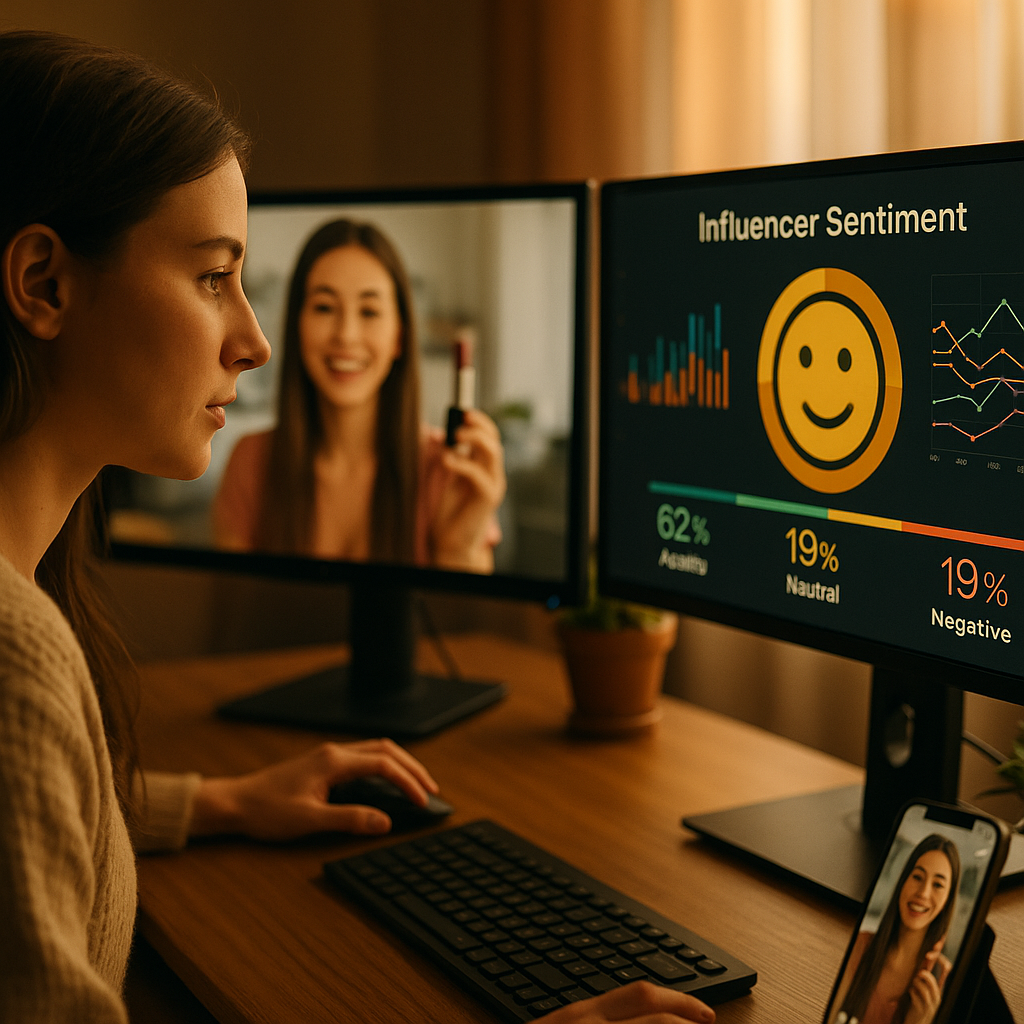
The rise of powerful sentiment analysis AI for influencer content monitoring is transforming how brands, agencies, and marketers measure digital reputation. Harnessing advanced machine learning, these tools deliver real-time insights into audience sentiment—empowering more agile responses, informed campaign tweaks, and stronger influencer partnerships. Ready to discover the cutting-edge ways sentiment analysis AI is reshaping influencer marketing in 2025?
Understanding the Role of Sentiment Analysis in Influencer Content Monitoring
Sentiment analysis, often infused with natural language processing (NLP) and AI, evaluates whether online communications express positive, negative, or neutral attitudes. When applied to influencer content monitoring, these algorithms scan text, images, audio, and video for cues about audience mood and perception. This enables brands to move beyond simple engagement numbers and truly grasp how influencer collaborations affect brand sentiment at scale.
Modern sentiment analysis AI goes deeper than keyword matching. It recognizes sarcasm, resolves ambiguous language, identifies nuanced emotional tones, and continuously learns from new data. Brands deploy these tools across top platforms—including Instagram, YouTube, TikTok, and X (formerly Twitter)—to evaluate influencer effectiveness, detect reputational risks, and enhance campaign outcomes.
Benefits of Advanced Sentiment Analysis AI for Brand Reputation
Brand reputation relies on far more than follower counts or viral moments. In 2025, the real value lies in continuous sentiment tracking across influencer content. Benefits of adopting advanced AI-driven sentiment analysis for influencer monitoring include:
- Real-time crisis detection: AI instantly flags negative trends, letting brands address PR risks before they escalate.
- Deep audience insight: By analyzing emotional responses and discussion themes, companies learn what truly resonates—or triggers backlash.
- Competitive benchmarking: Brands compare sentiment across influencers and even track competitor collaborations for valuable context.
- ROI optimization: Understanding which influencer partnerships foster positive sentiment can guide smarter budget allocations.
- Compliance and safety: AI tools can detect content that may violate advertising standards, or spot early warning signs of problematic associations.
Recent research published in 2025 by NielsenIQ found that 74% of leading brands now use AI-assisted sentiment tracking to protect reputation in influencer-led campaigns. The result? Measurably higher customer trust and more agile marketing strategies.
Key Features: What Makes Sentiment Analysis AI Effective in 2025?
Technology has evolved well beyond the first-generation social listening tools. High-performing sentiment analysis AI solutions specializing in influencer content monitoring provide:
- Multimodal analysis: They process not just captions but also images, audio, video thumbnails, and even influencer tones of voice in Stories or livestreams.
- Context-aware understanding: AI distinguishes between genuine negativity and playful banter or memes by referencing context and community slang.
- Granular reporting: Brands can break down sentiment by post, topic, hashtag, campaign, or even specific segments within an influencer’s audience.
- Multilingual capabilities: Global brands benefit from AI models trained in multiple languages and able to detect regional differences in slang and sentiment.
- Continuous self-learning: These tools update their understanding of latest cultural trends, language shifts, or emerging crisis indicators.
For influencer marketing teams, this means more actionable insights and fewer false positives, which were common with outdated monitoring tools. With the proliferation of short-form and multi-language content, these advanced features are essential for brand safety and success.
Strategies to Integrate Sentiment Analysis AI in Influencer Marketing
Integrating AI-based sentiment analysis into your influencer content monitoring workflow involves a few key steps. To maximize value and minimize friction, experts recommend:
- Defining goals: Identify whether your main objective is brand protection, campaign performance, crisis aversion, or competitive benchmarking.
- Selecting the right AI tool: Evaluate platforms for language support, integration with influencer management dashboards, data privacy, and ease of use.
- Collaborating on KPIs: Work with influencers to set sentiment-based metrics in addition to standard reach or engagement goals.
- Automating alerts and reporting: Configure the system to notify managers of significant sentiment shifts or compliance risks.
- Reviewing and refining: Regularly audit AI outputs, retrain models with feedback, and adapt strategies as campaign narratives evolve.
Some leading brands in 2025 have begun sharing sentiment dashboards directly with partners, fostering transparency and collaboration around authentic brand storytelling. This approach not only improves campaign trustworthiness, but also helps influencers adjust messaging in real time for stronger positive engagement.
Overcoming Challenges: Privacy, Bias, and Data Ethics in 2025
With growing reliance on sentiment analysis AI for influencer content, brands must address critical challenges:
- Data privacy: As AI tools analyze private comments, messages, or lesser-seen Stories, upholding user consent and GDPR-style regulations is non-negotiable. Choose vendors certified for robust privacy protection.
- Algorithmic bias: Left unchecked, AI models may misinterpret dialects or perpetuate biases, leading to skewed sentiment readings. Regular audits and diverse data inputs are essential to minimize such risks.
- Transparency: Both brands and influencers should receive clarity about how data is used, how sentiment scores are generated, and what adjustments may be triggered by these analytics.
Prioritizing ethical, unbiased practice is not only good for legal compliance, but also key to building long-term audience and influencer trust.
The Future of Sentiment Analysis AI in Influencer Marketing
Looking ahead, sentiment analysis AI will become ever more predictive and personalized. Anticipated trends in 2025 include:
- Emotion-driven influencer selection: Brands will use historical sentiment data to choose partners who best align with their desired emotional impact.
- Live sentiment tracking: Real-time monitoring during influencer-hosted livestreams or major launches to immediately adapt messaging.
- Cross-platform intelligence: Unified AI dashboards pulling data from all relevant platforms, even across language barriers.
- Augmented creative insights: AI not just tracks but also suggests optimizations—such as image selection or tone adjustments—for higher positive sentiment outcomes.
Whether defending against PR missteps or amplifying moments of authentic enthusiasm, sentiment analysis AI is now an indispensable tool in every modern influencer marketing toolkit.
Frequently Asked Questions: Sentiment Analysis AI for Influencer Content Monitoring
-
How accurate is sentiment analysis AI for influencer content?
State-of-the-art AI offers sentiment accuracy rates above 90%, especially on English-language content. Accuracy improves further with ongoing model updates, culturally adaptive training data, and regular audits for bias or outdated slang.
-
Can sentiment analysis AI handle multimedia influencer content?
Yes. Today’s leading solutions analyze text, images, video transcripts, tone of voice, and even emoji usage, offering well-rounded sentiment insights—even in visual-first or video-based campaigns.
-
Is AI sentiment analysis compliant with data privacy rules?
Leading providers in 2025 are fully compliant with regional and international data privacy requirements. However, marketers must choose reputable, transparent vendors and ensure proper consent for content analysis.
-
Can these tools detect sarcasm or subtle humor?
Modern AI is increasingly adept at context and sarcasm detection, particularly when trained on up-to-date cultural references and influencer-specific community language. Still, some false positives may persist—human review remains a valuable complement.
-
What does it cost to adopt sentiment analysis AI for influencer marketing?
Pricing varies by vendor, data volume, and feature set. Some solutions offer entry-level packages for small brands, while enterprise-level options with real-time alerts and deep integrations command higher fees, reflecting their increased value in reputation management.
In summary, sentiment analysis AI for influencer content monitoring equips brands with real-time, nuanced understanding of digital reputation and campaign impact. Embracing this technology enables marketers to act swiftly, evaluate ROI, and build more authentic, emotionally intelligent influencer programs—addressing challenges and unlocking new opportunities in 2025’s dynamic marketing landscape.