


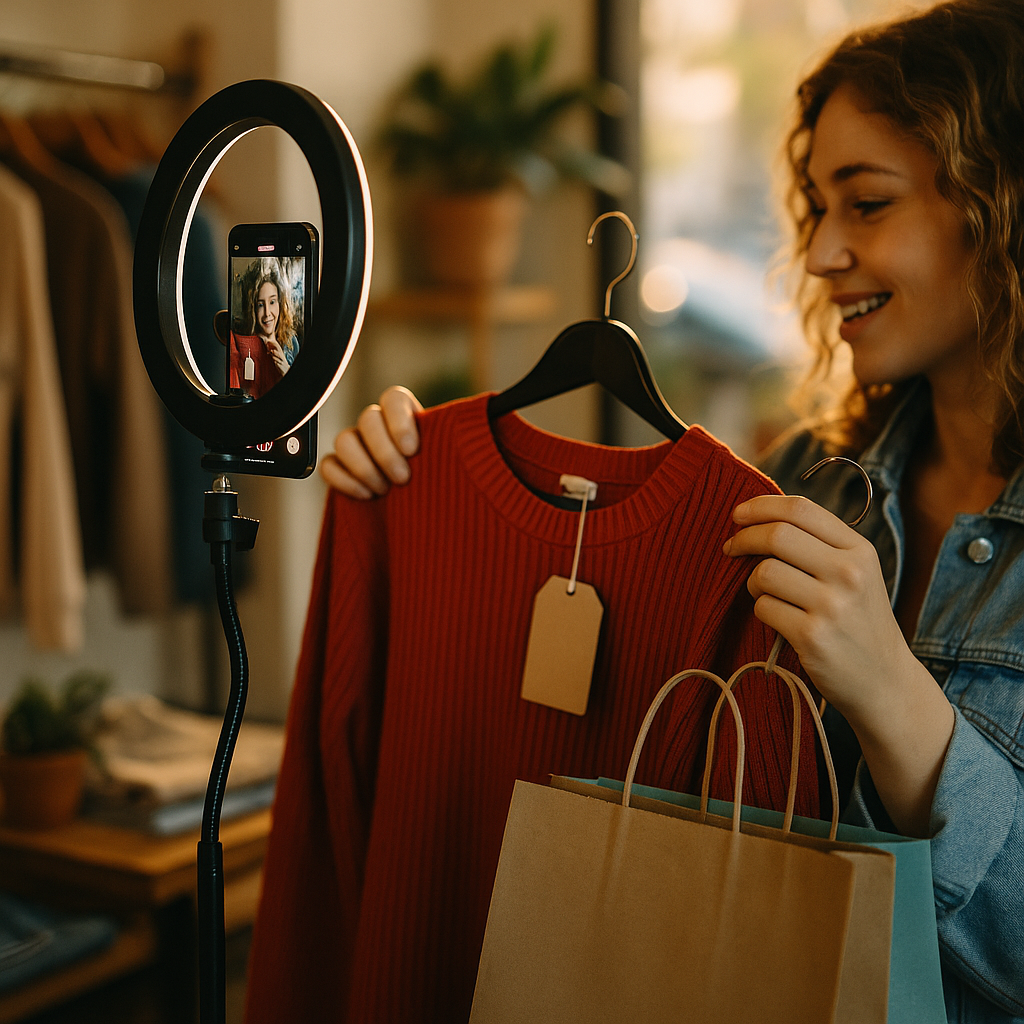
The evolution of social commerce has reshaped how people move from curiosity to purchase without ever leaving their favorite apps. In 2025, the path is faster, more visual, and more trust-dependent than traditional ecommerce. Brands now win by reducing friction across content, community, and checkout while staying credible and compliant. What changed, and what should you do next?
Social commerce trends: how discovery became the new storefront
Social platforms used to be “top of funnel.” Now they function like dynamic storefronts where discovery, validation, and purchase happen in one continuous flow. Instead of a customer searching a product catalog, an algorithm serves products through short-form video, creator posts, and social proof—often before the shopper has formed explicit intent.
In 2025, the strongest social commerce trends center on:
- Algorithm-led discovery: Recommendation engines learn from watch time, saves, shares, and comment sentiment, surfacing products that match micro-interests.
- Video-first merchandising: A product detail page is no longer the primary “pitch.” A 15–45 second demo, tutorial, or unboxing often does more to answer questions than static images.
- Community as a conversion lever: Reviews, creator credibility, and comment sections function like real-time product Q&A.
- Contextual shopping moments: Products appear in routines: “get ready with me,” “weekend reset,” “work setup,” or “meal prep,” turning lifestyle content into shoppable intent.
For brands, this shifts the goal from driving clicks to driving confidence. Shoppers want proof that the product works, fits, and arrives as promised. If discovery content doesn’t anticipate those questions, the customer keeps scrolling. The practical move: design content that answers objections early—price justification, sizing, durability, shipping speed, and returns—before asking for a purchase.
Influencer marketing and creators: trust, expertise, and measurable impact
Creators are not just “awareness partners.” They are translators who show how a product behaves in real life. That role directly supports Google’s EEAT expectations: experience (hands-on usage), expertise (category knowledge), authoritativeness (reputation), and trust (clear disclosures and accurate claims).
In 2025, effective influencer marketing and creators programs look less like one-off posts and more like structured partnerships:
- Experience-led demonstrations: Side-by-side tests, before/after routines, and “day-in-the-life” usage provide concrete evidence.
- Expert matching: Pair products with creators who have legitimate category fit (skin science educators for skincare, chefs for cookware, athletes for performance gear).
- Content rights and repurposing: Brands negotiate whitelisting and usage rights so high-performing creator content can power paid ads and product pages.
- Transparent disclosures: Clear “paid partnership” labels and honest pros/cons reduce backlash and improve long-term trust.
Readers often ask, “How do I know which creator will actually drive sales?” In practice, you evaluate fit before reach. Look for consistent audience engagement, comment quality, and prior examples where the creator answered questions, handled skepticism, and still earned trust. Then measure impact with trackable links, platform shopping analytics, and post-purchase surveys asking, “Where did you first hear about us?”
Equally important: set guardrails. Provide claim guidelines, safety requirements, and a simple fact sheet. If a product has limitations, address them. Overpromising may spike short-term conversions but creates returns, chargebacks, and negative comments that the algorithm will keep showing to future shoppers.
Shoppable posts and live shopping: compressing the path to purchase
Shoppable posts and live shopping compress the funnel by turning content into a storefront with embedded product metadata. When implemented well, they reduce friction without reducing confidence. The shopper sees the product, social proof, and key details in one flow rather than bouncing between tabs.
What’s changed is how the content functions:
- Shoppable tags now act like mini product cards: Price, availability, variants, and shipping signals appear earlier in the journey.
- Live shopping adds real-time objection handling: Hosts answer sizing, ingredients, compatibility, and setup questions instantly.
- Bundling and limited offers are easier to explain: Live formats let brands show why a kit exists and how to use it.
To make shoppable posts effective, treat them like a retail shelf. Ensure images and video show scale, texture, and usage. Add clear variant labeling and avoid confusing product names. If your catalog data is inconsistent, your tags will frustrate shoppers—incorrect prices, out-of-stock variants, or mismatched photos kill trust quickly.
For live shopping, plan it like a product training session, not a hype event:
- Run-of-show: Intro, top sellers, demos, comparison, FAQs, and closing offer.
- Proof points: Certifications, testing standards, warranty terms, and realistic timelines.
- Moderation: A dedicated moderator triages questions, flags issues, and captures insights for future content.
A frequent follow-up question is, “Do live streams still work if my audience is small?” Yes, if the format is designed for high intent. Smaller audiences can convert well when the host is credible, the product is shown clearly, and the checkout is easy. Record the live, repurpose the best segments, and keep the shoppable links active.
In-app checkout: frictionless payments, but higher expectations
In-app checkout is the turning point in the evolution from discovery to purchase. When shoppers don’t leave the platform, conversion rates often improve because fewer steps mean fewer drop-offs. But the trade-off is that customer expectations rise: if you remove friction, shoppers assume the entire experience—shipping, returns, support—will be equally smooth.
To deliver on those expectations, focus on four areas:
- Checkout clarity: Total cost, taxes, shipping fees, delivery estimates, and return windows must be visible before payment.
- Inventory accuracy: Real-time stock sync prevents cancellations that damage trust and platform performance signals.
- Post-purchase communication: Confirmations, tracking, and proactive delay notices reduce support load and refund risk.
- Customer support readiness: Clear pathways for order edits, returns, and defect resolution protect your ratings and future reach.
Brands often ask whether they should push shoppers to their own site instead. In 2025, the best approach is usually hybrid. Use in-app checkout for impulse-friendly items and repeatable purchases where convenience wins, and route to your site when you need complex customization, deeper education, subscriptions, or higher-margin bundles that benefit from richer merchandising. Either way, keep product information consistent across channels to avoid confusion.
Also consider the operational implications: in-app checkout may change how you handle taxes, fraud screening, and customer data access. Align your legal, finance, and support teams early so marketing doesn’t outpace your ability to fulfill orders reliably.
Customer journey mapping: from scroll to sale to loyalty
Customer journey mapping is how you keep social commerce from becoming a series of disconnected tactics. The goal is to understand what the shopper needs at each step—discovery, evaluation, purchase, and retention—and then design content and operations to meet those needs.
A practical 2025 journey map for social commerce often looks like this:
- Discovery: Short video shows the “why” and the result. The shopper saves or shares.
- Validation: Comments, creator follow-ups, and comparison clips answer “Will it work for me?”
- Decision: Shoppable tags or a live segment clarify price, variants, and delivery timing.
- Checkout: In-app payment completes the sale with minimal fields and clear totals.
- Post-purchase: Setup tutorials, care instructions, and customer support prevent regret.
- Loyalty: UGC prompts, referral incentives, and replenishment reminders drive repeat revenue.
To make this actionable, connect your analytics and feedback loops:
- Content performance signals: Saves and shares often predict purchase better than likes because they show intent.
- Conversion diagnostics: Track drop-offs by product, variant, and creator to find where clarity is missing.
- Voice-of-customer: Mine comments and returns reasons to identify what your content fails to explain.
Readers commonly wonder, “What content should we make next?” Let the audience tell you. If people repeatedly ask about sizing, make a sizing video. If they ask about durability, create a stress-test clip. If they worry about authenticity, show packaging details and order unboxing from your fulfillment line. This is EEAT in action: demonstrate real experience, document specifics, and correct misunderstandings quickly.
Data privacy and platform policies: building trust while scaling
In 2025, social commerce growth depends on trust, and trust depends on responsible data practices and policy compliance. Platforms enforce strict rules on disclosures, prohibited claims, targeting, and product categories. Shoppers also scrutinize brands for transparency, especially around health, finance, and children’s products.
To scale safely:
- Use compliant claims: Substantiate performance statements, avoid misleading before/after edits, and keep documentation ready.
- Disclose partnerships: Ensure creators label paid relationships clearly and consistently.
- Protect customer data: Limit collection to what you need, secure it, and explain how you use it in plain language.
- Prepare for disputes: Clear refund rules and responsive support reduce escalations that can hurt platform standing.
If you rely heavily on one platform, diversify content distribution and maintain an owned relationship where appropriate—email, SMS opt-ins, loyalty programs—while still respecting consent. The goal is not to “escape” platforms but to reduce risk and maintain continuity if policies or algorithms change.
FAQs: The Evolution Of Social Commerce From Discovery To Checkout
What is social commerce in 2025?
Social commerce is the ability to discover, evaluate, and purchase products directly within social platforms through shoppable content, live shopping, and in-app checkout, supported by community feedback and creator-led demonstrations.
How is social commerce different from traditional ecommerce?
Traditional ecommerce is search- and site-led: shoppers visit a store to browse. Social commerce is feed-led: products appear through recommendations and social proof, and checkout can happen without leaving the app.
Does in-app checkout reduce cart abandonment?
It often helps because it removes steps like loading a new site and re-entering payment details. However, it only works long-term if shipping speed, tracking, returns, and support match the convenience of the checkout.
What content converts best for social commerce?
Content that demonstrates real use and answers objections: short demos, comparisons, creator testimonials with specifics, live Q&A sessions, and post-purchase tutorials that reduce anxiety about setup, fit, or results.
How do I measure ROI from creators and shoppable posts?
Combine platform shopping analytics with trackable links or codes, product-level conversion reporting, and post-purchase surveys. Also monitor leading indicators like saves, shares, and qualified comments that signal intent.
Should brands prioritize their website or platform checkout?
Use a hybrid strategy. Prioritize platform checkout for convenience-driven purchases and fast-moving items, and use your site for customization, subscriptions, deeper education, and higher-consideration products that need more information.
What are the biggest risks in social commerce?
Inconsistent catalog data, unclear claims, poor fulfillment performance, weak customer support, and non-compliant creator disclosures. Each risk erodes trust and can reduce reach due to negative feedback signals.
How can small businesses compete in social commerce?
Win on clarity and credibility: show the product in real scenarios, answer questions directly in comments, run small live shopping events with strong demos, and deliver reliable fulfillment. Consistency beats scale when trust is the constraint.
Conclusion: In 2025, social commerce succeeds when discovery, trust, and checkout work as one system. The brands that win design content to answer real questions, partner with credible creators, and remove friction without hiding details like shipping, returns, or total cost. Map the journey from scroll to loyalty, keep data and claims compliant, and make convenience feel dependable.