


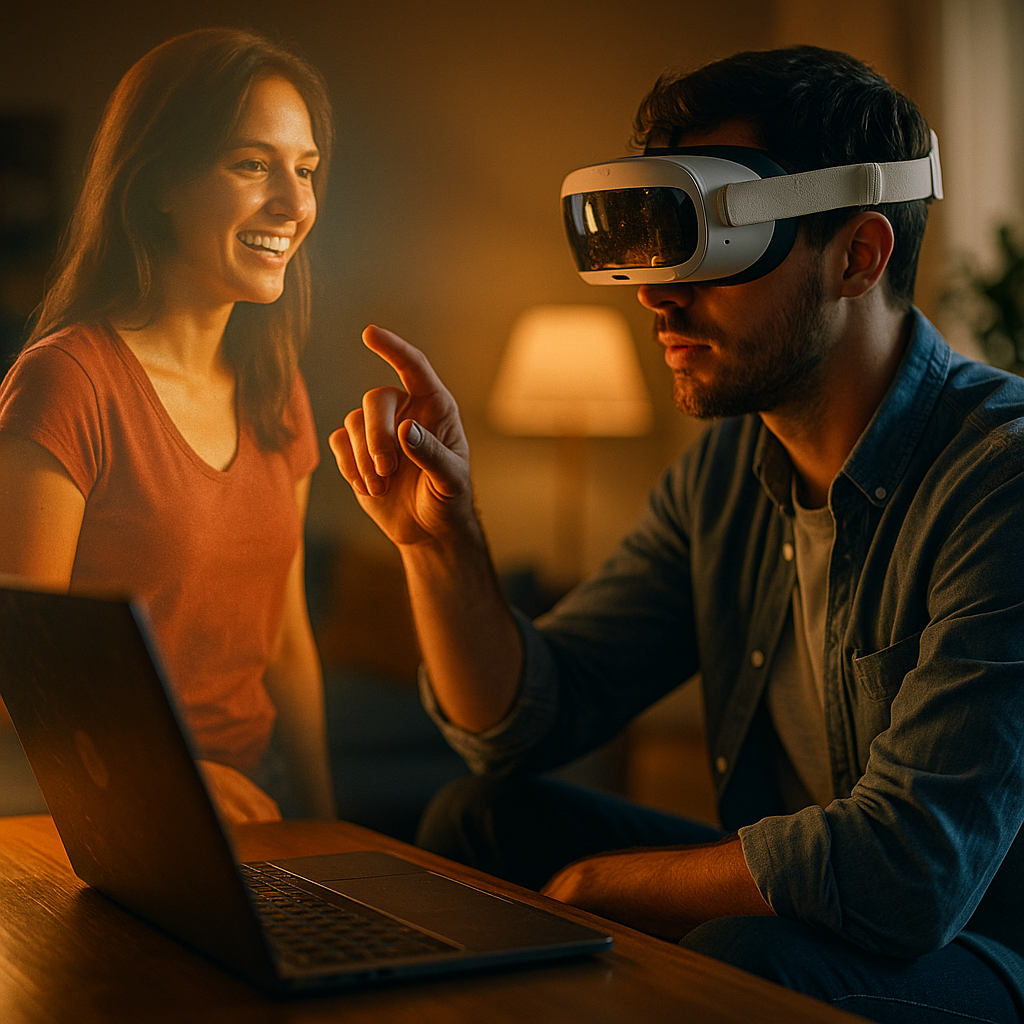
The Impact Of Spatial Computing On Future Narrative Brand Experiences is reshaping how people discover, evaluate, and trust brands in 2025. As AR glasses, mixed reality headsets, and AI-driven 3D worlds become more practical, stories stop being watched and start being lived. Brands that treat space as a storytelling canvas can earn attention without interrupting it—if they build with purpose. What changes first?
Spatial computing and immersive storytelling
Spatial computing blends digital content with the physical world using sensors, computer vision, and real-time 3D rendering. For narrative brand experiences, this shifts storytelling from a linear sequence into an environment the audience explores. Instead of “message delivery,” the brand designs a place where meaning emerges through interaction.
In practice, immersive storytelling has three defining traits:
- Embodiment: People feel present in a scene, not just adjacent to it. That presence changes memory formation and emotional response.
- Agency: The audience chooses what to look at, touch, hear, and discover—so the story adapts to intent rather than forcing a path.
- Context: The story can react to location, objects, lighting, movement, and time—making narrative feel “about me, here, now.”
For brands, the biggest strategic shift is moving from campaigns to world-building. A product launch becomes an explorable layer over a store, a home, or a city block. A sustainability claim becomes a transparent “x-ray” of supply chain steps, revealed when someone scans a package. A customer support flow becomes an overlay that teaches you in-place, hands-free.
Readers often ask whether immersive storytelling replaces video. It rarely does. Instead, spatial computing extends video into interactive scenes: short clips become portals, product pages become 3D demos, and social posts become location-based moments that people can step into and share.
XR brand experiences and the new customer journey
XR brand experiences (AR, VR, and mixed reality) reorganize the funnel because they reduce the distance between curiosity and comprehension. When people can manipulate a product at true scale, see it in their own context, and receive guided narration, uncertainty drops—and that changes how brands should design discovery and conversion.
Expect the customer journey to evolve in these ways:
- Discovery becomes spatial: A storefront, event venue, or retail shelf becomes media. Digital layers can be triggered by proximity, gaze, QR/NFC, or object recognition.
- Evaluation becomes experiential: “Try before you buy” moves beyond color swaps to fit, ergonomics, maintenance, and setup simulations.
- Support becomes embedded: Instructions and troubleshooting appear exactly where needed, reducing returns and increasing satisfaction.
To make this work, narrative design must anticipate real behaviors. People rarely want a long “metaverse tour” when they are shopping. They want clarity fast, with the option to go deeper. Strong XR brand experiences offer multiple depths: a 10-second view, a 60-second guided story, and a deeper interactive layer for enthusiasts.
Measurement also changes. You still track reach and conversions, but you add interaction signals that indicate genuine consideration: dwell time on key objects, completion of guided steps, replays of specific scenes, and “share to friend” actions from within the experience. Those signals often correlate with intent more tightly than a click.
3D narrative design for interactive brand worlds
3D narrative design is where brand strategy meets spatial craft. The goal is not to create a pretty 3D scene; it is to design meaning through movement, sound, light, and interaction. In spatial computing, the audience edits the story with their attention, so you must design for many paths while still landing the core message.
Effective interactive brand worlds typically follow a few principles:
- Anchor the story in a clear “why”: Decide the one change in belief or understanding you want by the end. Every object and interaction should support it.
- Use spatial hierarchy: Put the most important elements where the eye naturally goes. Use size, contrast, motion, and audio cues to guide attention.
- Design interactions with payoff: Every tap, grab, or step should reveal something useful—feature clarity, proof, personalization, or emotional resonance.
- Respect cognitive load: Avoid cluttered overlays. Provide “progressive disclosure” so people see more only when they ask for it.
- Make the brand role earned: The brand should feel like a guide or tool, not a billboard. If the experience is helpful, the brand impression improves naturally.
A common follow-up question is how to keep consistency across devices. The answer is to define a narrative system: a set of reusable spatial components (intro portal, object hotspots, proof panels, guided mode, accessibility mode) and a brand “spatial style guide” that includes scale rules, typography in 3D, motion behavior, audio tone, and interaction patterns.
Another question is whether photorealism is necessary. It depends on the promise. For luxury and high-consideration products, realism can reduce doubt. For services, education, and entertainment, stylized worlds often perform better because they load faster, feel intentional, and avoid the uncanny valley. The best choice is the one that supports comprehension and trust.
AR marketing personalization and real-time context
AR marketing personalization becomes more meaningful when it uses context responsibly. In spatial computing, personalization is not just “Hello, Jamie.” It is adapting the story to the room you are in, the task you are doing, and the questions you implicitly ask through behavior.
High-impact personalization patterns include:
- Contextual demos: Show how a product fits in the user’s space, with realistic lighting and occlusion, and guided setup steps.
- Role-based narratives: A buyer, a user, and an installer need different stories. Let people choose a role early and tailor the journey.
- Adaptive proof: If a user lingers on durability, surface warranty, test results, and material breakdowns; if they focus on design, surface options and inspirations.
- Location-aware utility: At events or in stores, provide wayfinding, live schedules, product comparisons, and staff assistance triggers.
Personalization raises immediate concerns about privacy and creepiness. Brands should assume that trust is the scarce resource in 2025. The safest approach is to personalize primarily from on-device signals and explicit user choices, while being transparent about what is processed and why.
Practical trust-building moves:
- Use clear consent prompts for camera, location, and spatial mapping, with simple explanations tied to user benefit.
- Prefer ephemeral processing: If you don’t need to store spatial maps or video, don’t.
- Offer a “basic mode” that delivers value without sensitive permissions.
- Explain personalization logic in plain language, especially when recommendations change the story path.
When done well, personalization improves relevance without sacrificing autonomy. People should feel in control of the narrative, not managed by it.
Brand experience innovation: trust, accessibility, and ethics
Brand experience innovation in spatial computing will be judged by outcomes, not novelty. The winners will pair creative ambition with operational discipline: inclusive design, safety, data stewardship, and measurable value.
To align with Google’s EEAT expectations and real-world user trust, focus on these pillars:
- Experience: Build from real user testing in real environments. Spatial experiences often fail in bright sunlight, noisy spaces, or small rooms. Field testing is not optional.
- Expertise: Involve 3D designers, UX researchers, accessibility specialists, and privacy counsel early. Spatial UX has unique rules around motion, depth, fatigue, and comfort.
- Authoritativeness: Back claims with verifiable proof inside the experience: certifications, lab results, and clear sourcing. Provide direct links or scannable references when possible.
- Trustworthiness: Be explicit about data use, avoid dark patterns, and prevent misleading visuals (for example, exaggerating product scale or performance through effects).
Accessibility deserves specific attention. Spatial content can exclude people with low vision, limited mobility, hearing differences, or vestibular sensitivity. Provide multiple input methods, captions, adjustable text size, safe movement boundaries, seated modes, and audio alternatives. If a story depends on fine motor gestures, add simple tap or voice options.
Ethically, spatial computing can manipulate attention more strongly than flat media. Brands should set internal standards on persuasion boundaries: do not hide key terms in hard-to-find layers, do not pressure users with time-limited overlays in personal spaces, and do not create “inescapable” experiences that trap attention. The brand should leave the user feeling informed and respected.
Spatial commerce and measurable business impact
Spatial commerce turns narrative into action by connecting exploration to purchase, booking, and post-purchase support. The core advantage is reducing ambiguity: fewer “I thought it would look different” moments, fewer setup surprises, and fewer mismatched expectations.
To make spatial commerce credible, connect it to operational realities:
- Inventory and configuration accuracy: Ensure 3D models match actual SKUs, finishes, and availability. An immersive experience that lies—even accidentally—breaks trust.
- Pricing transparency: Show price changes as users modify options, and explain why (materials, delivery constraints, service tiers).
- Seamless handoff: Let users save scenes, share them, and continue on another device. Spatial journeys often start on mobile and finish on desktop or in-store.
- Service integration: Include booking, installation guidance, and support overlays so the story continues after checkout.
Measurement should be planned from day one. Define success metrics that map to business outcomes:
- Consideration: qualified dwell time, feature interactions, saved configurations, repeat visits.
- Conversion: add-to-cart rate, booking completion, assisted sales uplift in-store.
- Efficiency: reduced returns, fewer support tickets, faster onboarding or training completion.
- Brand: lift in recall and trust measures from surveys embedded after value delivery, not before.
If a reader wonders where to start: pick one high-friction moment in the journey—fit, setup, comparison, or proof—and design a spatial narrative that resolves it better than any webpage can. Then iterate based on observed behavior, not internal opinions.
FAQs
What is spatial computing in simple terms?
Spatial computing lets digital content understand and interact with the physical world. It uses cameras and sensors to place 3D information into real spaces (AR) or blend real and virtual elements (mixed reality), so people can move around and engage naturally.
How will spatial computing change brand storytelling in 2025?
It turns storytelling into an experience people explore. Instead of watching a linear narrative, audiences discover story elements through interaction, context, and choice, which can increase understanding and improve trust when the experience is genuinely useful.
Do narrative brand experiences require headsets?
No. Many effective experiences run on phones and tablets through AR. Headsets and glasses can deepen immersion, but brands can start with mobile-first spatial layers and expand as adoption grows.
How do you keep spatial experiences from feeling like gimmicks?
Tie the experience to a real customer need: clarity, confidence, training, or support. Use interactivity to reveal proof and practical guidance, not just spectacle. If the spatial layer doesn’t help the user do something better, remove it.
What are the biggest risks for brands using spatial computing?
The main risks are privacy missteps, accessibility gaps, misleading visuals, and poor performance in real environments. Brands reduce risk with explicit consent, inclusive design, accurate 3D assets, field testing, and transparent claims.
How should brands measure success for XR brand experiences?
Combine business outcomes (conversion, returns, support volume) with spatial engagement signals (dwell time on key objects, completion of guided steps, saved configurations, shares). Measure whether the experience reduces uncertainty and improves decision quality.
Spatial computing is pushing narrative brand experiences into environments people can walk through, test, and personalize. The most effective strategies in 2025 prioritize utility, proof, and respectful data practices over spectacle. When brands design interactive worlds that answer real questions—fit, value, quality, and impact—customers reward them with time and trust. The clear takeaway: build stories people can use.