


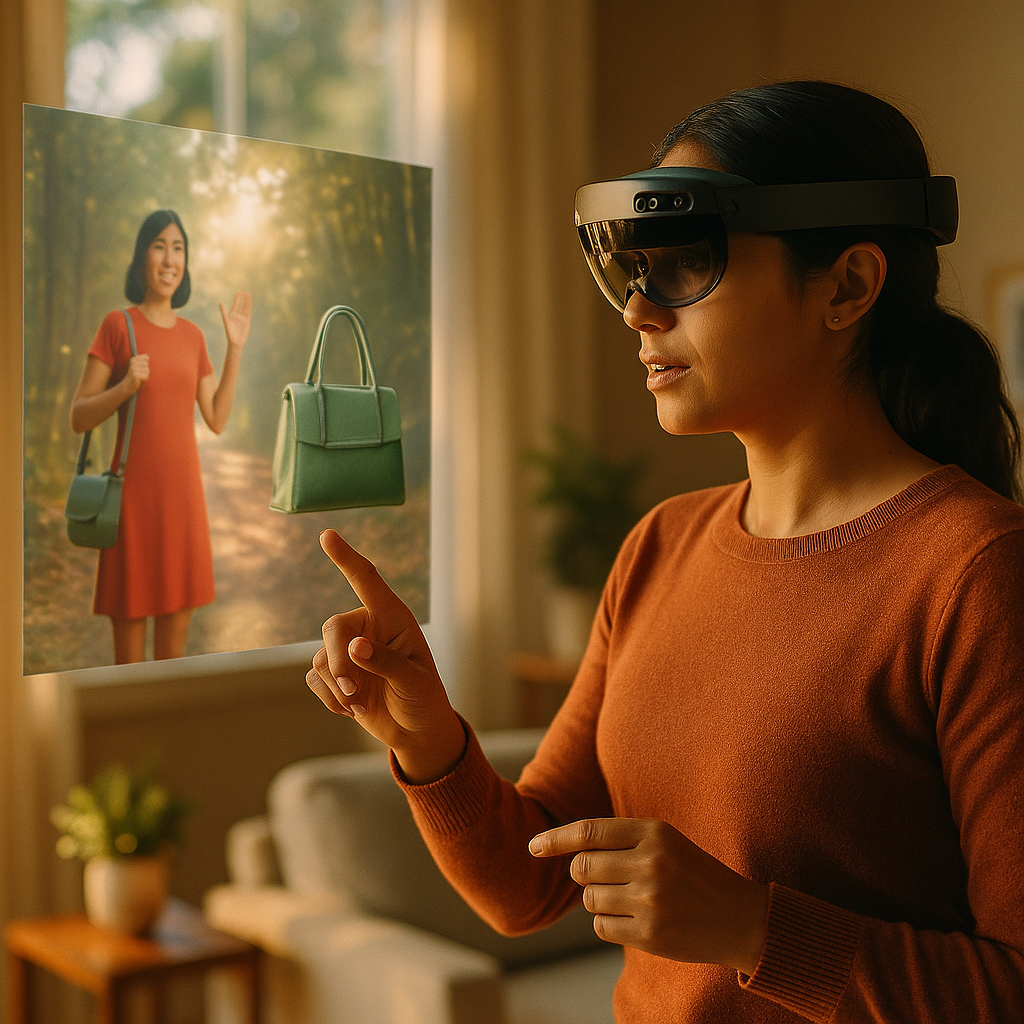
Spatial computing is reshaping how brands design, deliver, and measure immersive customer experiences. As screens give way to responsive environments, marketers can move from telling stories at audiences to letting people enter them. The impact of spatial computing on future brand storytelling formats lies in richer context, stronger memory, and more useful interaction. What does that change in practice?
Spatial computing marketing and the shift from content to experience
Spatial computing marketing changes the basic unit of brand communication. Instead of a static ad, landing page, or short-form video, the brand creates an environment that reacts to movement, location, gaze, gesture, voice, and nearby objects. That matters because people do not just consume a message in space; they make meaning through it.
In practical terms, future storytelling formats will become more experiential. A fashion label might let shoppers explore the craft behind a garment through layered visual overlays in a store. A travel brand could turn a booking journey into a room-scale preview of a destination. A healthcare company may explain a treatment by placing a 3D model into the viewer’s real environment, allowing exploration at a human scale.
The strategic implication is clear: brands must design for presence, not just attention. Presence means the user feels situated inside the story. That raises the bar for creative quality, utility, and trust. If an immersive experience feels gimmicky or intrusive, users will leave quickly. If it feels helpful, intuitive, and emotionally coherent, it can improve recall and conversion.
From an EEAT perspective, brands should ground immersive storytelling in real expertise. Product claims should be accurate. Educational overlays should be reviewed by subject matter experts. Privacy permissions should be transparent. The more realistic and persuasive a spatial experience becomes, the more important credibility becomes as well.
Immersive brand storytelling in AR, VR, and mixed reality
Immersive brand storytelling is not one format. It is a spectrum that includes augmented reality, virtual reality, and mixed reality, each suited to different goals. Understanding the distinction helps brands choose the right narrative structure rather than forcing one concept across every platform.
AR is effective when the brand wants to add context to the real world. Retail, beauty, home design, automotive, and live events benefit because users can preview products, compare options, and interact without leaving their surroundings. The story here is usually additive and practical: “See how this fits into your life.”
VR works best when complete immersion is the point. Destination marketing, training, luxury experiences, sports, and entertainment can use VR to deliver emotional intensity and uninterrupted focus. The story can be more cinematic because the environment is fully controlled. A brand can shape pacing, reveal, and atmosphere with precision.
Mixed reality creates some of the most promising future formats because digital objects feel persistent and spatially anchored in the physical world. This enables stories that unfold over time, across locations, and among multiple participants. For example, a brand activation might begin at home, continue in-store, and unlock new layers at an event. The narrative becomes modular but continuous.
The most effective immersive experiences use a simple rule: utility first, spectacle second. People will return to a spatial format if it helps them make a decision, learn faster, or participate more deeply. Brands that lead in this space will not be the ones with the flashiest effects. They will be the ones that make immersion feel meaningful.
3D content strategy for interactive customer experiences
3D content strategy is becoming central to future storytelling because spatial computing depends on assets that can move across platforms and contexts. A product model used in ecommerce can also power an AR try-on, a mixed reality product demo, and a training simulation. That makes 3D content not just a creative deliverable, but a long-term brand infrastructure investment.
To build interactive customer experiences that scale, brands should think in systems:
- Create modular assets: Build product models, environments, animations, and audio that can be reused across campaigns and channels.
- Design for context: A user in a store needs speed and clarity; a user at home may welcome deeper exploration.
- Map interaction to intent: Browsing, learning, comparing, and buying require different interaction patterns.
- Optimize performance: Spatial storytelling fails when load times are slow or interactions feel unstable.
- Plan governance: Brand consistency matters more when users can view products from any angle and in any environment.
Interactive storytelling also demands new creative roles. Traditional copywriters and art directors remain essential, but teams increasingly need 3D designers, experience strategists, real-time developers, and UX researchers who understand embodied interaction. Spatial design is not just visual design extended into depth. It includes movement, comfort, field of view, hand interaction, and environmental sound.
Brands should also anticipate likely user questions inside the experience. Can I change color? Compare sizes? Save this view? Share it? Buy now? Talk to support? The best spatial stories reduce friction by answering these questions before users need to ask. In 2026, that is a competitive advantage.
Mixed reality advertising and new narrative formats
Mixed reality advertising will push storytelling beyond campaigns into living brand layers that can persist over time. Instead of publishing a single ad unit, a brand may release a narrative world with episodes, collectible objects, local triggers, and social participation. This opens the door to formats that feel closer to productized media than traditional advertising.
Several storytelling formats are gaining traction:
- Spatial product demos: Users place, inspect, and test products in their own environment, often with contextual prompts and decision support.
- Location-based brand narratives: Physical spaces unlock specific scenes, offers, or educational moments.
- Guided co-experiences: Friends, families, or teams interact with the same branded layer together.
- Persistent branded objects: Digital items remain in place across sessions, encouraging repeat engagement.
- Shoppable immersive stories: Users move through a narrative path and purchase without breaking immersion.
These formats can strengthen performance marketing as well as brand building. A spatial product demo may shorten consideration. A co-experience can increase word of mouth. A persistent object can improve retention and return visits. But the format alone does not guarantee results. Measurement must connect immersive behavior with business outcomes.
That means defining success metrics beyond impressions. Brands should track dwell time, interaction depth, repeat visits, object manipulation, completion rate, assisted conversion, and post-experience recall. When possible, they should compare spatial journeys with non-spatial alternatives to understand lift. This kind of disciplined testing supports EEAT because it shows the brand is not making empty claims about innovation; it is evaluating real user benefit.
Spatial commerce trends and the future of purchase journeys
Spatial commerce trends point toward a future where discovery, evaluation, and purchase happen in a more continuous flow. Today, many purchase journeys still force users to switch between inspiration, product detail, reviews, and checkout. Spatial computing can compress these steps by placing information and action in one responsive environment.
Imagine a consumer considering a sofa. Instead of reading dimensions, they view the item at scale in their living room, swap fabrics with a gesture, check care instructions through a tap, compare another model side by side, and complete the order. The story is no longer a sequence of disconnected touchpoints. It becomes a decision environment.
For brands, this changes both storytelling and merchandising. Product pages evolve into interactive scenes. Reviews can become layered annotations tied to parts of a product. Customer support can appear as spatial guidance. Loyalty programs can unlock exclusive overlays, tutorials, or environments. The purchase path feels less like a funnel and more like a guided exploration.
Trust remains decisive. Brands must make pricing, limitations, and data collection easy to understand. If a virtual product preview is not accurate in scale, color, or function, the experience may increase returns rather than sales. If users do not understand what environmental data is being captured, confidence drops fast. Spatial commerce works best when realism and transparency reinforce each other.
Accessibility also deserves attention. Not every user can or wants to interact through gesture-heavy or headset-based interfaces. Strong brands provide multiple ways to access the same value, including mobile, touch, voice, and conventional web paths. Helpful content is inclusive content.
Brand experience design, ethics, and measurement in spatial environments
Brand experience design in spatial computing requires a higher standard of responsibility than most digital formats. When a brand can shape what users see in their physical environment, influence movement, or collect fine-grained behavioral data, ethics cannot be an afterthought.
Three principles should guide future storytelling formats:
- Consent: Ask clearly for permissions and explain why they are needed.
- Relevance: Use spatial features only when they improve the experience.
- Respect: Avoid manipulative cues, sensory overload, or deceptive realism.
Brands should document who created the experience, which experts validated claims, how data is stored, and how users can opt out. This directly supports EEAT. Experience matters because teams need proven capability to build usable environments. Expertise matters because immersive guidance often includes technical or commercial claims. Authoritativeness comes from consistency, quality, and trusted partnerships. Trustworthiness comes from honest design and transparent operations.
Measurement should also mature. Leadership teams need to know whether spatial storytelling just generated curiosity or truly created value. A solid framework includes:
- Attention metrics: Time spent, interactions, completion.
- Experience metrics: Comfort, usability, satisfaction, perceived usefulness.
- Brand metrics: Recall, favorability, intent, message understanding.
- Commercial metrics: Add-to-cart, conversion, return rate, lifetime value impact.
When these metrics are reviewed together, brands can refine format choices and allocate budget intelligently. The winners in 2026 will not be those who chase every new device. They will be those who connect immersive creativity with measurable customer value.
FAQs about spatial computing and future brand storytelling
What is spatial computing in marketing?
Spatial computing in marketing refers to digital experiences that understand and respond to physical space, user movement, and environmental context. It includes AR, VR, and mixed reality experiences used for brand storytelling, product exploration, training, events, and commerce.
How will spatial computing change brand storytelling formats?
It will shift storytelling from flat content to interactive environments. Brands will create stories people can enter, manipulate, and revisit across locations and devices. Formats will become more personalized, participatory, and commerce-ready.
Which industries benefit most from immersive brand storytelling?
Retail, beauty, fashion, automotive, travel, entertainment, healthcare, education, home design, and sports are strong candidates. Any industry that benefits from visualization, demonstration, training, or emotional immersion can gain value.
Is spatial storytelling only for large brands?
No. Smaller brands can start with focused use cases such as 3D product visualization, AR packaging, or immersive event layers. The key is solving a real customer need rather than launching a broad experience without clear purpose.
What are the biggest risks of spatial computing for brands?
The main risks are poor usability, inaccurate product representation, privacy concerns, accessibility gaps, and novelty without value. Brands reduce these risks through testing, transparent permissions, expert review, and multi-format access.
How should brands measure success in spatial experiences?
Measure both engagement and business impact. Useful metrics include dwell time, interaction depth, completion, repeat visits, recall, assisted conversions, direct sales, and changes in return rates or customer satisfaction.
Does spatial computing replace mobile marketing?
No. It extends mobile marketing. Smartphones remain important entry points for AR, commerce, loyalty, and sharing. Spatial computing is best viewed as part of an ecosystem that includes mobile, web, retail, CRM, and physical experiences.
What makes a spatial brand experience trustworthy?
Trust comes from accurate content, visible expertise, clear permissions, transparent data handling, accessible design, and realistic claims. If the experience helps users make informed decisions without pressure, trust increases.
The impact of spatial computing on future brand storytelling formats is practical, not theoretical. Brands can now create experiences that people enter, shape, and act on in real time. The opportunity is strongest where immersion adds clarity, confidence, or emotion. Success in 2026 depends on pairing creative ambition with usability, trust, measurement, and a clear customer benefit from the start.