


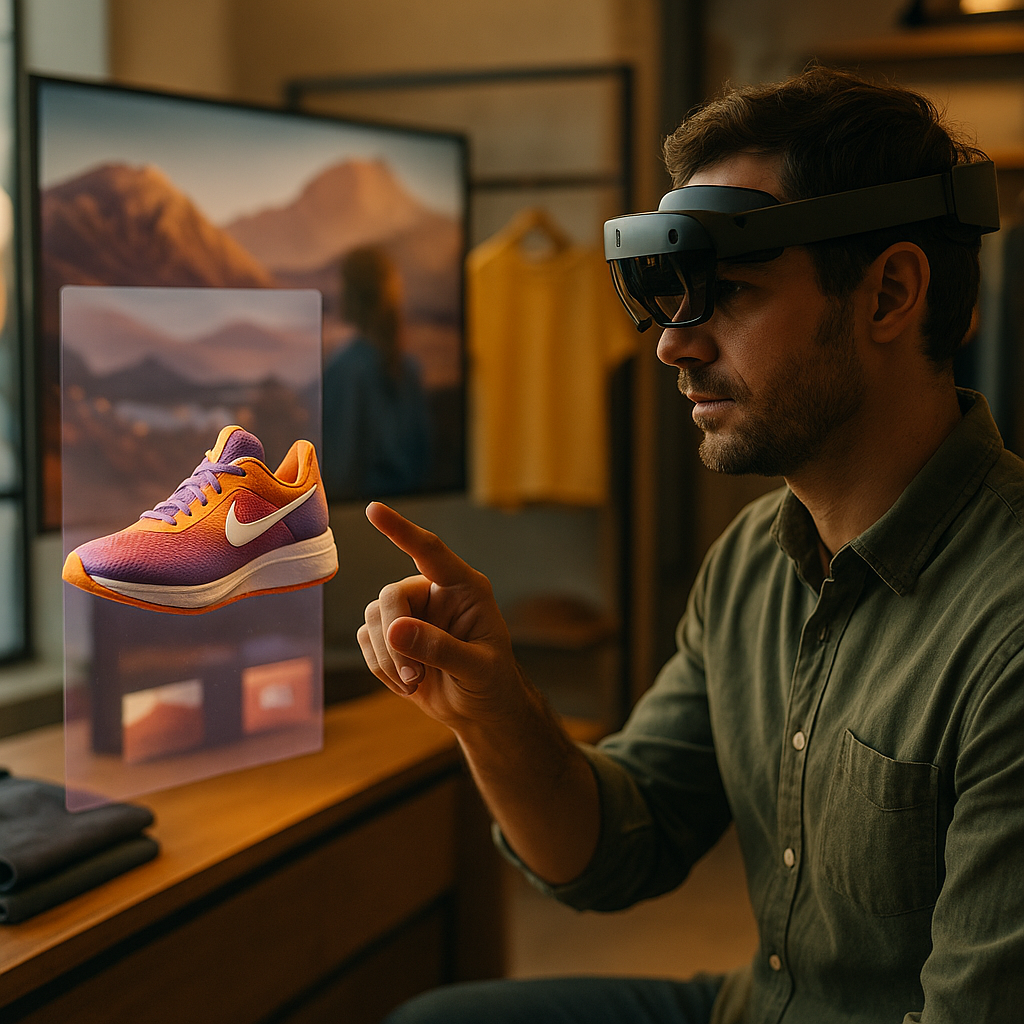
The Impact of Spatial Computing on Future Brand Narrative Formats is becoming impossible for marketers, strategists, and creators to ignore in 2026. As digital experiences move beyond flat screens, brands must rethink how stories are designed, delivered, and measured. Spatial computing changes not only where audiences engage, but how meaning, memory, and emotion are built. What happens when storytelling enters physical space?
Spatial computing marketing and the shift from screens to spaces
Spatial computing blends digital content with the physical world through devices and interfaces such as augmented reality, mixed reality, wearable displays, sensors, computer vision, and spatial audio. For brands, this means a major structural shift: narrative is no longer confined to a webpage, a video frame, or a mobile feed. It can now live in rooms, stores, streets, vehicles, events, and homes.
That shift matters because audience behavior has already changed. People move fluidly across channels and expect seamless, context-aware experiences. Traditional formats such as banner ads, static landing pages, and even short-form video still matter, but they cannot fully satisfy the growing demand for interactivity and relevance in physical environments. Spatial computing marketing expands brand storytelling into environments that react to presence, gesture, gaze, and location.
In practice, this creates new storytelling variables:
- Position: where branded content appears in relation to a user’s body and surroundings
- Persistence: whether a story element remains in place over time
- Context: what the environment, time, and user behavior reveal about intent
- Interactivity: how touch, motion, voice, and gaze affect the narrative
- Embodiment: how the user feels present inside a branded experience rather than outside it
These variables force brands to move beyond campaign thinking. Instead of asking, “What message should we push?” smart teams ask, “What experience should people enter, and how should that experience adapt?” That is the beginning of a new narrative logic.
Immersive brand storytelling and the rise of participatory narratives
Immersive brand storytelling is not simply about placing a logo in 3D. It is about redesigning narrative structure for environments where the audience can influence pace, sequence, and emotional intensity. In a spatial setting, the user often becomes a participant rather than a viewer.
This changes how brand narratives are built. Linear storytelling has a clear beginning, middle, and end. Spatial narrative often works more like a story architecture. Users may discover pieces in a different order, unlock layers through movement, or trigger scenes by entering certain zones. The brand still shapes the narrative arc, but control becomes shared.
That shared control can strengthen memory and trust when done well. People remember what they actively explore. They also assign greater value to experiences that feel personal. A beauty brand, for example, can let shoppers visualize product effects in real space while overlaying ingredient stories, tutorials, and personalized recommendations. An automotive brand can turn a showroom into an explorable performance story where the vehicle’s safety, design, and engineering appear as interactive layers around the car. A travel brand can transform planning into a pre-visit experience that lets potential visitors step through hotels, landmarks, or itineraries before booking.
The key is narrative intent. Spatial experiences should not exist only to impress. They should help the audience understand something faster, feel something more deeply, or make a decision more confidently. Helpful content principles still apply in immersive environments. The best experiences answer real questions:
- What is this product and how does it fit my life?
- Why should I trust this brand?
- What problem does this solve better than alternatives?
- How can I explore without friction or confusion?
Brands that treat spatial storytelling as utility plus emotion will outperform those that chase novelty alone.
Mixed reality advertising and the new rules of attention
Mixed reality advertising introduces a more demanding attention economy. On a phone screen, brands compete for scroll time. In a spatial environment, they compete for cognitive space inside the user’s real-world field of view. That raises the bar for relevance, design restraint, and user consent.
Interruptive formats will struggle here. A brand cannot assume it has the right to occupy someone’s space just because the technology allows it. Experiences need to feel invited, useful, and contextually appropriate. If they create visual clutter, social discomfort, or cognitive overload, users will reject them quickly.
That is why future-ready mixed reality advertising will likely follow several principles:
- Opt-in engagement: users choose when to enter a branded layer or interactive experience
- Environmental fit: content respects the physical setting and does not dominate it unnecessarily
- Task relevance: the experience supports a moment of shopping, learning, navigation, or decision-making
- Low-friction interaction: simple gestures, voice prompts, or intuitive spatial cues guide the journey
- Clear value exchange: users gain useful information, convenience, entertainment, or personalization
For marketers, this also changes measurement. Impressions alone mean less in spatial media. More valuable signals include dwell time, interaction depth, revisits, object engagement, route completion, shared experiences, and assisted conversion. Brands need cross-functional teams that combine creative strategy, UX design, 3D production, analytics, privacy governance, and platform expertise.
Executives often ask whether spatial experiences are scalable or still experimental. The honest answer in 2026 is both. They remain emerging, but the infrastructure is mature enough for practical deployment in retail, live events, education, automotive, healthcare, travel, and premium consumer experiences. The strongest programs start with high-intent use cases rather than broad gimmicks.
AR customer experience and how utility builds trust
AR customer experience is where spatial computing can create immediate business value. While immersive storytelling gets attention, utility drives sustained adoption. Consumers return to experiences that reduce uncertainty, save time, and improve decisions.
Consider the moments where customers hesitate: choosing the right product size, visualizing fit in a room, understanding complex features, comparing options, or learning how to use something properly. Augmented reality can address each of these friction points directly. When that utility is woven into a narrative, the brand becomes both guide and problem-solver.
This is where EEAT matters. Brands should design AR experiences that reflect real expertise, accurate product information, transparent claims, and clear customer benefit. If a furniture company offers room visualization, dimensions must be reliable. If a skincare brand presents ingredient education, the information should be evidence-based and easy to verify. If an industrial company uses AR demos for B2B buyers, the technical detail must be credible enough for professional evaluation.
Trust also depends on privacy and accessibility. Spatial systems can gather sensitive data about location, movement, gaze, and surroundings. Responsible brands should explain what is collected, why it is needed, how it is stored, and how users can control it. They should also design for different levels of mobility, comfort, and technical confidence. A spatial experience that excludes a large share of the audience is not future-proof.
Teams building AR customer experience should ask:
- Does this help the user solve a real problem?
- Is the information accurate and authored with subject-matter expertise?
- Can users understand and control data permissions easily?
- Is there a non-spatial fallback for people on other devices?
- Can the experience connect to commerce, support, or CRM systems cleanly?
When the answer is yes, spatial narrative becomes a trust engine rather than a one-time spectacle.
3D content strategy and the formats brands will need next
3D content strategy is quickly becoming a core marketing capability because spatial computing depends on assets that can move across platforms and contexts. Brands can no longer think only in terms of copy, images, and video. They need modular content systems that include 3D objects, spatial sound, interactive environments, metadata, behavioral logic, and adaptive storytelling layers.
The strongest strategy begins with a content model, not a single activation. A product should have reusable 3D assets that support ecommerce visualization, in-store interaction, training, customer support, and campaign storytelling. A brand world should include design rules for lighting, motion, interaction, and tone so experiences feel consistent across devices.
Future narrative formats are likely to include:
- Spatial product stories: explorable objects with embedded feature education and commerce links
- Location-based narrative layers: brand content triggered by stores, venues, cities, or landmarks
- Persistent branded environments: digital spaces users can revisit over time
- Collaborative experiences: multi-user storytelling for shopping, events, training, or fandom
- Adaptive service narratives: support and onboarding experiences that respond to the user’s context and progress
This requires operational discipline. Content teams need governance for asset quality, version control, localization, legal review, and analytics. Marketing leaders should also plan for interoperability. While platforms differ, reusable asset libraries and platform-agnostic storytelling principles will reduce waste and speed testing.
A practical starting point is to audit existing customer journeys and identify where spatial content adds the most value. Focus on one or two high-impact scenarios, define success metrics, and build a repeatable production workflow. Brands that create internal standards now will be in a stronger position as hardware adoption expands.
Future of digital storytelling through spatial ecosystems
The future of digital storytelling will not replace all current media with immersive environments. Instead, it will create narrative ecosystems where formats work together. A user might first encounter a brand through social video, continue on mobile, enter a spatial demo at home or in-store, receive AI-guided follow-up support, and complete the purchase on a traditional checkout flow. The story becomes continuous across modes, not trapped in one channel.
That continuity is where brand leaders should focus. Spatial computing should strengthen the full customer journey, not sit outside it. If the immersive layer is disconnected from media, CRM, commerce, support, and analytics, it becomes expensive theater. If it is integrated, it can become one of the most persuasive storytelling tools available.
The companies that succeed will share a few habits. They will invest in original expertise rather than copying trends. They will test with real users, not just internal stakeholders. They will tie spatial creativity to measurable outcomes such as consideration, conversion, retention, and loyalty. And they will respect the human realities of comfort, trust, and relevance.
Brand narrative formats are moving from messages people consume to environments they inhabit. That shift is profound because it changes what a brand relationship feels like. In spatial ecosystems, the brand is no longer just seen or heard. It is experienced in context, through action, with memory anchored to place and presence.
For marketers wondering when to act, the best answer is now. Not by rebuilding everything at once, but by developing the skills, standards, and experiments that prepare the organization for a more spatial future. The winners in 2026 are not the loudest adopters. They are the brands creating useful, trustworthy, and unforgettable experiences.
FAQs about spatial computing and brand storytelling
What is spatial computing in branding?
Spatial computing in branding refers to using technologies such as augmented reality, mixed reality, sensors, and 3D interfaces to place branded content in physical space. It allows audiences to interact with stories, products, and services in more immersive and context-aware ways.
How does spatial computing change brand narrative formats?
It shifts narratives from flat, linear formats into interactive environments. Users can explore stories at their own pace, trigger content through movement or location, and participate directly. This makes narrative more personalized, memorable, and tied to real-world context.
Is spatial computing only relevant for large consumer brands?
No. It can benefit B2C and B2B brands alike. Retail, automotive, healthcare, education, real estate, travel, manufacturing, and enterprise training all have high-value use cases. The right starting point depends on customer friction, product complexity, and business goals.
What are the biggest risks for brands using spatial experiences?
The main risks are poor usability, weak strategic fit, privacy concerns, inaccurate information, and novelty-driven execution. Brands should prioritize real utility, transparent data practices, and content grounded in credible expertise.
How can brands measure success in spatial computing campaigns?
Useful metrics include engagement depth, dwell time, interaction completion, repeat visits, assisted conversions, purchase confidence, support deflection, and customer satisfaction. The best measurement plans connect spatial behavior to broader business outcomes.
What should a brand build first?
Start with one high-intent use case where spatial computing clearly improves the customer experience. Product visualization, guided onboarding, interactive demos, and in-store assistance are often effective first steps because they combine utility with measurable value.
Spatial computing is redefining how brands tell stories by turning audiences into participants inside responsive environments. The most effective future narrative formats will combine immersion, utility, credibility, and strong privacy standards. Brands should start with practical customer needs, build reusable 3D and data foundations, and measure real outcomes. In 2026, spatial storytelling works best when it earns attention rather than demanding it.