


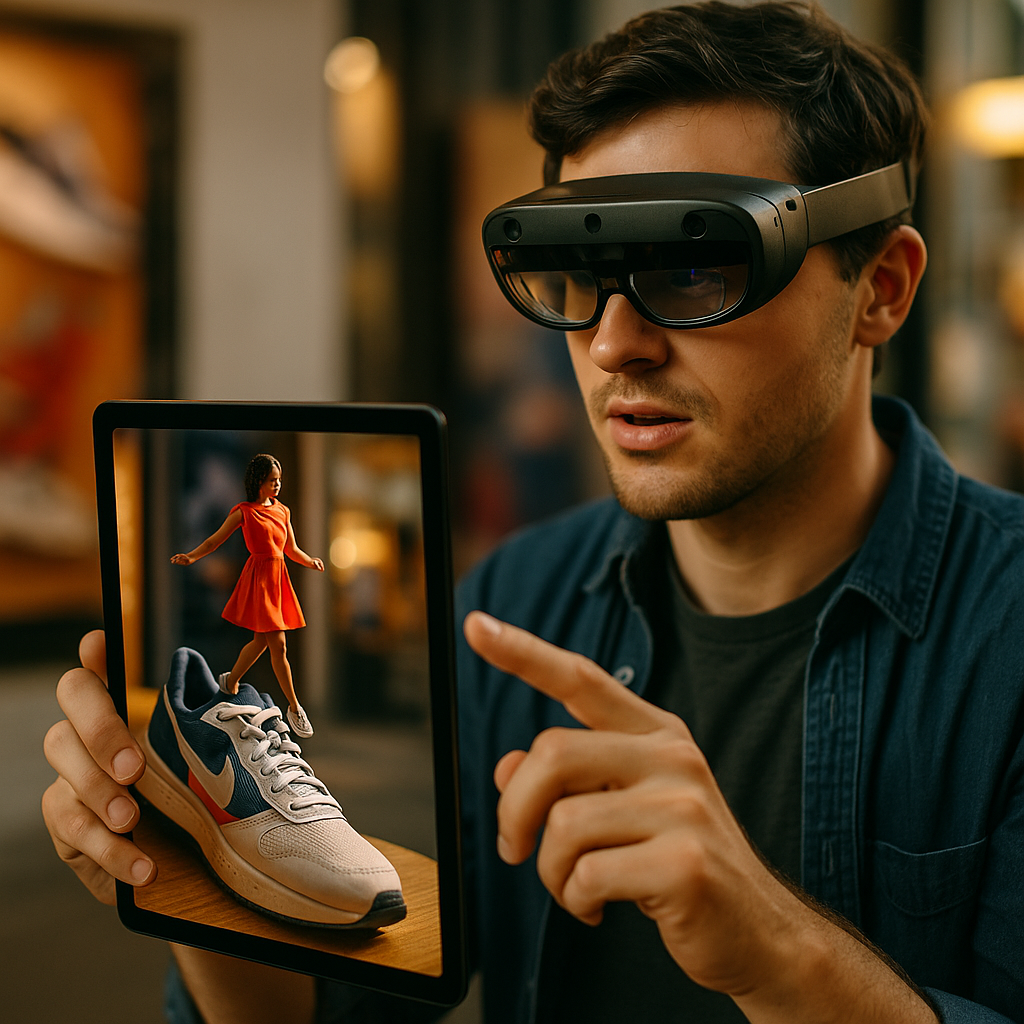
In 2025, spatial computing is reshaping how brands tell stories by blending digital content with the physical world. Instead of watching a narrative, audiences can enter it, influence it, and share it. This shift changes creative strategy, production, measurement, and trust. The brands that win will design experiences that feel human, useful, and memorable—so what does that look like in practice?
Immersive storytelling: turning audiences into participants
Immersive storytelling in spatial computing moves narrative brand storytelling from a linear message to an interactive experience. The audience no longer “receives” a story; they explore it. That difference matters because attention is earned through agency, not volume.
In a spatial experience, the brand can place narrative beats in space: a product origin story revealed as you walk through a virtual workshop; a sustainability journey that appears when you scan real packaging; a character-led guide that reacts to where you look and what you do. These mechanics create a feeling of discovery, which increases recall and deepens emotional connection.
To keep immersion from becoming gimmick, anchor every interaction to a clear story spine:
- Premise: what problem, aspiration, or belief the brand stands for.
- Progression: a beginning, middle, and end that still works if users take different paths.
- Payoff: a meaningful reveal, utility, or decision point that connects to the brand promise.
Practical tip: design for “glanceable” moments. Many users will engage in short bursts. Make sure each scene delivers a complete micro-chapter while also nudging the user toward the next beat.
Augmented reality branding: placing narrative in the real world
Augmented reality branding is one of the most immediate ways spatial computing impacts narrative brand storytelling because it merges context with content. The real world becomes your stage: homes, stores, event venues, and city streets can hold story elements that feel naturally relevant.
This is where follow-up questions usually appear: “Is AR only for product try-ons?” No. Try-ons are useful, but narrative AR goes further by making the brand’s meaning visible. A heritage brand can attach stories to artifacts on a shelf. A food brand can show provenance by letting customers tap ingredients on a plate to reveal farmers, processes, and quality checks. A financial brand can use AR to make an abstract concept like “risk” understandable through spatial metaphors and interactive scenarios.
AR also supports social distribution. When users capture and share a moment, they’re not just sharing an ad—they’re sharing an experience they helped create. To make that sharing brand-safe and on-message, provide:
- Guided capture: built-in prompts that help users frame the best moment.
- Clear identity cues: subtle, consistent brand assets rather than oversized logos.
- Consent-aware overlays: avoid capturing bystanders or sensitive locations without safeguards.
Measure impact beyond views. In AR, “dwell time,” “interaction depth,” and “return sessions” often correlate more strongly with brand lift than raw impressions.
Mixed reality experiences: blending utility and emotion
Mixed reality experiences combine virtual objects with real environments in ways that feel stable, persistent, and responsive. For narrative brand storytelling, this enables a powerful blend: emotional narrative plus practical utility.
Consider the storytelling advantage of persistence. A scene can remain in a user’s space over time—returning to it becomes part of the narrative. That creates a new pacing model: chapters can unfold over days, triggered by actions (opening a package, arriving at a store, completing a challenge) rather than forced binge consumption.
To keep mixed reality brand storytelling credible, treat it like product design, not just content production:
- Context-first design: what is the user doing in the physical space, and how does the story help rather than interrupt?
- Interaction clarity: users should understand how to progress without tutorials that break immersion.
- Comfort and accessibility: avoid rapid motion, reduce visual clutter, offer captions, and provide seated/standing modes.
Brands often ask: “Do we need a headset strategy?” Not necessarily. Build a layered approach where the same narrative concept adapts across devices: mobile AR for reach, mixed reality on compatible devices for depth, and web-based 3D for easy entry. Consistency in story logic matters more than uniform technical features.
Spatial UX design: guiding attention without breaking the story
Spatial UX design is the difference between a memorable narrative and a confusing tech demo. In spatial environments, the user controls the camera and the pace. That makes traditional storytelling tools—framing, cuts, and linear sequencing—less reliable. Your UX must quietly direct attention while preserving a sense of freedom.
Strong spatial narrative UX uses cues that feel natural:
- Light and sound: subtle audio direction and lighting gradients guide where to look.
- Motion hierarchy: the most important object moves first or most distinctly.
- Proximity triggers: story beats activate when a user approaches, reducing on-screen UI.
- Diegetic UI: instructions embedded in the world (signs, character gestures, tool labels) instead of floating menus.
Answering the next likely question—“How do we maintain brand voice?”—requires treating voice as behavior. In spatial computing, voice shows up in how characters respond, how tools behave, how guidance speaks, and how errors are handled. A premium brand might use calm, minimal cues and refined haptics. A playful brand might use expressive animation and friendly prompts. Document these choices in a spatial design system so future experiences stay coherent.
Finally, respect attention. If everything is interactive, nothing is. Limit interactive hotspots and keep the user’s goal clear: explore, learn, choose, or share.
Brand engagement metrics: measuring narrative impact responsibly
Brand engagement metrics for spatial computing must reflect the reality that experiences are non-linear. A user might skip a chapter, replay one moment, or spend most time in a utility feature. Measurement should capture both narrative consumption and meaningful outcomes.
Use a framework that maps to the funnel while staying experience-native:
- Reach and entry: launches, unique participants, device distribution, drop-off before first interaction.
- Engagement depth: average session duration, interactions per session, chapter completion rates, repeat visits.
- Story comprehension: in-experience polls, post-experience recall prompts, save/share rates of key moments.
- Business outcomes: add-to-cart, store visits, lead submissions, customer support deflection, conversion lift versus control.
For credibility under EEAT expectations, separate what you can prove from what you infer. If you claim “brand love increased,” support it with a validated brand lift study, controlled experiment, or well-designed survey. When you cannot, use careful language: “participants who completed the full experience were more likely to…”
Privacy and trust are part of measurement. Spatial experiences may involve camera access, location signals, and environmental mapping. Explain data usage in plain language at the moment of need, provide meaningful opt-outs, and avoid collecting more than necessary. Trust is not a compliance checkbox; it is a narrative multiplier.
Content authenticity and trust: EEAT for spatial brand narratives
Spatial computing can amplify credibility—or expose weak claims. Because users can inspect details up close and interact with information, inaccuracies stand out. EEAT in this context means building narratives that are demonstrably true, responsibly produced, and clearly attributed.
Apply these practical practices:
- Source transparency: if you present sustainability, safety, or health claims, include accessible evidence inside the experience (certifications, audit summaries, methodology notes).
- Expert involvement: involve subject-matter experts in scripting and review, and reflect their input in how you explain complex topics.
- Realistic representation: match 3D product models to real specs; avoid exaggerations that could be seen as deceptive.
- User safety: include boundary awareness prompts, avoid encouraging risky movement, and provide quick exits.
- Inclusive design: captions, readable contrast, motion reduction, and alternative navigation paths.
Authenticity also comes from restraint. Not every brand needs a sprawling virtual world. A focused, well-researched spatial vignette can outperform a large experience that lacks narrative clarity. In 2025, audiences reward brands that respect time, attention, and intelligence.
FAQs: The Impact Of Spatial Computing On Narrative Brand Storytelling
What is spatial computing in brand storytelling?
Spatial computing uses technologies like AR and mixed reality to place digital narrative elements into physical spaces or blend them with real environments. For brands, it enables stories people can explore, influence, and share through interactive experiences rather than passive media.
How does spatial storytelling improve brand recall?
It increases recall by combining agency (users make choices), multisensory cues (visual, audio, sometimes haptics), and contextual relevance (the story appears where it matters). Well-designed experiences turn key brand messages into moments of discovery, which tends to be more memorable than repeated exposure.
Do we need a headset to run spatial brand campaigns?
No. Many effective campaigns use mobile AR for broad reach. A strong approach is device-layered: mobile for entry, web-based 3D for quick access, and mixed reality on compatible devices for deeper chapters—while keeping the same narrative logic and brand voice.
What are the biggest risks for brands using spatial computing?
Common risks include collecting unnecessary data, creating uncomfortable or inaccessible experiences, over-promising product capabilities, and building novelty-first content with weak narrative structure. Brands reduce risk by practicing privacy-by-design, inclusive UX, and rigorous claim verification.
Which metrics matter most for spatial narrative campaigns?
Prioritize engagement depth and meaningful outcomes: interaction rate, chapter completion, repeat sessions, save/share of key moments, and conversion-related actions. Pair these with brand lift measurement or controlled testing when making strong impact claims.
How do we start without a large budget?
Start with a single narrative moment that solves a real user need—an AR “how it’s made” scene, an interactive product guide, or a location-based chapter at an event. Test with a small audience, measure interaction depth and comprehension, then expand the story world based on what people actually do.
Spatial computing changes narrative brand storytelling by making the audience an active participant inside a story that exists in real space. In 2025, the strongest work blends emotional narrative with practical value, supported by clear UX, credible sourcing, and privacy-first measurement. Build one focused, truthful experience, track engagement depth, and iterate—because the future belongs to stories people can step into.