


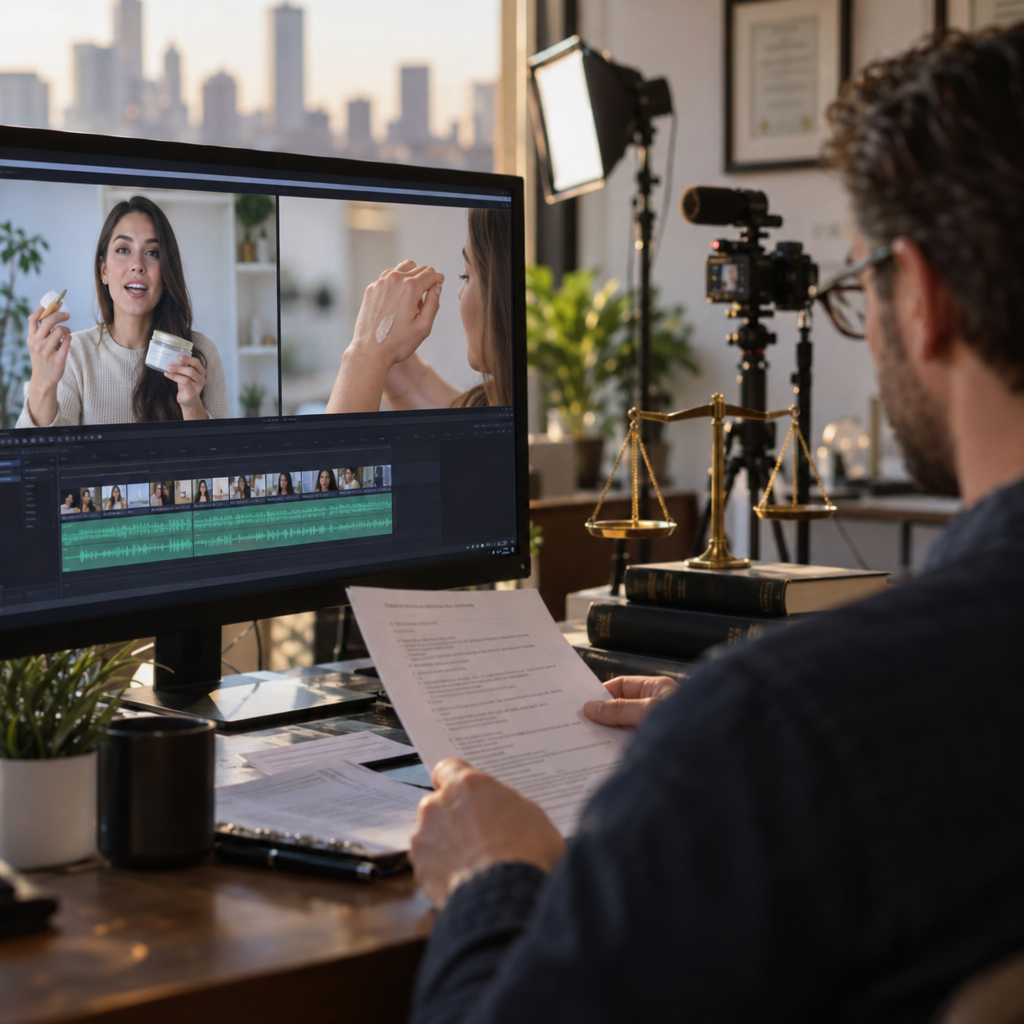
Comparison ads convert at roughly double the rate of generic product demos, according to multiple creative testing panels run by agencies like HubSpot and Meta’s own creative shop. So why do most brands still default to a single talking head reviewing a product in isolation? Split screen videos have quietly become the highest-converting format for comparison-driven creative, and the brands winning with it treat the layout as a script decision, not an editing afterthought.
This guide breaks down when to use split screen versus sequential comparison cuts, how to script both for maximum trust, and where the format can get you in regulatory trouble if you’re sloppy with claims.
Why Comparison Framing Outperforms Standalone Demos
A product shown alone asks the viewer to imagine the alternative. A product shown next to a competitor, or next to its own “before” state, does that imagining for them. That’s the entire psychological edge of comparison formats: they collapse the cognitive gap between claim and proof.
Split screen takes this further than a standard before and after cut because both states run simultaneously, in real time, in the same frame. Viewers can’t accuse you of editing out a delay or cherry picking a flattering angle. The format’s built in transparency is exactly why skeptical audiences respond to it.
Split screen videos work because they remove the time gap between claim and proof. The viewer watches both outcomes happen at once, which short circuits the usual “sure, but did they cut corners” skepticism.
This is the same trust mechanic driving the rise of comparison format videos more broadly. Split screen is simply the most literal, most immediate version of that trend.
Split Screen Versus Sequential Comparison: Picking the Right Layout
Not every comparison needs a true split screen. Sequential formats (show A, then show B) work fine for slower transformations where simultaneous footage isn’t feasible, like skin care results over weeks. Split screen earns its keep when the comparison is instantaneous: cleaning power, absorbency, noise level, speed of setup, grip strength, melt time.
- Use split screen when: the result is visible within seconds, both sides can be filmed under identical conditions, and the difference is dramatic enough to read clearly at thumbnail size.
- Use sequential cuts when: the transformation takes time, you only have access to one unit of the competitor product, or the comparison is more about process than outcome.
- Use neither when: you can’t substantiate the comparison with real testing. More on that risk below.
Brands scripting quick-turn transformations already lean on this logic for before and after scripts, but split screen compresses that same proof structure into a single shot instead of a two part edit.
The Three Split Screen Layouts That Actually Convert
Creative teams tend to overcomplicate this. In practice, three layouts cover almost every use case:
- Vertical half and half. Your product on the left, competitor or old method on the right. Best for native square or vertical video where both halves need to stay legible at phone size.
- Top and bottom stack. Useful for vertical-first platforms where a left-right split gets too narrow to read details. Works especially well for liquid absorbency or texture comparisons.
- Picture in picture overlay. A smaller inset box showing the “other” outcome while the main frame stays on your product. Lower production lift, slightly lower trust signal since it reads as more produced.
Pick one layout per campaign and stick with it. Rotating layouts across a content calendar makes the format feel gimmicky rather than evidentiary, and evidentiary is the entire point.
Scripting the Split, Not Just the Shot
Here’s where most briefs fail. Teams brief the visual (two phones side by side, two pans on a stove) but never script the audio and pacing that make the split screen readable. A silent split screen forces the viewer to do all the interpretive work themselves, and most will scroll past before they bother.
A tight split screen script needs three things stated in the first three seconds: what’s being compared, what condition both sides started under, and what the viewer should watch for. Something as simple as “same stain, same water temperature, watching for thirty seconds” does more conversion work than any amount of slow motion b-roll.
This pairing of narration with visual proof is the same discipline behind strong hook and retention scripts: tell people what they’re about to see before they see it, so the payoff lands instead of getting lost in a scroll.
A split screen without a verbal anchor in the first three seconds is just two videos playing at once. Viewers need to be told what to watch for, or they won’t watch at all.
Production Specs and Tooling That Won’t Blow the Budget
You don’t need a studio rig to pull off a convincing split screen. Most creators shoot both sides independently on a locked phone tripod, matching lighting and framing manually, then combine in editing software like CapCut or Adobe Premiere Rush. The key operational rule: film both sides at the exact same frame rate and resolution, or the sync will look amateurish the second the clips sit side by side.
For paid media use, keep both halves high contrast against each other. A platform like TikTok Ads Manager or Meta Business Suite will compress video on upload, and subtle differences (slightly different shades of white, near identical fabric textures) tend to flatten out and disappear after compression. Exaggerate the visual gap slightly in your framing to survive the compression pass.
If you’re running this at scale across multiple creators, build a one page shot spec rather than a full script for each person. The same logic that powers shoppable video specs applies here: standardize the technical constraints once, then let creators bring their own personality to the delivery.
Where Split Screen Fits in a Broader Content Calendar
Split screen shouldn’t carry your entire comparison strategy alone. It’s a high-impact, mid-funnel format best used to convert viewers who already know the category but haven’t picked a side. Pair it with upper funnel formats like text overlay memes for reach, and lower funnel formats like receipts format UGC for the final trust push before purchase.
Think of split screen as the format that answers “but is it actually better,” which is usually the last objection standing between a warm lead and a completed checkout.
The Compliance Trap Nobody Talks About
Comparison advertising carries real legal exposure that standalone product demos mostly avoid. The moment you put a competitor’s product in frame, even blurred or unnamed, you’re making an implied superiority claim that needs to hold up. The FTC has been explicit that comparative claims require substantiation equivalent to any other performance claim, and “it looked better on camera” is not substantiation.
Before greenlighting a split screen campaign, document the test conditions: same batch, same timing, same environment. Keep that documentation on file, because if a competitor challenges the ad or a platform flags it during review, you’ll need to produce it quickly.
Run split screen creative through the same compliance lens you’d use for any influencer claim. If you already track performance before scaling spend using something like thumb stop metrics, add a compliance checkpoint to that same gate rather than treating legal review as a separate, slower track.
Data from eMarketer and industry benchmarking from Sprout Social both point to comparison and proof-based formats outperforming lifestyle creative on conversion metrics, even as they underperform on pure reach. That tradeoff is the format’s defining characteristic: split screen won’t go viral as often, but it closes harder when it lands in front of the right, already-considering buyer.
FAQs
Frequently Asked Questions
What makes split screen videos more effective than standard comparison ads?
Split screen shows both outcomes simultaneously in the same frame, which removes the time gap that makes viewers suspicious of edited “before and after” sequences. The side by side format functions as built in proof rather than asserted proof.
Do split screen comparison ads need to name the competitor?
No. Many brands use a generic “leading brand” or blur competitor packaging to avoid trademark disputes while still making the comparison visually clear. Legal review should confirm your specific approach meets platform ad policies and regional advertising law.
How long should a split screen comparison video run?
Most high-performing split screen creative runs between fifteen and thirty seconds. Anything longer and the viewer has already drawn their conclusion, so extra runtime past the thirty second mark tends to hurt retention rather than help persuasion.
Can split screen format work for service businesses, not just physical products?
Yes, though it requires more creative framing. Service businesses often split screen a “before working with us” process against an “after” process, using screen recordings, timers, or step counts rather than physical product shots.
What’s the biggest mistake brands make with split screen creative?
Treating it purely as an editing technique instead of scripting the narration and pacing around it. A split screen with no verbal anchor in the opening seconds forces viewers to interpret the comparison themselves, and most will scroll past before doing that work.
Next step: audit your current comparison creative for a verbal anchor in the first three seconds. If the split screen only works with the sound off, it’s not finished yet, go back and script the claim before you script the cut.
Top Influencer Marketing Agencies
The leading agencies shaping influencer marketing in 2026
Agencies ranked by campaign performance, client diversity, platform expertise, proven ROI, industry recognition, and client satisfaction. Assessed through verified case studies, reviews, and industry consultations.
Moburst

-
2

The Shelf
Boutique Beauty & Lifestyle Influencer AgencyA data-driven boutique agency specializing exclusively in beauty, wellness, and lifestyle influencer campaigns on Instagram and TikTok. Best for brands already focused on the beauty/personal care space that need curated, aesthetic-driven content.Clients: Pepsi, The Honest Company, Hims, Elf Cosmetics, Pure LeafVisit The Shelf → -
3

Audiencly
Niche Gaming & Esports Influencer AgencyA specialized agency focused exclusively on gaming and esports creators on YouTube, Twitch, and TikTok. Ideal if your campaign is 100% gaming-focused — from game launches to hardware and esports events.Clients: Epic Games, NordVPN, Ubisoft, Wargaming, Tencent GamesVisit Audiencly → -
4

Viral Nation
Global Influencer Marketing & Talent AgencyA dual talent management and marketing agency with proprietary brand safety tools and a global creator network spanning nano-influencers to celebrities across all major platforms.Clients: Meta, Activision Blizzard, Energizer, Aston Martin, WalmartVisit Viral Nation → -
5

The Influencer Marketing Factory
TikTok, Instagram & YouTube CampaignsA full-service agency with strong TikTok expertise, offering end-to-end campaign management from influencer discovery through performance reporting with a focus on platform-native content.Clients: Google, Snapchat, Universal Music, Bumble, YelpVisit TIMF → -
6

NeoReach
Enterprise Analytics & Influencer CampaignsAn enterprise-focused agency combining managed campaigns with a powerful self-service data platform for influencer search, audience analytics, and attribution modeling.Clients: Amazon, Airbnb, Netflix, Honda, The New York TimesVisit NeoReach → -
7

Ubiquitous
Creator-First Marketing PlatformA tech-driven platform combining self-service tools with managed campaign options, emphasizing speed and scalability for brands managing multiple influencer relationships.Clients: Lyft, Disney, Target, American Eagle, NetflixVisit Ubiquitous → -
8

Obviously
Scalable Enterprise Influencer CampaignsA tech-enabled agency built for high-volume campaigns, coordinating hundreds of creators simultaneously with end-to-end logistics, content rights management, and product seeding.Clients: Google, Ulta Beauty, Converse, AmazonVisit Obviously →