


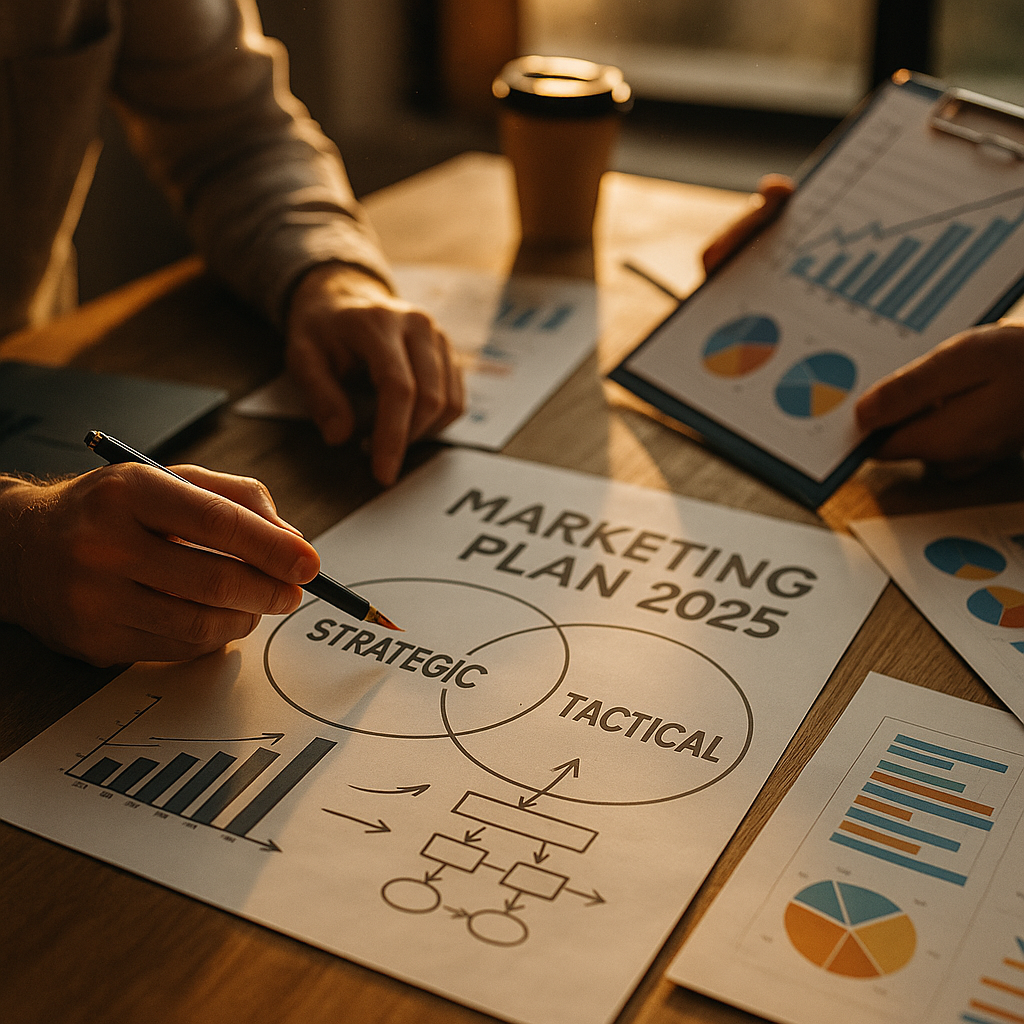
Building a marketing plan that is both strategic and tactical is essential for achieving long-term growth and daily wins. With competition intensifying in 2025, businesses need structured, actionable roadmaps that connect big-picture goals with precise actions. Ready to discover how to build a marketing plan that drives results at every level? Let’s dive in!
Understanding the Difference: Strategic vs Tactical Marketing Planning
Before crafting your marketing plan, it’s essential to differentiate between strategic and tactical marketing planning. Strategic planning outlines your overarching vision: what you want your brand to achieve and why. Tactical planning, on the other hand, defines how you’ll realize these ambitions through specific actions executed daily, weekly, or monthly.
- Strategic: Sets vision, defines target audience, positions the brand.
- Tactical: Implements campaigns, chooses channels, schedules content.
EEAT best practices, according to Google’s latest guidelines, stress the importance of showing proven expertise and evidence at both levels. Combining both approaches keeps your plan focused, agile, and impactful throughout the year.
Defining Your Business Goals and Marketing Objectives
Setting clear business goals and marketing objectives is the crucial first step for both inspiring strategy and shaping tactics. Begin by analyzing recent trends in your market, benchmarking against 2025 standards, and using data to inform your approach. Consider:
- What revenue or sales growth is realistic over 12 months?
- Are you aiming for new customer acquisition, retention, or both?
- How does your product or service solve emerging consumer pain points?
Transform your business goals into SMART (Specific, Measurable, Achievable, Relevant, Time-bound) marketing objectives. For example, “Increase qualified leads by 30% in Q1 2025 through targeted LinkedIn ads.” This level of clarity ensures every tactic serves a larger mission.
Conducting Market Analysis and Customer Research
Robust market analysis and customer research form the backbone of a marketing plan that works in 2025. Successful companies regularly invest in understanding market shifts, competitors, and—most importantly—customer behavior. Follow these evidence-based steps:
- Analyze the competitive landscape: Use the latest data tools to monitor competitors’ messaging, channel focus, and performance benchmarks.
- Gather customer insights: Run online surveys, analyze feedback from support teams, and study recent buying trends using analytics platforms.
- Segment your audience: Divide your market into clear personas based on demographics, behaviors, and needs. Automation platforms now make segmentation almost effortless.
Incorporating customer voice and market data into your plan boosts relevance, engagement, and ultimately, your ROI. According to a 2024 HubSpot report, organizations that employ data-driven customer insights in their planning see 40% higher campaign effectiveness.
Choosing Strategic Marketing Channels for 2025
Your strategic marketing channels determine where and how you’ll reach your target audience. The options in 2025 are broader than ever—from organic search and social media to podcasts, influencer programs, live streams, and emerging platforms like Threads. To choose optimally:
- Leverage analytics: Identify which channels deliver the highest engagement and conversions for your segment.
- Balance old and new media: Combine proven channels (SEO, email) with up-and-coming spaces (short-form video, social audio).
- Test rapidly: Prioritize an agile mix by piloting budget-friendly campaigns on new platforms for real-time feedback.
Document your channel strategy and outline core messages tailored for each. For example, LinkedIn may be used for B2B thought leadership, while Instagram serves branding and awareness efforts.
Designing and Implementing Tactical Marketing Activities
With your strategy set, it’s time to blueprint tactical marketing activities that support your objectives on a weekly basis. EEAT guidelines recommend fully mapping out the workflow for each tactic, assigning owners, resources, and metrics up front.
Consider these best practices:
- Develop a content calendar: Plot promotions, email sends, blog posts, and ad campaigns by date and channel.
- Invest in automation: Use current marketing platforms to streamline repetitive tasks, lead scoring, and personalized follow-ups.
- Embrace experimentation: Run A/B tests on creative, calls-to-action, and landing pages, learning continuously from performance data.
- Align with sales: Ensure seamless handoff of qualified leads and use shared dashboards to report progress.
Effective tactical implementation turns strategy from theory into targeted, trackable action. Businesses excelling at this step, according to Forrester’s 2024 findings, achieve 25% higher lead-to-sale conversion rates than competitors who don’t.
Measuring Results and Optimizing Your Marketing Plan
Continuous evaluation is vital if you want your marketing plan to remain relevant as behaviors and platforms evolve. Regularly measuring results and optimizing your marketing plan ensures that every action delivers real value.
- Set measurable KPIs: Examples include organic traffic growth, click-through rates, cost per lead, and sales pipeline velocity.
- Review and report: Block time monthly to analyze dashboards, adjust tactics, and spotlight what’s working—and what’s not.
- Agility is key: Be ready to pivot quickly if a channel underperforms, a trend emerges, or market conditions shift.
Draw on both quantitative data (analytics, conversion rates) and qualitative data (customer testimonials, team feedback) to guide refinements. An optimized plan saves resources and maximizes impact every quarter.
Building a marketing plan that is both strategic and tactical requires vision, actionable steps, and relentless optimization. Align goals, ground your actions in data, and embrace flexible execution to outperform in 2025’s competitive marketplace.
FAQs: Building a Strategic and Tactical Marketing Plan
-
What is the main difference between strategic and tactical marketing?
Strategic marketing focuses on big-picture goals and positioning, while tactical marketing details the specific actions and campaigns needed to achieve those objectives.
-
How often should I update my marketing plan?
Review and optimize your plan quarterly to ensure alignment with changing market trends, platform updates, and internal performance metrics.
-
Which marketing channels are most effective in 2025?
This depends on your audience—however, SEO, short-form video social channels, email marketing, and influencer collaborations continue to deliver strong results.
-
How can I ensure my tactics align with my strategy?
Begin with clear, SMART objectives, regularly tie each tactic to a strategic goal, and review KPIs to maintain alignment and adjust as needed.
-
What tools can help streamline my marketing planning?
Modern marketing automation platforms, AI analytics solutions, and collaborative project management tools can help track progress, automate tasks, and drive accountability.