


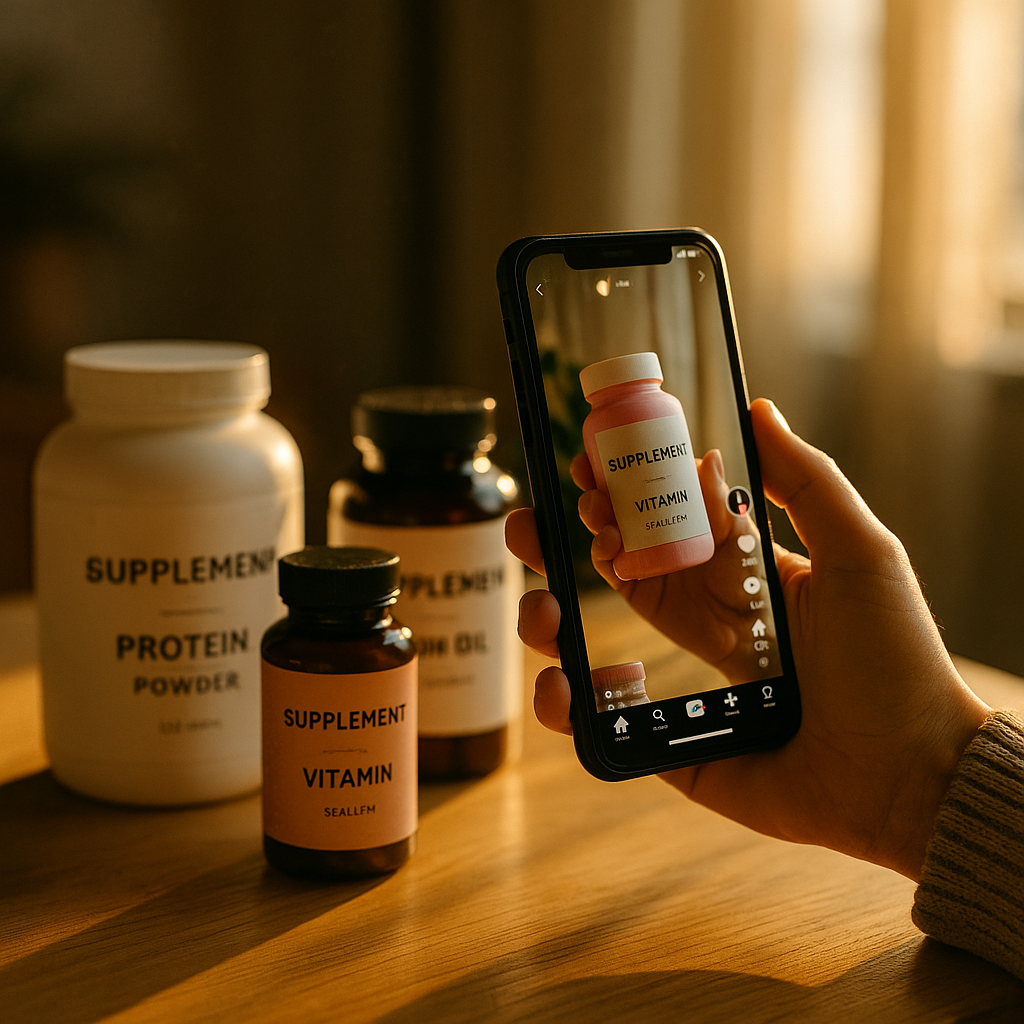
Supplement brands spent a decade building funnels on Meta. Now many are quietly dismantling them. Industry buyers tracking TikTok Shop performance report blended CAC coming in 30 to 50 percent lower than Meta prospecting campaigns for the same SKUs. That is not a rounding error. That is a reason finance teams start asking why the media plan still looks like it did two years ago.
The Math Behind the Migration
Supplement marketing has always lived and died on unit economics. Subscription models, low average order values, and razor thin margins mean a brand cannot absorb bloated acquisition costs the way a luxury or fashion label can. When Meta’s CPMs climbed again this year amid iOS privacy constraints and rising auction competition, supplement marketers felt it first and hardest.
TikTok Shop changed the equation by collapsing discovery and checkout into a single swipe. A viral creator video showing a magnesium stack or a greens powder doesn’t just drive awareness, it drives an in-app purchase before the viewer leaves the app. That shortened path matters enormously for a category where impulse plus social proof often beats deliberation.
Brands moving budget to TikTok Shop aren’t chasing a trend, they’re chasing a shorter, cheaper path from view to checkout that Meta’s ad stack can no longer match for this category.
Supplement brands also benefit from TikTok’s affiliate infrastructure. Instead of paying flat sponsorship fees, brands can structure creator deals on commission, only paying out when a sale actually closes. That shifts risk away from the brand and toward performance, which is exactly the kind of model a CFO wants to see when creator spend is scrutinized. This dovetails with a broader trend covered in influencer marketing’s core KPI shift, where GMV has overtaken vanity engagement metrics as the number finance actually cares about.
Why Meta’s Funnel Is Failing Supplement Brands
Meta still owns reach. Nobody disputes that. But reach without a frictionless checkout path is an expensive luxury for a category selling a $35 bottle of capsules. A Meta click typically lands on a brand’s own site, where load times, upsell pop ups, and multi-step checkouts bleed conversion rate. Every extra second of friction costs money in a vertical with this thin a margin.
Meta’s Advantage+ shopping campaigns have improved automation, and some brands still run them profitably as a complement. But the category’s broader complaint is consistent: rising CPMs, shrinking attribution visibility post iOS 14.5, and an algorithm that increasingly favors broad, interest-agnostic targeting over the niche wellness audiences supplement brands used to buy cheaply. Research from eMarketer has repeatedly flagged social commerce as the fastest growing slice of ad spend precisely because platforms like TikTok fold the purchase into the content experience itself.
There’s also a trust dimension. Supplement claims live under constant scrutiny from the Federal Trade Commission, and consumers have grown skeptical of polished static ad creative promising miracle results. A creator filming an unboxing in their kitchen reads as more credible than a studio shot ad unit, even when the underlying claim is identical. That credibility gap shows up directly in conversion rate.
Is TikTok Shop Actually Cheaper to Scale?
This is the question every media buyer should be asking before reallocating six figures of budget. The honest answer: cheaper at small to mid scale, more volatile at the top end.
Early TikTok Shop wins often come from a handful of creators whose content happens to resonate. That’s lightning in a bottle, not a repeatable system. Scaling requires a disciplined creator pipeline, something brands relying on one or two viral hits frequently lack. The brands seeing durable results have built what amounts to an always-on creator seeding operation, constantly testing new voices rather than re-running the same winning video until it fatigues.
- Lower CPMs during the discovery phase, but inventory tightens fast once a category gets hot
- Commission-based creator deals that reduce fixed cost risk
- Faster feedback loops, winning content shows itself within days, not weeks
- Heavier operational lift, someone has to manage dozens of creator relationships instead of one media buyer tuning an ad account
That operational lift is the part brands underestimate. Shifting budget from Meta to TikTok Shop isn’t just a media plan change, it’s a staffing and workflow change. Programs that treat creator sourcing as an afterthought tend to plateau quickly, a pattern explored in creator marketing maturity curve research showing the gap between brands that systematize creator sourcing and those that don’t.
Compliance Risk Doesn’t Disappear, It Just Moves
Supplement marketing carries regulatory baggage Meta campaigns learned to navigate over a decade of enforcement actions and policy updates. TikTok Shop is newer territory, and that novelty cuts both ways. On one hand, enforcement around disclosure and health claims is still maturing. On the other, that ambiguity is exactly where brands get burned.
FTC disclosure rules apply regardless of platform. A creator posting a TikTok Shop affiliate link without a clear #ad disclosure creates the same liability as an undisclosed Instagram post, and TikTok’s own commission structure makes the paid relationship arguably easier to prove in an investigation. Brands that assume TikTok Shop is a regulatory gray zone are setting themselves up for exactly the kind of backlash covered in programs without strategy, where a lack of clear creator guidelines turned into a PR problem.
Smart legal and compliance teams are building TikTok Shop specific creator contracts now, before volume scales further. That includes mandatory disclosure language, claims review for anything touching health outcomes, and a clear approval workflow before content goes live. Waiting until after a viral moment to retrofit compliance is a losing strategy.
What This Means for Budget Allocation
Nobody serious is suggesting supplement brands abandon Meta entirely. The smarter framing: Meta for retargeting and brand awareness at the top of funnel, TikTok Shop for the conversion heavy, impulse driven middle and bottom. Several brands are now running a hybrid model where Meta ads actually drive traffic to a brand’s TikTok Shop storefront rather than a traditional landing page, borrowing TikTok’s lower friction checkout while still using Meta’s targeting precision.
Measurement remains the sticking point. Attribution across two platforms with different reporting standards is messy, and plenty of CMOs are already struggling to prove ROI even within a single channel, a challenge detailed in ROI measurement research. Adding a second commerce engine without a unified dashboard just compounds the confusion.
The brands getting this right track CAC payback period as the north star metric across both platforms, rather than optimizing each channel in isolation. That approach, outlined in CAC payback period coverage, forces an apples to apples comparison that pure platform level reporting obscures. Livestream shopping events are also becoming a meaningful lever here, with supplement brands running scheduled drops that mirror the dynamics covered in livestream commerce trend reporting.
For agencies managing supplement clients, the practical move is a quarterly budget test: hold 70 to 80 percent of spend in the proven channel, and rotate 20 to 30 percent into TikTok Shop with clear CAC benchmarks before scaling further. That is more disciplined than either staying all in on Meta out of habit or chasing TikTok Shop hype without a measurement plan. Platforms like TikTok Ads Manager and Meta Business Suite both offer the reporting granularity needed to run this comparison honestly, provided someone on the team is actually pulling the numbers weekly rather than monthly.
Frequently Asked Questions
Common questions supplement marketers ask before shifting budget.
FAQs
Why are supplement brands specifically moving to TikTok Shop over other categories?
Supplement products have low average order values and thin margins, making CAC the single most sensitive metric in the business. TikTok Shop’s in-app checkout and commission based creator model reduce acquisition cost more dramatically for this category than for higher margin verticals like apparel or beauty.
Should a supplement brand drop Meta ads entirely?
Most brands keep Meta for retargeting and top of funnel awareness while shifting conversion focused budget to TikTok Shop. A full exit from Meta is rare and usually unwise given its retargeting precision and broader reach.
What compliance risks come with TikTok Shop affiliate creators?
FTC disclosure rules apply the same way they do on any platform. Creators must clearly disclose paid or commission based relationships, and health claims about supplements face the same scrutiny regardless of where they’re posted.
How do brands measure ROI across both platforms consistently?
The most reliable approach tracks CAC payback period and GMV per creator across both channels rather than relying on each platform’s native reporting in isolation, since attribution standards differ between Meta and TikTok Shop.
Is TikTok Shop reliable for scaling beyond a few viral creator hits?
Scaling requires an always-on creator pipeline rather than dependence on one or two viral videos. Brands that invest in systematic creator sourcing see more durable, repeatable results than those chasing isolated viral moments.
Run a side by side CAC test before committing further budget: hold your Meta baseline steady, route a defined 20 percent slice into TikTok Shop with a creator compliance workflow already in place, and compare payback period after 60 days, not vibes after one viral post.
Top Influencer Marketing Agencies
The leading agencies shaping influencer marketing in 2026
Agencies ranked by campaign performance, client diversity, platform expertise, proven ROI, industry recognition, and client satisfaction. Assessed through verified case studies, reviews, and industry consultations.
Moburst

-
2

The Shelf
Boutique Beauty & Lifestyle Influencer AgencyA data-driven boutique agency specializing exclusively in beauty, wellness, and lifestyle influencer campaigns on Instagram and TikTok. Best for brands already focused on the beauty/personal care space that need curated, aesthetic-driven content.Clients: Pepsi, The Honest Company, Hims, Elf Cosmetics, Pure LeafVisit The Shelf → -
3

Audiencly
Niche Gaming & Esports Influencer AgencyA specialized agency focused exclusively on gaming and esports creators on YouTube, Twitch, and TikTok. Ideal if your campaign is 100% gaming-focused — from game launches to hardware and esports events.Clients: Epic Games, NordVPN, Ubisoft, Wargaming, Tencent GamesVisit Audiencly → -
4

Viral Nation
Global Influencer Marketing & Talent AgencyA dual talent management and marketing agency with proprietary brand safety tools and a global creator network spanning nano-influencers to celebrities across all major platforms.Clients: Meta, Activision Blizzard, Energizer, Aston Martin, WalmartVisit Viral Nation → -
5

The Influencer Marketing Factory
TikTok, Instagram & YouTube CampaignsA full-service agency with strong TikTok expertise, offering end-to-end campaign management from influencer discovery through performance reporting with a focus on platform-native content.Clients: Google, Snapchat, Universal Music, Bumble, YelpVisit TIMF → -
6

NeoReach
Enterprise Analytics & Influencer CampaignsAn enterprise-focused agency combining managed campaigns with a powerful self-service data platform for influencer search, audience analytics, and attribution modeling.Clients: Amazon, Airbnb, Netflix, Honda, The New York TimesVisit NeoReach → -
7

Ubiquitous
Creator-First Marketing PlatformA tech-driven platform combining self-service tools with managed campaign options, emphasizing speed and scalability for brands managing multiple influencer relationships.Clients: Lyft, Disney, Target, American Eagle, NetflixVisit Ubiquitous → -
8

Obviously
Scalable Enterprise Influencer CampaignsA tech-enabled agency built for high-volume campaigns, coordinating hundreds of creators simultaneously with end-to-end logistics, content rights management, and product seeding.Clients: Google, Ulta Beauty, Converse, AmazonVisit Obviously →