


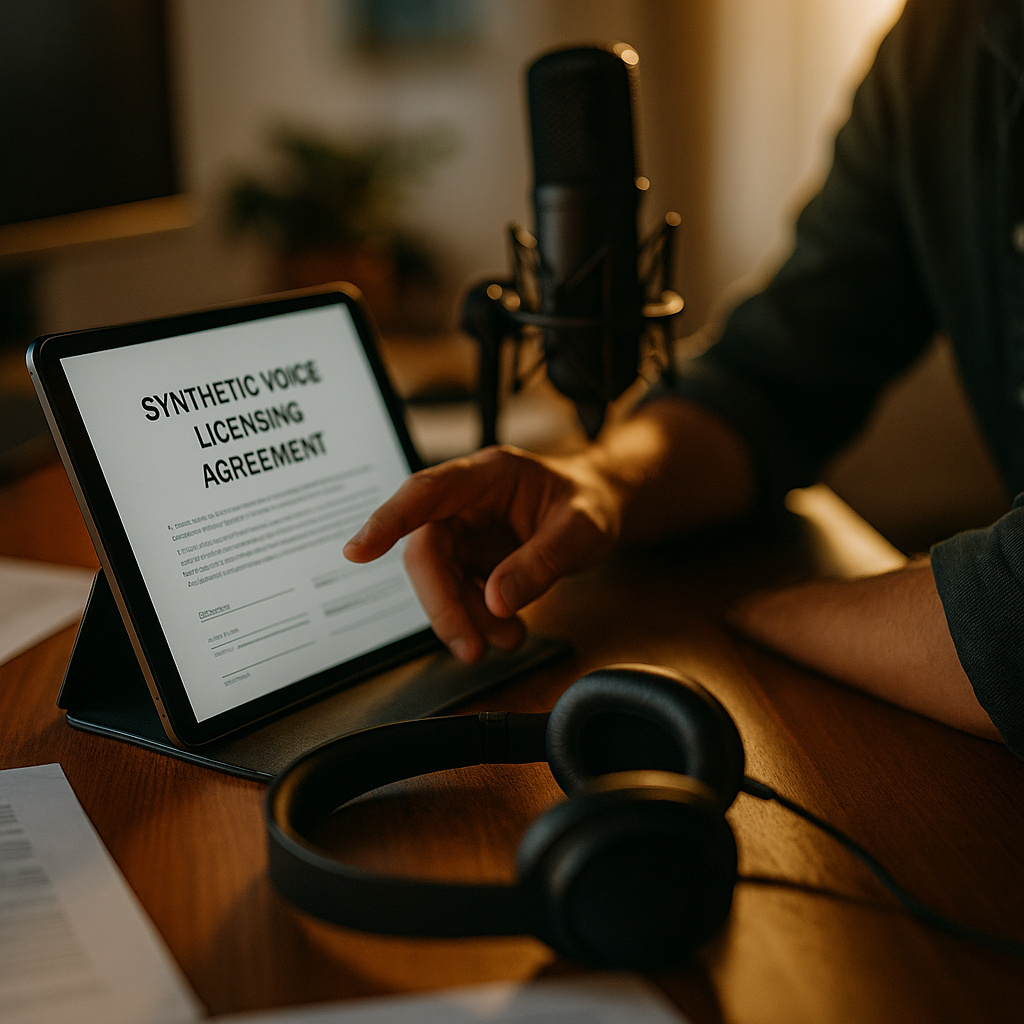
In 2025, brands scale multilingual campaigns faster than ever, and voice is often the last asset that slows launch. This review of synthetic voice licensing platforms focuses on what matters for global ads: rights clarity, territory coverage, talent consent, and predictable costs. You will see how major providers differ and what to check before you ship creative at scale—because one clause can derail everything.
Key criteria for synthetic voice licensing in global advertising
Synthetic voice platforms vary widely in what they actually license. For global ads, prioritize contract language over demos. A great voice is useless if you cannot run it across channels, regions, and timeframes without renegotiation.
- Usage scope and media: Confirm whether the license covers paid social, linear TV, OTT/CTV, radio, digital out-of-home, in-app, and programmatic placements. Some platforms default to “digital-only” unless you upgrade.
- Territory and language rights: Global campaigns often launch in waves. Look for worldwide rights (or a clear list of included territories), plus the ability to add markets without resetting the contract.
- Term length and renewals: Ads may need ongoing usage for evergreen performance. Check whether the license is perpetual, annual, or tied to a campaign window—and how renewal pricing works.
- Exclusivity and category conflicts: If you need a “signature voice,” ask whether your voice can be sold to competitors. True category exclusivity is rare and priced accordingly.
- Voice identity and consent: Determine if the voice is fully synthetic (not tied to a specific person) or a licensed voice likeness from a performer. For talent-based voices, confirm the platform has verifiable consent, permitted use cases, and a process for dispute resolution.
- Brand safety controls: Leading platforms provide content policies, abuse detection, watermarking or provenance indicators, and tools to block sensitive topics. For regulated categories, confirm compliance support.
- Workflow fit: Consider SSML support, pronunciation dictionaries, team approvals, versioning, and integrations with creative pipelines. Global ads require fast iteration and consistent pronunciation across languages.
- Pricing model: Common models include per-character, per-minute, subscription tiers, and enterprise licensing. For paid advertising, clarify whether there are advertising surcharges or separate commercial tiers.
Before evaluating vendors, define your campaign reality: number of markets, channels, ad variants, and expected refresh cadence. Then map those needs to license terms, not just feature lists.
Comparing AI voice licensing platforms: who fits which ad workflow
In 2025, most reputable platforms support high-quality neural voices, multiple languages, and real-time preview. The real differences show up in commercial terms, governance, and enterprise readiness. Below is a practical, ad-centric comparison of common platform types and representative providers.
- Enterprise “voice cloud” providers (common in large orgs): Offer broad language coverage, stability, and governance features. They are often strong for teams that need standardized procurement and security reviews. Watch for add-ons that separate “standard” TTS from “commercial advertising” rights.
- Creator-first AI voice studios: Built for speed, iteration, and multi-voice casting. They can be excellent for performance marketers producing many variants. Scrutinize ad usage terms, territory coverage, and whether the plan includes commercial rights by default.
- Talent-licensed voice marketplaces: Focus on voices based on real performers or curated talent. These can deliver distinctive reads with clearer talent provenance, but may add restrictions (categories, territories, term) similar to traditional voiceover agreements.
- Custom voice cloning services (enterprise or agency-led): Best when you need a consistent brand voice across years and markets. This route demands the strongest consent and governance, because it creates an asset that could be misused if poorly controlled.
How to shortlist quickly: If you run high-volume multilingual performance ads, start with platforms that include commercial rights, bulk rendering, and collaboration tools. If you need a unique brand voice tied to talent, focus on providers that document consent, usage scope, and recourse procedures.
Follow-up question to answer internally: Do you want a voice that is unique to your brand, or a high-quality voice that is simply “good enough” and fast to deploy? That decision drives both licensing complexity and cost.
Understanding commercial voiceover rights: what contracts must say
Licensing for global ads fails most often in the small print. Treat the license like any other advertising right: it must match how media buying actually works.
Clauses to look for and insist on:
- Explicit commercial advertising permission: The agreement should state that use in paid advertising is allowed, not implied.
- Channel definitions: “Online” may exclude connected TV or digital out-of-home. Make sure the contract language covers your real media mix.
- Territory: “Global” should be unambiguous. If it lists countries, confirm your current and likely expansion markets.
- Duration: If you plan to use the audio in evergreen retargeting or always-on brand ads, avoid short campaign-only terms unless renewals are simple and predictable.
- Derivative works and edits: Global ads require cutdowns, language adaptations, A/B versions, and remixing. Ensure edits and localized variants are permitted.
- Indemnity and liability: Understand who bears risk if a voice claim arises. Platforms differ: some provide stronger protections at enterprise tiers.
- Termination consequences: If you stop paying, can you keep running existing ads? Can you keep archived assets? Many issues occur when a license ends but media remains live in long-tail placements.
- Data use and training: Confirm whether your scripts, prompts, and generated audio can be used to train models. For ads, many brands require opt-out or strict limitations.
Practical tip: Ask the vendor to provide a one-page “rights summary” for your specific plan: media, territory, term, exclusivity, and whether voices are performer-based or fully synthetic. If they cannot do this clearly, expect friction later.
Managing global ad compliance: consent, disclosure, and brand safety
Global advertising adds legal and reputational complexity. A platform can be technically strong and still risky if it lacks governance tools. Align your selection with your internal compliance posture and the markets you operate in.
- Consent and voice provenance: If a voice is based on a person, you need clear documentation that the performer authorized synthetic use and commercial advertising usage. Ask how consent is captured, updated, and audited.
- Restricted content controls: Look for policy controls that prevent generating sensitive content (politics, medical claims, financial guarantees) if your brand requires it.
- Access controls: Role-based permissions matter. Agencies, regional teams, and freelancers should not have the ability to generate or export without approvals when risks are high.
- Localization accuracy: Compliance is not only legal; it is also linguistic. Ensure the platform supports pronunciation dictionaries, phonetic hints, and native-review workflows to avoid mistakes that undermine trust.
- Disclosure strategy: Some brands choose to disclose use of synthetic voice for transparency. Decide your stance and confirm whether the platform provides metadata or markers that help with internal tracking.
Answering a common follow-up question: “Do we need a different license per country?” Often no, if you purchase a worldwide commercial license; however, regulatory expectations and platform policies can vary by market. Build a simple checklist per region that covers claims, disclaimers, and any local sensitivity rules, then apply it consistently.
Budgeting and scaling with multilingual voiceover across channels
Global ads can explode in version count: multiple languages, different legal lines, product variants, and placements. The winning platforms make versioning cheap and operationally simple without adding hidden rights costs.
How to forecast cost realistically:
- Estimate output volume: Count final deliverables, not scripts. A single script often becomes multiple cutdowns and aspect-ratio variants.
- Choose pricing aligned to production style: Per-character pricing can be predictable for short ads; subscription tiers may be better for many iterations; enterprise licensing may be best when output volume is huge and governance needs are high.
- Check for commercial tier requirements: Some platforms offer attractive creator pricing that excludes paid advertising or limits channels. Confirm before procurement.
- Plan for QA: Budget time for native review, pronunciation tuning, and compliance sign-off. The “cost” of synthetic voice is not only rendering; it is review cycles and approvals.
Scaling playbook that works: Standardize a “global master script,” then localize into market-specific scripts with legal lines. Use a shared pronunciation glossary (brand names, product names, executive names). Render regional versions in batches, then lock approved audio to prevent accidental regeneration that changes phrasing or emphasis mid-campaign.
When to avoid full automation: If the ad relies on humor, culturally sensitive phrasing, or nuanced emotional performance, plan for either a talent-licensed synthetic voice with strong direction tools or a hybrid approach that reserves key hero assets for human VO while using synthetic for fast-turn variants.
Vendor due diligence for enterprise voice licensing: a practical checklist
EEAT-friendly procurement means you can explain and defend your decision. In 2025, that requires more than “the audio sounded good.” Use this checklist to validate claims and reduce operational risk.
- Rights packet: Ask for a plain-language summary of rights plus the full legal terms. Ensure both match.
- Voice catalog provenance: For each voice you might use, confirm whether it is performer-based, how consent is managed, and whether the voice can be retired or changed by the vendor.
- Security and data handling: SSO, audit logs, encryption, data retention, and whether your content is used for model training.
- Service reliability: SLA targets, support response times, and regional latency if your teams render from different continents.
- Change management: How does the vendor handle voice model updates that might change tone? Can you “freeze” a voice version for a campaign?
- Dispute and takedown procedures: If a claim is made about voice misuse, what happens and how fast? Who communicates with whom?
- Workflow proof: Run a pilot that mirrors reality: 3 languages, 2 channels, 5 variants, with approvals. Measure time-to-asset and revision cycles.
Recommendation for agencies: Document your licensing assumptions in the statement of work and client-facing deliverables. Make it explicit who owns generated audio, how long it can run, and what triggers re-licensing. This reduces last-minute friction when ads get repurposed.
FAQs about synthetic voice licensing platforms for global ads
What is the difference between text-to-speech access and a commercial license?
Text-to-speech access lets you generate audio, but it may not grant the right to use that audio in paid advertising. A commercial license spells out permitted media, territories, duration, and any restrictions like excluded categories or platforms.
Can I use one synthetic voice worldwide for the same brand campaign?
Often yes, if your license includes worldwide territory and the voice supports the needed languages or accents. Confirm whether the vendor treats localized outputs as covered derivatives and whether any markets require special approvals or disclosures.
Do synthetic voices require talent consent?
If the voice is based on a real person’s likeness, consent is essential and should be documented. If the voice is fully synthetic and not tied to an identifiable person, consent is handled differently, but you still need clear commercial usage rights and governance protections.
Is voice cloning safe for brand assets?
It can be, when you control access, require approvals, and ensure the vendor provides audit logs and strong misuse prevention. The biggest risk is unauthorized generation or ambiguous ownership terms, so treat the cloned voice as a high-value brand asset.
What happens if we stop paying for the platform subscription?
That depends on the contract. Some agreements allow continued use of previously generated audio during the license term; others restrict ongoing use once the subscription ends. Confirm post-termination rights, archival access, and whether live ads must be taken down.
How do we ensure pronunciation consistency across markets?
Use a shared pronunciation glossary, require native review for each market, and lock approved renders. Choose a platform that supports SSML, phonetic spelling, and reusable dictionaries so regional teams do not reinvent settings.
Can we get exclusivity on a synthetic voice for our category?
Sometimes, but it is uncommon and usually expensive. Many platforms do not offer category exclusivity for catalog voices. If exclusivity matters, pursue custom voice creation with explicit category and territory terms.
Choosing the right platform in 2025 is less about finding the most realistic demo and more about buying the right permissions for how global ads actually run. Favor providers that offer clear commercial rights, verifiable voice provenance, and governance that scales across teams and markets. Run a pilot that mirrors your media plan, then lock terms that match your rollout—before production accelerates.