


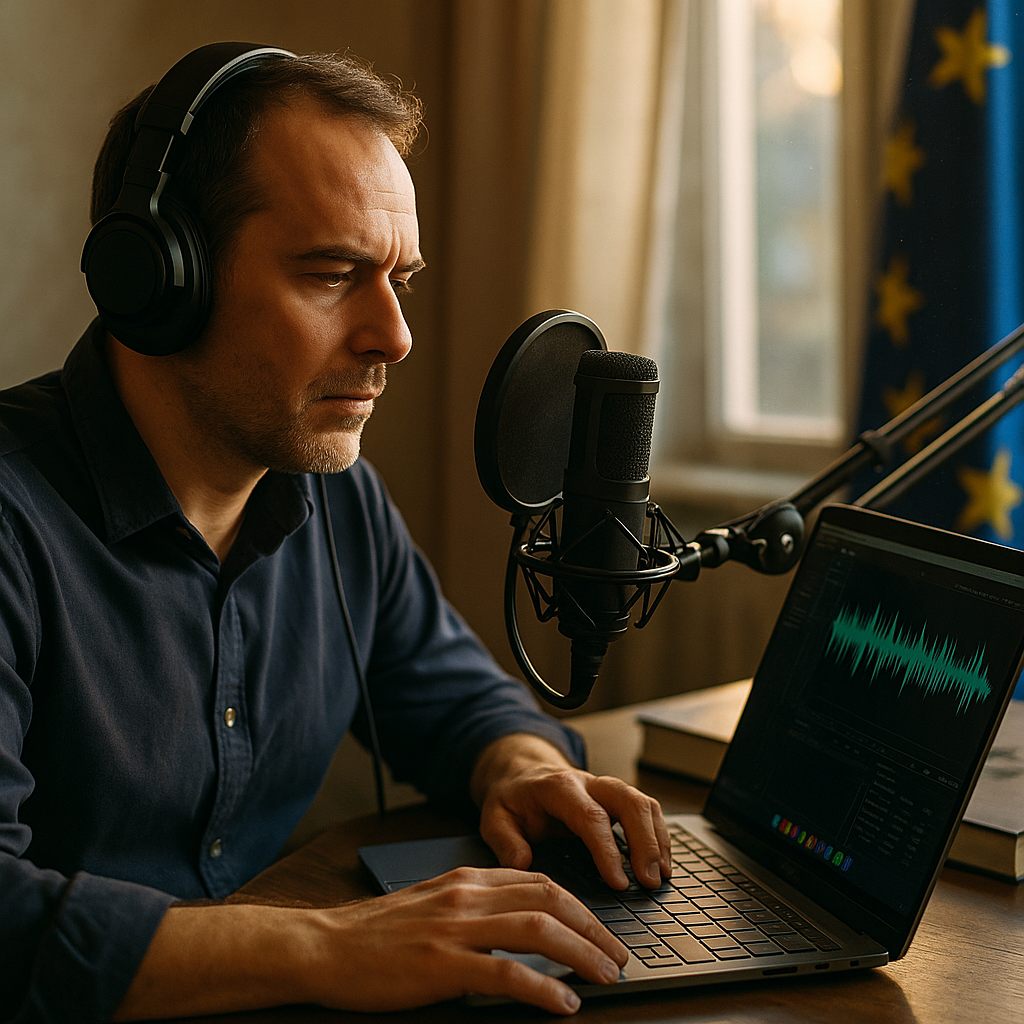
Navigating the legalities of synthetic voiceovers in global advertising is now a core compliance task for brands scaling creative across markets. AI voices can accelerate localization, reduce studio time, and support personalization, but they also introduce new risks: consent disputes, misleading endorsements, privacy breaches, and platform takedowns. Get the rules wrong, and a campaign can unravel fast—so what does “right” look like?
Global advertising compliance: mapping the rules before you record
Start with a practical truth: there is no single global rulebook for synthetic voice. In 2025, compliance depends on a layered analysis of local advertising standards, privacy laws, consumer-protection rules, IP and contract rights, and the policies of media platforms.
To keep campaigns moving, build a repeatable “jurisdiction + channel” checklist:
- Where will the ad run? Country/region and the audience’s location matter, not just where your company is incorporated.
- What is the claim? Health, finance, children’s advertising, political, and regulated products typically trigger stricter scrutiny.
- What channel is used? TV/radio rules differ from app ads, influencer placements, podcasts, in-game audio, and call-center scripts.
- Is the voice “identifiable”? A voice resembling a known person (or a specific employee) raises personality/publicity and endorsement issues.
- Is any personal data involved? If the workflow uses recordings, biometrics, or voiceprints, privacy obligations can apply.
Answering these questions early prevents a common failure mode: producing a single global creative asset, then discovering that a local regulator or broadcaster requires additional disclosures, consent language, or substantiation that cannot be bolted on without re-cutting audio.
AI voiceover legal risks: likeness, publicity rights, and misappropriation
The biggest legal flashpoint is whether a synthetic voice appropriates someone’s identity—even if you did not use their name. In many jurisdictions, individuals can have enforceable rights in their persona (often described as right of publicity or a similar personality right). Those claims become stronger when:
- The synthetic voice is intentionally directed to sound like a specific celebrity or recognizable public figure.
- The ad context implies endorsement, sponsorship, or affiliation.
- Your campaign uses recognizable catchphrases, mannerisms, or signature delivery associated with one person.
- The voice is based on an employee, influencer, or actor whose recordings were used without clear scope and compensation terms.
What advertisers should do in practice:
- Do not “sound-alike” a real person without explicit permission. If creative direction includes “make it sound like X,” treat it as a high-risk brief that needs legal sign-off and a licensing path.
- Document creative intent. Maintain internal notes that the voice was designed as an original character, not an imitation of a specific individual.
- Set resemblance thresholds. Use internal review and, when necessary, third-party assessment to confirm the synthetic voice does not create likely confusion with a specific person.
- Avoid implied endorsements. Ensure the script, visuals, and media context do not suggest a real person is speaking unless that person has contractually agreed.
A reader’s likely follow-up question is: What if the voice is “inspired by” a famous style but not identical? The closer you get to recognizability, the more your risk shifts from “creative homage” to “misappropriation.” When a reasonable audience could believe a specific person is involved, you should assume you need consent or a redesigned voice.
Voice cloning consent: contracts, talent releases, and scope control
Consent is your best defense, but only if it is precise. “Permission to use my recordings” is not the same as permission to clone a voice for global advertising, across unlimited languages, on perpetual terms. Brands should treat synthetic voice like any other high-value IP asset and secure contract terms that cover the whole lifecycle.
Key clauses to include in voice cloning consent and talent releases:
- Purpose and media scope: Specify advertising/promotional use, channels (broadcast, social, programmatic, in-store, IVR), and whether use includes influencer-style placements or endorsements.
- Territory and language: Global use is common, but it must be explicit. Include language localization rights if you will generate multilingual audio.
- Duration and renewal: Define a term and renewal process. Perpetual rights can be challenged or become reputationally risky even if technically enforceable.
- Compensation model: Upfront buyout, usage-based, or hybrid. If you are replacing multiple sessions with synthetic output, address that economic reality transparently.
- Approvals and brand safety: Limit what the voice can say (no political endorsements, sensitive categories, or competitor work) and require script or category approvals if needed.
- Revocation and takedown: Define what happens if consent is withdrawn, the talent dies, or the brand changes hands. Include a response timeline for removals from platforms and ad servers.
- Training data and custody: State whether recordings can be used to train models, who owns the resulting model/voice asset, and how it will be secured.
Operationally, create a “consent packet” that includes: the final contract, the scripts approved, the voice model identifier, and a list of markets/channels where it may run. This makes audits and platform disputes far easier to resolve.
If you are not cloning a human voice at all and instead using a vendor’s stock AI voice, you still need contractual clarity with the vendor on licensing, exclusivity, and indemnities—especially for global campaigns where a small ambiguity can turn into a multi-market takedown.
Privacy and data protection: biometric voice data and cross-border use
Synthetic voice production can trigger privacy compliance when you process recordings tied to a person, store voiceprints, or infer identity from audio. In many regulatory frameworks, biometric identifiers and voiceprints receive heightened protections. Even where “biometric” is narrowly defined, voice recordings can still be personal data.
Privacy-safe workflow controls that reduce risk:
- Data minimization: Collect only the recordings needed, at the lowest fidelity that achieves the result.
- Purpose limitation: Use recordings only for the agreed advertising purpose; do not repurpose for unrelated model training unless explicitly permitted.
- Retention limits: Set retention schedules for raw recordings, intermediate files, and generated assets. Keep only what you must for compliance and reuse.
- Security by design: Encrypt voice assets at rest and in transit; apply strict access controls; log and review access.
- Vendor due diligence: Confirm where processing occurs, whether subcontractors are used, and how cross-border transfers are handled.
Advertisers often ask: Do we need to disclose that a voice is synthetic? Privacy laws may not always require a disclosure solely because the audio is generated, but consumer-protection and platform policies can. If the ad could mislead audiences about who is speaking—especially in testimonial or authority contexts—transparency is usually the safer path.
Cross-border campaigns also create practical problems: a single production pipeline may involve storage in one region, generation in another, and distribution globally. Your compliance team should map data flows and confirm that contractual transfer mechanisms and local notice requirements are satisfied wherever audiences and talent are located.
Advertising standards and disclosure: preventing deception and false endorsement
The legal question regulators most consistently focus on is not “Is the voice AI?” but “Is the ad misleading?” Synthetic voices can trigger scrutiny when they imply expertise, authenticity, or endorsement that does not exist.
High-risk scenarios include:
- Testimonials and reviews: A synthetic voice presenting as a real consumer can look like a fabricated testimonial.
- Professional authority claims: A doctor-like voice in a health ad, or an “advisor” voice in finance, can imply credentials.
- News-like formats: “Anchors” or “reporters” generated to resemble journalism may cross into deception.
- Children’s advertising: Character voices can exert undue influence; additional guardrails may apply.
Practical disclosure approaches that preserve performance while reducing risk:
- Contextual disclosure: A short on-screen note (for video) or spoken disclosure (for audio-only) such as “Voice generated using AI.”
- Placement-based disclosure: Stronger disclosures for testimonial/endorsement formats; lighter disclosures for clearly fictional characters.
- Consistency across assets: Ensure translated versions keep disclosures; localization teams often remove “extra words” unless instructed not to.
Also protect against substantiation risk: if the synthetic voice claims performance results, ensure you have evidence on file. A polished AI read can make unsupported claims sound more credible, which increases regulator attention and consumer complaints.
Platform policies and governance: approvals, provenance, and enforcement readiness
Even if your campaign is legally defensible, major platforms can remove or limit ads that violate their synthetic media rules. In 2025, advertisers should treat platform policies as a separate compliance layer with its own enforcement mechanics: automated detection, user reports, and rapid takedowns.
Governance controls that keep synthetic voice campaigns stable:
- Pre-flight policy review: Before production, check the ad policies for each platform and major broadcaster, including rules on manipulated media, impersonation, and disclosures.
- Provenance documentation: Maintain a “source of truth” folder with contracts, consent, model licensing terms, scripts, and generation logs. This speeds up appeals.
- Escalation playbook: Define who responds to platform flags, what evidence is provided, and how quickly replacement creatives can be deployed.
- Internal approval gates: Require legal and brand safety approvals for any voice that resembles a real person, any testimonial format, and any regulated category.
- Monitoring: Track ad comments and complaint signals. Synthetic voice often prompts user questions; fast responses can prevent reports and reputational spirals.
Many teams also ask: Should we watermark or label synthetic audio? Watermarking is not universally required, but it is increasingly useful for provenance, dispute handling, and internal control. If your vendor supports watermarking or traceable identifiers, consider enabling it for high-risk categories and large-scale distribution.
FAQs
-
Do we need permission to use a synthetic voice that resembles a celebrity?
If a reasonable audience could think the celebrity is speaking or endorsing the product, treat it as requiring explicit permission and a negotiated license. “Sound-alike” creative direction is a high-risk strategy in global advertising.
-
Is using a vendor’s stock AI voice legally safer than cloning a real person?
It often reduces publicity-rights risk, but it does not eliminate legal exposure. You still need clear licensing terms, confirmation the vendor has rights to the underlying voice, and compliance with advertising standards, privacy obligations, and platform rules.
-
When should an ad disclose that the voice is AI-generated?
Use disclosure when the format could mislead people about identity, endorsement, or authenticity—especially testimonials, authority figures, and news-like presentations. Some platforms also require disclosure for synthetic or manipulated media, regardless of deception risk.
-
Can we translate an approved synthetic voice ad into other languages automatically?
Yes, but confirm the talent consent and vendor license cover multilingual generation and global territories. Also ensure required disclaimers and regulated-category wording remain accurate in each locale.
-
What contract terms matter most for voice cloning consent?
Scope (media, territory, language), duration, compensation, approvals/category restrictions, data use (including training), security, and takedown/revocation procedures. Without these, disputes become hard to resolve quickly.
-
Does synthetic voice trigger biometric privacy laws?
It can, particularly when you store or analyze voiceprints or use recordings tied to an identifiable person. Build privacy controls around collection, purpose limitation, retention, security, and cross-border processing, and document your data flows.
In 2025, synthetic voiceovers can power faster global campaigns, but only when brands treat them as both creative assets and regulated communications. Prioritize consent, avoid sound-alike impersonation, protect voice data, and use disclosures where deception risk exists. Build platform-ready documentation and clear governance so approvals scale across markets. The payoff is durable, compliant creative that ships quickly without legal surprises.