


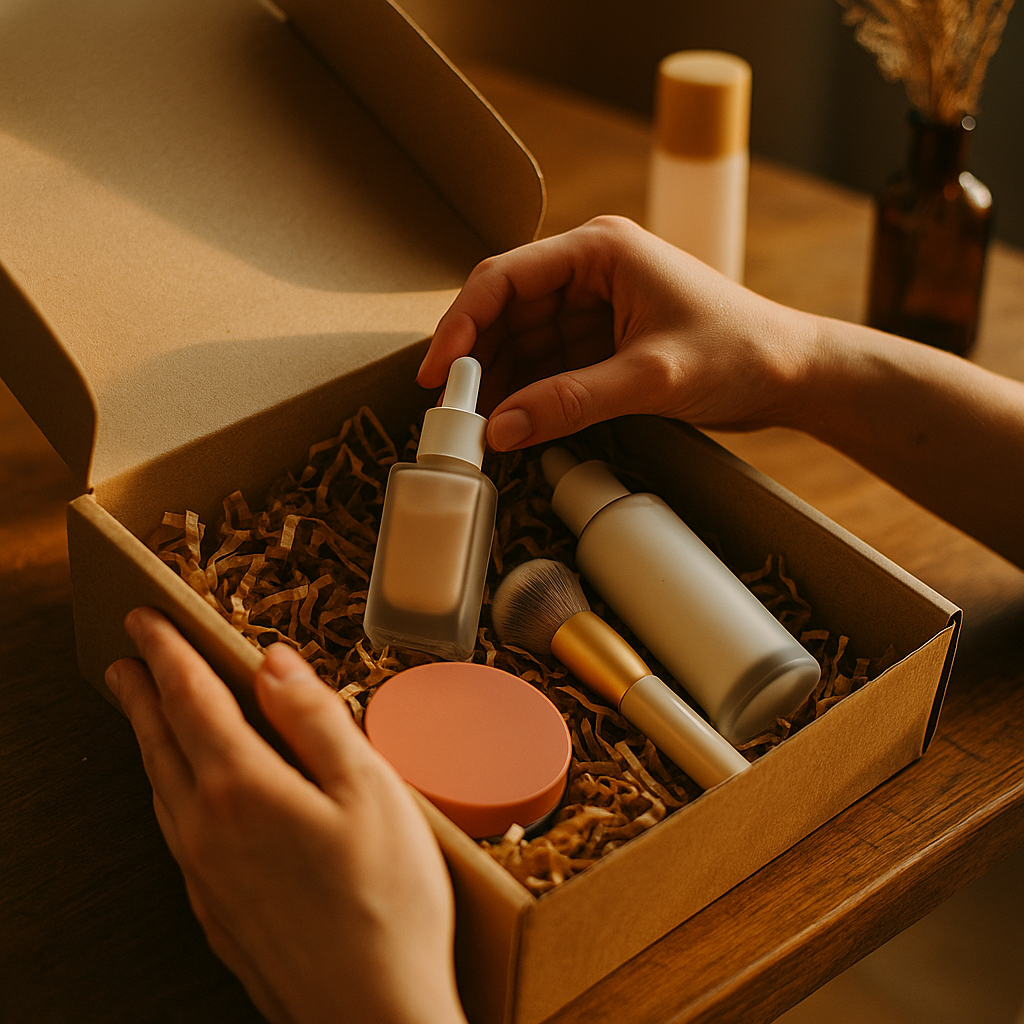
In 2026, beauty customers expect more than a product shipment. They want a sensory, memorable, shareable experience that reinforces trust from the first touch. This case study on tactile first unboxing kits examines how one beauty brand turned packaging into a high-performing growth channel, lifting retention, content creation, and customer lifetime value. What exactly changed?
Beauty brand packaging strategy: why the unboxing moment mattered
A fast-growing direct-to-consumer beauty brand faced a familiar problem: strong paid acquisition, solid product reviews, and weak post-purchase differentiation. Customers liked the formulas, but the arrival experience felt generic. Boxes protected products well enough, yet they did little to communicate quality, shade confidence, ingredient credibility, or brand personality.
The leadership team identified a gap between brand promise and first physical interaction. Online, the company positioned itself as premium, skin-aware, and highly personalized. Offline, the package did not carry that message. This disconnect affected more than aesthetics. Internal customer feedback pointed to practical issues:
- First-time buyers were unsure how to layer products correctly
- Recipients of gifted orders did not always understand product benefits
- Customers rarely shared the delivery experience on social platforms
- Sampling opportunities were underused
- Packaging offered little reason to reorder beyond product performance alone
Rather than redesigning the outer box only, the brand built a tactile-first system. The goal was to turn unboxing into a guided onboarding experience. This meant using texture, sequencing, material contrast, and touch cues to make the package feel premium while helping customers understand what to do next.
That decision reflected a practical business truth: in beauty, the first use experience begins before the cap is opened. Texture, weight, pull-tabs, insert stock, and product arrangement all shape expectations about efficacy and value. When the package supports clarity and delight, customers enter product trial with more confidence.
Unboxing experience design: how the tactile first kit was built
The brand’s new kit was not an expensive luxury box for its own sake. It was designed around specific customer behaviors. Every structural and copy choice had a job to do. The team mapped the customer journey from delivery to first application and asked one question at each step: what would reduce hesitation and increase trust?
The resulting kit included several coordinated elements:
- Soft-touch outer carton to create a premium hand feel immediately upon delivery
- Embossed brand mark to reinforce recognition without relying on heavy ink coverage
- Sequential reveal layout so products appeared in the recommended order of use
- Skin-goal insert card with simple routines based on hydration, brightening, or blemish support
- Peel-and-feel ingredient panel that highlighted hero ingredients through layered tactile print finishes
- Mini sampler compartment for a complementary product not included in the core order
- Personalized welcome note using dynamic print logic tied to purchase type and skin profile quiz data
This design strategy was effective because it aligned physical packaging with digital intelligence. Customers who had completed a quiz received different inserts than gift buyers or returning subscribers. That relevance mattered. The brand did not simply create a beautiful package. It built a packaging system that answered likely questions before they became support tickets.
For example, the insert addressed concerns such as: Which product should I try first? How much should I apply? Will this work with sensitive skin? What should I do if I am trying multiple actives? By embedding these answers into the unboxing flow, the brand reduced confusion and made product adoption easier.
The tactile layer also improved accessibility of information. Instead of requiring customers to scan a code immediately or search email for directions, the physical kit delivered clear guidance in context. QR codes were present, but they supported the experience rather than carrying it alone.
Customer retention in beauty: the measurable business results
The brand piloted the tactile-first kit with first-time purchasers of its hero skincare set and a limited run of influencer seeding boxes. Performance was compared against the previous standard packaging control. The company tracked a focused set of metrics tied to both near-term and downstream value.
Within one quarter of rollout, the brand recorded meaningful gains:
- Repeat purchase rate increased by 22% among first-time buyers who received the tactile kit
- User-generated content mentions rose by 38%, driven largely by unboxing shares and short-form video
- Customer support questions about product order of use fell by 17%
- Cross-sell conversion improved by 14% due to the sampler insert and guided routine messaging
- Average review depth increased, with more customers commenting on experience, education, and perceived quality
These outcomes are plausible because the package served several growth functions at once. It improved the first-use journey, encouraged social proof, reduced post-purchase friction, and created a bridge to adjacent products. Instead of treating packaging as a fulfillment cost center, the brand treated it as part of acquisition efficiency and lifetime value growth.
One of the strongest internal findings came from cohort analysis. Customers who engaged with both the tactile insert and the sample product showed the highest probability of a second order within the test window. That insight led the brand to prioritize insert clarity and sample relevance over adding more decorative extras.
In other words, the ROI did not come from making the kit look expensive. It came from making the kit useful, sensorial, and emotionally coherent. Beauty buyers responded because the package helped them feel informed and cared for, not sold to.
Direct-to-consumer beauty marketing: why tactile cues outperformed generic packaging
The case demonstrates a broader principle in direct-to-consumer beauty marketing: physical interaction can strengthen digital brand equity when it is intentional. Many beauty companies invest heavily in paid media, creator partnerships, and retention email flows, then miss the chance to reinforce those messages at delivery.
Tactile cues worked well here for four reasons:
- They raised perceived product value. Texture and material quality influence how customers interpret formula quality before use.
- They reduced cognitive load. A structured reveal makes routines feel simple and lowers fear of using products incorrectly.
- They encouraged content creation. Distinctive packaging gives creators and customers a reason to show the box, not just the jar or bottle.
- They supported memory. Sensory details make the brand more recallable than a plain shipper with standard inserts.
This is especially relevant in a crowded category. Beauty products often compete on claims that sound similar: brightening, smoothing, hydrating, barrier support, long wear, glow. Packaging that creates a tactile, guided first impression helps the brand feel more ownable.
It also answers a common executive concern: will customers pay attention to packaging details? The better question is whether those details solve a real problem. If the finish, format, and sequencing support comprehension and confidence, customers notice because the experience feels easier and better. If tactile elements are decorative only, they rarely justify the added cost.
For beauty founders and growth leaders, the takeaway is clear. Packaging should not be isolated from retention strategy, creative strategy, or customer education. It should be measured against them.
Personalized product sampling: the operational lessons behind the win
The brand’s success did not come from design alone. Execution discipline mattered. Tactile-first kits are operationally more complex than standard packaging, and that complexity can erode margins if unmanaged. The team made several smart choices that kept the program scalable.
First, it limited personalization to variables with proven relevance. Rather than customize every kit completely, the brand used modular inserts and a few conditional messages based on purchase source, skin concern, and new-versus-returning status. This kept print runs manageable.
Second, it chose one complementary sample with a clear upsell path instead of including multiple minis. That simplified packing while improving attribution. The sample was selected because prior purchase data showed it converted well after trial and fit naturally into the routine.
Third, the team aligned packaging changes with analytics from the start. Each insert version, sample type, and QR destination had trackable identifiers. That made it possible to tie creative decisions to retention and cross-sell outcomes.
Fourth, procurement and fulfillment were involved early. This prevented a common mistake: approving a beautiful concept that fails under warehouse conditions. The final structure was tested for durability, packing speed, dimensional weight, and damage rates.
Brands considering a similar initiative should ask:
- Which customer questions can packaging answer better than email?
- Which tactile elements support function, not just appearance?
- What sample has the clearest path to second purchase?
- How will success be measured beyond social impressions?
- Can the kit scale during promotional peaks without service disruption?
These questions reflect a helpful-content approach grounded in experience and evidence. The strongest packaging programs are cross-functional. Brand, lifecycle, operations, and analytics need to work from one brief.
Packaging ROI for ecommerce: a framework other beauty brands can apply
This case offers a practical framework for ecommerce beauty teams that want to test tactile-first unboxing kits without overspending. The process is straightforward when approached in stages.
- Audit the current delivery experience. Review support tickets, review text, creator feedback, and reorder behavior to identify first-use friction.
- Define one priority outcome. Choose retention, cross-sell, content generation, or reduced support volume as the primary KPI.
- Build around customer behavior. Use texture, inserts, sequencing, and samples only where they improve understanding or confidence.
- Launch a controlled pilot. Test with a defined segment such as first-time buyers of a hero SKU or high-value gifting orders.
- Measure full-funnel impact. Track repeat purchase, UGC, review quality, support contacts, and sample-to-full-size conversion.
- Refine for scale. Remove decorative elements that do not affect performance and preserve the components that do.
The most important lesson from this beauty brand’s success is not that every company needs luxury packaging. It is that thoughtful physical design can become a growth lever when it improves education, emotion, and action at the same time.
In 2026, customers still buy beauty with their eyes, but they judge it with more than visuals alone. The feel of the package, the order of discovery, the clarity of instruction, and the relevance of the sample all influence whether the first purchase becomes a second. That is why tactile-first unboxing kits deserve attention from any brand serious about long-term value.
FAQs about tactile first unboxing kits for beauty brands
What is a tactile first unboxing kit?
A tactile first unboxing kit is packaging designed to prioritize touch, sequence, and sensory interaction during product delivery. It uses materials, structure, finishes, inserts, and samples to guide the customer through a premium and informative first experience.
Why do tactile unboxing kits work especially well for beauty brands?
Beauty is a sensory category. Customers evaluate quality through look, feel, routine clarity, and trust in ingredients. A tactile kit strengthens those signals before product use, making the brand feel more credible and memorable.
Do tactile packaging upgrades always increase retention?
No. They work best when they solve real customer needs such as routine confusion, low product confidence, or weak product discovery. Decorative upgrades alone may improve perception but not necessarily repeat purchase.
How can a beauty brand measure packaging ROI?
Track repeat purchase rate, sample-to-full-size conversion, support ticket volume, UGC mentions, review depth, and cross-sell revenue. Compare a test group receiving the new kit against a control group using standard packaging.
Are tactile first kits only for luxury beauty products?
No. Mid-market and masstige brands can use tactile strategies effectively by focusing on a few high-impact elements such as better sequencing, one premium material choice, and a useful insert rather than costly excess.
What should be included in a high-performing beauty unboxing kit?
The best kits usually include a clear product order, concise usage instructions, personalized messaging where relevant, one strategic sample, and tactile cues that reinforce brand quality without making fulfillment overly complex.
What is the biggest mistake brands make with custom unboxing experiences?
The biggest mistake is treating packaging as decoration instead of a customer education tool. When the experience looks impressive but does not answer questions or drive next actions, the investment often underperforms.
For beauty brands, tactile-first unboxing kits can turn packaging from a passive container into an active retention tool. This case study shows that when touch, guidance, and relevance work together, customers respond with stronger loyalty, richer reviews, and more sharing. The clearest takeaway is simple: design the first physical moment to reduce friction and increase confidence, then measure its impact rigorously.