


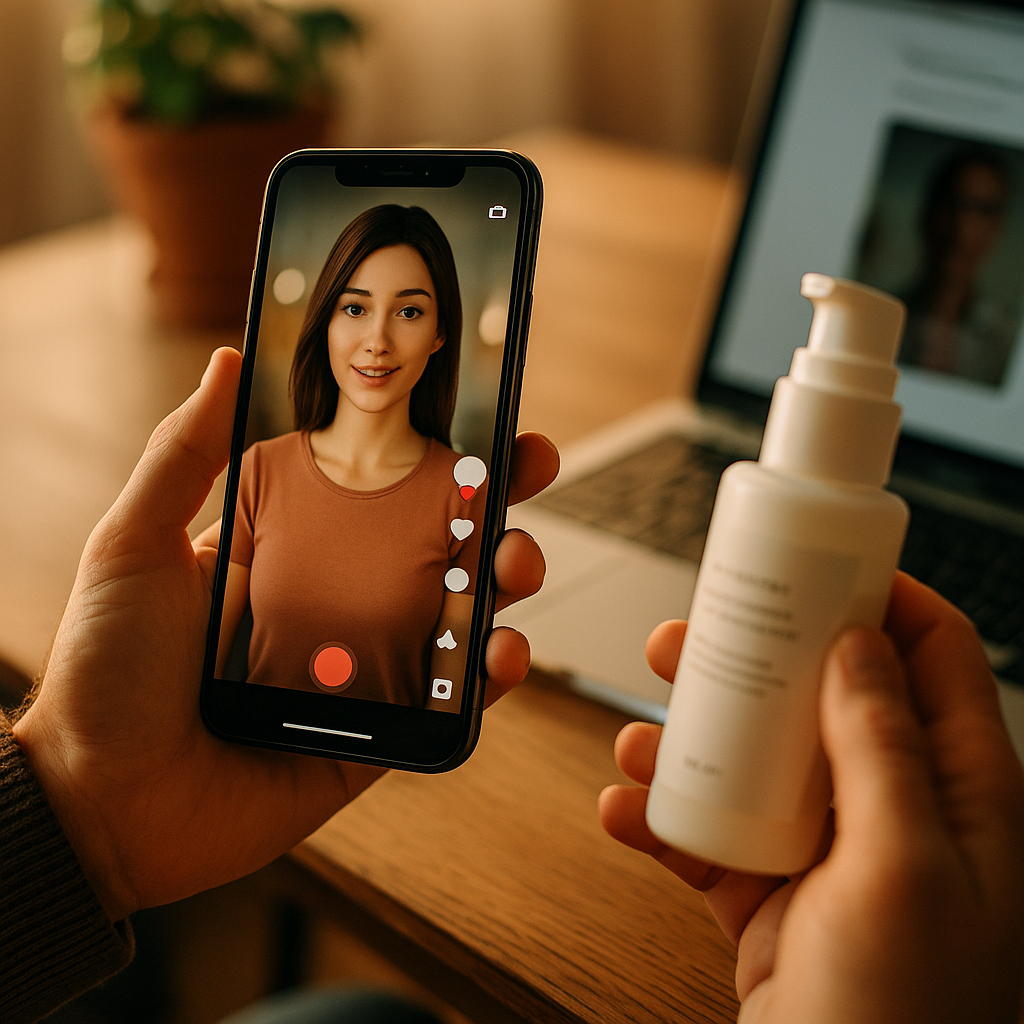
TikTok now lets brands generate product-demo videos with AI avatars instead of hiring a single human creator. Sixty seconds of studio-quality presenting, no talent fee, no shoot day. The TikTok AI avatar rollout for e-commerce is either the most efficient thing to hit your content pipeline or a compliance headache waiting to happen, depending entirely on how you vet it.
What TikTok Actually Shipped
TikTok’s Symphony suite, its generative AI toolkit built for TikTok Shop sellers and ad buyers, now includes digital-human presenters that can read a script, gesture at a product, and hold a demo-style tone for a full ad unit. Brands upload product images and a script (or let the tool draft one), pick an avatar persona, and get a rendered video suited for TikTok Shop listings, in-feed ads, or live-shopping teasers. It sits alongside TikTok’s existing AI dubbing and script generation features, but this is the first version aimed squarely at replacing, or supplementing, the human presenter in a product demo.
For high-SKU catalogs, that’s the pitch: instead of booking fifty creators to demo fifty products, you generate fifty videos in an afternoon. That math is seductive for any DTC brand running lean.
The real cost of an AI avatar isn’t the render, it’s the disclosure, testing, and legal review you skip if you treat it like a normal content order.
Why Brands Are Actually Interested
Three pressures are converging. First, TikTok Shop demands volume: sellers need constant creative refreshes to avoid ad fatigue, and human shoot cycles can’t keep pace. Second, budgets are flat while SKU counts grow, especially for brands in beauty, home goods, and consumer electronics where every variant needs its own demo. Third, marketing teams are already comfortable with synthetic media after two years of AI video tools proving themselves in other channels.
Credits-based AI video pricing models elsewhere in the industry have already shown brands what’s possible on cost, and TikTok’s avatar push is riding that same wave of expectation.
None of that means avatars are a free replacement for human influencers. It means they’re a new lever, best pulled for specific use cases rather than the whole strategy.
Where Digital-Human Presenters Actually Work
- Long-tail SKU coverage: Products too niche or low-margin to justify a human creator fee still get a demo video.
- Rapid localization: One script, multiple avatar languages and accents, without rebooking talent for each market.
- Testing creative variants: Run five avatar personas against the same script to find which tone converts before committing budget to human production.
- Evergreen explainer content: How-to-use and unboxing-style demos that don’t need a “real person” halo effect to perform.
Where it doesn’t work as well: hero campaigns, anything leaning on a creator’s existing trust with their audience, and categories like supplements, skincare, or financial products where authenticity claims carry regulatory weight.
The Disclosure Problem Nobody’s Fully Solved
Here’s the part legal teams should be asking about before creative teams get excited. The FTC’s endorsement guidance already treats undisclosed synthetic endorsers as a deceptive practice risk, and UK advertisers face similar scrutiny from the ICO on data use tied to AI-generated likenesses. TikTok requires AI-generated content labels through its platform tools, but labeling compliance at the platform level doesn’t automatically satisfy regulatory disclosure requirements in every market you’re advertising into.
If your avatar demo implies personal experience with a product (“I’ve been using this for three weeks and my skin cleared up”), you’ve crossed from neutral product demonstration into testimonial territory, and testimonials require substantiation regardless of whether the speaker is human or synthetic. Brands that script avatars to make first-person experiential claims are taking on liability they wouldn’t accept from a human creator without a contract and product-use documentation.
The safer creative lane: third-person feature walkthroughs. “This blender has three speed settings” is a demo. “This blender changed my morning routine” is an endorsement, and an avatar can’t have a morning routine.
Evaluating Vendors: A Practical Checklist
Whether you’re testing TikTok’s native tool or a third-party digital-human platform plugging into TikTok Shop, run the same diligence you’d apply to any new martech vendor.
- Licensing clarity: Does the avatar’s likeness carry any usage restrictions, and who owns the output? Get this in writing, not in a FAQ page.
- Disclosure tooling: Does the platform auto-apply AI labels, or is that manual and easy to forget at scale?
- Voice and script guardrails: Can you block first-person health, financial, or efficacy claims at the generation stage, or only catch them in review?
- Localization quality: Test the avatar in your actual target languages. Lip-sync and prosody quality vary wildly between vendors once you move past English.
- Brand safety controls: Can compliance or legal set approval gates before a video publishes, or does it go live the moment it’s rendered?
- Performance data access: Insist on view-through, click-through, and conversion data segmented by avatar vs. human creator content so you can actually compare ROI.
Treat this like the vetting process you’d apply to any autonomous content system. Influencers Time has covered the broader shift toward autonomous marketing tools, and the same due-diligence instincts apply here: vet the data inputs, vet the outputs, and don’t assume platform-native tools have solved governance just because they shipped fast.
Cost and ROI, Realistically
TikTok hasn’t published flat pricing for avatar generation; it’s currently bundled into Symphony access for eligible TikTok Shop sellers and select ad accounts, with usage tied to ad spend tiers in most rollouts observed so far. Third-party alternatives (Synthesia, HeyGen, Colossyan) charge per-minute or per-seat, typically in the range of tens of dollars per finished minute at brand tier, dramatically cheaper than a creator fee that can run hundreds to thousands of dollars per video depending on niche and following size.
The ROI case isn’t “avatars beat creators.” It’s “avatars beat having no content at all” for the long tail of your catalog that would never get creator budget in the first place. Measure it that way. Compare avatar-demo conversion rates against your product pages with zero video, not against your best-performing creator partnerships. That’s the honest baseline.
Judge avatar video against “no video,” not against your best human creator. That’s the comparison that actually reflects the opportunity cost you’re solving for.
Building the Internal Approval Workflow
Most brands don’t fail at AI avatar adoption because the tech is bad. They fail because nobody built a review gate before scaling production. A workable process looks like this: script review for claims language, legal sign-off on any category with regulatory exposure, a labeling checklist tied to publishing (not an afterthought), and a rolling performance audit comparing avatar content against a human-creator control group every quarter.
This mirrors governance conversations happening across AI-driven marketing functions generally, from media buying governance failures to AI search governance checklists. The pattern is consistent: speed without a review layer eventually produces a compliance incident, and it’s cheaper to build the gate now than to clean up after a mislabeled testimonial gets flagged.
Also worth building: an internal glossary distinguishing “avatar demo” from “avatar endorsement” so creative teams don’t accidentally script the latter while thinking they ordered the former. This single distinction prevents most of the disclosure risk described earlier.
What This Means for Human Creator Budgets
Don’t expect avatars to replace your top-tier creator relationships. Audiences on TikTok have shown consistent skepticism toward obviously synthetic content when it’s trying to pass as a genuine recommendation, and Sprout Social’s ongoing research into platform trust suggests authenticity signals remain the top driver of purchase intent from social content. What’s more likely is a bifurcation: human creators handle hero campaigns, community-building, and anything requiring perceived authenticity, while avatars absorb the volume work: catalog coverage, localization, and rapid testing.
Budget-wise, that means reallocating saved production spend toward fewer, higher-quality human partnerships rather than assuming avatar savings drop straight to the bottom line.
For teams building broader content-scaling systems, this fits the same logic covered in AI content systems built for trust: automation handles scale, humans handle the moments where trust is the actual product being sold.
Next Step
Run a controlled pilot: pick twenty long-tail SKUs that currently have zero video content, generate avatar demos with strict third-person scripting, label them clearly, and measure conversion against your no-video baseline for 30 days before scaling further. Everything else, disclosure policy, vendor contracts, and human creator strategy, should follow from what that pilot actually tells you, not from the vendor demo.
FAQs
Are TikTok’s AI avatars required to be labeled as AI-generated?
Yes. TikTok’s platform policy requires AI-generated content, including digital-human presenters, to carry an AI label. Brands should confirm the labeling is applied automatically by the tool rather than relying on manual tagging at scale.
Can an AI avatar legally make product claims on behalf of a brand?
An avatar can describe factual product features, but first-person experiential or efficacy claims (“this cleared my skin”) cross into testimonial territory that requires the same substantiation the FTC expects from human endorsers. Legal review is essential for regulated categories like health, beauty, and finance.
How much does AI avatar video cost compared to hiring a creator?
Third-party digital-human platforms typically charge in the tens of dollars per finished minute at brand tier, compared to creator fees that can run into the hundreds or thousands depending on following size and niche. TikTok bundles its native avatar tool into Symphony access for eligible Shop sellers rather than charging a separate per-video fee in most current rollouts.
Will AI avatars replace human influencers on TikTok?
Unlikely in the near term. Avatars are best suited for high-volume, low-authenticity-dependent use cases like catalog demos and localization, while human creators retain the edge for trust-driven purchase decisions and hero campaigns.
What’s the biggest compliance risk with AI avatar product demos?
The most common mistake is scripting avatars to speak in first person about personal product experience, which regulators treat as an endorsement requiring substantiation. Keeping scripts in third-person, feature-focused language significantly reduces this exposure.
Top Influencer Marketing Agencies
The leading agencies shaping influencer marketing in 2026
Agencies ranked by campaign performance, client diversity, platform expertise, proven ROI, industry recognition, and client satisfaction. Assessed through verified case studies, reviews, and industry consultations.
Moburst

-
2

The Shelf
Boutique Beauty & Lifestyle Influencer AgencyA data-driven boutique agency specializing exclusively in beauty, wellness, and lifestyle influencer campaigns on Instagram and TikTok. Best for brands already focused on the beauty/personal care space that need curated, aesthetic-driven content.Clients: Pepsi, The Honest Company, Hims, Elf Cosmetics, Pure LeafVisit The Shelf → -
3

Audiencly
Niche Gaming & Esports Influencer AgencyA specialized agency focused exclusively on gaming and esports creators on YouTube, Twitch, and TikTok. Ideal if your campaign is 100% gaming-focused — from game launches to hardware and esports events.Clients: Epic Games, NordVPN, Ubisoft, Wargaming, Tencent GamesVisit Audiencly → -
4

Viral Nation
Global Influencer Marketing & Talent AgencyA dual talent management and marketing agency with proprietary brand safety tools and a global creator network spanning nano-influencers to celebrities across all major platforms.Clients: Meta, Activision Blizzard, Energizer, Aston Martin, WalmartVisit Viral Nation → -
5

The Influencer Marketing Factory
TikTok, Instagram & YouTube CampaignsA full-service agency with strong TikTok expertise, offering end-to-end campaign management from influencer discovery through performance reporting with a focus on platform-native content.Clients: Google, Snapchat, Universal Music, Bumble, YelpVisit TIMF → -
6

NeoReach
Enterprise Analytics & Influencer CampaignsAn enterprise-focused agency combining managed campaigns with a powerful self-service data platform for influencer search, audience analytics, and attribution modeling.Clients: Amazon, Airbnb, Netflix, Honda, The New York TimesVisit NeoReach → -
7

Ubiquitous
Creator-First Marketing PlatformA tech-driven platform combining self-service tools with managed campaign options, emphasizing speed and scalability for brands managing multiple influencer relationships.Clients: Lyft, Disney, Target, American Eagle, NetflixVisit Ubiquitous → -
8

Obviously
Scalable Enterprise Influencer CampaignsA tech-enabled agency built for high-volume campaigns, coordinating hundreds of creators simultaneously with end-to-end logistics, content rights management, and product seeding.Clients: Google, Ulta Beauty, Converse, AmazonVisit Obviously →