


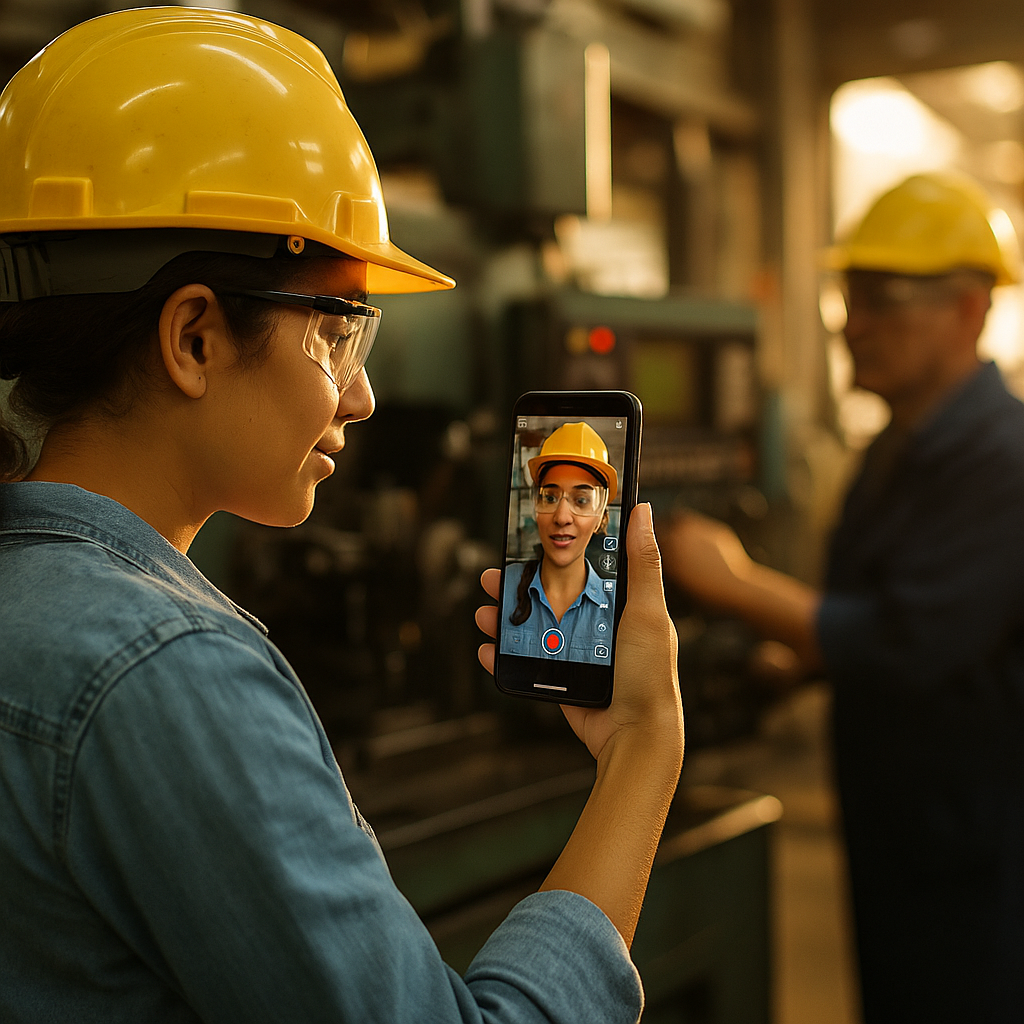
Specialized recruiting on TikTok may sound unconventional for manufacturing, yet in 2026 it has become a practical way to reach skilled technicians, engineers, and operators where they already spend time. This case study shows how one manufacturing firm used short-form video to solve a stubborn talent gap, improve applicant quality, and reshape its employer brand. Here is what made it work.
TikTok recruiting strategy for a manufacturing talent shortage
A mid-sized precision components manufacturer in the U.S. faced a familiar problem: open roles stayed unfilled for too long, especially CNC machinists, maintenance technicians, industrial electricians, and quality engineers. Traditional job boards produced volume but not fit. Internal recruiters saw many applicants who lacked certifications, shift flexibility, or interest in plant work. Referral programs helped, but not enough to support expansion.
The company’s leadership team initially questioned whether TikTok belonged in a manufacturing hiring plan. The recruiting director made a stronger case by focusing on audience behavior, not assumptions. Skilled tradespeople, vocational students, and early-career technicians consume short-form video daily. Many also use social platforms to evaluate workplace culture before applying.
The firm set three clear goals:
- Increase qualified applicants for hard-to-fill technical roles
- Reduce cost per qualified applicant compared with job boards
- Improve employer perception among younger skilled workers and career-switchers
Instead of treating TikTok as a trend, the company built a targeted recruiting strategy. It defined ideal candidate profiles by role, location, certification level, and commute radius. Recruiters partnered with plant managers to identify what candidates actually cared about: pay transparency, modern equipment, advancement, overtime expectations, safety standards, and supervisor quality.
That discovery process mattered. Helpful content starts with real questions from real people. Following EEAT principles, the company grounded its messaging in operational truth. Videos featured actual employees, real production areas, and specific hiring requirements. The recruiting team avoided polished claims it could not prove. That authenticity became a core advantage.
Employer branding on TikTok through real shop floor stories
The company did not launch with generic “we’re hiring” videos. It built an employer branding series around everyday work life. This decision addressed a common obstacle in manufacturing recruitment: candidates often have outdated assumptions about plant environments. Many imagine dirty, unsafe, repetitive work with little growth. The videos needed to replace assumptions with evidence.
Its content plan included five recurring formats:
- Day-in-the-life videos showing machinists, maintenance techs, and inspectors during real shifts
- Tool and technology spotlights featuring CNC equipment, robotics, quality systems, and digital workflows
- Pay and progression explainers outlining starting ranges, training paths, and promotion timelines
- Supervisor Q&A clips answering practical questions about schedules, certifications, and expectations
- Safety and culture moments demonstrating PPE standards, team meetings, and problem-solving routines
Every video answered one candidate question. That made the content useful, not promotional. A maintenance technician explained how preventive work reduced emergency callouts. A team lead showed a clean, organized production cell. A recruiter clarified which roles required experience and which offered paid training. A quality engineer discussed how cross-functional collaboration worked in practice.
The company also used captions and on-screen text to improve accessibility and retention. Since many users watch without sound, each video communicated its core message visually. This boosted completion rates and made content easier to share.
Most important, the employer brand stayed consistent with the actual employee experience. That alignment strengthened trust. In EEAT terms, the videos demonstrated experience through first-person employee voices, expertise through role-specific knowledge, authoritativeness through transparent process explanations, and trustworthiness through honest job details.
Skilled trades hiring with short-form video content
After a six-week content pilot, the firm moved into active skilled trades hiring. It used a mix of organic TikTok posts and paid promotion targeting specific regions near its plants and technical schools. The recruiting team did not optimize for broad reach alone. It optimized for qualified attention.
Its strongest videos shared several traits. They were short, specific, and practical. They opened with a clear hook such as “What does a CNC setup operator actually do here?” or “Can you get hired without five years of experience?” They then answered the question in under 30 seconds using employee narration and shop floor visuals.
The firm also created role-specific landing pages linked from its TikTok profile and ads. This solved a common drop-off problem. Sending users from a short video to a generic careers page often creates friction. Instead, each landing page matched the message in the video. If a TikTok covered second-shift maintenance roles with tuition support, the landing page repeated those details, listed requirements, and offered a simple mobile application flow.
To improve quality, recruiters added pre-screen questions that reflected actual must-haves:
- Can you work the listed shift?
- Do you hold the required certification or equivalent experience?
- What is your commute distance?
- Are you legally authorized to work in the role location?
- Do you have experience with the specified machines or systems?
This reduced wasted recruiter time and protected the candidate experience. Applicants knew quickly whether the role fit. Recruiters spent more time with viable prospects.
The company also learned that comments were a recruiting signal, not just engagement. Candidates asked direct questions about steel-toe reimbursement, apprenticeships, overtime, and age requirements. The team answered publicly when appropriate and turned repeated questions into new videos. That feedback loop made the channel smarter over time.
Social media recruitment metrics that proved ROI
Leadership support increased once the firm tied TikTok activity to hiring outcomes. Vanity metrics such as views and likes mattered less than business impact. The recruiting director built a measurement framework shared monthly with HR and operations leaders.
The dashboard tracked:
- Qualified applicant rate by source
- Cost per qualified applicant
- Interview-to-offer ratio
- Offer acceptance rate
- Time to slate for hard-to-fill roles
- 90-day retention for TikTok-sourced hires
Within one quarter, the manufacturer saw measurable gains. Applications from TikTok were lower in raw volume than job boards, but a much higher share met baseline requirements. Interview scheduling improved because candidates had already seen videos about shift schedules, equipment, and workplace expectations. That pre-education reduced surprises later in the funnel.
The company also found that TikTok-supported candidates were more likely to mention specific reasons for applying. They referred to a maintenance lead’s explanation of training, a machinist’s shop tour, or a recruiter’s transparent breakdown of compensation. This indicated stronger intent and better-informed decisions.
Another operational benefit emerged: hiring manager alignment improved. Plant leaders who had once been skeptical began suggesting video topics themselves. They saw that recruiting content could surface what made their teams strong. The platform became more than a sourcing channel. It became a mechanism for translating operational reality into candidate trust.
Did TikTok replace other recruiting channels? No. It worked best as part of a broader system that included referrals, local outreach, career fairs, technical school partnerships, and search. But it became a high-impact channel for awareness and qualification at the top of the funnel, especially for candidates who were passive or undecided.
Manufacturing recruitment challenges and compliance lessons
The campaign succeeded because the company treated manufacturing recruitment as a compliance-sensitive function, not just a creative exercise. Several safeguards were essential.
First, the legal and HR teams reviewed all hiring claims. Compensation ranges, sign-on bonuses, training promises, and promotion paths had to be current and documented. Overstating any of these could damage trust and create legal risk.
Second, safety and privacy standards shaped production filming. Employees gave consent before appearing on camera. Restricted areas were excluded. No customer-sensitive data, proprietary processes, or confidential screens appeared in videos. PPE compliance remained visible in every clip to reinforce safety culture.
Third, the company trained recruiters on platform tone. Fast, human responses mattered, but professionalism still applied. Recruiters learned how to answer public questions consistently, when to move a conversation to direct messages, and how to handle inappropriate comments.
Fourth, the firm prepared for scalability. Once several videos performed well, inbound interest rose quickly. That can become a problem if response times lag. The recruiting team updated SLAs for social leads, automated application confirmations, and aligned interview capacity with demand.
The company also learned where TikTok had limits. Senior niche roles with relocation requirements still performed better through targeted outreach and industry networks. Highly regulated positions requiring extensive background checks needed more detailed candidate education than a short video could provide. In those cases, TikTok functioned better as an awareness tool than a direct conversion channel.
The lesson is simple: TikTok works in manufacturing recruiting when it reflects the reality of the role, fits the hiring process, and respects compliance boundaries. Without those elements, even strong reach will not deliver sustainable hiring results.
Recruitment marketing best practices for repeating the success
What can other manufacturing firms take from this case study? The strongest insight is that specialized candidates do not need flashy branding. They need credible proof. If you want welders, technicians, electricians, or engineers to trust your opportunity, show them the work, the equipment, the people, and the path forward.
Here are the best practices this manufacturer would repeat:
- Start with hard-to-fill roles where traditional channels underperform and candidate questions are predictable.
- Use employee voices rather than scripted corporate narration. Real experts create stronger credibility.
- Answer one question per video so content stays useful and easy to consume.
- Build mobile-first landing pages that match the promise of the video and simplify application steps.
- Measure qualified outcomes instead of focusing only on reach or engagement.
- Create feedback loops by mining comments, recruiter notes, and hiring manager input for future content.
- Protect trust with accurate claims, visible safety standards, and prompt candidate communication.
For HR leaders, this case shows that TikTok is not only a Gen Z branding channel. It can support serious, specialized recruiting when managed with discipline. For operations leaders, it proves that the details candidates care about most are often the details companies have historically failed to communicate. For recruiters, it offers a practical way to qualify interest before the first screening call.
If your manufacturing firm struggles to hire specialized talent, the next step is not to post more generic openings. It is to make the job visible, understandable, and believable. That is where TikTok changed the game for this company.
FAQs about TikTok recruiting for manufacturing firms
Can TikTok really help recruit skilled manufacturing workers?
Yes. It can be highly effective for reaching technicians, machinists, operators, apprentices, and early-career engineers, especially when videos answer practical job questions and show the real work environment.
What types of manufacturing roles perform best on TikTok?
Hands-on and visually demonstrable roles tend to perform best, including CNC operators, welders, maintenance technicians, industrial electricians, quality inspectors, and robotics-related positions. Roles with clear career paths also attract strong interest.
How often should a manufacturing company post recruiting content?
Consistency matters more than volume. Many firms can start with two to four high-quality videos per week, then adjust based on engagement, recruiting demand, and recruiter response capacity.
Should employers use organic TikTok posts or paid ads?
The strongest strategy often combines both. Organic content builds trust and employer brand over time, while paid promotion helps target specific locations, schools, and candidate profiles for urgent openings.
How do you measure success beyond views?
Track qualified applicant rate, cost per qualified applicant, interviews booked, offer acceptance rate, time to fill, and retention of hires sourced through TikTok-related campaigns.
What are the biggest risks of using TikTok for recruiting?
The main risks include inaccurate job claims, slow follow-up, inconsistent messaging, privacy issues during filming, and weak application experiences after candidates click through. These risks are manageable with clear processes.
Do candidates actually trust employer content on TikTok?
They do when it feels specific, transparent, and consistent with reality. Employee-led videos, honest pay discussions, visible safety standards, and clear hiring requirements all increase trust.
Is TikTok enough on its own for specialized recruiting?
No. It works best as part of a broader recruitment marketing system that includes referrals, search, technical school partnerships, local outreach, and a strong candidate experience after the first click.
This case study shows that manufacturing firms can use TikTok to attract specialized talent when they focus on credibility, candidate questions, and measurable hiring outcomes. The platform worked because the company showed real jobs, real people, and real expectations. The clear takeaway for 2026 is this: useful, transparent short-form video can turn a difficult recruiting market into a competitive advantage.