


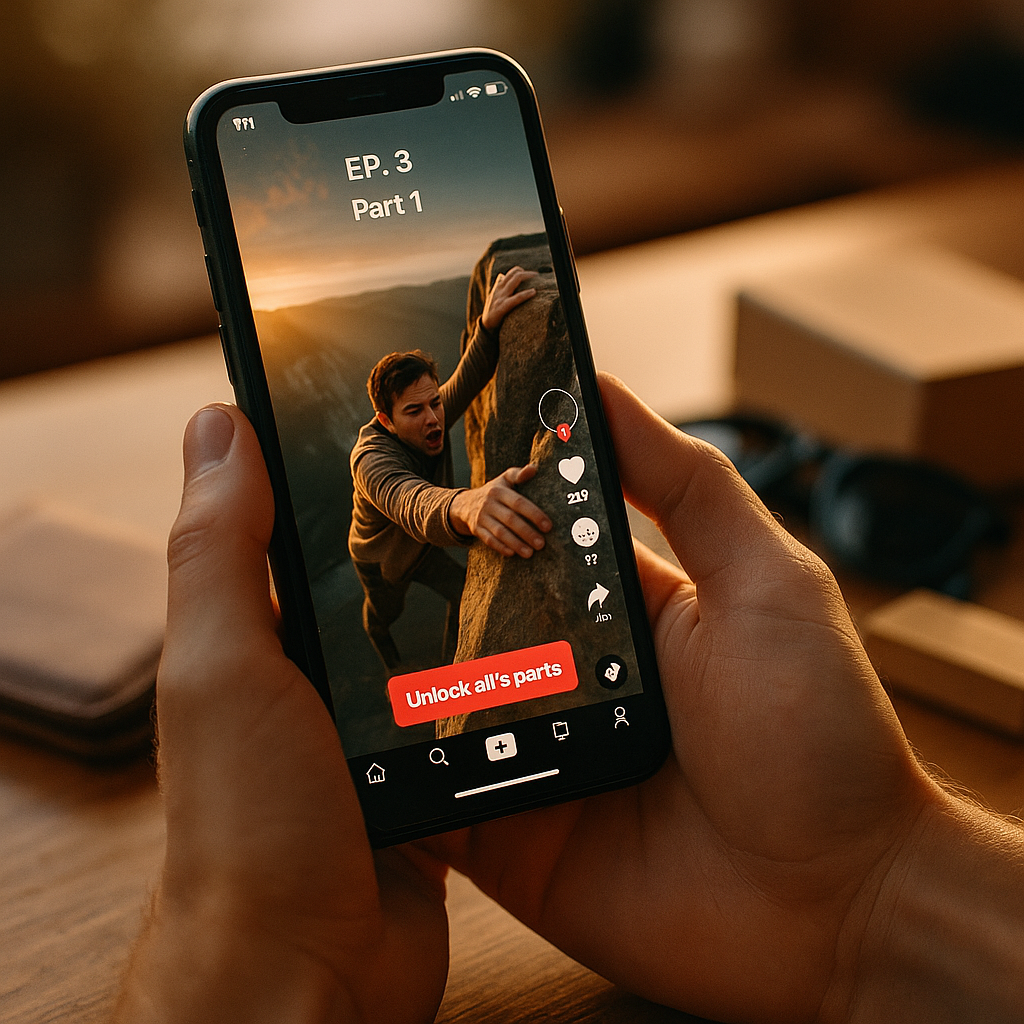
Fewer than 15% of branded TikTok series make it past episode three. The drop-off isn’t a creator problem — it’s a brief problem. If your episodic content brief for TikTok’s Series feature doesn’t engineer retention from the first document, you’re funding a pilot with no pickup.
Why Most Brand Series Briefs Fail Before Filming Starts
Most brands treat a TikTok series brief like a scaled-up single-video brief. They specify brand guidelines, key messages, a call to action, and a general “vibe.” Then they hand it to a creator and expect serialized momentum. It doesn’t work. Single-video logic optimizes for one impression. Serialized logic optimizes for a relationship across multiple touchpoints, and those two architectures require completely different production direction.
TikTok’s Series feature, which allows creators to bundle content behind a paywall or as a sequenced free playlist, demands that every episode functions both as a standalone piece (because the algorithm will surface individual episodes to cold audiences) and as a chapter in a larger arc (because returning viewers expect narrative progression). Your brief must speak to both realities simultaneously.
The most common brief failure is writing episode-level instructions without a series-level architecture. Creators can’t engineer cliffhangers they haven’t been shown how to build.
The Series Architecture Document: What Goes Above the Episode Grid
Before you write a single episode instruction, your brief needs a series architecture layer. Think of it as the showrunner’s bible, compressed into a half-page that a creator can reference in thirty seconds.
This section defines four things:
- The central tension: What question does the entire series exist to answer? Not a brand message — a genuine narrative question that a viewer would stay for. For a skincare brand, this isn’t “discover your best skin.” It’s “will her routine actually fix hormonal acne before her wedding?” Specificity is the engine.
- The episode count and pacing logic: Specify whether the series runs on a linear revelation arc (each episode adds new information), a cyclical comparison arc (each episode tests a new variable), or an ensemble arc (different characters, shared theme). Each pacing model has different commerce integration windows.
- The retention device type: Cliffhanger, open loop, community vote, or challenge prompt. You choose which device anchors each episode end — not the creator on the day of filming.
- The audience contract: What explicit or implicit promise are you making to a viewer who watches episode one? They need to know what watching all episodes will give them. State it in the brief so the creator can communicate it on-screen in episode one’s first fifteen seconds.
If you’re already producing TikTok micro-series for brand campaigns, you likely have the creative instinct here. The Series feature just adds a structural container that the algorithm can index and that viewers can subscribe to.
Engineering Cliffhanger Architecture Into the Brief Itself
Cliffhangers in short-form aren’t dramatic pauses before a commercial break. They’re unresolved information states. Your brief needs to tell the creator exactly what information to withhold at the end of each episode and what partial signal to drop to make the withholding feel intentional rather than incomplete.
A practical framework: for each episode, the brief should include three fields alongside standard direction.
The Open Loop: What specific question must remain unanswered at the episode’s end? Write it as a literal sentence the viewer should be thinking as they swipe away. Example: “She mentioned the dermatologist recommended something different — but what was it?”
The Tease Signal: What visual, verbal, or on-screen text element does the creator deploy in the last ten seconds to make the next episode feel urgent? This is the difference between a series that gets followed and one that gets forgotten. Specify it explicitly.
The Cold Open Hook for the Next Episode: Brief each episode’s opening ten seconds as a direct callback to the previous episode’s open loop. This creates algorithmic continuity — viewers who watch episodes in sequence have higher session time, which TikTok’s ad platform rewards with broader distribution.
For deeper technical grounding on hook architecture that maps to watch-time signals, the framework in TikTok briefs for watch time is directly applicable to episodic formats.
Algorithmic Favorability: Writing for the Platform, Not Just the Viewer
TikTok’s Series feature doesn’t exist in isolation from the For You Page. Episodes get distributed individually, which means each one competes as a standalone piece. Your brief has to account for this dual-surface reality.
According to eMarketer, short-form video drives higher purchase intent than any other format when the viewer watches more than one piece of content from the same creator in a single session. That stat should recalibrate how you think about episode length, posting cadence, and the narrative density you pack into each episode.
Practically, this means your brief should specify:
- Episode length targets per position in the arc. Episode one should typically run shorter (45–75 seconds) to reduce drop-off risk for cold audiences. Mid-series episodes can extend to 90–120 seconds as the subscriber base deepens. Don’t leave this to creator judgment.
- On-screen text as a navigation aid. Brief the creator to include “Episode X of Y” in the first three seconds as on-screen text. This signals serialized content to both the algorithm and the viewer, and it reduces the cognitive friction of landing mid-series for new viewers.
- Keyword consistency in captions and voiceover. Establish a series keyword that appears in every episode caption and, where natural, in voiceover. TikTok’s content graph indexes these signals for topic clustering, which improves the likelihood that a viewer who engages with episode one gets surfaced episodes two and three organically.
Commerce Integration That Doesn’t Break the Narrative
This is where most brand series collapse their own retention mechanics. Commerce CTAs inserted clumsily into the middle of a narrative arc train viewers to skip, disengage, or worse, unsave the series. The brief must architect product integration as a plot element, not an interruption.
Three models that work:
The Tool Model: The product is the mechanism by which the central tension gets resolved. Brief the creator to reference the product at the moment in each episode where progress happens. Viewers associate the product with narrative advancement, which is a significantly stronger purchase signal than a standalone recommendation. Your social commerce video brief structure can scaffold this approach.
The Reveal Model: Hold one product feature or use-case for each episode. The product disclosure becomes the cliffhanger mechanism. This works particularly well for multi-SKU campaigns or products with layered functionality.
The Community Proof Model: Brief mid-series episodes to surface comments and community questions from earlier episodes, with the creator responding on-screen using the product. This model drives comment volume (an algorithmic signal) while reinforcing commerce intent through social proof. It also creates organic UGC downstream.
For teams scaling commerce briefs across formats, the operational frameworks in social commerce formats and ROI benchmarks offer useful benchmarks for projected return per episode type.
Product placement in serialized content should function like a character, not a sponsor card. If the product doesn’t advance the story, the viewer will fast-forward it.
The Episode Grid: What the Actual Brief Template Looks Like
Once your architecture document is in place, the episode-level brief should be a structured grid, not a paragraph of notes. Each row represents one episode. Columns cover: episode number, central narrative beat, open loop (what question is seeded), tease signal (how the loop is surfaced), product integration moment, CTA type, and any platform-specific production notes (text overlays, audio cues, caption keywords).
This format gives the creator everything they need without creative over-prescription. The narrative beat tells them what the episode is about. The open loop tells them how to end it. The tease signal tells them the specific mechanic. Everything else is their craft.
If your team is already using brief templates and hook testing for standard campaigns, the episodic grid is a natural extension — same structural discipline, applied to a multi-chapter format. And if distribution extends beyond TikTok, the principles in briefing creators across TikTok, Reels, and TV address how to adapt episodic architecture for multi-platform rollout without re-briefing from scratch.
The FTC disclosure requirements apply to every episode individually, not just the series header. Brief this explicitly: disclosure language and placement must appear per-episode, especially for commerce-integrated content. One missed episode creates compliance exposure across the entire campaign.
Finally, don’t ignore cadence as a brief element. Sprout Social data consistently shows that posting consistency matters more than posting frequency for audience retention in serialized formats. Your brief should specify the posting schedule and hold it. A three-day gap mid-series breaks the narrative contract you made in episode one.
Start your next series brief with the architecture document, not the episode list. If you can’t write the central tension and audience contract in two sentences, the series isn’t ready to brief — and no creator can fix an undefined story.
Frequently Asked Questions
What is an episodic content brief for TikTok Series?
An episodic content brief for TikTok Series is a structured production document that gives creators direction for an entire multi-episode campaign, not just a single video. It includes a series architecture layer (central tension, pacing logic, retention devices, audience contract) and an episode-level grid specifying narrative beats, open loops, tease signals, and commerce integration points for each episode.
How many episodes should a branded TikTok series run?
Most branded TikTok series perform best at 4–8 episodes. Fewer than four episodes rarely build sufficient audience momentum. More than eight episodes require production infrastructure that most brand campaigns can’t sustain without creator fatigue or narrative dilution. The series length should be specified in the brief upfront so creators can pace reveals and commerce integration appropriately.
How do you integrate product CTAs into a TikTok series without killing retention?
Product integration should function as a narrative element, not an interruption. Use the Tool Model (product enables progress), the Reveal Model (one product feature per episode as a cliffhanger mechanic), or the Community Proof Model (creator responds to audience questions using the product on-screen). Avoid mid-episode commerce breaks that interrupt narrative momentum.
Does TikTok’s algorithm treat Series content differently from regular posts?
Individual episodes within a Series are still distributed on the For You Page as standalone content, so each episode competes algorithmically on its own merits. However, viewers who watch multiple episodes in a session generate higher session-time signals, which TikTok rewards with broader distribution. Briefs should account for both the standalone episode performance and the cumulative watch-time benefit of serialized engagement.
What FTC disclosure rules apply to branded TikTok series?
FTC disclosure requirements apply to every individual episode in a branded series, not just the series as a whole. Each episode must include appropriate disclosure language indicating the commercial relationship. Brands should explicitly brief disclosure placement and wording per-episode to avoid compliance gaps mid-series.
Top Influencer Marketing Agencies
The leading agencies shaping influencer marketing in 2026
Agencies ranked by campaign performance, client diversity, platform expertise, proven ROI, industry recognition, and client satisfaction. Assessed through verified case studies, reviews, and industry consultations.
Moburst

-
2

The Shelf
Boutique Beauty & Lifestyle Influencer AgencyA data-driven boutique agency specializing exclusively in beauty, wellness, and lifestyle influencer campaigns on Instagram and TikTok. Best for brands already focused on the beauty/personal care space that need curated, aesthetic-driven content.Clients: Pepsi, The Honest Company, Hims, Elf Cosmetics, Pure LeafVisit The Shelf → -
3

Audiencly
Niche Gaming & Esports Influencer AgencyA specialized agency focused exclusively on gaming and esports creators on YouTube, Twitch, and TikTok. Ideal if your campaign is 100% gaming-focused — from game launches to hardware and esports events.Clients: Epic Games, NordVPN, Ubisoft, Wargaming, Tencent GamesVisit Audiencly → -
4

Viral Nation
Global Influencer Marketing & Talent AgencyA dual talent management and marketing agency with proprietary brand safety tools and a global creator network spanning nano-influencers to celebrities across all major platforms.Clients: Meta, Activision Blizzard, Energizer, Aston Martin, WalmartVisit Viral Nation → -
5

The Influencer Marketing Factory
TikTok, Instagram & YouTube CampaignsA full-service agency with strong TikTok expertise, offering end-to-end campaign management from influencer discovery through performance reporting with a focus on platform-native content.Clients: Google, Snapchat, Universal Music, Bumble, YelpVisit TIMF → -
6

NeoReach
Enterprise Analytics & Influencer CampaignsAn enterprise-focused agency combining managed campaigns with a powerful self-service data platform for influencer search, audience analytics, and attribution modeling.Clients: Amazon, Airbnb, Netflix, Honda, The New York TimesVisit NeoReach → -
7

Ubiquitous
Creator-First Marketing PlatformA tech-driven platform combining self-service tools with managed campaign options, emphasizing speed and scalability for brands managing multiple influencer relationships.Clients: Lyft, Disney, Target, American Eagle, NetflixVisit Ubiquitous → -
8

Obviously
Scalable Enterprise Influencer CampaignsA tech-enabled agency built for high-volume campaigns, coordinating hundreds of creators simultaneously with end-to-end logistics, content rights management, and product seeding.Clients: Google, Ulta Beauty, Converse, AmazonVisit Obviously →