


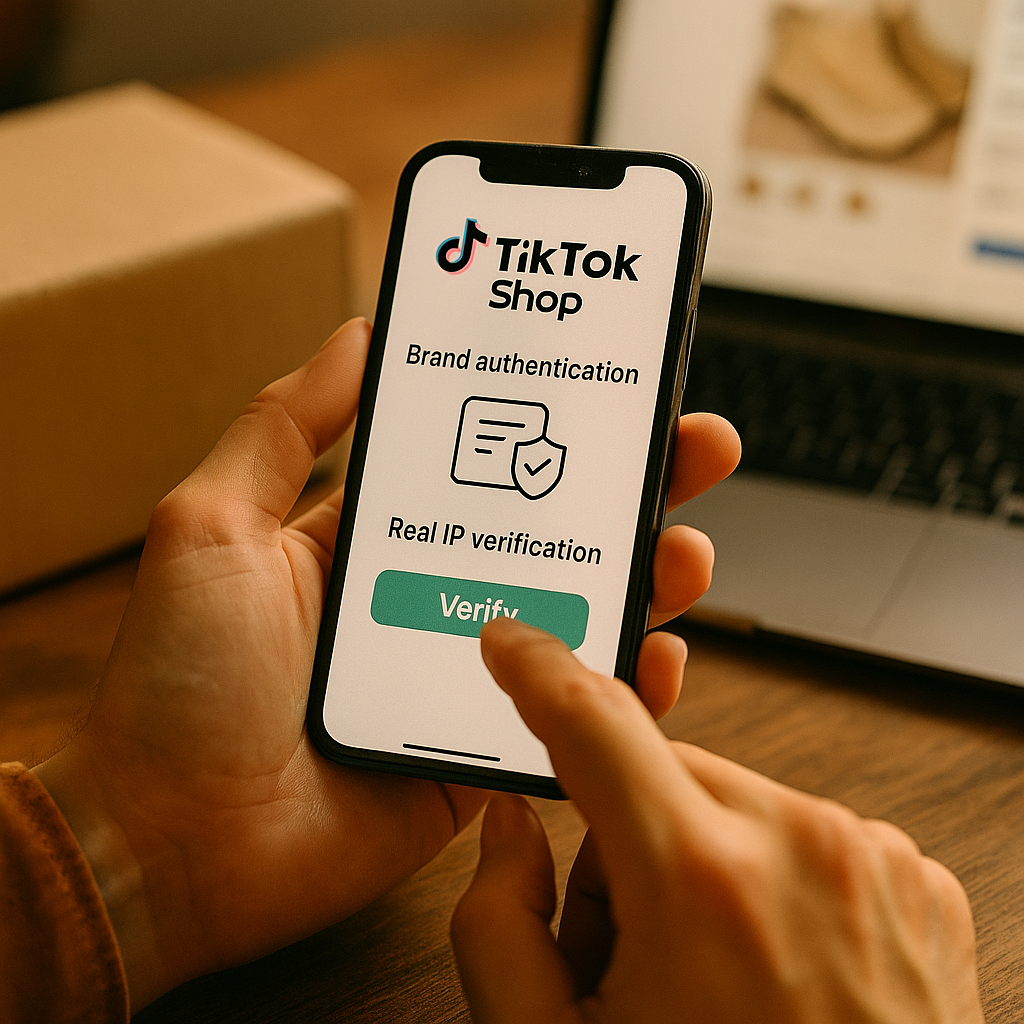
Fake reviews, cloned storefronts, bot-driven “sold out” spikes — social commerce has a trust problem. TikTok Shop’s answer? A sweeping real IP verification expansion powered by AI fraud detection, now flagging location-spoofing sellers at a scale the platform has never attempted before. If you’re running a brand storefront or vetting affiliate sellers on TikTok Shop, this changes your risk calculus overnight.
Why TikTok Shop Had to Act
Social commerce fraud isn’t a fringe issue anymore. It’s baked into the growth story. As TikTok Shop scaled past tens of billions in gross merchandise value across its core markets, it inherited the same problem every fast-growing marketplace eventually faces: bad actors move faster than trust and safety teams.
VPN-masked sellers claiming domestic status. Counterfeit shops registered in one country but shipping from another, dodging tariffs and compliance checks. Coordinated review farms inflating product ratings from IP clusters that don’t match any real customer geography. None of this is new to e-commerce — the FTC has pursued fake review cases against major platforms for years — but TikTok Shop’s hybrid content-commerce model made it particularly exploitable. A viral video can send thousands of buyers to a storefront in minutes, and fraudulent sellers learned to exploit that velocity before verification teams could catch up.
TikTok’s fraud detection systems reportedly flag location-spoofing patterns using device fingerprinting, login cadence analysis, and IP-to-billing address mismatches — a layered approach borrowed from fintech risk models, not traditional e-commerce moderation.
What Real IP Verification Actually Checks
This isn’t a simple “block VPN traffic” filter. TikTok’s expanded verification system reportedly cross-references several data points simultaneously:
- Seller registration IP against business license jurisdiction
- Login location consistency over rolling 30-day windows
- Device fingerprint clustering across multiple “distinct” storefronts
- Shipping origin data against claimed warehouse location
- Payment processor geography versus declared business address
The AI models don’t just flag one mismatch and move on. They weight combinations. A seller with a single VPN login might be a traveling employee. A seller with VPN logins, mismatched shipping data, and payment processing routed through a third country? That’s a pattern, and TikTok’s models are trained to escalate patterns for manual review rather than auto-ban on a single signal — reducing false positives that would otherwise punish legitimate small sellers.
The Merchant Trust Problem, Quantified
Trust isn’t abstract in social commerce — it shows up directly in conversion rates. Buyers who’ve been burned by a counterfeit purchase or a seller who never shipped don’t just abandon that one transaction. They abandon the platform’s shopping tab entirely, at least for a while. That’s the real cost of fraud: not the individual chargebacks, but the erosion of category-wide purchase intent.
Industry data on social commerce trust consistently points the same direction. Surveys from firms like Sprout Social have found that authenticity and perceived legitimacy rank among the top purchase drivers for social-first shopping audiences, often ahead of price. When a platform can’t guarantee seller legitimacy, it caps its own ceiling for commerce growth — no amount of algorithmic recommendation can compensate for buyer hesitation at checkout.
That’s the strategic logic behind TikTok’s investment. Verification isn’t just a compliance box. It’s a growth lever disguised as a risk control.
What This Means for Brands Running TikTok Shop Programs
If your brand sells directly through TikTok Shop or works with affiliate creators who drive traffic to it, the verification expansion touches your operations in three concrete ways.
First, expect slower onboarding for new storefronts and sub-accounts. If you manage multiple regional storefronts (a common setup for brands testing different markets), each one now goes through more rigorous identity checks. Build extra lead time into launch timelines — a week or two of buffer, not a same-day activation assumption.
Second, affiliate and creator-seller vetting gets stricter. Brands running affiliate programs where creators list products directly need to confirm their creator-sellers pass verification cleanly. A flagged or under-review affiliate account can quietly stall commission payouts or product visibility, and you may not get proactive notice. Build a verification-status check into your affiliate onboarding checklist.
Third, and most overlooked: competitor counterfeit exposure should drop, but not disappear. If your brand has fought knockoff sellers undercutting you on TikTok Shop, the AI fraud detection layer should catch more of them faster. That said, don’t treat it as a silver bullet — file takedown reports proactively rather than waiting for the algorithm to catch every bad actor.
How This Compares to Meta and Amazon’s Approach
TikTok isn’t inventing fraud detection from scratch. Meta’s commerce policies have used identity verification for Shops sellers for years, and Amazon’s brand registry and IP verification programs are the industry’s most mature model. What’s distinct about TikTok’s approach is the speed of iteration and the tight coupling with its recommendation algorithm.
Because TikTok Shop purchases are so often triggered by short-form video discovery rather than deliberate search, the platform has less “friction time” to catch fraud before a sale completes. Amazon shoppers search, compare, read reviews, then buy — often over days. TikTok Shop buyers can go from video view to purchase in under a minute. That compressed decision window means fraud detection has to work upstream, at the seller-verification stage, rather than relying on post-purchase dispute resolution. It’s a fundamentally different risk architecture, closer to real-time payment fraud detection than traditional marketplace moderation.
The AI Governance Angle Brands Can’t Ignore
Here’s the part that should matter to marketing leaders beyond just TikTok Shop operations: this is another example of a platform making unilateral, opaque AI-driven decisions that directly affect brand revenue. A false-positive flag on your storefront (however rare) could freeze sales during a critical launch window, with limited recourse and unclear appeal timelines.
This mirrors a broader pattern we’ve tracked across ad platforms — AI systems making consequential decisions with thin human oversight. The same governance questions that apply to AI media buying governance apply here: what’s the override threshold, who reviews edge cases, and how fast can a human intervene when the algorithm gets it wrong? Brands should treat TikTok Shop’s verification system the way they’d treat any AI governance layer in their own stack: understand the escalation path before you need it, not after.
It’s also part of a larger transparency push across TikTok’s platform. The verification expansion arrives alongside the company’s broader C2PA content authentication rollout, suggesting a coordinated strategy: verify sellers on one side, verify content authenticity on the other, and rebuild trust across the entire commerce-content loop. Brand teams tracking TikTok’s AI labeling compliance requirements should treat seller verification as the commerce-side counterpart to that same trust infrastructure.
Practical Steps for the Next Quarter
Don’t wait for a verification flag to force your hand. A few moves worth making now:
- Audit your own storefront verification status and confirm business registration data matches your actual operating jurisdiction, down to the payment processor details.
- Ask affiliate and creator-seller partners to confirm their account verification status in writing before onboarding them to new campaigns.
- Build a monitoring cadence for counterfeit or spoofed competitor listings, and file takedown requests proactively rather than assuming AI detection catches everything.
- Designate an internal owner for TikTok Shop platform policy changes. These verification rules will keep evolving, and someone on your team needs to own the update-tracking, not just the campaign execution.
This connects to a wider theme in performance marketing right now: attribution and trust infrastructure are converging. As we’ve noted in coverage of post-cookie attribution for commission-based creator deals, the platforms that win brand trust are the ones that pair verification with transparent reporting, not black-box decisions.
Should Brands Slow Down TikTok Shop Investment Because of This?
No — if anything, this is a signal to lean in more deliberately. A platform actively investing in fraud detection infrastructure is signaling long-term commerce ambitions, not retreat. eMarketer’s social commerce forecasts have consistently shown TikTok Shop outpacing broader social commerce growth rates in its core markets, and trust infrastructure is a prerequisite for that trajectory to hold.
The brands that should worry are the ones relying on gray-area tactics: cross-border arbitrage sellers, unverified affiliate networks, or storefronts with sloppy registration data. If that’s your setup, clean it up now, before an automated flag does it for you during a peak sales window.
Next step: Run a verification audit on every TikTok Shop storefront and affiliate-seller relationship your brand touches this month — don’t wait for a flag to surface the gaps for you.
FAQs
What is TikTok Shop’s real IP verification system?
It’s an AI-driven fraud detection layer that cross-checks seller registration IPs, login locations, device fingerprints, shipping origins, and payment processor geography to catch location-spoofing and fraudulent storefronts before they scale.
How does this affect brands already selling on TikTok Shop?
Brands should expect slightly longer onboarding for new storefronts, stricter vetting requirements for affiliate sellers, and generally reduced counterfeit competition, though proactive monitoring is still recommended.
Will legitimate small sellers get falsely flagged?
TikTok’s system reportedly weighs multiple risk signals together rather than auto-banning on a single mismatch, which should reduce false positives, but brands should still confirm their own registration data is accurate to avoid unnecessary review delays.
How is this different from Amazon or Meta’s seller verification?
TikTok Shop’s compressed purchase window (video discovery to checkout in minutes) means fraud detection has to work earlier in the process, at seller onboarding, rather than relying primarily on post-purchase dispute resolution like traditional marketplaces.
What should brands do to prepare for stricter verification rules?
Audit storefront registration data, confirm affiliate sellers’ verification status before onboarding, monitor for counterfeit competitor listings, and assign an internal owner to track TikTok Shop policy changes on an ongoing basis.
Top Influencer Marketing Agencies
The leading agencies shaping influencer marketing in 2026
Agencies ranked by campaign performance, client diversity, platform expertise, proven ROI, industry recognition, and client satisfaction. Assessed through verified case studies, reviews, and industry consultations.
Moburst

-
2

The Shelf
Boutique Beauty & Lifestyle Influencer AgencyA data-driven boutique agency specializing exclusively in beauty, wellness, and lifestyle influencer campaigns on Instagram and TikTok. Best for brands already focused on the beauty/personal care space that need curated, aesthetic-driven content.Clients: Pepsi, The Honest Company, Hims, Elf Cosmetics, Pure LeafVisit The Shelf → -
3

Audiencly
Niche Gaming & Esports Influencer AgencyA specialized agency focused exclusively on gaming and esports creators on YouTube, Twitch, and TikTok. Ideal if your campaign is 100% gaming-focused — from game launches to hardware and esports events.Clients: Epic Games, NordVPN, Ubisoft, Wargaming, Tencent GamesVisit Audiencly → -
4

Viral Nation
Global Influencer Marketing & Talent AgencyA dual talent management and marketing agency with proprietary brand safety tools and a global creator network spanning nano-influencers to celebrities across all major platforms.Clients: Meta, Activision Blizzard, Energizer, Aston Martin, WalmartVisit Viral Nation → -
5

The Influencer Marketing Factory
TikTok, Instagram & YouTube CampaignsA full-service agency with strong TikTok expertise, offering end-to-end campaign management from influencer discovery through performance reporting with a focus on platform-native content.Clients: Google, Snapchat, Universal Music, Bumble, YelpVisit TIMF → -
6

NeoReach
Enterprise Analytics & Influencer CampaignsAn enterprise-focused agency combining managed campaigns with a powerful self-service data platform for influencer search, audience analytics, and attribution modeling.Clients: Amazon, Airbnb, Netflix, Honda, The New York TimesVisit NeoReach → -
7

Ubiquitous
Creator-First Marketing PlatformA tech-driven platform combining self-service tools with managed campaign options, emphasizing speed and scalability for brands managing multiple influencer relationships.Clients: Lyft, Disney, Target, American Eagle, NetflixVisit Ubiquitous → -
8

Obviously
Scalable Enterprise Influencer CampaignsA tech-enabled agency built for high-volume campaigns, coordinating hundreds of creators simultaneously with end-to-end logistics, content rights management, and product seeding.Clients: Google, Ulta Beauty, Converse, AmazonVisit Obviously →