


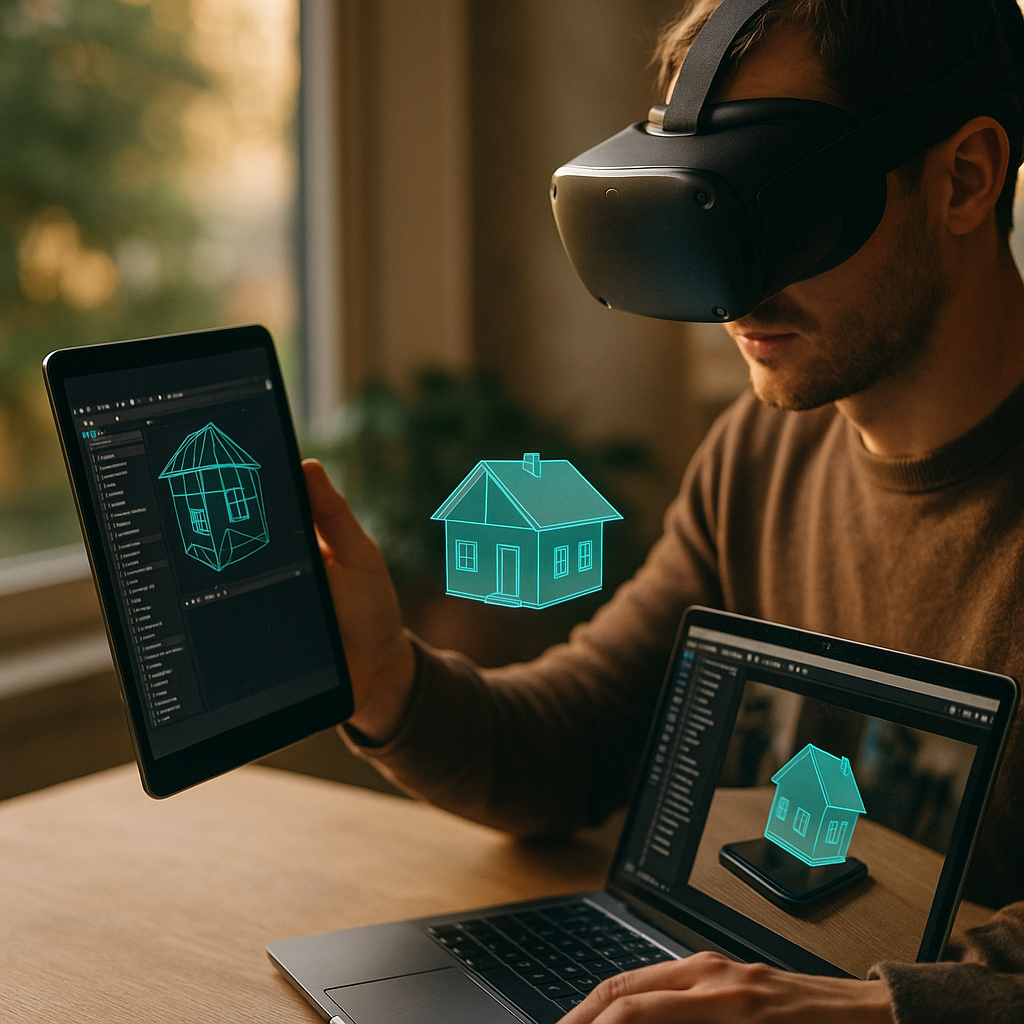
Choosing the right spatial CMS platforms can determine whether a 3D augmented reality program scales smoothly or collapses under content chaos. In 2026, brands need tools that support versioning, localization, governance, analytics, and fast publishing across devices. This review explains what matters, where leading platforms differ, and how to match capabilities to your AR roadmap before budgets lock in.
What to Look for in a 3D AR content management system
A spatial CMS is more than a place to upload 3D files. It is the operational layer that organizes, updates, publishes, and measures immersive content across apps, web-based AR, headsets, kiosks, and connected environments. If your team is evaluating options, start with practical criteria rather than vendor demos.
The strongest 3D AR content management system platforms typically offer:
- Asset ingestion and optimization: Support for common formats such as glTF, USD, USDZ, FBX, and Reality files, plus compression and LOD handling.
- Scene composition: Visual authoring for object placement, anchors, interactions, and environment settings without forcing every update through developers.
- Publishing workflows: Role-based approvals, staging environments, rollback, and release scheduling.
- Cross-platform deployment: Delivery to iOS, Android, web AR, game engines, and spatial devices from a single source of truth.
- Metadata and search: Taxonomies for products, campaigns, markets, and asset relationships so teams can reuse content efficiently.
- Localization and personalization: Variants by language, geography, device class, or audience segment.
- Analytics: Event tracking for placement, dwell time, interactions, conversions, and content performance.
- Security and governance: SSO, permissions, audit trails, and enterprise compliance controls.
From an implementation standpoint, the most important question is simple: Who needs to make changes every week? If marketers, merchandisers, educators, or retail ops teams must update experiences frequently, a platform with low-code scene management and workflow controls will provide far more value than a developer-centric asset repository.
Another key issue is real-time rendering strategy. Some CMS products are optimized for lightweight mobile commerce experiences, while others support complex digital twins, training simulations, or persistent spatial environments. The wrong fit creates friction quickly: heavy tools slow marketing teams, while lightweight tools cannot support industrial use cases.
Top spatial computing CMS features that separate leaders from basic tools
In this category, many vendors claim to support “AR content management,” but their depth varies significantly. The best spatial computing CMS products stand out in a few areas that directly affect cost, speed, and reliability.
First, content modeling. Mature platforms treat 3D objects, scenes, behaviors, and analytics events as structured content. That matters because you will eventually need to update one component across hundreds of experiences. If the system stores every scene as a fixed export, reuse becomes painful.
Second, workflow orchestration. Teams managing AR at scale need more than upload-and-publish. They need approvals, task routing, localization workflows, and version comparison. Retail, manufacturing, and healthcare organizations often have legal, product, and safety reviews before any immersive content goes live.
Third, interoperability. A modern platform should connect with PIM, DAM, commerce systems, CRM, CDP, and analytics stacks. For example, a retailer may want product dimensions from PIM, localized textures from DAM, and campaign triggers from marketing automation. A CMS that cannot connect cleanly becomes a silo.
Fourth, delivery performance. AR engagement drops when scenes load slowly or assets are oversized. Leading vendors include CDN support, progressive loading, adaptive resolution, and edge delivery strategies. Ask to see live performance dashboards, not just technical claims.
Fifth, governance for scale. Enterprise buyers should examine permissions at the object, collection, environment, and market level. In global organizations, not every team should be able to edit a master asset or overwrite a certified scene. Strong governance reduces operational risk without blocking local teams from publishing.
A useful vendor review should also include evidence of real deployments. Look for case studies that show content volume, market complexity, and measurable business outcomes such as faster launch cycles, reduced 3D production waste, or higher conversion rates. That aligns with Google’s EEAT expectations: trustworthy content comes from demonstrated experience and clear, specific claims.
Enterprise AR platform review: leading categories and who they suit
Rather than ranking brands without context, it is more useful to review the main categories of enterprise AR platform solutions and where they fit best. Most buyers will encounter one of the following approaches.
1. Headless CMS extended for 3D and AR
These platforms build on existing content infrastructure and add custom 3D fields, rendering integrations, and publishing workflows. They suit organizations that already have strong engineering teams and want AR to plug into a broader omnichannel stack. Their strengths include flexibility, API-first architecture, and integration depth. Their weakness is that scene authoring often requires additional tooling.
Best for: Large content operations, commerce brands with mature tech stacks, and companies that want one content model across web, app, and immersive channels.
2. Purpose-built spatial CMS products
These platforms are designed specifically for 3D scenes, anchors, object behaviors, and immersive deployment. They often include visual editors, device previews, and environment management. Their advantage is speed for non-technical teams. Their limitation can be narrower integrations or less flexibility outside spatial use cases.
Best for: Retail activations, product visualization, training, museums, events, and teams that need marketers or operators to publish directly.
3. Digital twin and industrial spatial platforms
These systems focus on connected spaces, IoT data, simulation, maintenance workflows, and persistent environments. They prioritize accuracy, telemetry, and operational overlays more than consumer-friendly publishing. They are powerful but often overbuilt for brand marketing use cases.
Best for: Manufacturing, logistics, field service, facilities management, and enterprise training.
4. Commerce-first AR management tools
These products center on product visualization, 3D viewers, virtual try-on, and configurators. They usually connect well with catalog and storefront systems and make merchandising easier. However, they may not support complex multi-object spatial storytelling or persistent environments.
Best for: Ecommerce brands, furniture, beauty, fashion, consumer electronics, and rapid SKU-based deployment.
When comparing vendors, request a guided proof of concept based on your actual workflow. Do not ask only whether the platform supports WebAR or mobile SDKs. Ask whether a merchandiser can update a localized 3D product scene in under 15 minutes, whether an ops manager can approve the change, and whether analytics will attribute the interaction to revenue or task completion.
How immersive content platforms handle workflow, integrations, and analytics
A polished demo can hide the daily reality of managing immersive programs. The true test of immersive content platforms is how they perform once dozens of stakeholders, markets, and campaigns depend on them.
Workflow management should be granular. At minimum, look for draft, review, approve, publish, and archive states. Better platforms also support parallel approvals, required reviewers, and change logs. If your brand operates globally, market-specific forks and inherited master content are especially valuable. They let local teams customize text, offers, or compliance elements without breaking the core scene.
Integrations should cover both inbound and outbound data flows. Inbound integrations typically include:
- DAM for source models, textures, and brand assets
- PIM for dimensions, variants, and specifications
- Commerce platforms for pricing, stock status, and product identifiers
- Identity tools for access control and SSO
Outbound integrations typically include analytics suites, CRM, CDP, and BI tools. This matters because immersive engagement should not live in isolation. If a shopper places a sofa in their room through AR and then purchases later on another device, your stack should connect those touchpoints.
Analytics maturity is where many platforms still underdeliver. Surface-level metrics such as views and session counts are not enough. You need event-level reporting tied to outcomes. For commerce, that may include add-to-cart after object placement, interaction depth by SKU, or conversion lift among users who engage with AR. For training, it may include completion rate, time to task accuracy, and repeat error reduction. For industrial environments, it may include maintenance resolution times or inspection accuracy.
Also ask how analytics are validated. Can the vendor explain event taxonomy, identity stitching, privacy controls, and data export options? A credible answer signals operational maturity. Vague assurances often indicate that reporting is still lightweight.
Best AR asset management software for scalability, security, and governance
If your program includes hundreds or thousands of 3D objects, governance stops being a technical detail and becomes a business requirement. The best AR asset management software handles scale without making content teams dependent on manual file tracking.
Start with asset lifecycle controls. A robust platform should preserve source files, optimized delivery versions, thumbnails, metadata, and dependencies between assets and scenes. If a shared model changes, the CMS should show where it is used before teams publish an update. That prevents accidental breakage across campaigns or stores.
Security deserves equal weight. In 2026, enterprise buyers should expect:
- SSO and federation with identity providers
- Role-based and attribute-based permissions
- Audit logs for edits, approvals, and publishes
- Environment separation for development, staging, and production
- Encryption in transit and at rest
For regulated sectors, ask whether the platform supports region-specific hosting, retention controls, and compliance documentation relevant to your operations. A vendor does not need to serve every vertical, but it should clearly explain what safeguards are available and where customer responsibilities begin.
Scalability also depends on content operations. Can the platform bulk-update metadata? Can it enforce naming standards? Can it automatically detect missing textures, oversized files, or unsupported geometry? Small quality-of-life features often save more time than headline features.
One practical recommendation: map your governance model before vendor selection. Decide who owns source assets, who approves edits, who can localize scenes, and who controls retirement. Then score each platform against that workflow. This reduces the risk of buying a strong rendering tool with weak operational discipline.
Spatial experience management trends shaping platform decisions in 2026
The market for spatial experience management is maturing quickly, and platform buyers should account for where the category is heading rather than only what works today.
AI-assisted 3D operations is becoming standard. Vendors increasingly offer automatic tagging, geometry checks, texture optimization, variant generation, and scene QA. This will not replace 3D artists or technical directors, but it can reduce repetitive production work and improve publishing speed.
Persistent and context-aware experiences are also gaining traction. Platforms are moving beyond one-off product viewers toward connected environments that remember state, user progress, and object relationships. This is especially important for retail stores, campuses, museums, and industrial spaces.
Web-first delivery remains strategically important even as dedicated spatial devices improve. For most brands, the broadest reach still comes from smartphone-based AR and browser-accessible experiences. A platform that excels only in premium hardware may limit business impact unless your deployment environment is tightly controlled.
Measurement is becoming more commercial. Buyers are no longer satisfied with engagement alone. They want ties to revenue, efficiency, safety, or training outcomes. Vendors that cannot support deeper attribution and exportable event data will struggle in enterprise reviews.
Composable architecture is another major shift. Organizations increasingly prefer platforms that can plug into existing DAM, CMS, commerce, and analytics systems rather than force a full-stack replacement. As a result, the best choice is often not the platform with the most features on paper, but the one that fits cleanly into your broader digital ecosystem.
The takeaway for 2026 is clear: choose a platform that solves today’s publishing and governance problems while preserving flexibility for future channels, data models, and AI-assisted workflows.
FAQs about spatial CMS platforms for managing 3D augmented reality
What is a spatial CMS?
A spatial CMS is a content management system designed to organize, publish, and optimize 3D and AR experiences across devices and environments. It manages assets, scenes, metadata, workflows, and analytics, often with APIs and integrations to DAM, PIM, commerce, and analytics platforms.
How is a spatial CMS different from a traditional CMS?
A traditional CMS focuses on text, images, pages, and standard media. A spatial CMS manages 3D models, scene logic, anchors, object behaviors, and immersive delivery workflows. It also needs stronger support for rendering performance, device compatibility, and asset dependencies.
Which companies need a spatial CMS most?
Retailers, ecommerce brands, manufacturers, healthcare organizations, training providers, museums, and real estate companies benefit most. Any organization managing recurring 3D or AR experiences across multiple products, locations, or markets will usually need a dedicated platform.
Can a headless CMS work for AR?
Yes, especially if your engineering team can extend it with 3D data models, rendering pipelines, and publishing workflows. For simpler or faster deployments, a purpose-built spatial CMS may reduce implementation effort and make content updates easier for non-technical teams.
What file formats should a good platform support?
Support varies by use case, but glTF, USD, USDZ, FBX, and common texture formats are frequently important. The best platform for you should also provide optimization, conversion, and delivery controls rather than only raw file storage.
How do I evaluate ROI for a spatial CMS?
Measure both operational and business outcomes. Operational metrics include faster publishing, lower rework, better asset reuse, and reduced dependency on developers. Business metrics include conversion lift, higher engagement quality, improved training performance, better task completion, or reduced support and maintenance costs.
Is WebAR enough, or do I need native app support too?
That depends on your audience and use case. WebAR is usually best for reach and low-friction access. Native apps may be necessary for advanced tracking, persistent experiences, deeper device features, or integration with broader app ecosystems. Many organizations need both.
What is the biggest mistake buyers make?
The biggest mistake is choosing based on visual demos alone. The right decision depends on workflow, integrations, governance, analytics, and who will maintain content over time. A proof of concept using real assets and real approval steps is far more reliable than a feature checklist.
Spatial CMS selection should focus on operational fit, not hype. The best platform for managing 3D augmented reality is the one that lets your team publish quickly, govern safely, integrate cleanly, and measure real outcomes. In 2026, buyers should prioritize workflow depth, interoperability, analytics, and scalability to build AR programs that remain useful long after launch.