


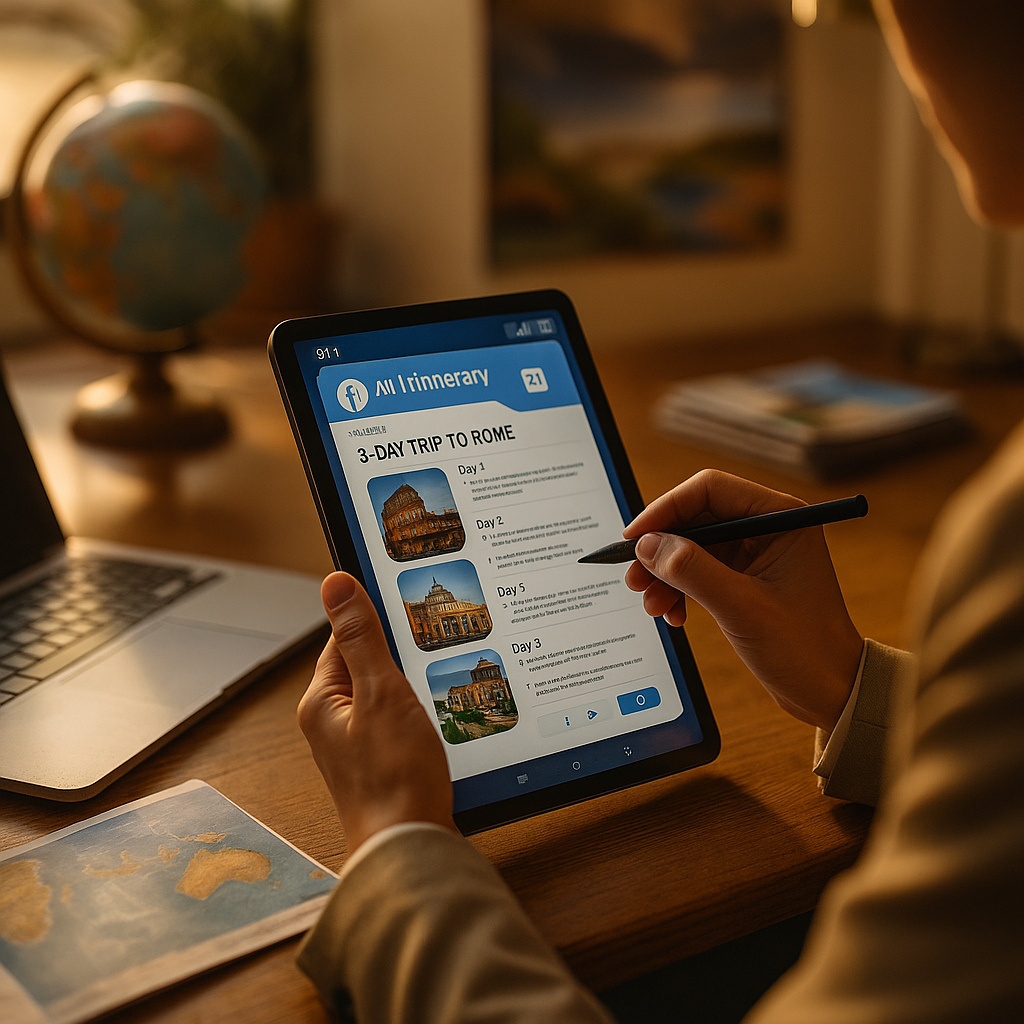
Case Study: How a Travel Brand Used AI Itinerary Lead Magnets to Scale shows what happens when a high-intent offer meets a fast, personalized experience. In 2025, travelers expect itineraries that feel made for them, not copied from a blog post. This case study breaks down the strategy, tech, and governance behind an AI-powered lead magnet that grew email capture and bookings—while reducing manual work. Ready to see the exact playbook?
AI itinerary lead magnet strategy: the brand, the problem, and the goal
A mid-sized travel brand (operating in guided tours and custom trips) relied on content marketing and paid social to drive traffic. Their blog attracted consistent search traffic, but conversion rates lagged: readers skimmed, saved posts for later, and left without subscribing. The team had three constraints:
- High intent, low capture: destination guides pulled in qualified visitors, yet lead capture was limited to a generic newsletter pop-up.
- Slow personalization: sales consultants built sample itineraries manually, creating delays and inconsistent follow-up quality.
- Attribution gaps: they couldn’t clearly link content consumption to consultation requests and bookings.
The goal was specific: increase qualified leads without increasing headcount, and do it in a way that improved customer experience. Their hypothesis was simple: if they could give each visitor a tailored itinerary preview in minutes, they would capture more emails and create better sales conversations.
They chose an AI itinerary lead magnet rather than a traditional PDF because itineraries are inherently personal: dates, budgets, pace, food preferences, fitness level, and “must-sees” change the entire plan. That variability is exactly where personalization drives perceived value.
Travel brand growth funnel: turning content traffic into qualified leads
The team redesigned the top-to-mid funnel to connect search intent to an immediate, customized output. Instead of “Sign up for deals,” the call-to-action became “Build my itinerary.” The funnel had four steps:
- Entry points: destination guides, “best time to visit” articles, and tour pages each offered a relevant itinerary builder (e.g., “7 days in Japan,” “long weekend in Lisbon,” “family-friendly Costa Rica”).
- Micro-quiz: a short form collected only what was necessary to generate a credible first draft: destination, trip length, travel month, travelers count, approximate budget range, pace (relaxed/balanced/packed), and top interests.
- Email gate at the right moment: the first two steps were ungated; the email was requested only after the user saw a “preview snippet” (e.g., day 1 and day 2 highlights). This improved perceived fairness and reduced form abandonment.
- Conversion paths: after delivery, users could (a) schedule a call, (b) request a refined itinerary, or (c) browse matching packages. Each path was tracked as a distinct conversion event.
Two decisions made this funnel work at scale:
- Intent alignment by page context: every builder defaulted to the page’s destination and season. Users could change it, but most didn’t need to.
- Qualification without friction: budget and dates were framed as ranges and “approximate.” That kept the experience welcoming while still giving sales enough signal to prioritize follow-up.
To answer the follow-up question most marketers have—does this cannibalize consultation requests?—the brand positioned the AI itinerary as a “first draft,” then offered a human refinement call as the fastest way to make it bookable. That created a natural bridge from self-serve to assisted sales.
Personalized travel itinerary generator: the AI workflow and tech stack
The brand built a controlled generation workflow rather than a freeform chatbot. Their objective was consistency, brand voice, and operational reliability. The workflow included:
- Structured input schema: all quiz answers mapped to a standard itinerary template (days, neighborhoods/regions, activities, transit notes, meal guidance, and “alternatives if weather changes”).
- Retrieval of trusted content: the system pulled from the brand’s curated library: preferred partners, tour availability rules, minimum connection times, and destination-specific constraints (e.g., closed days, seasonal access). This reduced hallucinations and kept itineraries aligned with what the brand could actually sell.
- Guardrails: the model was instructed to avoid medical/legal claims, to flag uncertainties (“confirm opening hours”), and to propose options at three budget tiers when the user selected “not sure.”
- Human-in-the-loop escalation: itineraries with complex requirements (multi-country routing, accessibility needs, dietary restrictions at high specificity, or very tight timing) were tagged for a consultant review before sending the final version.
Delivery mattered as much as generation. They tested three formats and standardized on a hybrid:
- Email: a clean day-by-day summary with clear next steps.
- Landing page: a shareable itinerary page with expandable sections, map links, and “swap this activity” buttons.
- CRM record: the itinerary populated the lead profile so sales could pick up the conversation without asking the customer to repeat themselves.
Because the year is 2025, user expectations include speed. The team optimized for a sub-minute “first draft” by generating a lean version first, then expanding sections asynchronously. Users could start reading immediately, while the richer detail loaded in the background.
They also answered a practical concern inside the product: “Is this itinerary realistic?” Each day included “time budget” notes (morning/afternoon/evening) and transit assumptions. When the model couldn’t confidently estimate travel time, it offered two alternatives: a “compact day” and a “local day.”
Lead magnet conversion optimization: experiments that improved opt-ins and revenue
The team treated the itinerary builder like a performance landing page, running controlled experiments across copy, form length, and delivery mechanisms. The most impactful optimizations were:
- Preview-first gating: showing a short preview before requesting email consistently outperformed immediate gating because users saw value before “paying” with contact info.
- Destination-specific promises: “Get a 5-day Kyoto food + culture plan” converted better than “Get an itinerary,” because it echoed the reader’s intent and made the output tangible.
- One CTA per moment: the itinerary page initially had too many buttons. They reduced it to one primary CTA (“Refine with a travel expert”) and one secondary CTA (“See matching trips”). This increased click-through to consultation without reducing package browsing.
- Behavior-based follow-up: if a user scrolled past day 3, they received an email offering a “logistics pass” (train tips, best neighborhoods, and a packing list). If they clicked accommodations, they received a “stay style” questionnaire. This improved relevance and reduced unsubscribes.
- Price framing with ranges: instead of a single estimate, they displayed a range with assumptions (season, room type, and activity intensity). Leads felt informed rather than sold to, and sales calls started with clearer constraints.
To avoid the common follow-up issue—“Won’t people just take the itinerary and book elsewhere?”—the brand built in “bookable advantages” that were genuinely useful:
- Local availability notes: guidance on when reservations fill up and how the brand can secure spots.
- Risk reduction: flexible change policies and support messaging placed next to high-friction moments (e.g., long transfers, weather-dependent activities).
- Partner exclusives: select inclusions (like priority entry bundles) available only through the brand’s packages.
The result was a lead magnet that didn’t just collect emails—it created a sales narrative: “Here’s your plan, here’s what could go wrong, and here’s how we make it easy.”
EEAT and AI content governance: accuracy, trust, and compliance
Scaling with AI in travel requires stronger trust signals, not weaker ones. The brand adopted EEAT-aligned practices to keep the experience helpful and credible:
- Experience: itineraries referenced real operational know-how (seasonality, closures, transit tradeoffs). The brand embedded “tips from our trip designers” snippets sourced from internal playbooks and updated after each season.
- Expertise: destination specialists reviewed the itinerary templates and the retrieval library quarterly. High-volume destinations had stricter rules (e.g., timed-entry attractions).
- Authoritativeness: the itinerary page included a clear “How this was built” section explaining that AI generated a first draft using the brand’s destination knowledge base, then offered expert review. Transparency reduced skepticism and improved call bookings.
- Trust: the system avoided stating uncertain details as facts. It used language like “confirm” and offered official-source prompts without sending users off-platform prematurely.
Governance wasn’t just editorial—it was operational:
- Safety and policy checks: the model was constrained to avoid risky advice (health, visas, or safety situations) and to route those questions to human support with appropriate disclaimers.
- Data privacy: the quiz avoided sensitive personal data. Information was stored with clear retention rules and consent logging, and users could request deletion from the itinerary page.
- Quality monitoring: they sampled itineraries weekly, scoring for feasibility, partner alignment, and tone. Recurrent issues triggered prompt updates or library fixes.
One more follow-up question the team preempted: “Will AI hurt our brand voice?” They solved it by creating a brand style guide for generation—sentence length, formality level, and prohibited phrases—and by training the system to prioritize clarity over flourish. The best-performing itineraries read like a competent trip designer wrote them for a friend: direct, specific, and calm.
Scaling travel marketing with AI: results, what to copy, and what to avoid
After rollout, the brand scaled acquisition without adding proportional manual workload. The biggest gains came from improving lead quality and response speed rather than chasing vanity metrics. Internally, they tracked:
- Lead capture rate by entry page type (guides vs. tour pages)
- Itinerary completion rate (quiz starts to delivery)
- Consultation request rate from the itinerary page
- Sales cycle time (first touch to qualified opportunity)
- Booking conversion rate for leads who received itineraries vs. standard newsletter leads
They also tracked qualitative indicators: fewer repetitive questions on calls, higher confidence in budgets, and more “this feels like it was made for us” feedback. Those signals mattered because travel is a high-consideration purchase; clarity and trust shorten the path to yes.
What readers can copy immediately:
- Start with one destination and one trip length to prove conversion mechanics before scaling.
- Use retrieval from your own verified content (partners, policies, constraints). Don’t rely on general web knowledge for operational details.
- Gate after value is visible, not before. A preview earns the email.
- Design for handoff: send the itinerary to the CRM with structured fields so sales can act fast.
- Offer a human refinement step as the natural next action, not a separate “sales” push.
What to avoid:
- Overlong quizzes that feel like work. If you want more data, ask later based on behavior.
- False certainty about opening hours, visas, or safety conditions. Uncertainty handled honestly builds trust.
- One-size-fits-all templates that ignore pace, mobility, seasonality, and travel style.
The core lesson is operational: the itinerary is not the product—it’s the conversation starter that scales. When it’s designed to be feasible, transparent, and connected to your offerings, it becomes a durable growth engine.
FAQs: AI itinerary lead magnets for travel brands
What is an AI itinerary lead magnet?
An AI itinerary lead magnet is a personalized trip plan generated from a short questionnaire and delivered in exchange for contact details, typically an email address. Unlike static PDFs, it adapts to dates, budget, pace, and interests to increase perceived value and lead quality.
Will an AI itinerary reduce the need for travel advisors?
No. In this case study, AI handled the first draft and repetitive structuring work, while advisors focused on refinement, complex routing, partner coordination, and closing. The best outcomes came from combining automation with expert review where it matters.
How do you prevent incorrect or “hallucinated” recommendations?
Use a controlled workflow: pull details from a curated internal knowledge base (partners, constraints, seasonal rules), add guardrails that prevent guessing, and route complex requests to humans. Also monitor samples routinely and update prompts and sources when issues appear.
What should the quiz ask to qualify leads without hurting conversions?
Collect only the essentials for a credible first draft: destination, trip length, month/season, traveler count, budget range, pace, and top interests. Save detailed questions (exact hotels, dietary specifics, accessibility) for follow-up after engagement signals.
How do you connect the lead magnet to revenue?
Track the itinerary as a conversion event, then measure downstream actions: consultation requests, package views, and booking rate. Store the itinerary and key preferences in the CRM so sales can respond quickly and personalize outreach.
Is it better to deliver the itinerary as a PDF or a web page?
A web page usually performs better because it supports tracking, interactive refinement, and clear next steps. Many brands still email a readable summary for convenience, linking back to the web version for updates and conversion actions.
What’s the fastest way to launch this in 2025 without overbuilding?
Start with one high-traffic destination page and a simple micro-quiz, generate a short itinerary preview, and gate the full version via email. Connect outputs to your CRM and add one strong next step: “Refine with an expert.” Expand destinations only after you validate completion and consultation rates.
In 2025, this travel brand proved that personalization can scale when it’s engineered into the funnel, not bolted on at the end. By using AI itinerary lead magnets with strong guardrails, transparent delivery, and a clear human refinement path, they turned content traffic into qualified conversations and faster bookings. The takeaway is practical: build an itinerary offer that’s feasible, trackable, and connected to sales—then optimize it like a product.