


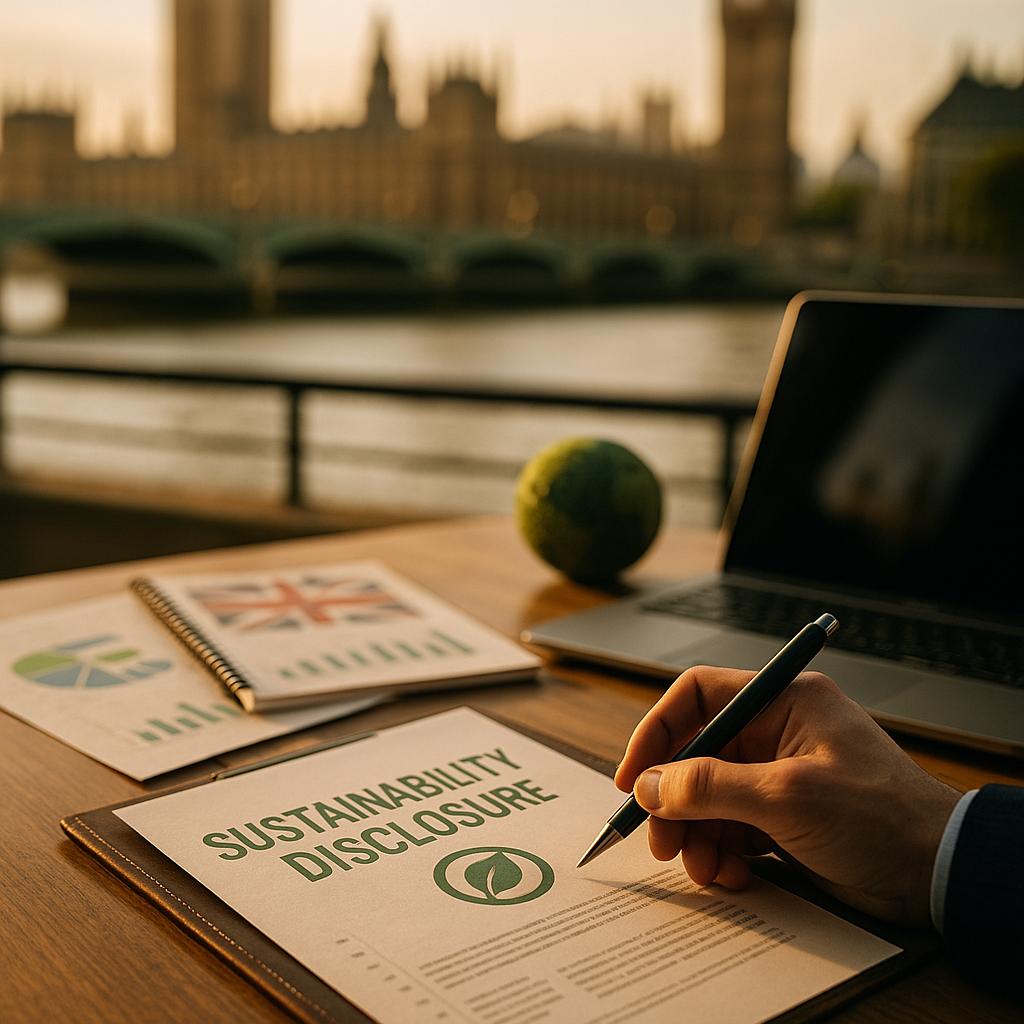
Navigating legal disclosure requirements for sustainability in the UK has moved from a specialist concern to a board-level priority in 2025. Regulators, investors, customers, and employees increasingly expect clear, comparable information about climate risks, emissions, and wider environmental impacts. Yet rules can overlap and evolve quickly, especially for groups with complex supply chains. This guide explains what to report, why it matters, and where mistakes often happen—before scrutiny lands.
UK sustainability reporting laws: what applies and who must comply
Start with a simple principle: in the UK, sustainability disclosures are triggered by a mix of company size, listing status, sector, and whether the business falls under specific regimes such as modern slavery reporting. Many organisations miss requirements because they assume “sustainability reporting” is only voluntary or only for listed firms.
Core UK frameworks you should map against your organisation in 2025 include:
- Companies Act reporting (strategic report and directors’ report), including mandatory narrative disclosures for certain companies.
- Streamlined Energy and Carbon Reporting (SECR) for qualifying UK companies and LLPs, covering energy use and greenhouse gas (GHG) emissions.
- Climate-related financial disclosures aligned to TCFD for certain companies and financial institutions under UK requirements.
- FCA Listing Rules and disclosure expectations for premium- and standard-listed issuers, including sustainability and climate-related reporting expectations where applicable.
- Modern Slavery Act transparency statements (while not “environmental,” it is commonly part of broader ESG disclosure and frequently reviewed alongside sustainability claims).
Practical scoping steps: confirm your legal entity types (company/LLP), turnover and employee thresholds, whether you are quoted or listed, whether you are part of a UK group, and whether reporting is at entity or consolidated level. If you have overseas subsidiaries, align the UK requirements with any extra-territorial rules that may apply to your customers or capital providers, but keep UK compliance as the baseline for filings and annual reports.
Likely follow-up question: “Do SMEs need to do any of this?” Even when not legally required, SMEs often face contractual demands: procurement questionnaires, lender covenants, and customer audits. Treat these as “market disclosure requirements” and apply the same governance discipline you would for statutory reporting, because misstatements can still create legal and reputational risk.
SECR compliance: energy, emissions, and the numbers regulators expect
SECR remains a key legal disclosure requirement for many UK-incorporated companies and LLPs. It focuses on energy consumption and associated emissions, aiming to standardise how organisations disclose carbon information in annual reporting. SECR is not a marketing exercise; it is a regulated disclosure that should be supported by consistent calculations and a defensible audit trail.
What SECR typically requires (depending on your category):
- UK energy use (electricity, gas, transport fuels) and, where applicable, relevant global energy use.
- GHG emissions associated with that energy use (usually Scope 1 and Scope 2; transport and other categories depend on what you consume and report).
- At least one intensity ratio (for example, tonnes CO2e per £m turnover or per unit of production), selected to reflect how your business operates.
- Energy efficiency actions taken in the reporting period.
- Methodologies used, including emissions factors and organisational boundaries.
How to avoid common SECR pitfalls:
- Boundary confusion: document whether you are using financial control, operational control, or equity share approaches. Keep it consistent year-to-year unless you have a justified reason to change.
- Data gaps and estimations: if you must estimate, disclose the basis clearly and keep supporting calculations. Overuse of estimation can undermine credibility with auditors and investors.
- Intensity ratios that mislead: choose ratios that are stable and relevant; explain drivers of changes (acquisitions, volume shifts, energy price impacts, operational changes).
- Inconsistent emissions factors: use recognised sources and apply them consistently. If you update factors, explain the impact.
Likely follow-up question: “Do we need assurance?” SECR does not always mandate external assurance, but many organisations adopt limited assurance to improve reliability and reduce challenge risk. If you are already subject to audit scrutiny, stronger controls over SECR data reduce the cost and disruption of year-end reporting.
TCFD-aligned disclosures: climate risk governance, strategy, metrics, and targets
UK climate-related disclosure requirements aligned to the Task Force on Climate-related Financial Disclosures (TCFD) have shaped what “good” climate reporting looks like. Even where a company is not strictly within scope, TCFD structure has become the default expectation for credible climate disclosure in annual reports and investor communications.
TCFD is built around four pillars:
- Governance: who oversees climate risks and opportunities, how the board gets information, and how management implements decisions.
- Strategy: how climate scenarios and transition/physical risks affect business models, revenue, costs, and capital allocation.
- Risk management: how climate risks are identified, assessed, and integrated into enterprise risk management.
- Metrics and targets: what you measure (Scopes 1–3 where relevant), targets you set, progress tracking, and how metrics connect to remuneration or performance.
What regulators and investors look for in 2025: decision-useful disclosures that connect climate risk to financial statements and operational plans. High-level narratives without quantified impacts attract challenge. If you claim resilience under different scenarios, show the assumptions and what would change in your strategy if the assumptions prove wrong.
Answering the question: “Do we have to disclose Scope 3?” Legal requirements vary by regime and scope. However, where Scope 3 is material to your business model (common in retail, manufacturing, finance, and food), omitting it without explanation can look like avoidance. If your data maturity is low, disclose a phased plan: categories prioritised, supplier engagement approach, and controls for data quality.
Link to financial reporting: align climate statements with impairment testing, asset lives, provisions, and contingent liabilities where climate risks could be financially material. Misalignment between glossy sustainability claims and audited accounts is a frequent trigger for scrutiny.
Greenwashing risk: FCA, ASA, and CMA expectations for sustainability claims
Legal disclosure requirements do not stop at annual reports. Public sustainability statements—on websites, packaging, investor decks, and recruitment materials—can create regulatory exposure if they are misleading or cannot be substantiated. In 2025, “greenwashing” risk management is as much a legal function as it is a communications one.
Key UK oversight bodies and why they matter:
- FCA: scrutiny of sustainability-related claims in financial services and for listed entities, with expectations that disclosures are fair, clear, and not misleading.
- ASA: regulation of advertising claims, including environmental benefit claims and comparative statements.
- CMA: focus on misleading environmental claims and consumer protection, including how claims are presented and whether consumers can verify them.
How to make sustainability claims defensible:
- Be specific: replace “eco-friendly” with measurable claims, such as “contains 75% recycled content,” supported by documented evidence.
- State boundaries: clarify whether “carbon neutral” refers to a product line, a facility, or the whole company, and explain treatment of offsets.
- Use balanced language: highlight trade-offs and limitations. If progress depends on supplier data or future technology, say so.
- Substantiate comparisons: “50% lower emissions than before” must specify the baseline, scope, and methodology.
- Align claims to disclosures: your public messaging should not exceed what your governance, metrics, and filings can support.
Likely follow-up question: “Are offsets acceptable?” Offsets are not automatically prohibited, but claims must be accurate and not used to imply reductions that have not occurred. Disclose the type of credits, quality criteria, and how offsets fit within a broader reduction strategy. If reductions are the core plan, show the roadmap and interim targets rather than relying on offsets as a headline.
Supply chain transparency: due diligence, Scope 3 data, and contractual disclosures
Even when UK legal obligations focus on a company’s own operations, sustainability disclosure quickly becomes a supply-chain exercise. Customers increasingly require emissions and risk data from suppliers, and your own Scope 3 reporting may depend on the quality of upstream information.
Build a supply chain disclosure system that can stand up to challenge:
- Supplier segmentation: prioritise high-spend, high-emissions, and high-risk categories first, rather than trying to survey everyone at once.
- Data hierarchy: use primary supplier data where possible; where not, use credible secondary data and improve coverage year-on-year.
- Contract clauses: include requirements for data provision, methodology alignment, audit rights, and improvement plans.
- Controls and sampling: perform reasonableness checks, request supporting evidence, and audit a sample of suppliers to improve integrity.
Answering the question: “What if suppliers refuse?” Treat this as a procurement and risk issue: offer templates, training, and a clear timeline; use incentives for compliance; and create escalation paths. Disclose limitations transparently in your own reporting. Investors generally tolerate honest limitations paired with a credible plan; they react poorly to overconfident claims built on weak data.
How this links back to legal disclosure: supply chain weaknesses often surface during SECR and TCFD-aligned reporting, and they can undermine public claims. A structured supplier programme reduces the chance of inconsistent statements across annual reports, tenders, and marketing materials.
Governance and assurance: building an audit-ready disclosure process
Strong sustainability disclosure depends on governance, not just calculations. Regulators and stakeholders expect internal accountability, clear oversight, and processes that can be tested. In 2025, the fastest way to reduce legal and reputational risk is to make sustainability reporting “audit-ready” even if assurance is not mandatory.
What an audit-ready process looks like:
- Named owners: assign accountable executives for SECR, climate disclosures, and public claims approvals, with board visibility.
- Documented policies: set out organisational boundaries, data collection methods, emissions factors, treatment of renewables and certificates, and materiality decisions.
- Controls and evidence: keep invoices, meter data, calculation workpapers, and change logs. Make it easy to trace every reported number to a source.
- Consistency checks: reconcile energy costs and consumption, verify site lists, and test anomalies before publication.
- Review and sign-off: create a cross-functional review involving finance, legal, risk, procurement, and communications to ensure one version of the truth.
When to consider external assurance: if you are listed, raising capital, making ambitious claims, or facing high customer scrutiny, limited assurance can strengthen trust and reduce the risk of corrective statements later. If you plan to transition to more detailed reporting standards, early assurance helps identify control gaps before they become public issues.
Answering the question: “Who should lead—sustainability or finance?” The most reliable model is joint ownership: sustainability teams drive methodology and programmes; finance drives controls, documentation, and consistency with audited reporting. Legal should approve claim wording and oversee risk, especially where public statements could be considered misleading.
FAQs
What are the main UK legal disclosure requirements for sustainability in 2025?
They typically include Companies Act narrative reporting duties for certain companies, SECR energy and emissions disclosures for qualifying entities, and UK climate-related disclosure requirements aligned to TCFD for in-scope organisations and many listed or regulated firms. Additional obligations can arise through FCA expectations, as well as Modern Slavery Act reporting and sector-specific rules.
How do we know if SECR applies to our business?
Confirm your entity type (company or LLP), whether you meet the qualifying thresholds, and whether you are within a group that reports on a consolidated basis. If you are close to thresholds, plan early—late scoping often leads to rushed estimates and weak documentation.
Do we need to report Scope 3 emissions?
Not every legal regime mandates Scope 3 in the same way, but many stakeholders expect it when it is material. If you cannot report full Scope 3 yet, disclose which categories you cover, your data sources, your improvement plan, and how you will strengthen supplier data quality.
Can we say our products are “carbon neutral”?
You can make carbon-related claims only if you can substantiate them, define the boundary, and explain the role of offsets. Avoid implying absolute emissions elimination if the claim relies on credits. Keep the supporting evidence accessible and consistent with your published disclosures.
What evidence should we keep to support sustainability disclosures?
Maintain utility bills, meter readings, fuel receipts, travel data, supplier datasets, calculation spreadsheets, emissions factor sources, boundary decisions, and sign-off records. Evidence should allow a third party to reproduce your calculations and understand key assumptions.
Should we get external assurance for our sustainability data?
It is often beneficial when disclosures influence investor decisions, procurement outcomes, or regulatory scrutiny. Limited assurance can validate controls and reduce the risk of public corrections, especially for emissions metrics and high-profile claims.
Legal disclosure requirements for sustainability in the UK demand more than a polished narrative in 2025. Organisations that scope obligations correctly, build reliable SECR and TCFD-aligned processes, and control public sustainability claims reduce regulatory risk and improve trust with investors and customers. The takeaway is practical: create one governed dataset, document methods, and align every claim to evidence—before reporting becomes a dispute.