


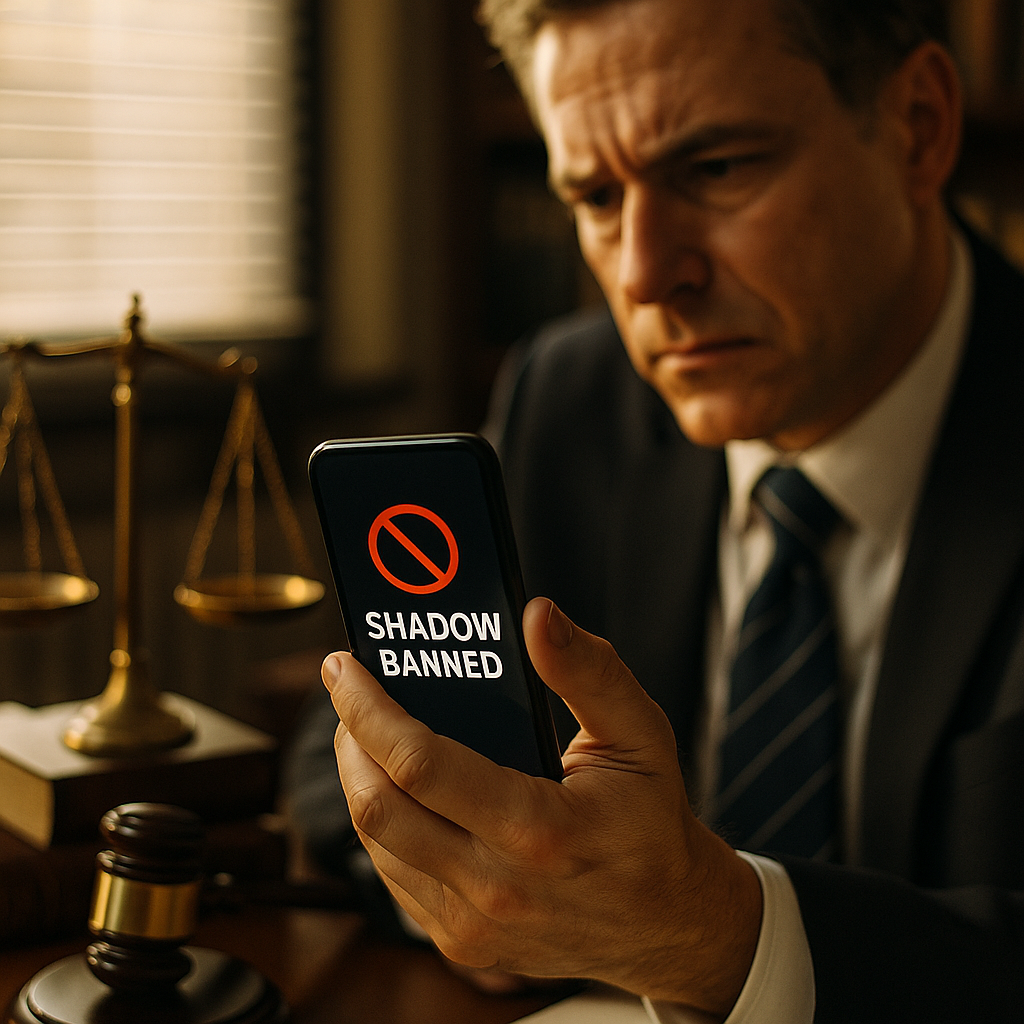
Platform shadow banning can quietly reduce a brand’s reach, distort performance metrics, and trigger reputational fallout. In 2025, Understanding the Legal Risks of Platform Shadow Banning for Brands matters because visibility decisions can intersect with consumer protection, contract terms, and competition rules. Marketers need more than technical fixes; they need defensible governance, documentation, and escalation paths. The question isn’t if it happens, but what you do next.
Platform moderation transparency: what “shadow banning” means for brands
“Shadow banning” is not a single legal term; it is a practical description for reduced distribution that is difficult to detect and often not clearly disclosed. For brands, the core issue is not the label but the effect: content appears published, yet impressions, recommendations, search visibility, or hashtag placement drop without clear explanation.
Common patterns that brands report include:
- Algorithmic demotion in feeds or recommendations for specific posts, accounts, or domains.
- Search suppression where branded keywords or handles become harder to find.
- Hashtag or trend exclusion that blocks discoverability without removal.
- Link throttling that limits outbound traffic to a brand site or landing page.
- Geographic or audience restrictions that disproportionately reduce reach in key markets.
Brands should treat these as platform moderation decisions—whether made by humans, automated systems, or a mix. That framing helps legal and compliance teams ask the right questions: What rule was applied? Was it applied consistently? Did the platform provide notice and a way to appeal? Did the change affect advertising, commerce, or regulated claims?
If internal stakeholders assume the problem is purely “algorithmic,” they often skip critical steps: preserving evidence, reviewing platform terms, mapping impacted campaigns to consumer-facing promises, and assessing contractual and regulatory exposure. A better approach is to run a short, cross-functional incident review as soon as suppression is suspected.
Terms of service and contract liability: where brands can and cannot push back
Most brands interact with platforms through a mix of click-through terms (user terms, community guidelines, developer terms) and negotiated agreements (influencer programs, commerce integrations, managed services, ad insertion orders). The legal risk profile changes depending on what governs the relationship.
Key contract questions to answer immediately:
- What agreement governs the affected surface? Organic posting may be governed by standard terms, while commerce or ads may have separate service terms or insertion orders.
- Do the terms reserve broad discretion? Many platforms reserve the right to remove, limit, or demote content “in their sole discretion,” which can narrow breach claims.
- Are there transparency or notice commitments? Some programs include support SLAs, review timelines, or escalation contacts that can be enforced.
- What dispute resolution applies? Arbitration clauses, venue selection, and notice requirements matter when time-sensitive campaigns are affected.
- Do you have dependencies that create leverage? Spend commitments, enterprise relationships, or commerce integrations may open practical avenues to resolve issues faster, even when legal rights are limited.
Even when a platform has broad discretion, brands can still face downstream contractual exposure. If suppressed content is tied to a co-marketing agreement, influencer deliverables, or sponsor guarantees, the brand may be accused of failing to deliver promised impressions or placements. Mitigate this by baking “platform risk” clauses into marketing contracts:
- Define performance metrics as “best efforts” where distribution is platform-controlled.
- Include force-majeure-style coverage for platform enforcement or algorithmic changes.
- Require alternative deliverables (email sends, paid amplification, replacement content) if reach collapses.
Brands also benefit from adding internal controls: maintain a record of account standing, policy compliance checks, and platform communications. That evidence supports any request for reconsideration and reduces finger-pointing with partners.
Consumer protection and advertising compliance: hidden suppression can amplify disclosure risk
Shadow banning can trigger legal risk not because suppression is illegal by itself, but because it can create inconsistent consumer experiences and unintended advertising outcomes. If a brand is running a regulated campaign—health, finance, alcohol, gaming, or children’s products—distribution shifts can affect disclosures, targeting, and claims substantiation practices.
Where the risk shows up:
- Disclosures may not travel when content is re-shared, clipped, or redistributed differently than expected, increasing the chance that required qualifiers are missed.
- Targeting can skew if the platform’s systems reduce reach among certain audiences, potentially colliding with fairness expectations or internal policy commitments.
- Promotions can become misleading if consumers cannot access promised offers, contest terms, or customer support links because link throttling blocks the path.
- Performance reporting becomes unreliable, complicating “results” claims in marketing (“#1,” “most viewed,” “viral,” or ROI statements) if the baseline distribution was artificially constrained.
Brands often ask: “Can we blame the platform?” Regulators typically focus on what the advertiser controlled or should have anticipated. A practical approach is to design campaigns so they remain compliant under distribution variance:
- Use clear, in-content disclosures, not only in captions that may be truncated or deprioritized.
- Host material terms on a brand-controlled landing page with stable URLs and accessible formatting.
- Maintain substantiation files for claims and ensure updates are reflected across channels quickly.
- Implement a distribution anomaly checklist for regulated campaigns: if reach drops unexpectedly, verify that customer access, terms, and support paths still function.
From an EEAT perspective, this is where brands should lean on qualified professionals: legal counsel for advertising rules, compliance for regulated products, and analytics specialists for measurement integrity. A written playbook with named owners is often the difference between a controlled response and a public scramble.
Competition law and discrimination claims: when moderation becomes a market issue
When shadow banning affects a brand’s ability to compete—especially if the platform also offers competing products, favors certain sellers, or influences consumer choice—the issue can shift from “content policy” to competition and market fairness. The specifics depend on jurisdiction and market context, but the risk pattern is consistent: opaque suppression that disadvantages certain businesses can raise scrutiny if it looks like self-preferencing, discriminatory enforcement, or unfair access to essential distribution channels.
Scenarios that increase exposure:
- Self-preferencing signals: the platform’s own store, services, or affiliated brands consistently receive better visibility under similar conditions.
- Selective enforcement: competitors engage in comparable practices without demotion or restrictions, suggesting inconsistent rule application.
- Retaliation concerns: suppression appears after disputes, complaints, pricing decisions, or public criticism of the platform.
- Gatekeeper dynamics: the platform is a primary channel for discovery in a category, making distribution decisions materially impact market access.
Brands considering escalation should prepare a fact-based record. The most persuasive approach is not “we feel censored,” but “here is a controlled comparison.” Useful evidence includes:
- Before/after analytics with timestamps and notes on content types.
- Policy compliance logs (what checks you ran, what changed, what you corrected).
- Side-by-side examples of similarly situated accounts and content.
- Support tickets, appeal outcomes, and any contradictory explanations.
Brands also ask whether public pressure helps. It can, but it can also harden positions or trigger broader reviews. A safer sequence is: private escalation with evidence, request for specific remediation (reversal, clarification, written guidance), then consider strategic communications if business harm continues.
Data governance and evidence preservation: how to prove shadow banning without violating rules
Proving suppression is harder than proving removal because the content remains live. Brands need a defensible, privacy-aware evidence trail that does not violate platform terms or data laws. In 2025, data governance is not optional: scraping, unauthorized automation, or employee workarounds can create fresh legal and security risk.
Build an evidence kit using permitted sources:
- Native analytics exports (impressions, reach, search queries where available, referral traffic, audience demographics).
- Ad account logs if suppression overlaps with paid eligibility, learning limits, or policy flags.
- Screenshots and screen recordings showing search results, hashtag visibility, and recommendation placements across controlled devices.
- UTM-tagged links and server-side analytics to detect link throttling patterns and referral anomalies.
- Change logs documenting content edits, account security events, and policy acknowledgments.
Avoid “growth hacks” that increase risk:
- Do not use unauthorized bots to test ranking positions at scale.
- Do not purchase third-party datasets of questionable provenance.
- Do not ask employees to bypass geo or age restrictions to test visibility if that violates policy or law.
Brands should implement a short internal protocol:
- Preserve: capture analytics and screenshots within 24–72 hours of suspicion.
- Stabilize: pause high-stakes posts that could worsen enforcement; review recent content for policy triggers (music rights, medical claims, sensitive targeting).
- Escalate: route to a named platform contact or support queue with a structured brief.
- Document: keep a single case file with dates, decisions, and outcomes for audit readiness.
This also supports EEAT: a brand that can show disciplined monitoring, clear governance, and respectful compliance is more likely to receive constructive platform support and less likely to create regulatory issues during remediation.
Brand risk management strategy: governance, appeals, and communications that reduce legal exposure
Shadow banning often becomes a legal problem because response is improvised. A structured program reduces both the likelihood of suppression and the severity of outcomes when it happens.
1) Preventive controls
- Policy mapping: translate platform rules into a brand-friendly checklist by content type (UGC, influencer, product claims, giveaways).
- Rights clearance: confirm licenses for music, images, and endorsements; many suppressions trace back to IP or authenticity flags.
- Account security: enforce MFA, role-based access, and vendor offboarding; compromised accounts often trigger restrictions.
- Consistency audits: check repeated use of identical captions, links, or hashtags that might resemble spam behavior.
2) Appeals and escalation
- Submit an appeal that is specific: include URLs, timestamps, affected markets, and the business impact.
- Request actionable guidance rather than a general “review,” such as which policy category was triggered and what remediation is required.
- Track outcomes and keep messaging consistent across support channels to avoid conflicting narratives.
3) Partner and influencer management
- Require creators to follow your disclosure and claims playbook; their violations can spill over to brand accounts through tagging and shared assets.
- Contract for rapid takedown/edits if content triggers enforcement, and specify who owns the appeal process.
4) External communications
- Prepare a short statement template for customer support if consumers cannot find content or offers.
- Do not accuse the platform without evidence; focus on customer access (“If you can’t view the offer, use this link”) and keep the message factual.
5) When to involve counsel
Bring in legal counsel when suppression affects regulated advertising, materially disrupts contractual obligations, appears discriminatory or retaliatory, or threatens investor-facing statements about growth. Counsel can also help craft requests that preserve rights without escalating conflict unnecessarily.
FAQs
What is shadow banning in practical terms?
It is a situation where your content remains published but receives reduced distribution—such as lower feed visibility, weaker recommendations, limited search presence, or excluded hashtags—often without clear notice.
Is platform shadow banning illegal?
Not inherently. The legal risk usually arises from surrounding issues: inconsistent contract performance, misleading advertising outcomes, discrimination concerns, or competition and market access impacts.
How can a brand confirm it is being shadow banned?
Use permitted evidence: native analytics trends, controlled-device visibility checks, referral traffic changes with UTM links, and documented before/after comparisons. Avoid unauthorized scraping or automation that could violate terms.
Can brands sue a platform for shadow banning?
It depends on the governing terms and the facts. Many platforms reserve broad moderation discretion, which can limit claims. Brands often get better results through structured escalation, enterprise support channels, and negotiated contractual protections.
Does shadow banning increase regulatory risk for ads and promotions?
Yes, especially for regulated products or campaigns with required disclosures. Suppression can alter how disclosures appear, who receives messages, and whether consumers can access terms or offers—creating potential consumer protection exposure.
What contract clauses help protect brands from shadow banning impacts?
Include platform-dependence language, best-efforts delivery standards, alternative deliverables if distribution drops, and clear rules for measuring performance when the platform controls reach.
Should a brand publicly call out a platform for shadow banning?
Do it only with strong evidence and a clear objective. Public accusations can escalate enforcement or damage business relationships. Start with private escalation backed by a documented record and a specific request for remediation.
Shadow banning creates legal risk when it disrupts contracts, skews compliant advertising, or distorts competition under opaque moderation. In 2025, brands protect themselves by treating suppression as an incident: preserve evidence, review governing terms, stabilize regulated campaigns, and escalate with precise documentation. Build platform-risk clauses into partner deals and maintain strong compliance controls. The takeaway: governance turns a visibility shock into a manageable business event.