


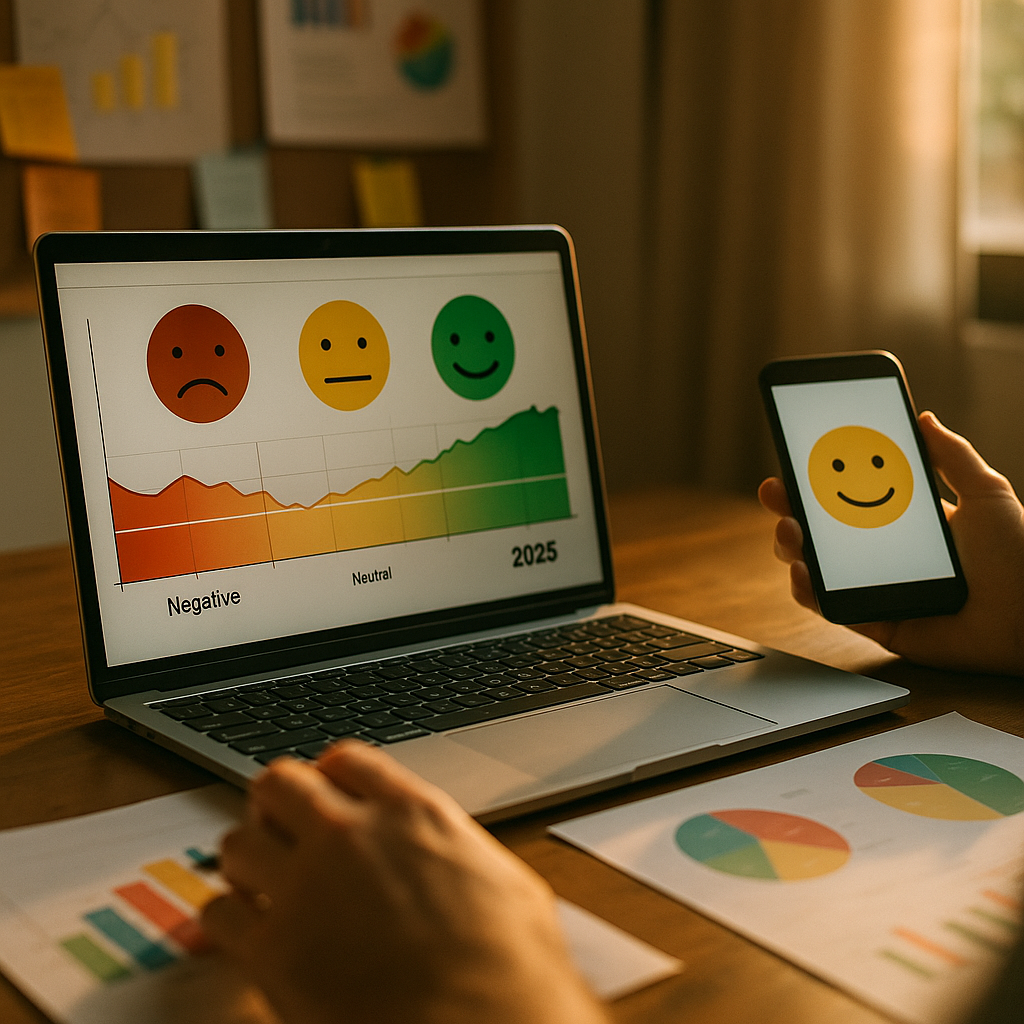
Understanding the customer sentiment impact of a campaign is essential for modern marketers aiming to drive meaningful engagement and optimize their strategies. By applying a structured framework, businesses can accurately assess how campaigns influence brand perception and customer emotions. Ready to unlock the secrets behind effective sentiment measurement? Explore the proven framework that empowers brands in 2025.
Identifying Customer Sentiment Metrics for Campaign Analysis
Measuring customer sentiment impact begins with defining the right metrics. Accurate sentiment analysis goes beyond simple positive or negative judgments; it reveals the depth of customer emotions and aligns with campaign objectives. Start by pinpointing core sentiment indicators, such as:
- Sentiment Score: This numeric rating aggregates emotional tone—positive, negative, or neutral—across customer feedback.
- Emotion Detection: Mapping granular emotions like joy, anger, trust, or surprise builds a nuanced sentiment profile.
- Brand Mention Volume: A surge in brand mentions often signals heightened engagement or controversy following a campaign.
- Topic Relevance: Linking sentiment to campaign-specific topics, products, or promises provides context.
- Change Over Time: Benchmarking pre- and post-campaign sentiment highlights the true impact of your efforts.
Selecting relevant metrics upfront ensures clarity, consistency, and actionability when measuring campaign performance. In 2025, top brands blend qualitative and quantitative measures for a complete view.
Leveraging Advanced Data Sources for Sentiment Impact
Relying solely on traditional surveys is insufficient in the age of omnichannel communication. Comprehensive sentiment analysis demands data from diverse sources. Integrate the following channels to create a holistic customer sentiment measurement framework:
- Social Media Monitoring: Track real-time conversations and gather organic, unsolicited opinions from platforms like X (formerly Twitter), TikTok, and Instagram.
- Review Aggregators: Extract sentiment from public forums, product review sites, and app store comments for unfiltered feedback.
- Customer Service Logs: Analyze support ticket transcripts and chat logs for emotional tone shifts triggered by campaign messaging.
- Email and Survey Responses: Combine unsolicited and solicited feedback to cover all customer segments.
- Voice and Video Transcripts: Employ advanced AI tools to interpret sentiment from spoken interactions, a rising trend in 2025.
Diversifying data sources not only improves reliability but also reduces bias. EEAT guidelines recommend cross-validating findings to enhance trustworthiness and objectivity in sentiment insights.
Applying Reliable Sentiment Analysis Methodologies
Advanced sentiment measurement involves more than keyword scanning. To measure campaign impact accurately, brands use robust methodologies:
-
Natural Language Processing (NLP):
Modern NLP tools use contextual understanding, sarcasm detection, and emotion tagging to dissect customer language accurately. In 2025, deep learning models provide up-to-the-minute sentiment scores, reducing error rates compared to legacy techniques.
-
Human Validation:
Automated analysis is powerful, but expert review remains invaluable. For high-stakes campaigns, human analysts audit sample data, calibrating AI outputs for accuracy and mitigating algorithmic bias.
-
Longitudinal Analysis:
Campaign impact extends beyond launch. Track sentiment before, during, and after your campaign, mapping trends to identify lasting effects.
-
Comparative Benchmarking:
Compare campaign results to previous efforts or industry standards. This approach contextualizes results and clarifies whether sentiment shifts meet or exceed expectations.
Using a blend of AI and human insight achieves both scale and trustworthiness—key pillars of EEAT best practice.
Translating Sentiment Data into Actionable Campaign Insights
Numbers and graphs have little value unless they drive strategy. To excel in 2025, businesses must turn customer sentiment impact into practical campaign improvements:
- Sentiment Segmentation: Analyze shifts among key audience groups (e.g., new vs. loyal customers) to uncover tailored insights.
- Identify Drivers: Use text analytics to link sentiment changes to specific content, creative assets, or campaign touchpoints.
- Alerting and Response: Set up automated alerts for rapid sentiment downturns, allowing quick remediation and protecting brand reputation.
- Scenario Planning: Leverage historical sentiment patterns to predict future reactions and stress-test upcoming campaign concepts.
- KPI Integration: Align sentiment scores with business performance metrics (conversion rates, retention, NPS) for an integrated view.
This data-driven approach closes the feedback loop, ensuring that customer emotions directly inform all aspects of campaign strategy.
Best Practices for Building a Resilient Sentiment Measurement Framework
Building a sustainable and scalable framework involves more than data and technology. As sentiment analysis becomes table stakes in 2025, follow these best practices to stand out:
- Transparency: Clearly document your data sources, methodologies, and weighting factors. This builds confidence and supports regulatory compliance.
- Continuous Learning: Regularly update models to capture new slang, shifting attitudes, or emerging cultural references relevant to your audience.
- Cross-company Collaboration: Involve marketing, customer service, product, and legal teams in designing the framework for a holistic perspective.
- Ethical Data Handling: Respect privacy and obtain explicit consent whenever possible. Use only anonymized datasets where suitable.
- Actionability Over Vanity: Focus on metrics that trigger meaningful change instead of chasing high scores for appearances.
Embedding these principles into your organization’s DNA will future-proof your approach, delivering clarity and credibility in every campaign.
Conclusion: Integrating Customer Sentiment Impact for Campaign Success
Adopting a robust framework for measuring customer sentiment impact ensures your campaigns are impactful and resonant. By combining advanced analytics, diverse data, and actionable insights, brands can turn emotion into strategy and consistently elevate customer experience. In 2025, success belongs to those who listen, learn, and respond to their audience’s true sentiment.
FAQs: Measuring the Customer Sentiment Impact of a Campaign
-
How do I choose the right sentiment metrics for my campaign?
Start by aligning metrics with your campaign objectives and customer segments. Blend quantitative scores (like sentiment scores and Net Promoter Score) with qualitative insights (emotion detection, topic relevance) to obtain a holistic perspective.
-
Is AI-based sentiment analysis accurate enough for business decisions in 2025?
Yes, when combined with human validation. AI models have become highly sophisticated but periodically calibrate them with expert review for best results, especially for nuanced campaigns or new products.
-
How often should I measure sentiment during a campaign?
At minimum, measure sentiment before, during, and after your campaign. For major launches or ongoing activity, consider real-time or daily tracking to spot changes early and intervene as needed.
-
Can sentiment analysis help predict future campaign reactions?
Absolutely. Historical sentiment data enables predictive modeling, helping anticipate customer responses and optimize future campaign strategies before launch.
-
What are the main challenges with sentiment measurement frameworks?
Common challenges include data source limitations, model bias, integrating qualitative insights, and ensuring company-wide collaboration. Transparency, regular updates, and clear documentation help overcome these obstacles.