


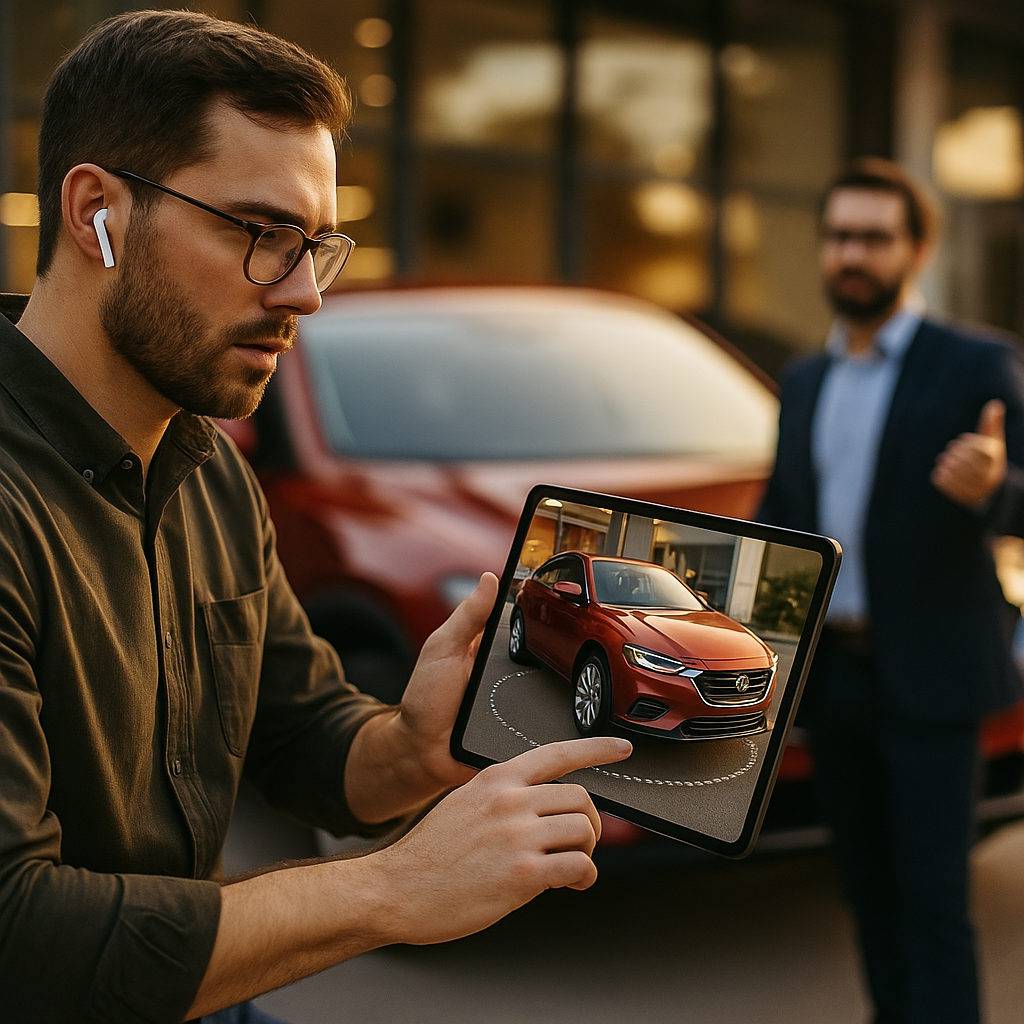
In 2025, automotive shoppers expect to research, configure, and even “experience” vehicles from home without sacrificing confidence. This case study shows how one brand used AR to drive remote sales by turning phones into showrooms, tightening lead follow-up, and giving dealers a measurable way to convert interest into signed orders. The outcome surprised skeptics—what changed, exactly?
Remote car sales strategy: Why the brand needed AR now
The automotive brand in this case study—an established, multi-dealer network with a strong mid-market SUV lineup—faced a familiar problem: online leads were rising, but conversions were not. Customers were researching deeply, yet many still delayed decisions because they couldn’t confidently answer a few “last-mile” questions remotely: How big will it look in my driveway? Will that color work in real light? Will the rear cargo fit our stroller and weekend bags?
At the same time, dealers were under pressure to respond faster and sell beyond local walk-in traffic. The brand’s leadership set a clear goal for 2025: grow remote-originated retail orders while protecting dealer margins and improving customer satisfaction. They didn’t want a novelty; they wanted a repeatable, measurable approach.
After evaluating options—more video content, virtual showrooms, live-agent video tours—the team identified augmented reality as the missing layer between “I’ve read everything” and “I’m ready to buy.” AR could reduce uncertainty by letting shoppers place a true-to-scale vehicle on their driveway, explore trims, and visualize key features—without requiring a store visit.
Key decision: AR would not replace sales staff or test drives. It would remove friction, qualify intent, and make it easier to move confidently into a remote consultation, financing, and deposit.
Augmented reality car shopping: The AR experience they built
The brand launched a mobile-first AR experience designed for fast access and low friction. The guiding principle was simple: if the AR feature took more than a few seconds to load or required an app install, usage would drop. The experience ran primarily in the mobile browser, using QR codes and deep links from ads, inventory pages, and SMS follow-ups.
Core AR features:
- True-to-scale placement: Shoppers could place the vehicle in a driveway, parking spot, or garage. The system included a brief calibration step to improve scale accuracy.
- Trim and color switching: Users could swap between trims and colors in real time to compare style differences without restarting the session.
- Hotspots for key decisions: Tappable points explained practical details (cargo volume, seating configurations, tow package, driver-assist features) using short, plain-language copy.
- Interior preview: A guided “peek inside” mode let users view the cabin layout and highlight comfort features, with attention to accessibility and readability.
- Shareable snapshots: Users could capture images/video of the vehicle in their own environment and share with household decision-makers—critical for high-consideration purchases.
Commerce connection: Every AR session included a persistent call-to-action that matched the user’s stage: “Check availability nearby,” “Get a remote quote,” “Schedule a video walkaround,” and “Reserve this configuration.” The brand avoided pushing “Buy now” too early; instead, it surfaced next steps that reflected real purchase behavior.
Accessibility and trust safeguards: The experience included clear disclaimers where needed (for example, that colors may vary by device and lighting), as well as a “Compare with actual dimensions” view that showed length/width/height and recommended garage clearance. This helped the brand avoid overpromising and strengthened credibility.
AR vehicle visualization: How it supported dealer workflows and lead handling
AR only improved outcomes because the brand connected it to dealer operations. They treated AR as a sales enablement layer, not just a marketing widget.
Integration points that mattered:
- CRM attribution: Each AR session generated an event stream tied to the lead record (model viewed, trims compared, time in AR, CTA clicks, shared assets). This allowed dealers to prioritize high-intent prospects.
- SMS and email follow-up templates: BDC agents and sales advisors could send a personalized link that reopened the shopper’s last-viewed configuration in AR. This reduced rework and kept momentum.
- Remote consultation playbook: The brand trained dealers to use AR data to guide calls: “I saw you compared the sport and premium trims—do you want to review the driver-assist differences?” This made the conversation feel helpful instead of scripted.
- Inventory-aware routing: When possible, the AR experience connected to local inventory. If the exact configuration wasn’t available, it suggested the closest match and explained the trade-offs, helping the dealer propose alternatives without losing trust.
Training approach: The brand created short, role-specific training modules: one for BDC teams, one for sales advisors, and one for managers. Training emphasized how to interpret AR engagement signals and when to propose remote steps (video walkaround, financing pre-approval, deposit) versus when to recommend an in-person test drive.
Answering a common follow-up: Would this overwhelm dealers with new data? The brand limited visible metrics to a small set that correlated with conversion: “AR engaged,” “trim compare,” “shared,” and “reserve-clicked.” Everything else stayed in reporting dashboards.
Virtual showroom automotive: The marketing rollout and on-site placement
The brand avoided a big-bang launch. Instead, it ran a structured rollout that made it easy to validate performance and refine the experience quickly.
Where AR appeared in the customer journey:
- Model pages: A “View in your driveway” module sat near price and key specs, not hidden below the fold.
- Inventory listings: For each vehicle listing, the site offered “See this trim in AR,” using the most relevant 3D asset for that VIN-equivalent configuration.
- Paid social and video ads: Ads linked directly into AR with a single tap, minimizing drop-off.
- Dealer follow-up: After a quote request, automated messages included an AR link to the quoted trim, helping shoppers visualize what they were being offered.
Creative strategy: The brand used practical use cases rather than flashy AR demos: fitting a vehicle into a narrow driveway, comparing wheel styles, checking cargo space for sports gear, and verifying visibility around the rear. This approach aligned with how people justify a purchase and reduced the “gimmick” perception.
Performance measurement: The team defined success metrics before launch and aligned them with dealer incentives. They tracked AR adoption rates, AR-to-lead conversion, lead-to-appointment, appointment-to-order, and remote-originated deposits. They also monitored soft metrics: time-to-first-response, customer satisfaction signals from post-interaction surveys, and cancellation rates after deposits.
Answering a likely question: Does AR replace a virtual showroom? The brand treated AR as the “reality check” layer, while the broader virtual showroom included financing education, warranty explanations, chat/video support, and dealer inventory transparency. AR worked best when it was one step in an end-to-end remote path.
Automotive AR ROI: Results, what worked, and what they changed
The brand reported clear improvements after implementing AR across its core SUV lineup and scaling dealer adoption. While results varied by region and model availability, a consistent pattern emerged: AR increased confidence and reduced drop-off during the decision phase.
Observed outcomes:
- Higher-quality leads: Leads who engaged with AR tended to ask more specific questions and progressed faster because basic uncertainties were resolved early.
- Faster decision cycles: AR shortened the time between initial inquiry and a meaningful sales conversation, especially for remote buyers who could not easily visit a dealership.
- Improved remote close rates: When paired with responsive follow-up and clear pricing steps, AR helped move customers from “considering” to “committing,” including paid reservations.
- Better alignment among household decision-makers: Shareable AR captures reduced back-and-forth and helped shoppers get consensus sooner.
What worked best: The strongest performance came from pairing AR with human support. Dealers who used AR engagement insights to personalize outreach saw better conversion than those who treated AR as a passive site feature. Additionally, inventory-aware AR links increased trust because shoppers felt the experience was anchored to realistic availability.
What they changed after launch:
- Simplified onboarding: The brand reduced the number of taps to enter AR and improved device compatibility guidance, which increased session starts.
- Refined hotspot content: Early copy read like brochure text; they rewrote it to answer real questions customers asked on calls.
- Added “fit check” tools: A quick overlay for vehicle length/width helped shoppers evaluate garages and parking spaces with more confidence.
- Strengthened dealer accountability: Managers received weekly reporting on AR-assisted opportunities and response times, reinforcing consistent follow-through.
Important caveat for ROI claims: The brand attributed uplift using controlled comparisons—markets and dealers adopting AR earlier versus later—and used multi-touch attribution to avoid crediting AR for conversions driven by unrelated incentives. This disciplined approach improved internal trust in the numbers and supported continued investment.
AR customer experience in automotive: Implementation lessons you can apply
This case study highlights repeatable principles that apply to most automotive organizations in 2025, whether you’re a manufacturer, dealer group, or mobility brand.
- Start with a friction point, not a feature: AR should answer a specific remote-sales blocker—fit, scale, color confidence, feature clarity—not simply “create engagement.”
- Make it easy to access: Browser-based AR and deep links reduce abandonment. If an app is required, offer it as an optional upgrade, not a gate.
- Connect AR to commerce: AR must lead naturally to a next step: quote, appointment, financing pre-approval, or reservation. Build CTAs around real shopper intent.
- Train teams to sell with AR data: The best AR experience fails if follow-up is slow or generic. Use AR signals to personalize outreach and prioritize leads.
- Be transparent: Provide disclaimers for color variation and environment lighting, and show real dimensions. Trust beats hype in high-consideration purchases.
- Measure what matters: Track AR adoption and progression through the funnel. Use controlled tests to validate impact before scaling.
Answering the next question: What does it take to get started? At minimum, you need accurate 3D assets per model/trim family, a lightweight AR delivery method, analytics instrumentation, and a dealer process that treats AR engagement as a sales signal—not just a marketing metric.
FAQs: AR for automotive remote sales
Is AR effective for selling cars remotely in 2025?
Yes—when AR reduces a specific confidence gap (scale, fit, color, feature understanding) and is paired with fast, helpful human follow-up. AR works best as a bridge between online research and a remote quote, consultation, or reservation.
Do customers need a special app to use AR car visualization?
Not always. Many modern AR experiences run in a mobile browser via deep links or QR codes. App-based AR can offer richer features, but requiring an install can reduce adoption unless customers already have strong intent.
How do you measure AR ROI for automotive sales?
Use funnel metrics tied to revenue outcomes: AR-to-lead conversion, lead-to-appointment, appointment-to-order, and remote-originated deposits. Compare performance across similar markets or phased rollouts and use multi-touch attribution to avoid over-crediting AR.
What vehicle details should AR emphasize to improve conversion?
Focus on decision-driving details: dimensions and fit, trim differences, interior layout cues, cargo practicality, wheel styles, and key driver-assist features. Keep explanations short and action-oriented, and link each view to the next step (quote or availability).
How do dealers use AR data without overwhelming their teams?
Surface only a few high-signal events—such as “AR engaged,” “trim compared,” “shared,” and “reserve-clicked”—and tie them to follow-up prompts. Keep deeper analytics in manager dashboards and make response-time standards part of the process.
What are common pitfalls when launching AR for automotive shopping?
Slow load times, too many steps to start, inaccurate scale, brochure-style content, and weak dealer follow-up. Another common pitfall is treating AR as a standalone campaign instead of integrating it into inventory, CRM workflows, and the remote sales playbook.
AR improved remote selling for this automotive brand in 2025 because it targeted real buyer uncertainty and connected directly to dealer execution. By offering true-to-scale visualization, trim comparisons, and shareable proof, the brand increased confidence without replacing human support. The key takeaway: treat AR as a conversion tool—instrument it, integrate it with CRM, and train teams to act on AR intent signals.