


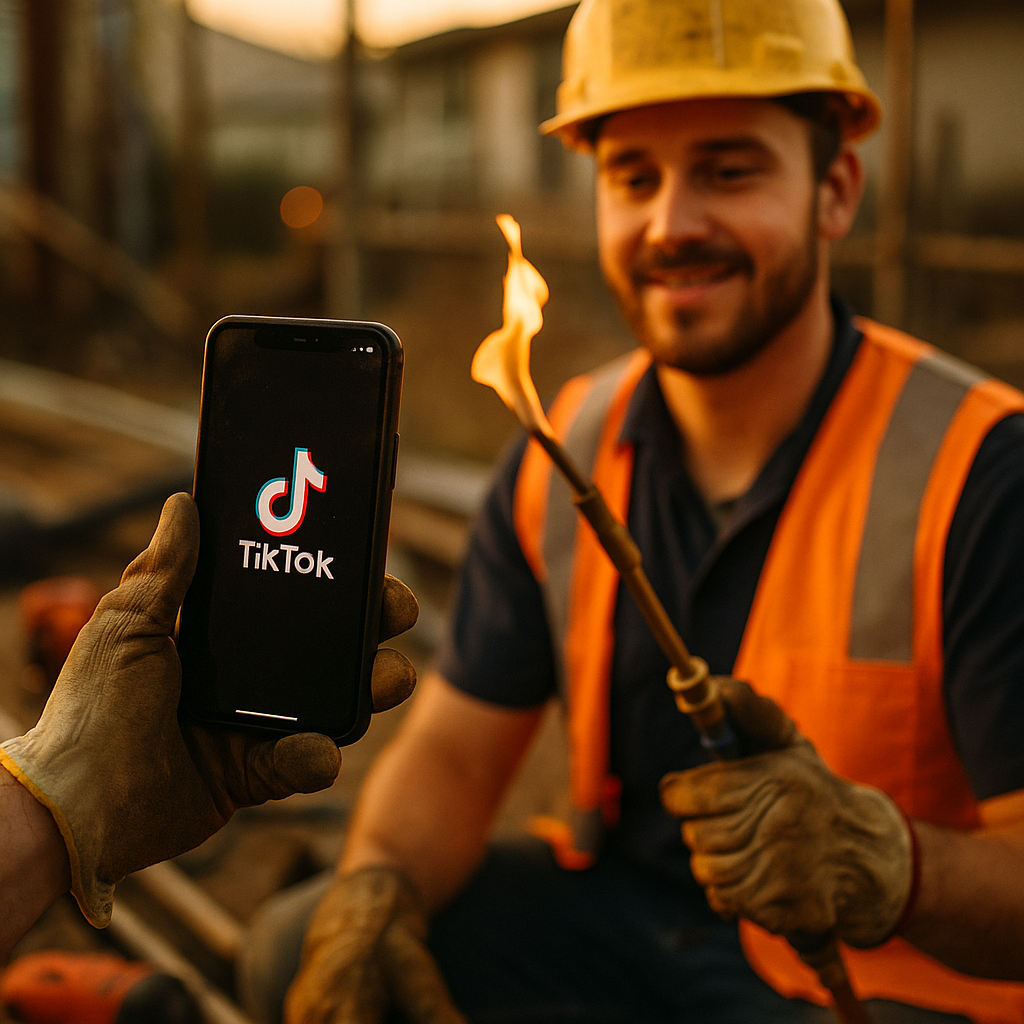
Case Study: How a Manufacturing Firm Used TikTok for Trade Recruiting is no longer a novelty in 2025; it’s a practical playbook for reaching welders, machinists, electricians, and maintenance techs where they actually spend time. This article breaks down a real-world approach—from strategy to safeguards—so you can copy what works, avoid what doesn’t, and build a pipeline that hires faster. Ready to see the blueprint?
Trade recruiting strategy: the company, the roles, and the hiring problem
A mid-sized U.S. manufacturing firm (about 650 employees, multiple shifts, mixed automated and manual lines) entered 2025 with a familiar constraint: production demand was steady, but skilled-trade hiring couldn’t keep pace. The firm needed to fill 24 roles over 90 days across three plants: CNC machinists, industrial maintenance technicians, welders, and electricians. The bottleneck wasn’t pay alone. It was awareness, speed, and fit.
Before TikTok, the company relied on job boards, staffing agencies, and occasional local radio. Applicants arrived in bursts, often unqualified or unwilling to work the required shift. The recruiters also saw drop-off after the first screening because candidates felt uncertain about the work environment, schedule, and growth. Hiring managers were frustrated by no-shows, and recruiters were stuck repeating the same explanations one candidate at a time.
The firm’s HR director set a clear objective: increase qualified applicants and reduce time-to-interview without lowering standards. The team chose TikTok because it could show the job, the tools, and the culture in seconds—especially valuable for trades where “seeing it” matters. To ensure responsible hiring, the firm involved HR, plant leadership, and safety early, agreeing on what could be filmed, who could appear, and what disclaimers were needed.
Key decision: TikTok would not replace job boards; it would become the top-of-funnel engine and an authenticity layer that improved conversion through the funnel.
TikTok recruiting content: what they posted and why it worked
The firm built a content plan around one principle: show the work, don’t narrate it. Instead of generic “we’re hiring” videos, they created short series that answered the questions candidates typically ask in the first call—pay range, schedule, skills, training, safety, tools, and team dynamics.
Content pillars that performed best:
- “Day in the life” clips for each trade and shift, filmed in 15–35 seconds with captions and clear role labels (e.g., “CNC Setup: First 30 minutes”).
- Tool-and-task demos showing real work outputs (parts, weld beads, panels) while avoiding proprietary details.
- Pay and progression explainers with on-screen ranges and the exact requirements for each step (e.g., “Maintenance Tech I to II: what changes”).
- Safety-first storytelling that demonstrated lockout/tagout culture, PPE expectations, and training cadence—without making safety look optional or performative.
- Myth-busting videos addressing misconceptions (e.g., “No, you don’t need 10 years to start here” or “Yes, we train on controls”).
- Hiring manager Q&A in simple language: what gets someone hired, what causes rejection, and what to bring to an interview.
They also standardized production quality. Videos were filmed vertically on-site, using consistent lighting and clear captions for noisy environments. Every post ended with one direct call to action: “Comment ‘TRADE’ and we’ll DM the link,” or “Apply via the link in bio—select your trade and shift.” That structure reduced friction and gave recruiters a way to track demand by role.
Why it worked: candidates could self-qualify. People who disliked the environment, shift pace, or PPE requirements opted out early, while those who liked the work leaned in and applied faster. That raised quality and reduced wasted screening time.
Employer branding on TikTok: building trust with proof, not promises
In trade hiring, skepticism is rational. Candidates want to know whether the shop is safe, whether supervisors respect the craft, and whether overtime is stable or chaotic. The firm focused its employer brand on verifiable specifics and employee voice.
How they earned credibility:
- Employee-led videos featuring machinists, welders, and maintenance techs explaining what they like—and what’s hard—about the job. HR avoided scripting beyond safety and confidentiality rules.
- Real numbers shared responsibly: shift differentials, overtime policies, training hours during onboarding, and how quickly new hires could test into higher pay bands.
- Facility transparency using wide shots of work areas, break rooms, and tool cribs, while blurring confidential displays and customer labels.
- Manager accessibility with short clips of supervisors describing expectations and how performance is evaluated.
The team avoided tone-deaf trends and prioritized clarity. They used trending audio only when it didn’t undermine professionalism or safety. The goal wasn’t “going viral.” It was building repeatable trust. Several candidates later told recruiters they applied because the shop looked clean, organized, and straightforward about requirements.
EEAT note: the firm documented every claim they made in posts (pay bands, benefits, training steps) and kept an internal content log tied to HR policies. That reduced compliance risk and ensured consistency across videos, job postings, and interviews.
Skilled trades hiring funnel: converting views into qualified interviews
Attention doesn’t equal applicants unless you remove friction. The firm mapped a simple funnel from TikTok to interview and built controls to keep response times fast—critical in 2025, when in-demand tradespeople often accept the first credible offer that treats them with respect.
Funnel design:
- Top-of-funnel: TikTok videos targeted by location radius around each plant and by trade-related interests.
- Capture: link-in-bio page with three buttons only: “Machining,” “Maintenance,” “Welding/Electrical.” Each button opened a short application optimized for mobile.
- Pre-qualify: five knockout questions (shift availability, commute tolerance, required certs where applicable, work authorization, and start timeline).
- Speed-to-contact: auto-text confirmation plus a recruiter follow-up within one business day.
- Interview experience: structured 30-minute screen, then a scheduled onsite walk-through with a skills discussion (not a vague “chat”).
They also created a “comment-to-DM” workflow. When users commented a keyword, recruiters sent a short message with the correct link for that trade and a one-sentence expectation statement (e.g., “This role is 2nd shift; you’ll troubleshoot conveyors and PLC-adjacent controls; we train on site.”). This step boosted conversions because it made the next action feel personal while staying scalable.
What candidates asked most—and how the firm answered inside the funnel:
- “What’s the schedule really like?” They posted shift start times, break cadence, and overtime rules, and repeated them in the application confirmation text.
- “Do you train?” They published a simple onboarding timeline and explained who mentors new hires.
- “Is this a clean shop?” They showed housekeeping standards and tool organization, then reinforced it during plant tours.
- “What’s the pay range?” They shared ranges in posts and ensured recruiters used the same numbers in conversations.
Outcome metrics (internal, 2025 campaign window): The TikTok-driven pipeline produced 1,180 profile visits, 312 link clicks, 94 completed applications, and 38 qualified screens over eight weeks. The firm filled 19 of the 24 openings during the campaign period, and time-to-interview dropped because candidates arrived pre-informed. Importantly, hiring managers reported fewer “surprise” candidates who disliked the job once they saw the floor.
Recruitment marketing metrics: what they measured and how they optimized
The firm treated TikTok like any other recruiting channel: measure, learn, adjust. They avoided vanity metrics and focused on movement through the funnel by role and by plant.
Metrics that mattered:
- Qualified application rate (applications that met minimum shift, commute, and skill requirements).
- Screen-to-interview rate (a proxy for alignment between content and job reality).
- Time-to-first-contact (measured in hours, not days).
- Offer acceptance rate by source (TikTok vs. job boards vs. referrals).
- 90-day retention indicator (early stability tied to realistic expectations).
Optimization happened weekly. If machinist content drove clicks but low qualified applications, they refined videos to clarify required experience (setup vs. operator) and posted a “skills checklist” clip. If maintenance candidates asked the same question repeatedly, they turned the answer into a video and pinned it. They also A/B tested calls to action: “Apply now” underperformed compared to “Pick your shift and trade in 60 seconds.”
Budget discipline: The firm started with a modest paid boost focused on a 25–40 mile radius and paused spend on posts that didn’t generate qualified clicks. Organic content stayed consistent because it built the credibility layer that paid ads can’t buy.
Compliance and safety in social recruiting: guardrails that protected the brand
Filming on a plant floor introduces real risk—privacy, safety portrayal, and employment law. The firm built a simple governance system so content stayed authentic without becoming reckless.
Non-negotiable guardrails:
- Safety depiction rules: PPE must be correct in every shot; no staged shortcuts; no filming during lockout/tagout steps unless supervised and approved.
- Confidentiality controls: blur customer names, production dashboards, and proprietary specs; avoid filming sensitive equipment settings.
- Consent and appearance: written releases for employees on camera; clear opt-out process; no pressure from supervisors to participate.
- Fair hiring compliance: avoid language that implies age, gender, or other protected preferences; keep requirements job-related and consistent with postings.
- Comment moderation: hide harassment, respond to genuine questions, and route candidate-specific issues to private messages.
They also trained two “content captains” per plant—one from HR and one from operations—so filming didn’t disrupt work or compromise safety. Posts went through a lightweight review: HR verified pay/benefits language, safety verified PPE and process depiction, and a supervisor verified the task description. This kept turnaround fast without losing control.
Practical takeaway: guardrails enabled speed. Without them, every post would have required lengthy debate, and the channel would have stalled.
FAQs
Is TikTok effective for recruiting welders, machinists, and maintenance technicians in 2025?
Yes, when content shows real tasks, tools, and expectations. Trades candidates respond to proof: what the shop looks like, how safety is handled, and what skills the job actually uses. TikTok can produce qualified applicants if you connect posts to a low-friction application and respond quickly.
What should a manufacturing firm post first to start trade recruiting on TikTok?
Start with three videos: a “day in the life” for one trade, a pay-and-progression explainer with clear requirements, and a safety culture clip that demonstrates PPE and training. Pin the one that answers the most common question (often schedule or pay range).
How do you turn TikTok views into applications without annoying people?
Use one clear call to action per post, offer a direct link by trade and shift, and keep the application short. Invite comments for a DM link, but don’t force public disclosure of personal details. Make response speed part of the process so candidates don’t cool off.
Should we use trends and humor for manufacturing recruiting content?
Only if it supports clarity and professionalism. Light humor can work, but never at the expense of safety or credibility. In this case, straightforward demonstrations and myth-busting outperformed trend-first videos because candidates wanted concrete job information.
What are the biggest compliance risks with TikTok recruiting for manufacturing?
The main risks are showing unsafe behavior, exposing confidential information, and using biased language in captions or replies. Reduce risk with PPE rules, filming boundaries, employee consent forms, and a quick review process that checks claims against HR policies.
How quickly should recruiters respond to TikTok leads?
Within one business day at most, and faster if possible. Skilled trades candidates often compare multiple offers at once. An auto-confirmation text plus a next-day human follow-up is a practical standard that improves screen rates.
TikTok can solve a real manufacturing hiring problem in 2025 when you treat it as a structured recruiting channel, not a random content feed. This firm won attention by showing the work, earned trust by stating specifics, and converted interest with a fast, mobile-friendly funnel. The takeaway is simple: combine authentic trade content with strong guardrails and rapid follow-up, and your pipeline can change fast.