


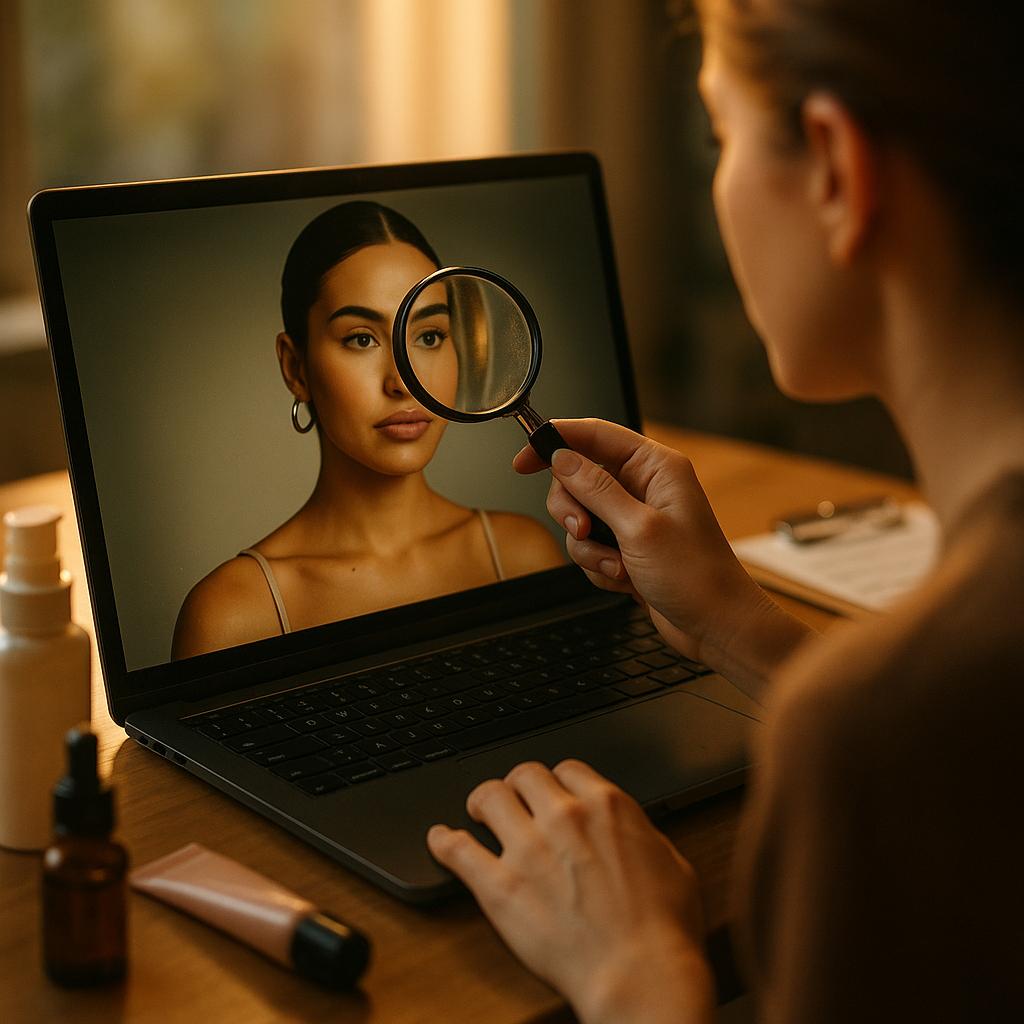
Sixty-nine percent of consumers say they trust influencer recommendations more than brand-produced content, according to Statista — but what happens when the “influencer” isn’t a person at all? Beauty and wellness brands are racing to deploy AI-generated influencer personas without asking the one question that matters most: what happens when this virtual face makes a claim that gets us sued? Vetting AI-generated influencer personas for category risk isn’t optional anymore. It’s the difference between a viral campaign and an FTC inquiry.
Beauty and wellness sit in a uniquely dangerous zone for synthetic marketing. Unlike a virtual influencer hawking sneakers or gaming gear, a beauty avatar recommending a serum is making an implicit efficacy claim. A wellness persona endorsing a supplement is brushing up against health claims regulators actively police. Get this wrong and you’re not just dealing with a PR headache — you’re dealing with regulatory exposure, retailer delisting, and consumer class actions.
Why This Category Is Different
Fashion and tech brands can get away with a lot when their virtual influencer is purely aesthetic. Lil Miquela can wear a jacket without triggering a regulatory review. But the moment an AI persona says “this cleared my skin in two weeks” or “this adaptogen reduced my cortisol,” you’ve crossed from lifestyle content into a testimonial with implied scientific backing — backing that doesn’t exist because the persona has no actual skin, no actual cortisol levels, no actual lived experience.
This is the core problem brands underestimate. A synthetic persona can’t have a real result. Every claim it makes is manufactured, which means every claim needs a paper trail proving the underlying product claim is substantiated independently of the endorsement.
An AI persona endorsing a beauty or wellness product isn’t just content risk — it’s a testimonial with no test subject behind it, which is exactly the kind of gap regulators are trained to spot.
The Vetting Framework: Four Risk Layers
Before any AI-generated persona touches a beauty or wellness campaign, brands should run it through four distinct risk layers. Skipping any one of these is how legal teams end up doing damage control instead of prevention.
- Claims risk: Does the persona’s scripted content make or imply efficacy, medical, or health claims? Even casual language like “this fixed my eczema” needs substantiation on file.
- Disclosure risk: Is it unambiguous to the average viewer that this is a synthetic, non-human persona? The FTC has signaled that AI-generated endorsers require clear, conspicuous disclosure — vague “virtual influencer” bio lines buried in a profile don’t cut it.
- Cultural and demographic risk: Was the persona’s appearance, skin tone, body type, or wellness narrative trained on data that could read as tone-deaf, appropriative, or exclusionary in a category already scrutinized for representation failures?
- Platform policy risk: Does the persona violate Meta, TikTok, or YouTube’s synthetic media disclosure requirements? Policies here are shifting fast, and enforcement has been inconsistent enough that “the platform allowed it” is not a legal defense.
Each layer needs its own sign-off. Not a single legal review at the end, but staged checkpoints during script development, visual generation, and pre-publish review.
Claims Risk Deserves Its Own Audit Trail
Here’s where most brands cut corners. A human influencer’s claim, even if exaggerated, is at least anchored to a real (if subjective) experience. An AI persona’s claim is pure copywriting dressed as testimony. Regulators and plaintiffs’ attorneys know this, and it’s becoming a favored angle of attack.
Practically, this means every script line for an AI beauty or wellness persona should map back to a substantiation document: clinical study, ingredient data sheet, or approved marketing claim from legal. If the line can’t be mapped, it doesn’t ship. This is tedious. It’s also exactly the kind of discipline that separates brands who survive an FTC inquiry from brands who become the example in the next enforcement action.
Brands already building rigor into claims verification for real product marketing should apply the same standard here — teams using retrieval-based claims verification to stop AI hallucinations in product copy have a head start, because the same infrastructure can validate persona scripts before they’re recorded or rendered.
Disclosure Isn’t a Checkbox, It’s a Design Choice
A tiny “AI-generated” label in a bio doesn’t meet the bar regulators are moving toward. The test isn’t “did we technically disclose” — it’s “would a reasonable consumer scrolling past this in three seconds understand they’re watching a synthetic entity.”
That’s a design problem, not just a legal one. Brands running AI personas in beauty and wellness should build disclosure into the creative itself: verbal callouts, persistent on-screen labels, or naming conventions that make the synthetic nature unmistakable (think “AI Ava” rather than a name indistinguishable from a human creator). The ICO and other data regulators internationally are also watching how synthetic personas interact with consumer data collection, particularly when personas “respond” to comments using AI-driven engagement.
If your team is also running synthetic-media detection to catch fraud in your human creator roster, apply the inverse logic here. The tools built to flag undisclosed AI content, like those covered in our review of synthetic-media detection tools for TikTok and Instagram, are useful for stress-testing whether your own persona would get flagged by the same detection logic your competitors or watchdogs are using.
Cultural Fit Isn’t Optional in This Category
Beauty and wellness have long, documented histories of getting representation wrong. An AI persona trained on a narrow dataset can encode those same failures at scale, instantly, without a single human involved in the mistake. Skin tone rendering that skews narrow. Body composition that reinforces unrealistic wellness ideals. Hair texture representation that ignores entire consumer segments.
Run the persona’s visual and narrative output past a diverse review panel before launch, not after backlash. This isn’t a soft “nice to have.” It’s risk mitigation with a direct line to sales, because beauty and wellness consumers vote with their wallets faster than almost any other category when they sense inauthenticity or exclusion.
Platform Rules Are Moving Targets
Meta, TikTok, and YouTube have each rolled out AI-content labeling requirements over the past two years, and none of them are fully harmonized. What passes on one platform may get flagged or demonetized on another. Brands running multi-platform AI persona campaigns need a live compliance matrix, not a one-time policy read.
Check Meta’s business guidelines and TikTok’s advertising policies quarterly, not annually. Enforcement patterns shift faster than the written policy language does, and beauty/wellness advertisers get scrutinized more heavily than most categories because of the historical volume of misleading claims in the space.
Treat platform policy review like a recurring compliance task, not a one-time launch checklist item — the rules governing synthetic media are the least stable part of this entire framework.
Building the Vetting Process Into Your Workflow
The brands getting this right aren’t treating persona vetting as a bolt-on legal review. They’re building it into the same operational rigor they’d apply to any AI-driven campaign launch. If your team has already adopted frameworks for faster AI-driven campaign launches, extend that same structured, staged-review approach to persona risk instead of treating it as a separate, slower track.
Practically, this looks like:
- A pre-launch checklist covering all four risk layers, signed off by legal, brand, and platform compliance leads.
- A claims substantiation library that every script line gets checked against before recording or rendering.
- A disclosure design standard applied consistently across every platform and format the persona appears in.
- A recurring (quarterly, minimum) platform policy review, given how quickly synthetic media rules evolve.
- A representation review panel with actual authority to halt launch, not just offer feedback.
None of this is glamorous. It’s also exactly the kind of unglamorous rigor that’s kept smart brands out of headlines while others learn the hard way. eMarketer has tracked rising marketer interest in synthetic and virtual influencers, but interest is outpacing governance, and beauty/wellness is the category where that gap is most expensive.
What About Smaller Brands Without a Legal Team?
Not every brand has in-house counsel reviewing every script. If that’s you, lean on your agency or platform partner to provide a documented claims substantiation process, and don’t sign off on any AI persona campaign without it in writing. A one-page substantiation memo per major claim is a minimum bar, not a nice-to-have. It’s cheaper than a regulatory inquiry, and far cheaper than a recall or delisting from a major retailer who’s watching your marketing claims as closely as your ingredient panel.
The bottom line: run every AI-generated persona through claims, disclosure, cultural, and platform review before it goes live, and keep the substantiation paperwork ready before the first comment ever asks “is this real?”
Frequently Asked Questions
What is category risk in the context of AI influencer personas?
Category risk refers to the specific legal, regulatory, and reputational exposure that varies by industry. In beauty and wellness, this means heightened scrutiny of efficacy claims, health benefits, and representation, since these categories are already closely watched by regulators like the FTC and consumer advocacy groups.
Do AI-generated influencers need to disclose that they’re not human?
Yes. Regulators and most major platforms expect clear, conspicuous disclosure that a persona is synthetic. A vague bio mention isn’t sufficient; disclosure should be built into the content itself, such as verbal callouts or persistent on-screen labeling.
Can an AI persona legally make a product efficacy claim?
An AI persona can appear in content that includes efficacy claims, but every claim needs independent substantiation, such as clinical data or approved marketing language from legal. Since the persona has no real experience with the product, there’s no personal testimonial to fall back on if a claim is challenged.
How often should brands review platform policies for synthetic media?
At minimum, quarterly. Platform enforcement around AI-generated content and disclosure requirements is changing faster than most brands’ internal review cycles, particularly on Meta, TikTok, and YouTube.
What’s the biggest mistake brands make when launching AI beauty personas?
Treating the persona as a creative asset rather than a claims vehicle. Brands that skip claims substantiation and disclosure design in favor of focusing purely on aesthetics are the ones most likely to face regulatory or reputational fallout.
FAQs
What is category risk in the context of AI influencer personas?
Category risk refers to the specific legal, regulatory, and reputational exposure that varies by industry. In beauty and wellness, this means heightened scrutiny of efficacy claims, health benefits, and representation, since these categories are already closely watched by regulators like the FTC and consumer advocacy groups.
Do AI-generated influencers need to disclose that they’re not human?
Yes. Regulators and most major platforms expect clear, conspicuous disclosure that a persona is synthetic. A vague bio mention isn’t sufficient; disclosure should be built into the content itself, such as verbal callouts or persistent on-screen labeling.
Can an AI persona legally make a product efficacy claim?
An AI persona can appear in content that includes efficacy claims, but every claim needs independent substantiation, such as clinical data or approved marketing language from legal. Since the persona has no real experience with the product, there’s no personal testimonial to fall back on if a claim is challenged.
How often should brands review platform policies for synthetic media?
At minimum, quarterly. Platform enforcement around AI-generated content and disclosure requirements is changing faster than most brands’ internal review cycles, particularly on Meta, TikTok, and YouTube.
What’s the biggest mistake brands make when launching AI beauty personas?
Treating the persona as a creative asset rather than a claims vehicle. Brands that skip claims substantiation and disclosure design in favor of focusing purely on aesthetics are the ones most likely to face regulatory or reputational fallout.
Top Influencer Marketing Agencies
The leading agencies shaping influencer marketing in 2026
Agencies ranked by campaign performance, client diversity, platform expertise, proven ROI, industry recognition, and client satisfaction. Assessed through verified case studies, reviews, and industry consultations.
Moburst

-
2

The Shelf
Boutique Beauty & Lifestyle Influencer AgencyA data-driven boutique agency specializing exclusively in beauty, wellness, and lifestyle influencer campaigns on Instagram and TikTok. Best for brands already focused on the beauty/personal care space that need curated, aesthetic-driven content.Clients: Pepsi, The Honest Company, Hims, Elf Cosmetics, Pure LeafVisit The Shelf → -
3

Audiencly
Niche Gaming & Esports Influencer AgencyA specialized agency focused exclusively on gaming and esports creators on YouTube, Twitch, and TikTok. Ideal if your campaign is 100% gaming-focused — from game launches to hardware and esports events.Clients: Epic Games, NordVPN, Ubisoft, Wargaming, Tencent GamesVisit Audiencly → -
4

Viral Nation
Global Influencer Marketing & Talent AgencyA dual talent management and marketing agency with proprietary brand safety tools and a global creator network spanning nano-influencers to celebrities across all major platforms.Clients: Meta, Activision Blizzard, Energizer, Aston Martin, WalmartVisit Viral Nation → -
5

The Influencer Marketing Factory
TikTok, Instagram & YouTube CampaignsA full-service agency with strong TikTok expertise, offering end-to-end campaign management from influencer discovery through performance reporting with a focus on platform-native content.Clients: Google, Snapchat, Universal Music, Bumble, YelpVisit TIMF → -
6

NeoReach
Enterprise Analytics & Influencer CampaignsAn enterprise-focused agency combining managed campaigns with a powerful self-service data platform for influencer search, audience analytics, and attribution modeling.Clients: Amazon, Airbnb, Netflix, Honda, The New York TimesVisit NeoReach → -
7

Ubiquitous
Creator-First Marketing PlatformA tech-driven platform combining self-service tools with managed campaign options, emphasizing speed and scalability for brands managing multiple influencer relationships.Clients: Lyft, Disney, Target, American Eagle, NetflixVisit Ubiquitous → -
8

Obviously
Scalable Enterprise Influencer CampaignsA tech-enabled agency built for high-volume campaigns, coordinating hundreds of creators simultaneously with end-to-end logistics, content rights management, and product seeding.Clients: Google, Ulta Beauty, Converse, AmazonVisit Obviously →