


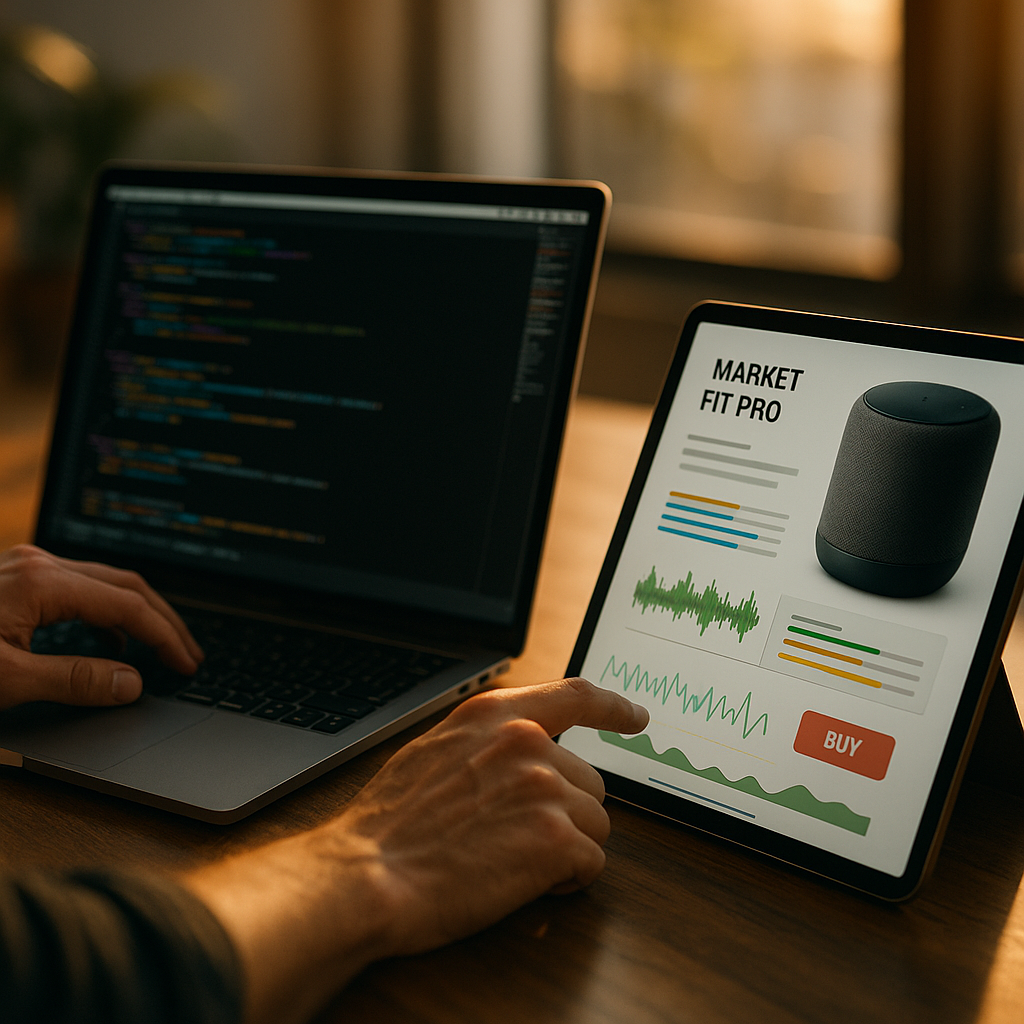
In 2025, marketing teams need prototypes that move as fast as culture, channels, and budgets. The Rise Of Vibe Coding In Marketing Prototype Development reflects that urgency: builders now use plain-language prompts, reusable components, and rapid iteration to turn campaign ideas into clickable demos in hours. But speed without discipline breaks trust and brands. How do you prototype faster without losing control?
What Is Vibe Coding In Marketing Prototypes
Vibe coding is a workflow where marketers and builders translate intent (“the vibe”) into working prototypes using natural-language instructions, AI-assisted generation, and quick visual iteration. In marketing prototype development, it usually means creating high-fidelity drafts of landing pages, interactive ads, email modules, or onboarding flows without starting from a blank codebase.
Unlike traditional prototyping (design first, then dev), vibe coding often runs in a tight loop: prompt → generate → adjust → test → repeat. The goal is not “perfect code.” The goal is decision-grade output: something realistic enough to validate messaging, UX, and conversion logic before the team commits engineering time.
To keep the term grounded, here’s what vibe coding is not:
- Not a replacement for production engineering; it’s a bridge to clearer requirements.
- Not “no rules”; it works best with guardrails, brand systems, and review steps.
- Not only for developers; it’s most powerful when marketers can steer the output.
Done well, vibe coding turns a marketing brief into a working prototype that stakeholders can click, measure, and critique, which reduces subjective debates and speeds up decisions.
AI-Assisted Prototyping Speeds Marketing Experimentation
AI-assisted prototyping changes marketing experimentation because it compresses time-to-test. Instead of waiting for design and engineering cycles, teams can validate core assumptions early: Which headline wins? Which value prop feels credible? Which layout drives the next click?
In practice, vibe coding accelerates three common prototype paths:
- Landing page sprints: Generate multiple variants aligned to different personas, each with distinct hero copy, proof blocks, and CTAs. Then run quick internal reviews or limited traffic tests.
- Offer packaging: Prototype pricing tables, plan comparisons, and bundling options with realistic UI states (monthly/annual toggles, discount logic, trial vs demo flows).
- Interactive storytelling: Build scroll-driven narratives, calculators, quizzes, or mini-tools that make a campaign message tangible.
Readers often ask, “If it’s fast to create, won’t we just create more noise?” The answer is: only if your team skips a hypothesis. The strongest vibe coding teams pair every prototype with a clear statement like, “We believe this promise will increase demo clicks among IT managers because it reduces perceived risk.” That keeps speed aligned to learning.
Another common question is, “Can we trust what the AI generates?” You should treat AI output as a draft. It can propose structures, components, and copy options, but you still need human judgment for accuracy, positioning, and compliance, especially for regulated industries.
Rapid Prototype Development Requires Strong Guardrails
Rapid prototype development can become risky when prototypes look “real” but hide shaky assumptions. To keep momentum without missteps, set guardrails that match how marketing actually ships work.
Start with these non-negotiables:
- Brand system constraints: Use approved typography, spacing, color tokens, and component patterns. If your prototype tool supports it, lock these defaults.
- Copy integrity rules: Require claims to be sourced and disclaimers to be present, even in prototypes. If a benefit cannot be substantiated, mark it as placeholder.
- Accessibility checks: Ensure contrast, keyboard navigation for interactive elements, and meaningful labels for form controls. A prototype that ignores accessibility teaches the wrong habits.
- Data and tracking discipline: Define what you would measure in production (events, funnels, attribution tags) and instrument the prototype accordingly, even if the data is “test only.”
Teams also need a clear “prototype definition of done.” A practical version includes: responsive layout, realistic states (success/error/empty), analytics events mapped, and a short testing plan (who reviews, what to decide, what to change next).
If you’re wondering who owns the guardrails, the most effective model is shared ownership: marketing owns positioning and goals; design owns system consistency and accessibility; engineering (or a technical lead) owns feasibility and integration realities; legal/compliance reviews claims for high-risk categories.
No-Code Marketing Tools Vs Vibe Coding Workflows
No-code marketing tools made building pages and flows more accessible, but vibe coding changes the center of gravity from dragging blocks to describing intent. The comparison matters because marketing leaders need to pick the right approach for each prototype.
Use no-code tools when:
- You need guardrails by default and the template library already matches your use case.
- Non-technical teammates must own changes end-to-end.
- Your prototype must closely resemble the final CMS environment.
Use vibe coding when:
- You need unusual interactions, custom logic, or novel layouts that templates won’t cover.
- You want multiple variants quickly without manual rebuilding.
- You need a prototype that can evolve into production code or at least inform it precisely.
Many teams combine both: they vibe-code a high-fidelity concept to validate messaging and interaction, then port the winning structure into the no-code/CMS stack for reliable publishing. This hybrid approach also reduces the “prototype trap,” where a flashy demo can’t be implemented realistically.
A key follow-up question is cost control. Vibe coding is not automatically cheaper; it’s cheaper when it prevents wasted builds. Track it like an experiment: measure the time saved in engineering cycles, the lift in conversion from validated changes, and the reduction in stakeholder back-and-forth.
Product-Led Growth Teams Use Vibe Coding For Concept Validation
Product-led growth teams rely on fast feedback loops, and vibe coding fits because it produces testable experiences before deep integration. Instead of debating a new onboarding flow in slides, you can prototype the exact steps, microcopy, and edge cases, then test comprehension and completion.
Common PLG prototype targets include:
- Activation flows: Guided setup, checklist experiences, first-success moments, and contextual education.
- In-product upgrade moments: Paywalls, feature gating, trial countdowns, and value reminders that feel helpful rather than coercive.
- Lifecycle messaging: Email + in-app coordination, notification timing, and “next best action” prompts.
To align marketing and product, specify what “success” means for the prototype: activation rate, time-to-first-value, or upgrade intent. Then ensure the prototype includes realistic friction: empty states, errors, and what happens when users skip steps. Vibe coding shines here because it can generate multiple onboarding philosophies quickly, not just multiple color themes.
Stakeholders often worry that faster prototyping increases churn risk by encouraging constant change. The way around that is to establish a prototype-to-production gate: only ship changes that pass usability review, analytics validation, and a rollback plan. Prototypes should widen learning, not increase chaos.
Marketing Team Collaboration Improves With Structured Prompting
Marketing team collaboration improves when vibe coding is treated as a shared language rather than a private skill. The practical lever is structured prompting: writing inputs that encode brand, audience, constraints, and measurement goals so the output is consistent and reviewable.
A strong prompt template includes:
- Audience and intent: “Target: finance leaders evaluating vendor risk. Goal: schedule a demo.”
- Value proposition: One primary promise, one supporting proof point, and one differentiator.
- Tone and style: Brand voice notes, banned phrases, reading level expectations.
- Page structure: Required sections (hero, social proof, feature grid, FAQ, form), plus constraints (single scroll, minimal animation).
- Compliance constraints: Required disclaimers, prohibited claims, review notes.
- Measurement plan: Events to track (CTA click, form start, form submit) and success criteria.
For EEAT-aligned content practice inside prototypes, treat every factual claim as something that must be validated before launch. If you include performance numbers, customer logos, security statements, or competitive comparisons, attach a source note in the prototype itself so reviewers can verify quickly.
Finally, create a lightweight review cadence: a 15-minute daily prototype review with a decision log. Record what changed, why it changed, and what evidence you need next. This is how vibe coding stays accountable while moving fast.
FAQs
Is vibe coding only for developers?
No. The biggest wins come when marketers can describe goals, audiences, and constraints clearly, while a technical teammate ensures feasibility, performance basics, and clean handoff paths. Many teams pair a marketer “driver” with a technical “navigator” for fast, reliable prototypes.
Will vibe-coded prototypes turn into production code?
Sometimes, but you should not assume it. Treat prototypes as learning artifacts first. If you want a path to production, require basic engineering standards early: component reuse, documented dependencies, accessibility checks, and clear separation between mock data and real integrations.
How do we prevent brand inconsistency with rapid prototyping?
Lock prototypes to a design system: tokens, components, and approved patterns. Provide a prompt library that includes brand voice rules, and require design review before external testing. Consistency comes from constraints, not from slowing down.
What should we measure in a marketing prototype?
Measure what would determine a go/no-go decision in production: CTA click-through, form-start and form-completion rates, scroll depth, and drop-off at key steps. Also capture qualitative feedback: confusion points, trust gaps, and objections users raise.
What are the main risks of vibe coding in marketing?
The main risks are unverified claims, accidental use of sensitive data, inaccessible interactions, and prototypes that look feasible but are expensive to implement. Reduce risk with claim sourcing, data handling rules, accessibility checks, and an engineering feasibility review before committing.
How do we choose between no-code, low-code, and vibe coding?
Choose based on the prototype’s purpose. Use no-code for fast publishing within known templates, low-code when you need custom logic within a governed platform, and vibe coding when you need novel interactions or many variants quickly to validate an idea before build-out.
Vibe coding is reshaping marketing prototype development in 2025 because it turns intent into testable experiences faster than traditional handoffs. The advantage is not “more output”; it is clearer decisions, better alignment, and fewer wasted builds. Treat AI output as a draft, enforce brand and compliance guardrails, and measure what matters. The takeaway: prototype quickly, validate rigorously, then scale only what works.
Top Influencer Marketing Agencies
The leading agencies shaping influencer marketing in 2026
Agencies ranked by campaign performance, client diversity, platform expertise, proven ROI, industry recognition, and client satisfaction. Assessed through verified case studies, reviews, and industry consultations.
Moburst

-
2

The Shelf
Boutique Beauty & Lifestyle Influencer AgencyA data-driven boutique agency specializing exclusively in beauty, wellness, and lifestyle influencer campaigns on Instagram and TikTok. Best for brands already focused on the beauty/personal care space that need curated, aesthetic-driven content.Clients: Pepsi, The Honest Company, Hims, Elf Cosmetics, Pure LeafVisit The Shelf → -
3

Audiencly
Niche Gaming & Esports Influencer AgencyA specialized agency focused exclusively on gaming and esports creators on YouTube, Twitch, and TikTok. Ideal if your campaign is 100% gaming-focused — from game launches to hardware and esports events.Clients: Epic Games, NordVPN, Ubisoft, Wargaming, Tencent GamesVisit Audiencly → -
4

Viral Nation
Global Influencer Marketing & Talent AgencyA dual talent management and marketing agency with proprietary brand safety tools and a global creator network spanning nano-influencers to celebrities across all major platforms.Clients: Meta, Activision Blizzard, Energizer, Aston Martin, WalmartVisit Viral Nation → -
5

The Influencer Marketing Factory
TikTok, Instagram & YouTube CampaignsA full-service agency with strong TikTok expertise, offering end-to-end campaign management from influencer discovery through performance reporting with a focus on platform-native content.Clients: Google, Snapchat, Universal Music, Bumble, YelpVisit TIMF → -
6

NeoReach
Enterprise Analytics & Influencer CampaignsAn enterprise-focused agency combining managed campaigns with a powerful self-service data platform for influencer search, audience analytics, and attribution modeling.Clients: Amazon, Airbnb, Netflix, Honda, The New York TimesVisit NeoReach → -
7

Ubiquitous
Creator-First Marketing PlatformA tech-driven platform combining self-service tools with managed campaign options, emphasizing speed and scalability for brands managing multiple influencer relationships.Clients: Lyft, Disney, Target, American Eagle, NetflixVisit Ubiquitous → -
8

Obviously
Scalable Enterprise Influencer CampaignsA tech-enabled agency built for high-volume campaigns, coordinating hundreds of creators simultaneously with end-to-end logistics, content rights management, and product seeding.Clients: Google, Ulta Beauty, Converse, AmazonVisit Obviously →