


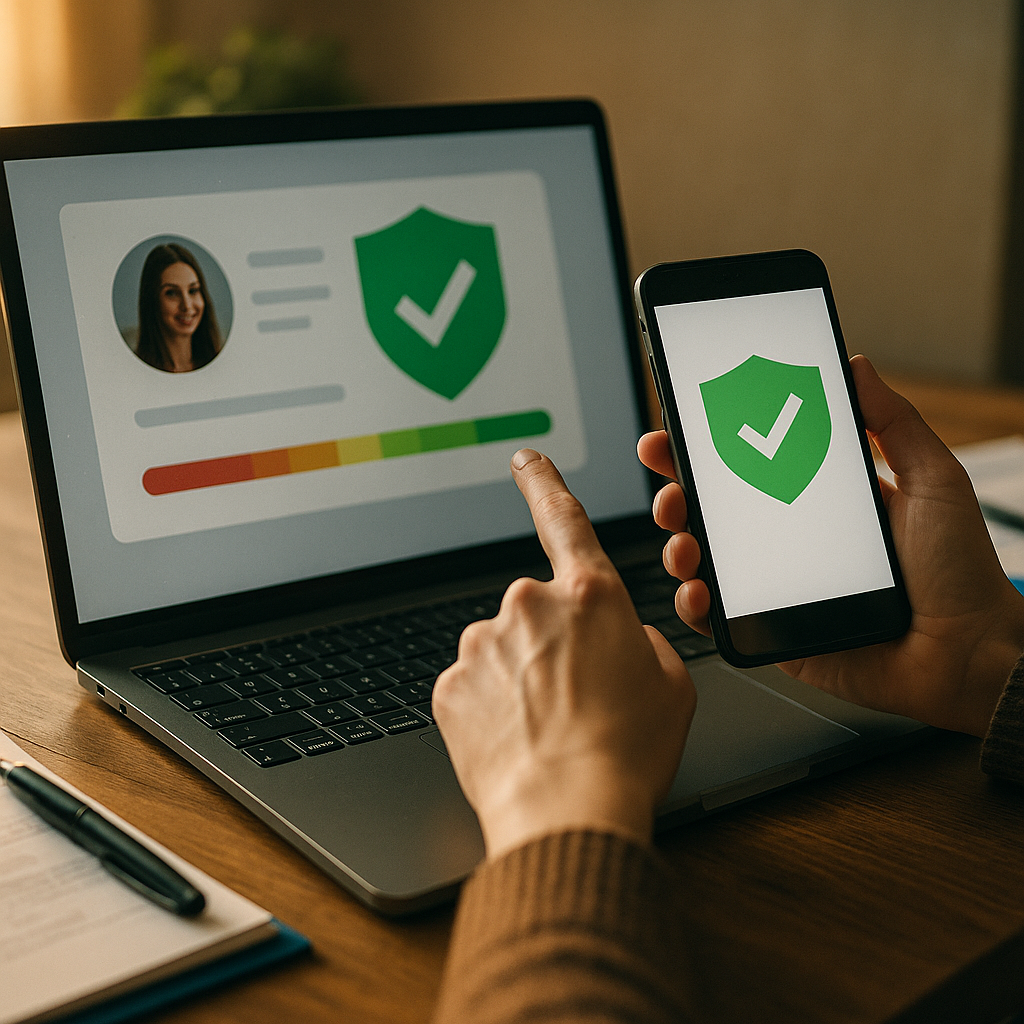
Sixty-one percent of marketers say fake followers and inflated engagement have directly cost them campaign budget, yet most still onboard creators using vanity metrics alone. Vitaay’s authenticity-scoring algorithm promises to fix that by automating trust assessment before a single dollar moves. But how much of that scoring is genuine signal detection, and how much is a black box dressed up in a confidence number?
What Vitaay’s Score Actually Measures
Vitaay markets itself as an AI matching engine that pairs brands with creators, and the authenticity score sits at the center of that pitch. The company breaks the score into four weighted components: audience quality, engagement consistency, content-behavior patterns, and historical brand-safety signals. Each gets converted into a composite number, usually presented as a percentage or a letter grade, that brands see before they ever message a creator.
That sounds tidy. It also mirrors what identity-resolution vendors have been doing in adtech for years, just applied to creator profiles instead of consumer identities. If you’ve evaluated identity resolution match rates for attribution vendors, the due-diligence questions are nearly identical here: what’s the training data, what’s the false-positive rate, and who audits the model.
Vitaay doesn’t publish its full model architecture, which isn’t unusual in this space but does limit how deeply outside evaluators can verify claims. The public-facing documentation describes engagement pattern analysis using time-series anomaly detection, likely looking for the tell-tale spikes and dead zones that bot-driven engagement produces. That’s a reasonable technical approach, similar to fraud detection models used in ad verification tools.
The Engagement Consistency Layer
This is arguably the most defensible piece of the algorithm. Rather than looking at raw engagement rate, which is trivially inflated, Vitaay reportedly analyzes engagement velocity, the rate at which likes and comments accumulate after posting. Organic engagement tends to follow a predictable decay curve. Purchased engagement often arrives in unnatural bursts, sometimes hours or days after posting when a bot farm gets around to the order.
Sprout Social and other social listening platforms have published research showing this kind of temporal analysis catches fraud that simple ratio-based detection misses. It’s a smarter approach than most brands realize exists. Whether Vitaay’s implementation matches the sophistication of dedicated fraud-detection vendors is harder to confirm without access to validation data.
An authenticity score is only as trustworthy as the data it’s trained on — and no AI matching engine has yet published third-party audited accuracy rates for creator fraud detection.
Where the Model Gets Fuzzy: Audience Quality Scoring
Audience quality is where most authenticity algorithms, Vitaay included, start making assumptions that deserve scrutiny. Scoring “real” followers typically involves checking for profile completeness, posting history, follower-to-following ratios, and geographic distribution anomalies. These are useful heuristics. They’re also increasingly gameable.
Sophisticated follower farms now build out full profile histories, post occasional content, and follow realistic ratios specifically to defeat this kind of screening. A model trained eighteen months ago on bot signatures from that era may be blind to the current generation of fraud. This is the core weakness in any AI trust-scoring system: it’s fighting an adversary that adapts faster than most vendors update their models.
Brands running influencer programs at scale, similar to the vetting logic behind networks like Stack Influence’s vetted creator network, should ask Vitaay directly how often the underlying model gets retrained and on what dataset size. If the answer is vague, treat the authenticity score as a starting filter, not a final verdict.
Content-Behavior Patterns: The Least Transparent Layer
This component reportedly evaluates whether a creator’s content aligns with their stated niche, posting frequency consistency, and caption/comment authenticity using natural language processing. In theory, this catches creators who’ve pivoted into influencer marketing purely for brand deals without an organic content history, a red flag for engagement that won’t convert.
In practice, NLP-based authenticity checks can carry bias. Creators who write in non-native English, use regional slang, or post in a niche the model wasn’t well-trained on may score lower for reasons that have nothing to do with fraud. This is the same fairness problem that’s dogged AI lead-scoring tools in sales tech, where CRM autonomy in scoring models has occasionally penalized legitimate leads based on incomplete training data. Brands should ask whether Vitaay has tested its model for demographic or linguistic bias, and whether there’s a manual override path for creators who dispute a low score.
Why Brands Should Care Before Committing Spend
Here’s the uncomfortable math. If a brand runs a $50,000 quarterly influencer program and even 15% of that budget goes to creators with inflated audiences, that’s $7,500 spent on impressions nobody real ever saw. Scale that across an annual program and the waste becomes a budget-line problem, not a rounding error.
The FTC has also sharpened its stance on influencer disclosure and endorsement guidelines, which means brand-safety risk isn’t just financial anymore. A creator flagged post-campaign for fraudulent engagement or undisclosed sponsorship history can create compliance exposure that outlasts the campaign itself. An authenticity score that catches this before contract signing has real operational value, assuming it’s accurate.
This is why the evaluation question isn’t “does Vitaay have an authenticity score” but “how does Vitaay’s false-positive and false-negative rate compare to manual vetting.” Most platforms haven’t published that comparison. Ask for it before you commit spend, not after a campaign underperforms.
A 15% fraud rate on a $50,000 quarterly program isn’t a rounding error — it’s $7,500 in wasted spend that a properly audited scoring model should catch before the contract is signed.
How This Compares to Manual Vetting and Competing Platforms
Manual vetting, the kind agencies have done for years using tools like HypeAuditor or Modash alongside human review, still catches nuance that automated scoring misses: brand fit, tone, past controversy context. It’s slower and doesn’t scale, though. Vitaay’s pitch is speed at scale, which matters if you’re running hundreds of nano and micro-creator relationships simultaneously, similar to the volume challenges discussed around large creator database economics.
The realistic best practice right now is hybrid: use the algorithmic score to triage and eliminate obvious fraud, then apply human review to anything scoring in the ambiguous middle range, roughly the 60-80% band where most disputed cases land. Treating any single AI score as a final gate, without an appeals or review process, is where brands get burned.
What to Ask Before You Trust the Score
- What’s the model’s training data source, and how recently was it updated?
- Does Vitaay publish or share false-positive/false-negative rates with enterprise clients?
- Is there a human review or appeals process for creators disputing a low score?
- How does the platform handle regional, linguistic, or niche-specific bias in NLP scoring?
- Can the brand export raw signal data (engagement velocity, follower growth curves) rather than relying solely on the composite score?
If a vendor can’t answer most of these, that’s not disqualifying on its own, but it should shift how much weight you put on the score relative to your own due diligence. The same governance logic applies here as it does in identity-based attribution governance: the algorithm is a tool, not a substitute for accountability.
The Bigger Pattern: AI Trust Layers Are Multiplying
Vitaay isn’t operating in isolation. Authenticity scoring, identity resolution, and AI-driven creative vetting are converging into a broader trust infrastructure layer across marketing tech. HubSpot and eMarketer have both tracked rising brand investment in AI-driven marketing verification tools as influencer budgets grow and manual review capacity doesn’t scale with it. The direction is clear even if individual vendor accuracy varies.
That means the skill brands need going forward isn’t just picking creators, it’s evaluating the tools that pick creators for them. That’s a procurement and data-literacy competency, not a marketing one, and most brand teams haven’t built it yet.
Bottom line: treat Vitaay’s authenticity score as a first-pass filter, verify its methodology directly with the vendor, and keep a human review step for anything in the ambiguous middle range before you release budget.
Frequently Asked Questions
What is Vitaay’s authenticity-scoring algorithm?
It’s an AI-driven scoring system that evaluates creator profiles across audience quality, engagement consistency, content-behavior patterns, and brand-safety history to produce a composite trust score before brands commit campaign spend.
How accurate is AI-based creator authenticity scoring?
Accuracy varies by vendor and hasn’t been independently, publicly audited for Vitaay specifically. Time-series engagement analysis tends to be more reliable than NLP-based content scoring, which can carry linguistic or niche bias.
Should brands rely solely on an authenticity score before hiring a creator?
No. Best practice is using the score to triage and eliminate obvious fraud, then applying human review to ambiguous cases, particularly creators scoring in the middle range rather than clearly high or low.
What questions should brands ask before trusting a creator-scoring platform?
Ask about training data recency, published false-positive/false-negative rates, availability of a human appeals process, bias testing across languages and niches, and whether raw signal data is exportable for independent review.
Does authenticity scoring reduce compliance risk?
It can help, especially around FTC disclosure and brand-safety concerns, but it doesn’t eliminate risk. Brands remain responsible for verifying disclosure compliance and creator history independent of any single vendor’s score.
Top Influencer Marketing Agencies
The leading agencies shaping influencer marketing in 2026
Agencies ranked by campaign performance, client diversity, platform expertise, proven ROI, industry recognition, and client satisfaction. Assessed through verified case studies, reviews, and industry consultations.
Moburst

-
2

The Shelf
Boutique Beauty & Lifestyle Influencer AgencyA data-driven boutique agency specializing exclusively in beauty, wellness, and lifestyle influencer campaigns on Instagram and TikTok. Best for brands already focused on the beauty/personal care space that need curated, aesthetic-driven content.Clients: Pepsi, The Honest Company, Hims, Elf Cosmetics, Pure LeafVisit The Shelf → -
3

Audiencly
Niche Gaming & Esports Influencer AgencyA specialized agency focused exclusively on gaming and esports creators on YouTube, Twitch, and TikTok. Ideal if your campaign is 100% gaming-focused — from game launches to hardware and esports events.Clients: Epic Games, NordVPN, Ubisoft, Wargaming, Tencent GamesVisit Audiencly → -
4

Viral Nation
Global Influencer Marketing & Talent AgencyA dual talent management and marketing agency with proprietary brand safety tools and a global creator network spanning nano-influencers to celebrities across all major platforms.Clients: Meta, Activision Blizzard, Energizer, Aston Martin, WalmartVisit Viral Nation → -
5

The Influencer Marketing Factory
TikTok, Instagram & YouTube CampaignsA full-service agency with strong TikTok expertise, offering end-to-end campaign management from influencer discovery through performance reporting with a focus on platform-native content.Clients: Google, Snapchat, Universal Music, Bumble, YelpVisit TIMF → -
6

NeoReach
Enterprise Analytics & Influencer CampaignsAn enterprise-focused agency combining managed campaigns with a powerful self-service data platform for influencer search, audience analytics, and attribution modeling.Clients: Amazon, Airbnb, Netflix, Honda, The New York TimesVisit NeoReach → -
7

Ubiquitous
Creator-First Marketing PlatformA tech-driven platform combining self-service tools with managed campaign options, emphasizing speed and scalability for brands managing multiple influencer relationships.Clients: Lyft, Disney, Target, American Eagle, NetflixVisit Ubiquitous → -
8

Obviously
Scalable Enterprise Influencer CampaignsA tech-enabled agency built for high-volume campaigns, coordinating hundreds of creators simultaneously with end-to-end logistics, content rights management, and product seeding.Clients: Google, Ulta Beauty, Converse, AmazonVisit Obviously →