


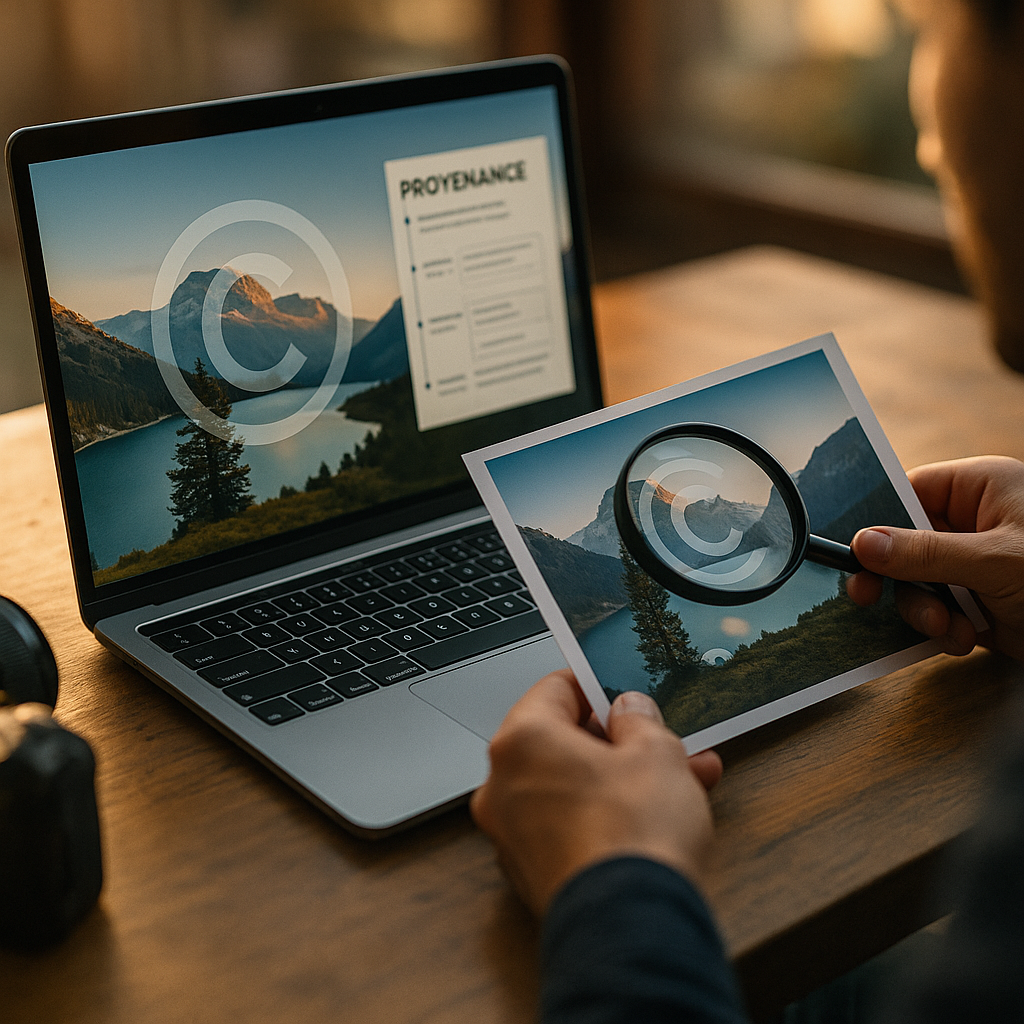
Only 4% of AI-generated content circulating online carries any detectable provenance signal, yet 100% of brands will be held accountable when synthetic media causes a crisis. That gap is why AI content provenance has quietly become one of the most consequential procurement decisions a CMO will make this year. Watermarking and detectability tools sound like back-office plumbing, but get the selection wrong and you’re explaining to the FTC, a retailer partner, or a furious creator community why your brand published something nobody can verify.
This isn’t a theoretical compliance exercise anymore. It’s a live operational risk sitting between your influencer program, your AI content pipeline, and your legal team.
Why Provenance Suddenly Matters to Marketing Leaders
A year ago, “AI content provenance” was a term reserved for computer vision researchers and policy wonks. Now it shows up in RFPs for creator platforms, in brand safety audits, and in the fine print of retail media contracts. The shift happened fast because generative tools moved from novelty to default production method. Brands are running AI-assisted briefs, synthetic UGC, and AI-voiced ads at a scale that makes manual verification impossible.
Regulators noticed first. The FTC has signaled it will treat undisclosed synthetic endorsements the same way it treats undisclosed paid partnerships, and the EU’s AI transparency rules push in the same direction. Platforms followed: Meta, TikTok, and YouTube all now require some form of AI-content labeling. The problem is that labeling only works if the underlying provenance signal is actually detectable, durable, and verifiable across platforms. That’s where watermarking and detection tools come in, and where most brand teams discover the tech is far messier than the marketing decks suggest.
A watermark that survives a single platform’s compression algorithm but disappears after a re-upload or screen recording isn’t a safeguard, it’s a false sense of security.
Watermarking vs. Detection: Two Different Promises
These two categories get lumped together constantly, and that’s a mistake that costs brands real money when they’re negotiating vendor contracts.
Watermarking embeds a signal at the point of creation, invisible pixel patterns, metadata tags, or audio frequencies that mark content as AI-generated or AI-assisted. Google’s SynthID, Adobe’s Content Credentials (built on the C2PA standard), and Meta’s AI labeling system all fall here. The promise is proactive: content is tagged before it ever leaves the building.
Detection tools work in reverse. They analyze existing content, no matter its origin, and estimate the probability it was AI-generated. Hive Moderation, Reality Defender, and Sensity AI are the names you’ll hear most in brand safety RFPs. The promise is reactive: catch synthetic content that slipped through without a watermark, including deepfakes of your own spokespeople or counterfeit influencer endorsements.
Brands need both, not one or the other. Watermarking protects content you produce. Detection protects you from content produced about you, impersonation, fake testimonials, and manipulated creator videos that never touched your pipeline in the first place.
Where Watermarking Breaks Down
Watermarks are fragile by design. Most invisible watermarking schemes degrade or vanish entirely after common transformations: cropping, recompression, screenshotting, or re-encoding for a different platform’s aspect ratio. A TikTok video with an embedded SynthID signal might lose that signal the moment a user downloads it and reposts to Instagram Reels. Metadata-based approaches like C2PA fare slightly better because the credential travels with the file, but strip the metadata (which most social platforms do on upload) and the chain of custody breaks.
This matters enormously for influencer marketing specifically. Sponsored content routinely gets reposted, remixed, and redistributed by fans and aggregator accounts. If your provenance signal can’t survive that journey, you’ve got a compliance gap the size of your entire earned media footprint.
Where Detection Tools Fall Short
Detection models are probabilistic, not definitive. They output confidence scores, not binary verdicts, and those scores drift as generative models improve. A detector tuned to catch last year’s diffusion model artifacts may miss content from a newer model entirely. Independent testing cited by outlets covering AI forensics has shown detection accuracy swinging from the high 90s down to coin-flip territory depending on the generator used and the compression applied afterward.
There’s also an adversarial arms race baked into the category. Every detection improvement gets reverse-engineered by bad actors optimizing to evade it. Brands that rely on a single detection vendor as a compliance checkbox are trusting a moving target.
What Brands Actually Need to Evaluate
Skip the vendor demo theater and ask these questions before signing anything:
- Cross-platform durability. Does the watermark survive re-upload to the top five platforms your creators actually use?
- Standard compliance. Is the tool built on C2PA or another open standard, or is it proprietary and likely to fragment your provenance trail across vendors?
- False positive rate on human content. A detector that flags real creator footage as “likely AI” will torch trust with your talent roster fast.
- Audit trail exportability. Can you produce a compliance report for a retailer or regulator in minutes, not weeks?
- Integration with existing DAM and CRM workflows. Provenance checks that require a separate manual step will get skipped under deadline pressure.
- Update cadence. How often does the vendor retrain against new generative models? Quarterly is table stakes now.
This evaluation can’t sit solely with legal or IT. Marketing operations needs a seat at the table because provenance tooling now touches the same governance questions showing up across the AI stack, similar to the no-code agent oversight gaps described in governance for autonomous agents.
The ROI Case Nobody Wants to Make
Provenance tooling is a cost center until the day it isn’t. Try explaining to a CFO why you need a five-figure annual spend on watermarking software with no direct revenue line attached. Here’s the honest framing: this is risk mitigation insurance, and the payout happens exactly once, the day a deepfake impersonating your CEO or a fabricated influencer endorsement goes viral before you can respond.
Quantify it in terms the finance team understands. What’s the cost of a single brand safety incident involving synthetic media? Crisis comms alone can run into six figures, and that’s before considering lost retailer trust or regulatory scrutiny. Statista tracking on deepfake incident growth shows the frequency curve bending upward sharply, which makes “we’ll deal with it if it happens” an increasingly expensive bet.
There’s an upside case too. Brands that can prove content provenance to retail partners and platforms often get preferential treatment in algorithmic distribution and partnership vetting. It’s becoming a trust signal the same way security certifications became a sales enabler in B2B software. Marketing teams already tracking authority and visibility metrics, like those discussed in media authority scoring, should expect provenance compliance to factor into those scores eventually.
Building a Workable Provenance Stack
Most mid-to-large brands end up running a layered approach rather than betting on one tool.
- Tag at source. Require any AI-assisted creative, whether internal or creator-produced, to carry C2PA-compliant Content Credentials before it leaves the production pipeline.
- Monitor at the edge. Deploy a detection tool across social listening to catch impersonation attempts and unlabeled synthetic content referencing your brand or spokespeople.
- Contractually bind creators. Influencer agreements should now include disclosure clauses specifying how AI-assisted content gets labeled, echoing the disclosure logic already baked into platform ad policies.
- Automate the audit trail. Your compliance documentation should generate itself from the tooling, not depend on someone remembering to screenshot a watermark verification.
Human review still matters here. No detection tool should be the sole gatekeeper on a decision with legal exposure, a lesson that echoes what’s playing out with mandated human review requirements elsewhere in the AI content stack. Build a review checkpoint for anything flagged above a moderate confidence threshold rather than trusting automation end to end.
Teams managing high-volume creator programs should also look at how provenance intersects with existing campaign tooling. If you’re already using AI co-pilots for creator deals, make sure provenance disclosure requirements get baked into the deal terms those tools generate, not bolted on afterward.
A Quick Reality Check on Standards
The C2PA coalition (which includes Adobe, Microsoft, and the BBC among its members) is the closest thing the industry has to a universal standard, but adoption is uneven. Plenty of generative tools brands use daily still don’t embed C2PA metadata by default, and most social platforms strip it on upload regardless. Treat any vendor claim of “universal compatibility” with skepticism until you’ve tested it against your actual distribution channels. The HubSpot and Sprout Social ecosystems are starting to surface provenance metadata in their reporting dashboards, which is a good sign the standard is gaining operational traction beyond the policy layer.
FAQs
Frequently Asked Questions
What is AI content provenance and why does it matter for brands?
AI content provenance refers to the ability to trace whether a piece of content was created, modified, or assisted by AI, and to verify that origin reliably. It matters for brands because regulators, platforms, and consumers increasingly expect disclosure, and unlabeled synthetic content creates legal, reputational, and platform compliance risk.
What’s the difference between watermarking and detection tools?
Watermarking embeds a provenance signal into content at the point of creation, marking it as AI-generated before distribution. Detection tools analyze existing content after the fact and estimate, with a confidence score, whether it was AI-generated. Brands typically need both: watermarking for content they produce, detection for content produced about them.
Can watermarks be removed or stripped during normal content sharing?
Yes. Many invisible watermarks degrade or disappear after cropping, recompression, or platform re-uploads, and most social platforms strip embedded metadata on upload. Metadata-based standards like C2PA are more durable but still break if a platform doesn’t preserve the credential chain.
How accurate are AI detection tools right now?
Accuracy varies widely depending on the generative model used and any post-processing applied to the content. Independent testing has shown detection confidence ranging from near-perfect to near coin-flip accuracy, which is why brands shouldn’t treat any single detector’s output as a definitive verdict.
Do influencer contracts need to address AI content disclosure?
Yes. Brands should add explicit clauses requiring creators to disclose AI-assisted production methods and to use provenance-compliant tools where available, mirroring the disclosure standards platforms and regulators already apply to paid endorsements.
Is C2PA the industry standard for content provenance?
C2PA is the most widely adopted open standard, backed by companies including Adobe, Microsoft, and the BBC, but adoption across generative tools and social platforms is still inconsistent. Brands should verify compatibility with their actual distribution channels rather than assuming universal support.
Next step: audit your current creator and AI content pipeline this quarter for provenance gaps, then pick one watermarking standard and one detection vendor to pilot before writing it into contracts. Waiting for a universal standard to emerge means waiting through your next brand safety incident.
Frequently Asked Questions
Top Influencer Marketing Agencies
The leading agencies shaping influencer marketing in 2026
Agencies ranked by campaign performance, client diversity, platform expertise, proven ROI, industry recognition, and client satisfaction. Assessed through verified case studies, reviews, and industry consultations.
Moburst

-
2

The Shelf
Boutique Beauty & Lifestyle Influencer AgencyA data-driven boutique agency specializing exclusively in beauty, wellness, and lifestyle influencer campaigns on Instagram and TikTok. Best for brands already focused on the beauty/personal care space that need curated, aesthetic-driven content.Clients: Pepsi, The Honest Company, Hims, Elf Cosmetics, Pure LeafVisit The Shelf → -
3

Audiencly
Niche Gaming & Esports Influencer AgencyA specialized agency focused exclusively on gaming and esports creators on YouTube, Twitch, and TikTok. Ideal if your campaign is 100% gaming-focused — from game launches to hardware and esports events.Clients: Epic Games, NordVPN, Ubisoft, Wargaming, Tencent GamesVisit Audiencly → -
4

Viral Nation
Global Influencer Marketing & Talent AgencyA dual talent management and marketing agency with proprietary brand safety tools and a global creator network spanning nano-influencers to celebrities across all major platforms.Clients: Meta, Activision Blizzard, Energizer, Aston Martin, WalmartVisit Viral Nation → -
5

The Influencer Marketing Factory
TikTok, Instagram & YouTube CampaignsA full-service agency with strong TikTok expertise, offering end-to-end campaign management from influencer discovery through performance reporting with a focus on platform-native content.Clients: Google, Snapchat, Universal Music, Bumble, YelpVisit TIMF → -
6

NeoReach
Enterprise Analytics & Influencer CampaignsAn enterprise-focused agency combining managed campaigns with a powerful self-service data platform for influencer search, audience analytics, and attribution modeling.Clients: Amazon, Airbnb, Netflix, Honda, The New York TimesVisit NeoReach → -
7

Ubiquitous
Creator-First Marketing PlatformA tech-driven platform combining self-service tools with managed campaign options, emphasizing speed and scalability for brands managing multiple influencer relationships.Clients: Lyft, Disney, Target, American Eagle, NetflixVisit Ubiquitous → -
8

Obviously
Scalable Enterprise Influencer CampaignsA tech-enabled agency built for high-volume campaigns, coordinating hundreds of creators simultaneously with end-to-end logistics, content rights management, and product seeding.Clients: Google, Ulta Beauty, Converse, AmazonVisit Obviously →