


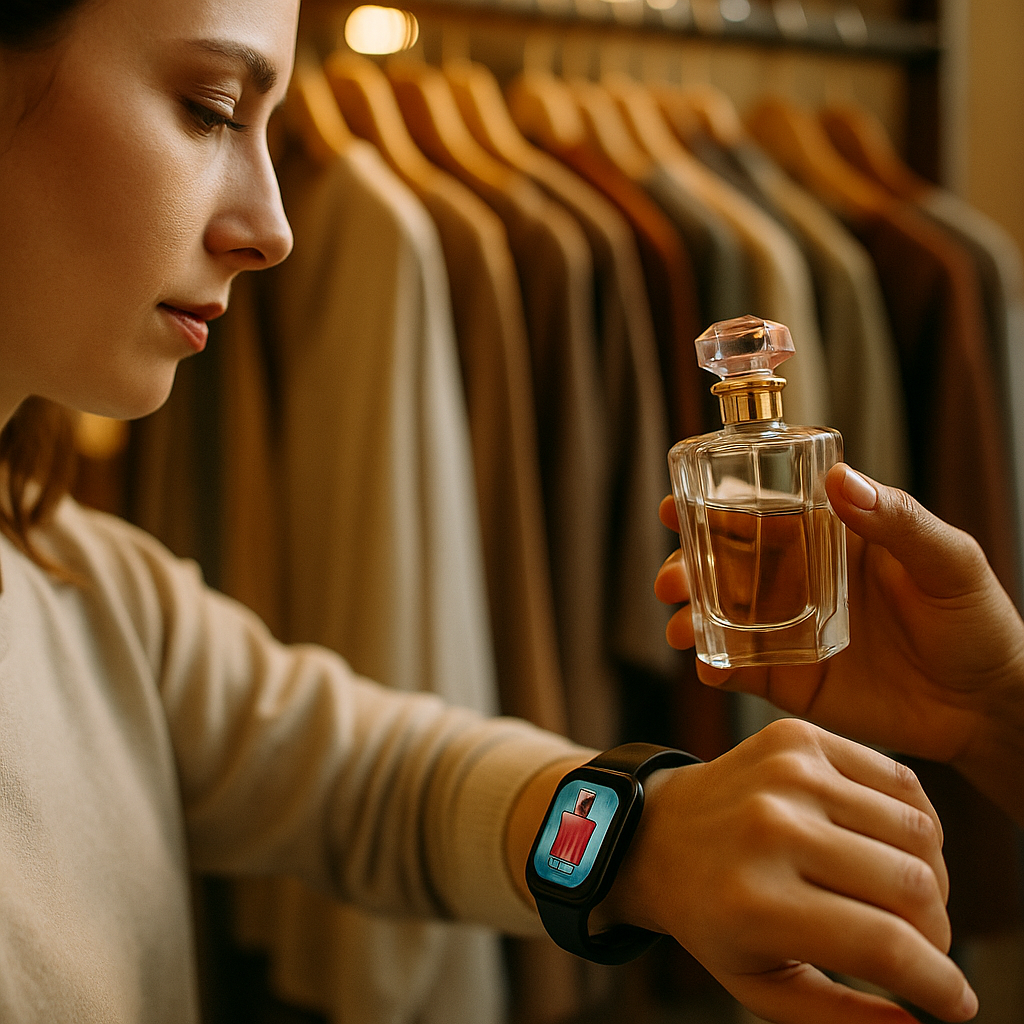
Wearable AI devices are reshaping how people notice, evaluate, and trust brands in 2026. From smart glasses and AI earbuds to health trackers with assistants, these tools turn discovery into a continuous, contextual experience. For marketers, understanding wearable AI devices is no longer optional; it is central to future visibility, relevance, and conversion. What changes when brands are found without screens?
AI brand discovery is becoming ambient and always on
Traditional brand discovery depended on deliberate actions: opening a browser, typing a query, scrolling a feed, or visiting a store. Wearable technology changes that pattern by moving discovery into the background of daily life. AI-enabled glasses can identify products in a user’s field of view, earbuds can answer spoken questions in real time, and smartwatches can surface recommendations based on location, behavior, and intent signals.
This shift matters because discovery is becoming ambient. Instead of the user searching at a specific moment, AI systems continuously interpret context and suggest options. A runner wearing a health-focused smartwatch may receive hydration product recommendations after a workout. A commuter using AI earbuds may ask for the best nearby lunch spot and hear one or two highly filtered brand suggestions rather than a list of ten links.
For brands, this means the battle for attention changes in three ways:
- Fewer visible touchpoints: Users may hear one answer or see one overlay, not a crowded results page.
- Higher importance of relevance: The device chooses what is timely, useful, and easy to act on.
- Greater value of trust signals: AI systems are more likely to recommend brands with strong reviews, clear product data, reliable service, and authoritative digital footprints.
This is not speculation detached from real behavior. Consumers already expect instant, personalized assistance across devices. Wearables simply reduce friction further. As adoption grows, brand discovery will feel less like browsing and more like guided decision-making.
Voice search marketing will shape how brands are recommended
Wearable AI devices rely heavily on voice interactions because voice is fast, hands-free, and natural in motion. That makes voice search marketing a core discipline for future brand discovery. If someone asks, “Which running shoes are best for flat feet near me?” an AI wearable may synthesize local inventory, review sentiment, price, and prior user preferences into a single recommendation.
That changes optimization priorities. Brands can no longer focus only on ranking webpages. They need content and data structures that help AI agents interpret offerings accurately. Helpful content should answer practical questions directly, describe product attributes clearly, and remove ambiguity around pricing, availability, compatibility, and use cases.
To improve discoverability in voice-led environments, brands should prioritize:
- Conversational content: Write in natural language that mirrors how people actually speak.
- Question-based pages: Address common buying questions, comparisons, setup concerns, and use scenarios.
- Local business accuracy: Keep hours, addresses, inventory signals, and contact details consistent across platforms.
- Structured product information: Make features, benefits, materials, pricing, and policies easy for machines to parse.
- Review quality: Encourage authentic feedback that mentions specific experiences and outcomes.
Voice-led discovery also compresses consideration. On a phone or laptop, consumers may compare multiple tabs. On a wearable, they often want the fastest credible answer. That means brands must be precise, trustworthy, and easy for AI systems to summarize. If your brand message cannot be distilled into a few confident sentences, you may lose visibility at the exact moment of intent.
Personalized marketing through wearables will raise the bar for relevance
The strongest advantage of wearables is context. Devices can infer motion, time of day, location, routine, biometrics, and immediate activity. When handled responsibly, that data can power personalized marketing that feels useful instead of intrusive. The future of brand discovery will depend on this balance.
Consider a few realistic scenarios in 2026:
- Smart glasses: A traveler looking at a restaurant district sees subtle overlays with trusted dining options that match dietary preferences.
- AI earbuds: A parent asks for a quick gift recommendation on the way home and receives options based on previous shopping patterns.
- Fitness wearables: A user finishing a long walk gets a prompt about recovery products, hydration, or nearby healthy food brands.
In each case, the winning brand is not necessarily the loudest. It is the one that best fits the user’s context. This creates a more demanding environment for marketers. Generic segmentation becomes less effective. Brands need strong first-party data strategies, permission-based personalization, and messaging tied to real situations.
However, personalization must support user benefit. Helpful content principles and EEAT matter here. Brands should demonstrate experience by showing how products solve actual problems. They should build expertise with accurate, specific information. They should reinforce authoritativeness through credible reviews, transparent policies, and consistent performance. And they must earn trust by clearly explaining how data is used.
Consumers are increasingly sensitive to relevance that feels manipulative. Wearable-based personalization should answer a real need, not exploit a vulnerable moment. Brands that respect boundaries will be more likely to become default recommendations in AI-mediated discovery.
Consumer privacy in wearables will determine trust and brand preference
No discussion of wearable-driven discovery is complete without addressing consumer privacy. Wearables can capture intimate signals: location, health patterns, movement, voice, and environmental context. Because these devices operate close to the body and often throughout the day, users are likely to judge brands not just by convenience, but by restraint.
Trust will become a ranking factor in practice, even when not labeled that way. Users will favor ecosystems and brands that are transparent about data collection, consent, storage, and sharing. AI assistants may also be designed to prioritize vendors that meet stronger privacy and safety standards.
Brands should take several actions now:
- Explain data use plainly: Replace vague policy language with clear descriptions of what is collected and why.
- Offer meaningful choices: Let users opt in to personalization tiers instead of forcing all-or-nothing consent.
- Minimize unnecessary collection: If a signal does not improve the experience, do not capture it.
- Demonstrate security practices: Show how data is protected and how users can delete it.
- Avoid creepy timing: Just because a wearable can infer a moment does not mean a brand should interrupt it.
These steps support EEAT because trust is not abstract. It is built through predictable behavior, responsible policies, and consistent customer outcomes. In wearable environments, where AI may act as a gatekeeper, trust is also a discoverability asset. A brand that feels safe is more likely to be recommended, accepted, and remembered.
Retail media and omnichannel commerce will merge with wearable technology
Wearables will not replace phones, stores, or laptops. Instead, they will connect them. This is where omnichannel commerce becomes essential. Brand discovery may begin with AI glasses, continue through a voice interaction on earbuds, and end with a purchase on a mobile app or in a nearby store. Marketers need to design for that continuity.
Retail media networks, local inventory feeds, loyalty programs, and mobile commerce platforms will increasingly feed wearable recommendation engines. If a device knows a user is near a partner retailer and that a product is in stock, it can turn awareness into action almost instantly. The distance between discovery and transaction shrinks.
To prepare, brands should align these systems:
- Product catalogs: Keep titles, attributes, images, and availability current across channels.
- Local inventory data: Ensure store-level stock information is accurate and accessible.
- Loyalty and CRM systems: Use permissioned customer data to create useful continuity across touchpoints.
- Measurement models: Track assistive discovery, not just last-click conversions.
- Creative assets: Develop formats suitable for audio summaries, glanceable visuals, and short prompts.
This also affects branding. In wearable settings, logos and long-form copy may matter less at the first interaction than utility, memorability, and ease of action. A brand needs a clear value proposition that survives compression into audio or lightweight visual prompts. If your brand cannot communicate why it is the right choice in a few seconds, wearable discovery will expose that weakness.
Companies that already invest in mobile-first customer journeys have an advantage because wearable experiences are often extensions of mobile ecosystems. Still, success will require tighter integration between media, commerce, analytics, and customer experience teams.
Future consumer behavior will reward brands that are useful, credible, and machine-readable
The long-term impact of wearables is not just new hardware. It is a new model of future consumer behavior. People will increasingly expect AI to reduce effort, filter noise, and present credible recommendations at the right time. Brand discovery habits will therefore become more selective and more delegated.
That delegation has major implications. When AI acts as an intermediary, brands must appeal to both humans and machines. A strong website alone is not enough. Brands need machine-readable content, reputable mentions, consistent business data, and evidence of real customer satisfaction. They also need strong category positioning so AI systems can identify when and why the brand should be recommended.
In practice, leading brands will focus on five disciplines:
- Entity clarity: Make sure your brand, products, founders, locations, and services are described consistently online.
- Authority building: Earn mentions from credible publications, experts, communities, and verified customers.
- Experience signals: Publish useful content rooted in actual product use, customer outcomes, and service knowledge.
- Friction reduction: Simplify checkout, support, returns, and onboarding so recommendations convert smoothly.
- Testing across interfaces: Evaluate how your brand appears in voice replies, visual overlays, notifications, and agent-led shopping flows.
Marketers should also prepare for fewer opportunities to interrupt and more pressure to deserve inclusion. Wearables will likely reduce casual scrolling while increasing high-intent interactions. That favors brands with depth over hype. If your product information is weak, your service reputation uneven, or your digital presence fragmented, AI-driven discovery will make those issues more visible.
The opportunity is substantial for brands willing to adapt. Wearable AI can introduce products in moments that feel genuinely helpful: while commuting, shopping, exercising, traveling, or solving a problem in real time. When a brand earns that moment, discovery feels less like advertising and more like assistance.
FAQs about wearable AI devices and brand discovery
What are wearable AI devices?
Wearable AI devices are body-adjacent technologies such as smart glasses, AI earbuds, smartwatches, rings, and health trackers that use artificial intelligence to interpret context, answer questions, provide recommendations, and support decisions in real time.
How do wearable AI devices affect brand discovery?
They make discovery more contextual, immediate, and filtered. Instead of searching through many results, users may receive one or two highly relevant recommendations based on location, intent, routine, and preferences.
Will wearable AI reduce the importance of traditional SEO?
Traditional SEO will still matter, but it will expand. Brands must optimize not only for webpages but also for voice responses, structured data, local accuracy, reviews, and AI-readable product information.
Why is EEAT important in wearable-driven discovery?
EEAT helps brands demonstrate experience, expertise, authoritativeness, and trustworthiness. These qualities improve user confidence and increase the likelihood that AI systems will recommend a brand in high-intent moments.
What is the biggest privacy challenge with wearables?
The biggest challenge is responsible handling of sensitive contextual and biometric data. Users want personalization, but they also expect transparency, consent, security, and the ability to control what is collected and how it is used.
Which industries may benefit first from wearable brand discovery?
Retail, travel, fitness, food and beverage, health services, local commerce, and consumer electronics are likely to benefit early because wearable recommendations fit naturally into real-time decision moments in these categories.
How can brands prepare now for wearable AI discovery habits?
Start by improving structured content, local data, product accuracy, review quality, privacy practices, and omnichannel measurement. Then test how your brand appears in voice and AI-assisted experiences across mobile and connected ecosystems.
Wearable AI devices will change brand discovery by making it contextual, selective, and deeply tied to trust. In 2026, the brands that win will not simply be the most visible; they will be the most useful, credible, and easy for AI systems to understand. Build for relevance, transparency, and machine-readable clarity now, and future discovery habits will work in your favor.