


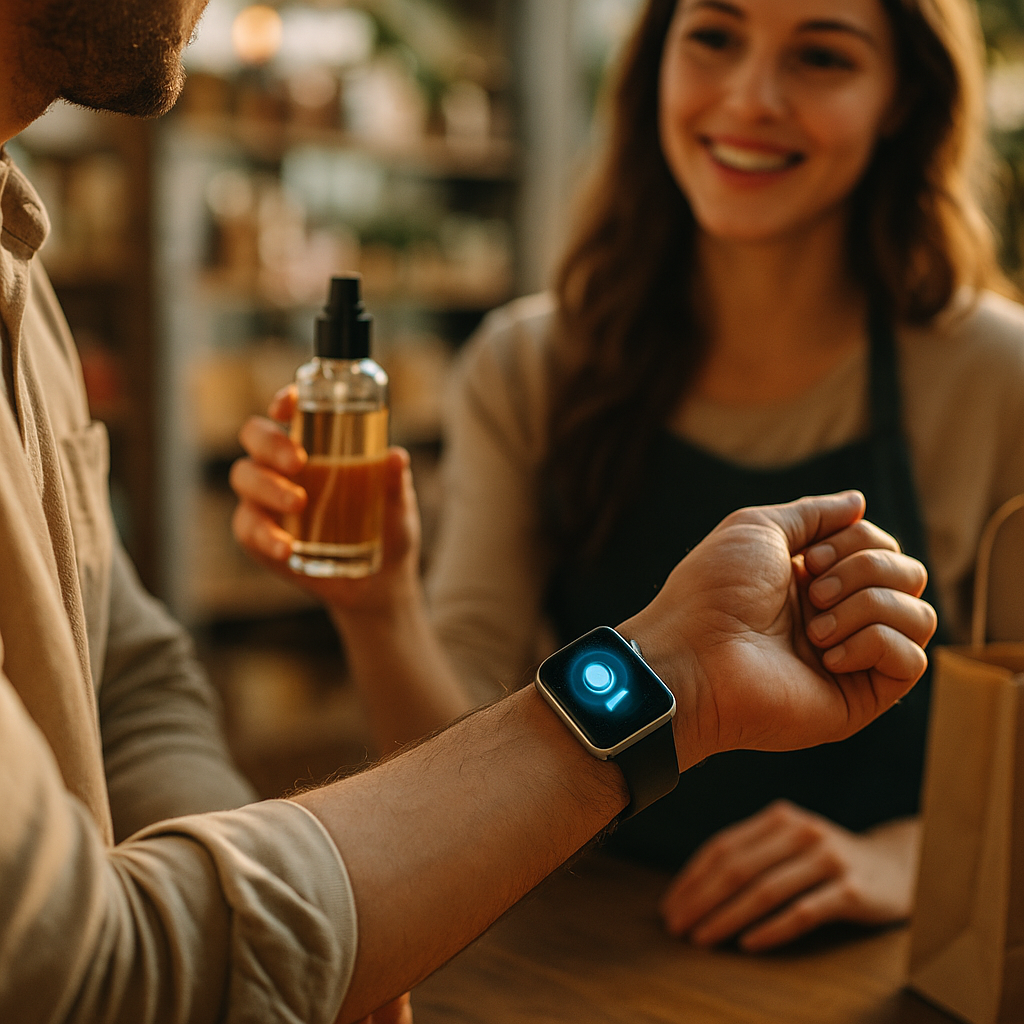
Wearable AI devices are changing how people notice, evaluate, and trust brands in everyday moments. From smart glasses to AI earbuds and health-focused wearables, these tools compress search, recommendation, and purchase decisions into real time. For marketers, understanding wearable AI devices is now essential to future visibility, customer relevance, and competitive growth. What happens when discovery becomes ambient?
How wearable technology marketing is redefining brand discovery
Brand discovery used to begin with a search bar, social feed, storefront, or word-of-mouth recommendation. In 2026, it increasingly begins with context. Wearable devices equipped with AI can interpret location, schedule, voice input, biometric signals, movement, and even environmental cues. That means discovery is shifting from intentional browsing to predictive assistance.
For example, a user walking through an airport may receive a subtle audio suggestion for a nearby coffee brand based on wait time, past purchases, and loyalty status. Someone wearing AI glasses in a retail district may see product overlays, comparative reviews, or personalized offers without actively opening an app. In both situations, the brand is not discovered through a traditional campaign touchpoint. It is surfaced through relevance.
This change matters because it compresses the customer journey. Awareness, consideration, and action can happen within seconds. Brands that once fought for attention through broad messaging now need to win in micro-moments shaped by utility and trust.
Effective wearable technology marketing depends on several factors:
- Contextual accuracy: recommendations must fit the user’s immediate needs
- Low-friction experiences: interactions need to be fast, glanceable, and voice-friendly
- Permission-based personalization: users must feel in control of what data is used
- Consistent brand signals: the same value proposition should appear across mobile, voice, and wearable interfaces
Brands that ignore wearable environments risk becoming invisible in moments where buying intent is strongest. Discovery is no longer confined to channels; it is becoming an always-available layer over daily life.
The rise of AI-driven consumer behavior across ambient interfaces
To understand future discovery habits, brands need to understand AI-driven consumer behavior. Consumers are adapting quickly to interfaces that remove effort. They are growing comfortable asking devices for recommendations, accepting curated options, and delegating routine decisions to AI assistants.
This behavioral shift does not mean consumers care less about brand identity. It means they evaluate brands differently. Instead of browsing ten options, they may rely on one trusted recommendation generated by an AI assistant. Instead of comparing every feature manually, they may prioritize whichever brand appears most compatible with their preferences, budget, timing, or wellness goals.
Several patterns are becoming clear:
- Discovery is becoming conversational: users ask, speak, confirm, and move on
- Convenience competes with loyalty: the easiest relevant option can displace familiar brands
- Trust is delegated: people increasingly trust AI summaries, ratings, and filtering systems
- Attention windows are shorter: brands have less time to explain value
This creates both opportunity and risk. A strong brand can gain visibility through high-quality data, useful metadata, excellent reviews, and product compatibility with AI recommendation systems. A weaker brand can disappear even if its offering is competitive, simply because it is not structured for machine-led discovery.
Marketers should ask practical questions now: Is our product information accessible to AI systems? Are our locations, prices, reviews, FAQs, and availability updated in real time? Does our brand message still make sense when reduced to a one-sentence recommendation spoken into an earbud?
These are not technical side issues. They shape whether a brand enters the consideration set at all.
Why voice search and wearables will influence the next customer journey
Voice search and wearables are a powerful combination because they remove screens from key decision moments. A person cooking dinner, driving, exercising, commuting, or shopping can now ask a wearable assistant for suggestions instantly. That convenience changes what kind of content gets chosen and what kind of brands get remembered.
Wearable voice interactions tend to favor brands that are:
- Easy to pronounce and recognize
- Supported by strong local and product data
- Reviewed positively in trusted ecosystems
- Clear in their category positioning
- Fast to fulfill or easy to access
Consider a likely scenario. A consumer asks their AI earbuds, “What’s a good sustainable skincare brand I can buy near me today?” The assistant may combine location data, product inventory, user preference history, ingredient standards, and review summaries to recommend only two or three options. The consumer may never see the wider market.
This means search engine optimization still matters, but its application expands. SEO in 2026 is not only about ranking on a results page. It is about being understandable, retrievable, and trustworthy across AI-mediated environments. Brands need to optimize for spoken queries, natural-language questions, concise answers, and structured information that machines can interpret accurately.
Content should address likely verbal prompts such as:
- What is the best option near me?
- Which brand fits my budget?
- What do people say about this product?
- Is it healthy, sustainable, fast, or compatible?
Brands that prepare for these interactions will be easier for wearable assistants to surface. Brands that rely on visual persuasion alone may struggle, because many discovery moments will happen without a screen at all.
Personalized brand experiences in a world of sensor-based data
One of the biggest shifts in future discovery will come from personalized brand experiences powered by wearable data. Unlike smartphones, wearables often stay close to the body throughout the day. They can capture signals about sleep, activity, stress, heart rate trends, routines, location patterns, and time-sensitive behavior. When users give permission, AI can use these signals to shape recommendations with unusual precision.
That does not mean brands should become intrusive. The most effective experiences will feel useful, respectful, and timely. A fitness brand might surface recovery products after a strenuous workout. A travel brand might suggest lounge access when fatigue indicators are high and a delay is detected. A grocery retailer might recommend quick meal options near the end of the workday based on commuting patterns.
The strategic lesson is simple: personalization must solve a real problem. If it feels manipulative, users will turn notifications off, restrict permissions, or lose trust in both the device and the brand.
To create better wearable-led discovery experiences, brands should focus on:
- Declared value exchange: explain why data is collected and what benefit the user gets
- Moment-based messaging: deliver relevance based on context, not volume
- Cross-device consistency: ensure the wearable suggestion matches the app, site, and in-store reality
- Human-centered tone: recommendations should feel assistive, not invasive
- Choice architecture: let users refine, pause, or reject personalization easily
These practices align with Google’s helpful content principles and broader EEAT expectations. Experience matters because readers and buyers want evidence that recommendations are grounded in real-world usefulness. Expertise matters because wearable ecosystems are technically complex. Authoritativeness matters because AI-mediated discovery favors recognized, reliable sources. Trust matters most of all because wearable data is highly personal.
When brands respect that reality, personalization becomes a growth driver rather than a privacy risk.
Privacy and consumer trust as the foundation of wearable commerce trends
No discussion of future discovery habits is complete without wearable commerce trends and the role of trust. The same data that makes recommendations smarter also raises serious concerns about surveillance, profiling, consent, and security. Consumers are willing to trade some data for convenience, but only when the boundaries are clear.
That means trust will shape discovery as much as technology does. If users do not trust the wearable platform, they will limit data sharing. If they do not trust a brand, they will ignore its recommendations even if they are relevant. If they suspect hidden targeting or poor data protection, they may avoid entire ecosystems.
Brands can strengthen trust in five practical ways:
- Use plain-language privacy notices: avoid vague or legalistic explanations
- Ask for consent in context: request permissions when the benefit is obvious
- Limit data collection: gather only what is necessary for the stated experience
- Show visible safeguards: communicate how data is stored, protected, and deleted
- Respect user controls: make opting out easy and immediate
Trust also influences how AI recommendations are ranked and accepted. Brands with credible reviews, accurate listings, transparent return policies, and reliable fulfillment are more likely to be favored by both algorithms and users. This is where operational excellence becomes a marketing advantage. Discovery does not stop at visibility; it depends on confidence that the brand will deliver.
For regulated industries such as health, finance, and insurance, the stakes are even higher. Wearable-led discovery may be powerful, but compliance, ethical design, and factual accuracy cannot be optional. In these sectors, one misleading recommendation can damage both reputation and user safety.
The future belongs to brands that treat privacy and trust as product features, not legal footnotes.
Omnichannel brand strategy for wearable search optimization
The most successful companies will approach wearable search optimization as part of a larger omnichannel strategy. Wearables do not replace mobile apps, websites, email, retail, or social platforms. They connect them. Discovery may begin through a smart ring, AI glasses, or earbuds, but the next step could happen in an app, on a product page, or inside a physical store.
That means brand systems need to be synchronized. Product data, reviews, inventory, support content, loyalty status, and pricing should remain accurate across every touchpoint. If a wearable assistant recommends an item that is unavailable, overpriced, or poorly explained on the next channel, the brand loses credibility fast.
A strong wearable-ready strategy includes:
- Structured data and clean product feeds
- Local SEO and real-time business information
- Short, high-clarity content blocks for AI summaries
- Voice-friendly FAQs and support answers
- Consistent identity across audio, visual, and text interfaces
- Measurement frameworks for assisted discovery, not just last-click conversions
Measurement deserves special attention. Traditional attribution often misses ambient discovery. A user might hear a brand recommendation through smart earbuds, check reviews later on mobile, and purchase in-store days afterward. If marketers track only the final click, they underestimate wearable influence. Teams should expand analytics to include assisted interactions, location-based prompts, voice engagements, and cross-device behavior patterns where privacy standards allow.
It is also wise to revisit creative strategy. Wearable environments reward concise language, immediate relevance, and utility-first messaging. Brands should test how taglines, product descriptions, and offers sound when spoken aloud. They should ask whether the message remains clear when delivered in one sentence by an AI assistant.
The brands that adapt early will not just gain impressions. They will earn placement inside the systems consumers increasingly rely on to decide what to buy, where to go, and whom to trust.
FAQs about wearable AI devices and future brand discovery
What are wearable AI devices?
Wearable AI devices are body-worn technologies such as smart glasses, earbuds, watches, rings, and health trackers that use artificial intelligence to interpret data, automate tasks, and deliver personalized insights or recommendations in real time.
How will wearable AI devices change brand discovery?
They will shift discovery from screen-based browsing to ambient, context-aware recommendations. Instead of actively searching, users will increasingly receive brand suggestions based on location, intent, schedule, preferences, and real-world conditions.
Will SEO still matter in a wearable-first environment?
Yes. SEO will remain essential, but it will extend beyond web rankings. Brands must optimize for voice queries, natural-language prompts, structured data, local intent, and AI-readable content that can be surfaced by wearable assistants.
What types of brands will benefit most from wearable-led discovery?
Brands with clear value propositions, accurate data, strong reviews, fast fulfillment, local relevance, and trustworthy customer experiences will benefit most. Categories tied to convenience, health, mobility, retail, and daily decision-making may see especially strong impact.
Are consumers comfortable sharing data with wearable devices?
Many are open to it when the value exchange is clear, the controls are simple, and the brand or platform is trusted. Comfort drops quickly when data use feels excessive, hidden, or unrelated to the user’s benefit.
How should brands prepare now?
Brands should improve data quality, optimize for voice and local discovery, create concise AI-friendly content, strengthen privacy practices, and measure cross-device journeys. They should also test how their brand appears in audio-first and glance-based interfaces.
Will wearable AI reduce the importance of brand loyalty?
Not entirely, but it may change how loyalty is earned. In many situations, AI systems will prioritize relevance and convenience. To stay preferred, brands must combine strong identity with excellent usability, trust, and contextual value.
The impact of wearable AI on brand discovery is practical, immediate, and strategic. As AI assistants move closer to the body, discovery becomes more contextual, more predictive, and less dependent on traditional browsing. Brands that invest in trust, structured data, voice readiness, and useful personalization will be easiest to find. The clear takeaway: prepare for ambient discovery now, or risk disappearing from tomorrow’s decision moments.