


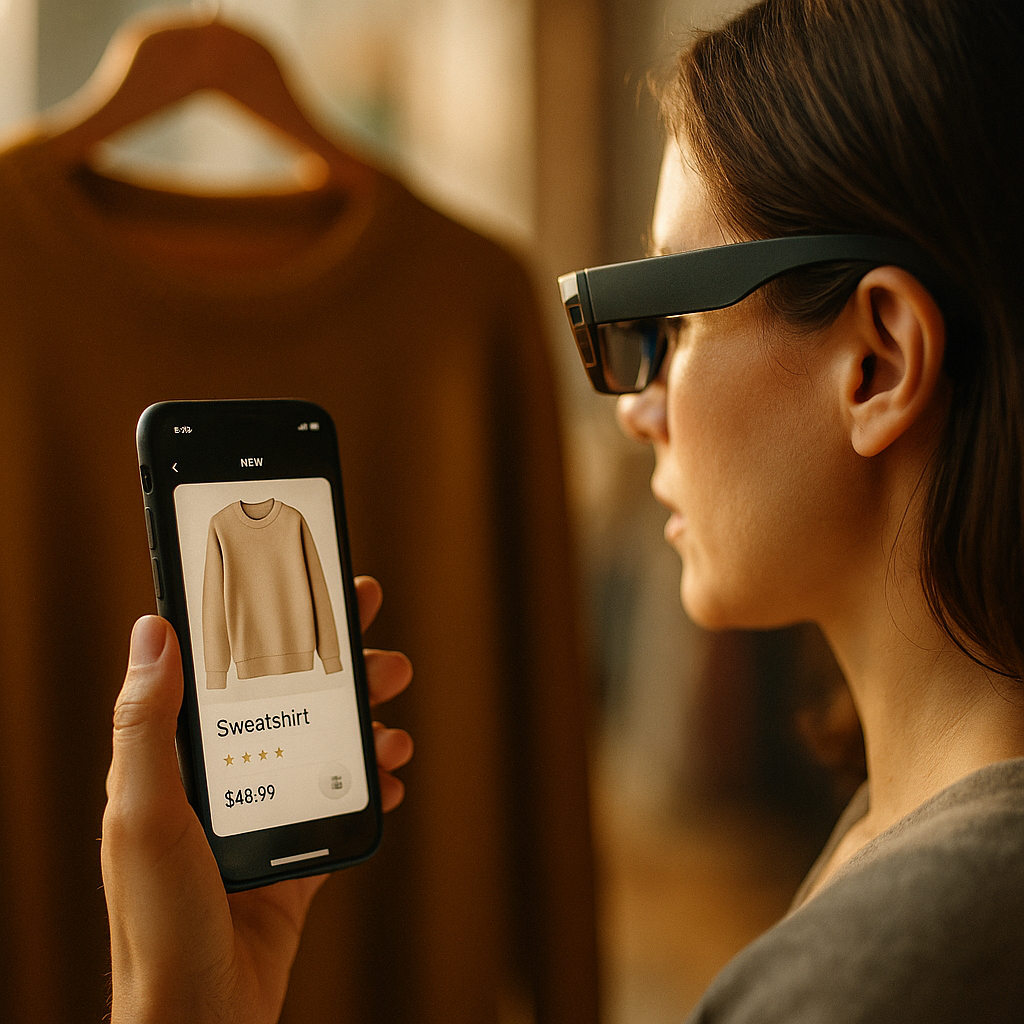
In 2025, wearable AI devices are shifting how people notice, evaluate, and adopt brands—often without opening a browser. Smart glasses, rings, earbuds, and watches can listen, see, and suggest in real time, turning everyday moments into discovery opportunities. This change rewards brands that earn trust, supply clean data, and design for intent. What happens when your next best customer never searches at all?
Wearable AI search behavior: from queries to continuous intent
Traditional discovery starts with a typed query: a person wants something, searches, and compares results. Wearable AI changes that sequence. It captures context—location, movement, calendar events, past preferences, and spoken prompts—and converts it into recommendations. Brand discovery becomes less about “finding” and more about “being surfaced” at the right moment.
Instead of searching “best running shoes,” a runner may ask earbuds, “What should I wear for a wet trail today?” The assistant can combine weather, terrain history, and prior purchases, then recommend a specific shoe model or local store. The user experiences a curated answer, not a results page.
This shift creates two practical changes for marketers and product teams:
- Fewer explicit searches: discovery happens through assistant suggestions, proactive reminders, and ambient prompts.
- More intent signals: wearables generate high-quality context (time, place, activity), which can refine recommendations if users grant permission.
Follow-up question readers often ask: Does this make SEO irrelevant? No. It changes what “search visibility” means. Assistants still rely on trustworthy sources—structured product data, authoritative content, accurate location and inventory, and consistent brand signals across the web. The difference is that the assistant may deliver one or two options, not ten blue links.
AI brand discovery: how assistants choose which brands to recommend
Wearable assistants must decide what to show, say, or summarize in a very limited interface. Smart glasses have small displays; earbuds rely on audio; rings and watches prioritize short notifications. That constraint pushes systems toward “best answer” behavior—one recommended brand, one store, one product, one action.
In practice, AI brand discovery tends to follow these ranking priorities:
- Relevance to the immediate context: is the user commuting, cooking, traveling, training, or shopping right now?
- Personal fit: prior purchases, sizes, dietary preferences, budgets, brand affinities, and returns history.
- Trust and safety: verified business profiles, consistent contact details, clear policies, and credible third-party reviews.
- Availability and friction: local inventory, delivery speed, easy reordering, and seamless payment.
- Content clarity: assistants favor sources with clean structured data and unambiguous claims.
Because the interface is constrained, “being second-best” matters less; you may simply be omitted. That increases the value of brand fundamentals: accurate product attributes, transparent pricing, strong customer support signals, and reputable reviews.
If you’re wondering how an AI verifies trust, expect it to rely on cross-source consistency. When your website, merchant feeds, business listings, and reputable review platforms match, you look reliable. When they conflict—hours, return policy, ingredients, warranty terms—you look risky, and assistants will often avoid risky suggestions.
Ambient commerce: the rise of “seen, asked, bought” moments
Wearables enable “ambient commerce,” where discovery and purchase happen inside daily life. Smart glasses can identify products in view. Earbuds can respond during a walk. Watches can confirm an order with a tap. This collapses the funnel from awareness to action.
Examples of how ambient commerce plays out:
- Visual discovery: a user sees a jacket on the street; glasses identify similar items, price ranges, and availability nearby.
- Situational replenishment: a watch detects the user is traveling and suggests travel-size essentials based on past purchases.
- In-the-moment comparison: earbuds summarize pros/cons of two products while the user stands in a store aisle.
- Service discovery: after hearing a car noise, the assistant suggests nearby repair shops with verified hours and transparent estimates.
For brands, the key is to reduce the steps between recommendation and fulfillment. Assistants prefer actions they can complete quickly: reserve for pickup, reorder, book appointment, or add to cart. If a brand forces users into long forms, confusing logins, or slow mobile pages, the assistant may route them to a simpler alternative.
A common follow-up: Will assistants only recommend big brands? Not necessarily. Wearable experiences often favor local availability, niche fit, and strong reputation. Smaller brands can win by being the best match in context—especially when they provide accurate inventory, fast fulfillment, and clear policies.
Personalized recommendation engines: what signals wearables amplify
Wearables produce signals that smartphones capture less reliably: biometric trends, activity type, micro-location, and real-time voice intent. When users opt in, these signals can power highly personalized recommendation engines. That can improve user experience, but it also raises the bar for brands competing for attention.
Signals that often influence recommendations include:
- Activity context: running vs. strength training vs. commuting changes what “best” means.
- Time sensitivity: “need it today” prioritizes local inventory and speed.
- Habit loops: repeated routines (morning coffee, weekly grocery run) make replenishment suggestions more likely.
- Sensory context: noise level, lighting, and movement affect whether the assistant uses audio, text, or haptic prompts.
- Preference constraints: allergens, sustainability preferences, materials, sizing, and price ceilings.
Brands should expect a stronger “product truth” requirement. If your product data lacks key attributes (materials, compatibility, sizes, certifications, ingredients, shipping cutoffs), assistants may skip you because they cannot confirm fit. Treat product data as a customer experience asset, not a back-office feed.
Another follow-up: Does personalization reduce brand switching? It can, but not automatically. Wearable AI makes switching easier when a better match appears in context. Loyalty becomes less about habit and more about performance: quality, availability, and post-purchase service that keeps ratings strong.
Trust, privacy, and consent: the new gatekeepers of brand visibility
Wearables sit closer to the body and capture more intimate signals. In 2025, discovery depends on user consent and platform trust. If users limit permissions, assistants have fewer signals and may default to general recommendations or previously trusted merchants. Brands that respect privacy and communicate clearly gain a competitive advantage.
Practical trust builders that influence discovery outcomes:
- Transparent data practices: plain-language explanations of what data is collected and why.
- Consent-driven personalization: allow users to opt in, adjust preferences, and revoke access easily.
- Security signals: strong authentication, secure checkout, and minimal data retention.
- Authentic reviews: verified purchase reviews and responsive customer service interactions.
- Accurate claims: avoid exaggerated health, sustainability, or performance statements that can trigger skepticism.
EEAT matters more when AI summarizes your brand in one sentence. Demonstrable expertise (qualified authors, credible sources), experienced guidance (real usage insights), authority (recognition, certifications), and trust (policies, support, and consistency) help assistants—and users—feel safe choosing you.
If you’re asking how to apply EEAT without publishing endless blog posts, focus on high-impact assets: clear product pages, robust help centers, transparent policies, and proof points such as certifications and independent testing. Quality beats volume because assistants extract concise answers from reliable pages.
Wearable-first marketing strategy: what brands should do now
Winning in wearable-driven discovery requires operational readiness, not just ad spend. You are optimizing for assistant comprehension, real-time availability, and frictionless action. The goal is to make it easy for AI to recommend you and easy for a user to say “yes.”
Key steps to prioritize:
- Strengthen structured data: maintain accurate product attributes, pricing, availability, shipping cutoffs, store hours, and service areas.
- Unify identity across platforms: consistent naming, descriptions, and contact details across your site, merchant feeds, and listings.
- Design for short interactions: fast mobile experiences, simple checkout, and clear next actions like “reserve,” “book,” or “reorder.”
- Optimize for voice and conversational intent: create succinct FAQ content that mirrors how people ask questions aloud.
- Invest in post-purchase excellence: returns, support speed, and review management directly affect assistant confidence.
- Measure new discovery paths: track “assistant-influenced” conversions via promo codes, referral parameters, and post-purchase surveys.
Brands should also prepare for a blended world of organic recommendations and paid placements. If platforms introduce sponsored suggestions in wearables, users will still demand trust. Any paid visibility that feels misleading will backfire faster in intimate interfaces like earbuds and glasses.
A practical follow-up: What should a small business do first? Ensure your business listing is accurate, your inventory or availability is current, your reviews are recent and real, and your policies are easy to summarize. Then add structured data and conversational FAQs that answer the top “near me,” “best for,” and “works with” questions.
FAQs: wearable AI and future brand discovery habits
Will wearable AI devices replace smartphones for shopping?
Wearables will handle more discovery and quick actions, but smartphones will remain important for detailed comparison, long-form reading, and complex purchases. The bigger change is that wearables will increasingly start the journey and route users to the fastest path to completion.
How do brands get recommended by AI assistants on smart glasses and earbuds?
Assistants favor relevance, trusted reputation, and data clarity. Brands improve their odds by maintaining accurate structured product data, consistent listings, strong reviews, transparent policies, and fast fulfillment options that reduce friction.
What content works best for wearable-driven discovery?
Concise, verifiable content: clear product specs, compatibility details, pricing, availability, shipping/return policies, and short FAQs written in conversational language. Assistants extract answers, so clarity and consistency matter more than clever copy.
Is paid advertising enough to win in wearable AI discovery?
No. Paid placements may increase visibility, but wearables amplify trust signals. If your customer experience, reviews, or data accuracy is weak, assistants and users will avoid repeat recommendations, limiting long-term impact.
How can brands respect privacy while still personalizing?
Use explicit opt-ins, explain benefits in plain language, minimize data collection, and give users control to edit preferences and revoke access. Privacy-respecting personalization builds trust and can improve retention because users feel in control.
What metrics should marketers track as wearable AI grows?
Track local visibility, assistant-influenced conversions, share of “recommended” mentions in surveys, review velocity and rating quality, inventory accuracy, checkout completion rates, and repeat purchase rates tied to replenishment prompts.
Wearable AI devices are redefining brand discovery in 2025 by turning context into recommendations and compressing the path from interest to purchase. Assistants choose fewer options, so data accuracy, availability, and trust signals matter more than ever. Brands that earn consent, publish clear product truth, and remove checkout friction will be surfaced more often. The takeaway: optimize for assistant understanding and customer confidence, not clicks.