


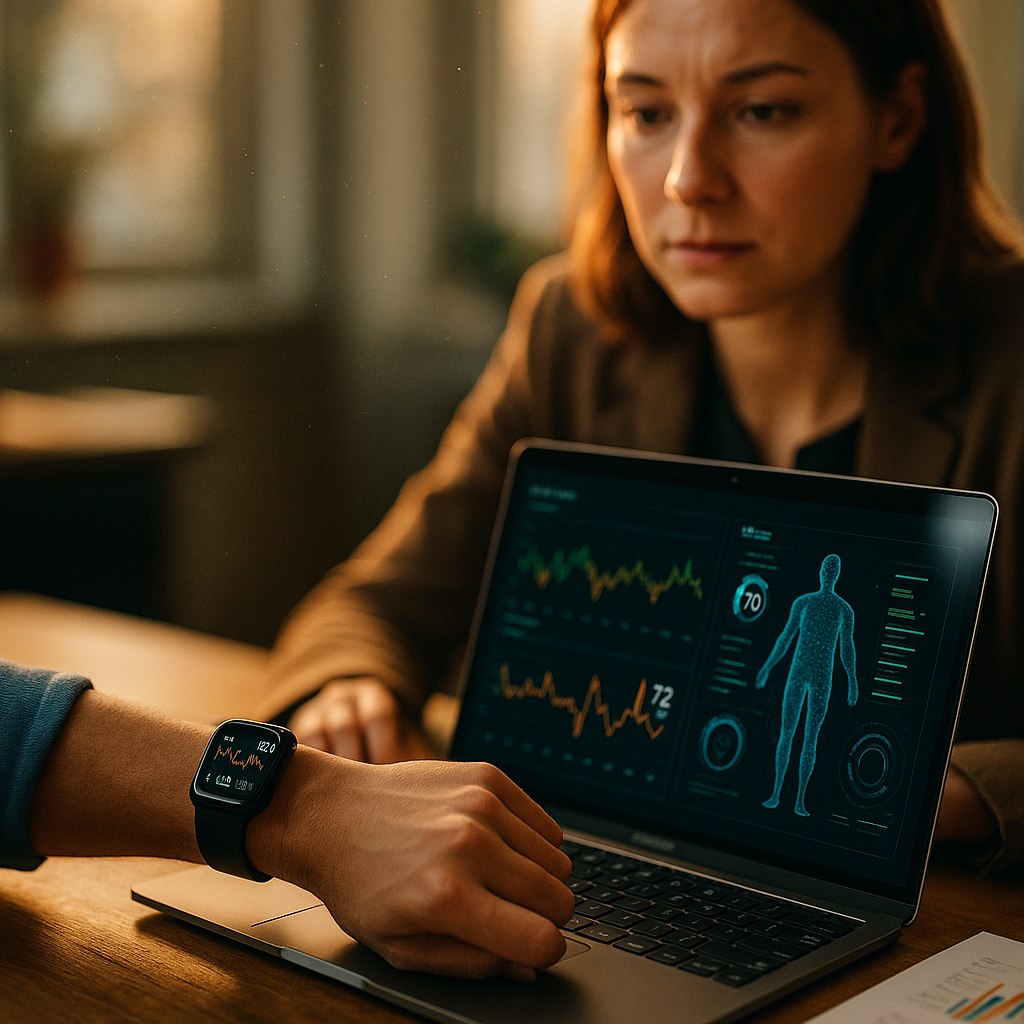
BioMetric Branding is reshaping how brands respond to real human signals in 2026. Smartwatches, fitness bands, rings, and health apps now reveal context that clicks and cookies never could. Used responsibly, wearable data can help marketers deliver timely, useful experiences instead of generic interruptions. The opportunity is huge, but so are the ethical and technical stakes. What does smart execution look like?
Wearable marketing data: what brands can actually use
Wearable marketing data includes signals generated by connected devices such as smartwatches, fitness trackers, smart rings, glucose monitors, sleep trackers, and connected earbuds. These devices can produce context-rich inputs like heart rate ranges, movement patterns, stress indicators, sleep quality, workout status, body temperature trends, location context, and time-of-day behavior. For marketers, the key is not to chase every signal. It is to determine which data is appropriate, permissioned, and useful in a real customer journey.
The practical value of wearable data lies in context. A user finishing a run may be more receptive to a recovery drink offer than to a random apparel ad. Someone showing signs of poor sleep over several days may be interested in wellness content, but not necessarily in a high-pressure sales push. In other words, the data matters less than the moment it helps identify.
Marketers should separate wearable inputs into three categories:
- Operational signals: battery level, device type, app activity, notification readiness.
- Behavioral signals: movement, exercise sessions, commuting patterns, active hours.
- Sensitive biometric signals: heart rate, stress estimates, sleep scores, health-related patterns.
This distinction matters because not all data should be treated equally. Sensitive biometric information requires stricter consent, stronger security, and a more cautious use case. In many regions, health-adjacent data can trigger legal obligations even when it is collected outside a clinical setting.
Helpful brands use the minimum data needed to improve relevance. They do not collect deeply personal inputs just because the technology allows it. This is a core EEAT principle in practice: show expertise in the field, demonstrate trustworthiness through restraint, and create content and campaigns that genuinely benefit the user.
Contextual marketing with biometrics: turning signals into relevance
Contextual marketing with biometrics works when brands connect a real-time or near-real-time signal to a customer need. That does not mean building ads around private health details. It means identifying moments where a response is likely to be helpful, timely, and expected.
Consider a few realistic examples:
- A sports apparel app detects that a user completed a long cycling session and offers recovery tips, hydration reminders, and a loyalty reward for performance socks.
- A meditation platform sees elevated evening stress trends, based on explicit user opt-in, and sends a short wind-down audio recommendation instead of a subscription upsell.
- A travel brand uses jet lag and sleep disruption patterns from a connected device ecosystem, again with consent, to recommend late checkout, airport lounge access, or wellness-friendly room upgrades.
- A grocery retailer syncs with a wellness app and highlights post-workout meal bundles after exercise windows.
The strongest campaigns use a layered decision model. First, they confirm consent. Second, they evaluate whether the moment is commercially and ethically appropriate. Third, they choose the least intrusive response. Sometimes the best action is not a promotion at all. It may be educational content, a product reminder, or no message.
Brands often ask how fast biometric-triggered marketing should be. Real time sounds impressive, but immediate action is not always better. A delayed message, delivered after a workout or after a sleep cycle ends, may feel more respectful and useful. Context is not just about signal detection. It is also about message timing, channel choice, and emotional appropriateness.
Another common question is whether this replaces traditional segmentation. It does not. Biometric context should enhance audience strategy, not erase it. Demographics, lifecycle stage, prior purchases, channel preferences, and stated interests still matter. The wearable signal simply sharpens the brand’s understanding of when to engage and how to be relevant.
Privacy-first personalization: consent, trust, and compliance
Privacy-first personalization is the non-negotiable foundation of biometric branding. If a customer feels watched rather than helped, the strategy has already failed. Wearable data is intimate by nature. That means brands must build trust before they try to build conversion.
A responsible framework starts with explicit, informed consent. Users should know:
- What data is being collected
- Why it is being collected
- How it will be used in marketing or personalization
- How long it will be stored
- Who it will be shared with
- How to revoke access
Consent should never be buried in vague terms. It should be understandable, granular, and easy to manage. Let users opt into workout-based recommendations without forcing them to share sleep metrics. Let them pause data sharing without losing full account access. Choice increases trust.
Security is just as important. Sensitive data should be encrypted in transit and at rest. Access controls should be strict. Internal teams should only see what they need. Data retention periods should be limited. If an organization cannot protect biometric data at a high level, it should not be using it for marketing at all.
Compliance in 2026 also requires cross-functional governance. Legal, privacy, product, security, analytics, and marketing teams must align on use cases before launch. This protects the company and the customer. It also improves campaign quality, because the team is forced to define value clearly rather than relying on experimentation that may cross ethical lines.
The safest rule is simple: never use biometric data to exploit vulnerability. If stress, fatigue, or emotional fluctuation is being used to pressure consumers into impulse purchases, the campaign is not just risky. It is poor brand strategy. Trust compounds over time; manipulation destroys it quickly.
Biometric customer experience: where activation creates value
Biometric customer experience design should focus on utility across the customer journey. Wearable-driven activation is most effective when it improves the product experience, loyalty experience, or support experience first, and promotional messaging second.
There are several channels where this can work well:
- Mobile apps: in-app cards, personalized dashboards, timely reminders, wellness insights tied to brand services.
- Push notifications: brief, relevant alerts based on opted-in activity windows.
- Email and CRM: summary recommendations, weekly wellness-related offers, behavior-informed nurture journeys.
- On-site personalization: landing pages or app storefronts adjusted for activity state or time of day.
- Loyalty programs: rewards for healthy routines, engagement streaks, or event participation.
The most mature use cases appear in industries where the value exchange is obvious. Fitness, sportswear, wellness, travel, nutrition, insurance-adjacent programs, and health-focused consumer apps have the clearest fit. But even in those sectors, the message must match the brand promise. A recovery-focused message from an athletic brand feels natural. A sleep-based pitch from an unrelated brand may feel intrusive.
Execution also depends on identity resolution. Brands need a reliable, privacy-compliant way to connect wearable activity to a customer profile. That may happen through app logins, secure API integrations, customer data platforms, or consented partner ecosystems. Without strong identity management, brands risk inaccurate targeting, fragmented measurement, and poor user experience.
One important practical point: avoid overpersonalization in creative. You do not need to say, “We noticed your heart rate was elevated at 9:14 p.m.” That feels invasive. A better approach is broad contextual language such as, “Ready to unwind?” or “Recover smarter after your session.” The campaign can be informed by biometric data without exposing the exact signal that triggered it.
AI-driven audience segmentation: from raw inputs to actionable campaigns
AI-driven audience segmentation helps marketers make sense of noisy wearable signals. Biometric data is dynamic, irregular, and highly personal. AI models can identify patterns, cluster users into behavior-based cohorts, predict intent windows, and suppress messaging when engagement is likely to be unwelcome.
Useful segmentation models may include:
- Routine-based segments: morning runners, weekend cyclists, frequent travelers, night-shift workers.
- Recovery-based segments: users with heavy activity patterns who may value rest and nutrition content.
- Engagement readiness segments: people more likely to respond after activity completion than during activity.
- Value segments: customers whose biometric-linked interactions correlate with retention or repeat purchase.
But AI should not operate as a black box. Marketers need explainable logic, testing discipline, and human review. A model may infer patterns that are statistically useful but ethically questionable. For example, a segment built around chronic stress indicators may be technically predictive yet inappropriate for promotional targeting. Strong governance means asking not only, “Can we do this?” but “Should we?”
Measurement should also evolve beyond last-click attribution. Biometric branding often influences engagement quality, session timing, retention, and loyalty rather than immediate transactions. Better KPIs include:
- Opt-in rate for wearable-based personalization
- Notification open and dismiss rates
- Incremental conversion versus control groups
- Retention and repeat usage
- Customer satisfaction and trust signals
- Unsubscribe, opt-out, and complaint rates
Testing is critical. Start with narrow use cases, small audiences, and clear guardrails. Run holdout groups. Compare contextual messaging against non-contextual messaging. Monitor not just revenue but customer sentiment. If performance rises while trust falls, the strategy is flawed.
Ethical marketing technology: a framework for launching biometric branding in 2026
Ethical marketing technology is what separates a smart innovation from a reputational risk. Brands that want to launch biometric branding in 2026 should follow a disciplined rollout model.
- Define the customer value: state the practical benefit to the user before any technical planning begins.
- Map the data: identify exactly which wearable signals are needed and reject unnecessary collection.
- Secure explicit consent: build clear, granular permission flows inside the app or account experience.
- Create governance rules: document prohibited use cases, escalation paths, and review responsibilities.
- Design respectful messaging: avoid language that reveals sensitive observations too directly.
- Test with control groups: validate incremental value and monitor trust-related metrics.
- Review continuously: update campaigns as regulations, platform rules, and customer expectations evolve.
Brands should also prepare for operational complexity. Device ecosystems are fragmented. APIs change. Data quality varies by hardware and operating system. Some users share rich wearable data; others share very little. Building a resilient program requires flexible data pipelines, transparent product design, and a willingness to prioritize reliability over novelty.
From an EEAT perspective, this is where expertise becomes visible. Helpful content and helpful campaigns both come from real understanding of the domain, honest discussion of limitations, and a commitment to user welfare. If your brand cannot explain the benefit, the permissions, the protections, and the boundaries in plain language, the strategy is not ready.
The future of biometric branding is not about constant surveillance or hyper-personalized pressure. It is about delivering better timing, better service, and better relevance with the customer fully informed and in control. The brands that succeed will be the ones that treat biometric signals as a privilege, not a shortcut.
FAQs about wearable advertising and biometric branding
What is biometric branding?
Biometric branding is the use of consented data from wearable devices or body-related digital signals to inform marketing, personalization, and customer experience. The goal is to make messaging more context-aware and useful, not just more targeted.
Is wearable data legal to use for marketing?
It can be, but only under strict conditions. Brands need clear consent, strong data protection, transparent disclosures, and compliance with applicable privacy and consumer data laws. Sensitive health-related data often requires extra caution.
What types of brands benefit most from biometric marketing?
Fitness, wellness, sportswear, nutrition, travel, and loyalty-led consumer apps often have the strongest use cases because the connection between wearable context and customer value is easier to understand.
How do brands avoid seeming invasive?
Use broad contextual messaging, collect only necessary data, offer granular consent controls, and avoid directly referencing sensitive biometric details in creative. Relevance should feel helpful, not unsettling.
Does biometric branding replace traditional segmentation?
No. It improves timing and contextual relevance, but it works best alongside customer lifecycle data, stated preferences, purchase history, and broader audience strategy.
What are the biggest risks?
The main risks are privacy violations, weak consent design, poor data security, inaccurate targeting, and unethical use of sensitive signals. Reputational damage can be severe if customers feel exploited.
How should success be measured?
Track opt-in rates, engagement lift, retention, conversion against control groups, satisfaction indicators, and opt-out or complaint rates. Long-term trust is as important as short-term revenue.
Can AI improve biometric marketing campaigns?
Yes. AI can help classify patterns, identify intent windows, and suppress poorly timed messaging. However, models should be explainable, tested carefully, and reviewed by humans to avoid harmful or inappropriate outcomes.
Biometric branding offers marketers a new layer of context, but its power depends on discipline. The winning approach in 2026 is clear: collect less, explain more, protect rigorously, and activate only when the customer gains real value. Brands that respect consent and design around usefulness can turn wearable data into better experiences, stronger loyalty, and more trustworthy personalization.