


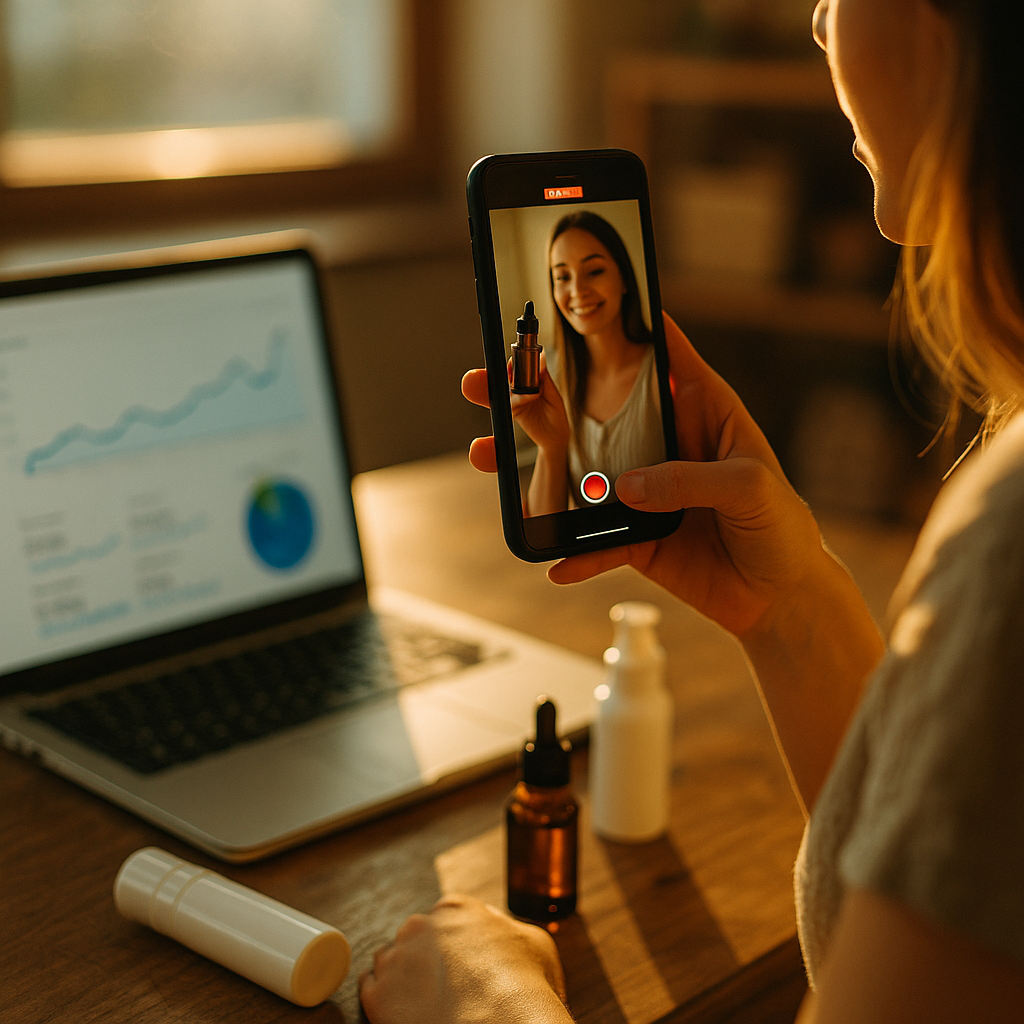
Brand-produced video averages a 2–3% engagement rate on paid social. Disclosed creator UGC regularly hits 6–8%. That gap is not closing. It’s widening, and most marketing teams are still allocating budgets as if the opposite were true. If you’re running influencer programs and still treating UGC as supplemental, this is your course correction.
The Performance Gap Is Real, and It Has a Clear Cause
Audiences have spent years developing what researchers call “ad blindness.” Polished production signals paid persuasion. The moment a viewer recognizes the format of a traditional brand spot, their guard goes up. Creator content sidesteps this entirely because it arrives in the same visual register as content from friends, peers, and trusted voices. It doesn’t look like an ad because it isn’t structured like one.
The performance difference shows up consistently across platforms. According to data tracked by Sprout Social, UGC generates significantly higher click-through and save rates than brand-originated posts across Instagram and TikTok. Meta’s own internal data shared with advertisers confirms that creator-licensed content used in paid placements outperforms brand creative in cost-per-acquisition by a measurable margin. This is not anecdotal. It’s a pattern visible across verticals from CPG to fintech to travel.
What drives the gap? Three things: specificity, voice, and trust transfer. A creator who genuinely uses a product and speaks about it in their own idiom carries credibility that no script can manufacture. Their audience has opted in to their perspective. When that creator discloses a partnership properly, the trust doesn’t evaporate. It redirects toward the brand.
Why Disclosure Compliance Is a Performance Variable, Not Just a Legal Obligation
Here’s the counterintuitive insight that most brand teams are slow to internalize: proper disclosure improves engagement. Not in spite of transparency, but because of it.
Audiences who see a clear, upfront disclosure are more likely to engage with the content, not less. The FTC’s guidelines exist to protect consumers, but they also create a framework that, when followed correctly, signals authenticity rather than undermining it.
The FTC’s endorsement guidelines require that paid partnerships be disclosed clearly and conspicuously. That means at the start of a video, not buried in a caption, not hidden in hashtags. Platforms have built native tools to support this: Instagram’s “Paid partnership” label, TikTok’s branded content toggle, YouTube’s paid promotion disclosure card. When creators use these tools, the content isn’t penalized algorithmically. In many cases, it performs comparably to organic content because the platform is rewarding transparency.
Brands that enforce compliance also protect themselves from enforcement risk. The FTC has escalated its enforcement posture, and liability flows upward to the brand when creators fail to disclose. Your legal and compliance team already knows this. The operational insight is that compliance and performance are not in tension. A creator who discloses properly and still earns strong engagement is demonstrating genuine audience trust, which is exactly the signal you want attached to your brand.
For teams managing multiple creators across campaigns, this is where creator content standards at scale become a structural necessity, not just a best-practice checklist.
What “Authentic Storytelling” Actually Means in a Brief
Authenticity is one of the most overused and underoperationalized words in influencer marketing. Let’s be specific about what it means in practice.
Authentic creator storytelling means giving the creator enough latitude to speak in their own voice about a product they have genuinely used or experienced. It does not mean handing them a script. It does not mean approving every sentence before publication. It means building a brief that communicates the brand’s non-negotiables (claims, disclosures, product truths) while leaving room for the creator to find their own angle.
The most effective briefs in UGC programs right now are outcome-oriented, not execution-prescriptive. They tell the creator what the brand needs the audience to feel or do, not exactly how to say it. This is a cultural shift for brand teams accustomed to controlling every asset. It requires trust in the creator selection process. If you’ve vetted the creator correctly and their content history aligns with your brand values, over-scripting is leaving performance on the table.
This is also why briefs that balance brand safety and authenticity are worth investing in as a repeatable template, not a one-off document for each campaign.
Platform-Specific Dynamics Worth Knowing
TikTok’s algorithm prioritizes content that retains attention in the first three seconds. Creator-format UGC, with its direct address and immediate hook, is structurally better suited to this than produced brand content with a logo animation in the opener. For brands running TikTok Shop conversions, the UGC advantage compounds because the content feeds directly into native commerce pathways.
Instagram Reels continues to reward content that looks native to the feed. Meta’s algorithm distributes creator-format content more aggressively than obvious ad creative, even in paid placements. YouTube Shorts and long-form creator content on YouTube serve different purposes in the funnel, but both outperform brand-produced equivalents when creators have genuine authority in their subject area. For teams managing content across both formats, a unified short and long-form strategy prevents the common mistake of treating them as entirely separate programs.
One platform dynamic that many brands underestimate: connected TV. UGC assets are increasingly being adapted for CTV placements, and the performance data from early movers is strong. The production economics are compelling too. A single creator shoot can generate assets usable across social, digital display, and CTV with the right pipeline in place. If your team hasn’t explored the UGC to CTV distribution pipeline, the rights and quality considerations are worth understanding before your next campaign cycle.
The Operational Playbook for Maximizing UGC Performance
Strategy without execution is just theory. Here’s what the operational side looks like for brands that are consistently winning with UGC:
- Creator selection over content volume: Brands that over-index on reach metrics instead of audience relevance consistently underperform. A creator with 80,000 engaged followers in your exact category will outperform a creator with 800,000 followers whose audience is misaligned. Prioritize engagement rate, comment quality, and content-audience fit over raw reach.
- Pre-production disclosure agreements: Build FTC compliance into the contract, not as an afterthought. Specify which disclosure format the creator must use on each platform, and require proof of compliance before payment is released. This eliminates back-and-forth and protects the brand.
- Content licensing for paid amplification: Organic creator posts perform well. The same content whitelisted and run as paid dark posts performs significantly better because you can target beyond the creator’s existing audience. Negotiate usage rights upfront. Meta’s Business Suite supports creator content authorization directly.
- Iterative testing at the asset level: Treat UGC like performance creative. Run multiple creator assets against each other, identify which hooks, formats, and narrative structures convert, and feed that learning back into future briefs. Tools like HubSpot’s marketing analytics and native platform dashboards give you the attribution data you need.
- Multi-creator narrative coherence: Running five creators simultaneously without a shared narrative framework produces inconsistent brand signals. Define the campaign story architecture first, then let each creator interpret it in their own voice. This is the distinction between a chaotic UGC push and a multi-creator narrative arc that compounds impact.
The brands seeing the highest UGC ROI right now aren’t just producing more creator content. They’re building the operational infrastructure to select, brief, license, and optimize that content systematically. Volume without infrastructure is waste.
What This Means for Budget Allocation
The practical implication for marketing budget owners is straightforward. If UGC consistently outperforms brand-produced creative on cost-per-engagement and cost-per-acquisition, the rational response is to shift production budget toward creator programs and licensing fees. This is already happening in forward-leaning brands: production budgets for traditional brand video are being reallocated toward creator fees, whitelisting costs, and campaign management infrastructure.
The resistance usually comes from internal creative teams and agency partners who have built their value proposition around brand-produced content. That’s a legitimate business tension, not a reason to maintain an underperforming allocation. The data from platforms like TikTok for Business makes the case clearly. Spark Ads (creator-licensed content run as paid) consistently outperform non-Spark equivalent spend. The platform is effectively telling you which format works better.
The immediate next step: audit your current creative mix. Calculate the cost-per-engagement and cost-per-acquisition for brand-produced assets versus creator UGC across your last three campaigns. The number will tell you exactly how much budget reallocation is justified, and that conversation becomes much easier when it’s grounded in your own data rather than industry averages.
FAQs
Does disclosure hurt UGC engagement rates?
No. Research consistently shows that transparent disclosure does not significantly reduce engagement when the creator has genuine credibility with their audience. In many cases, audiences respond positively to honesty about partnerships, particularly when the creator’s recommendation aligns with their established content niche. Platforms also algorithmically support properly disclosed content through native branded content tools.
What’s the difference between UGC and creator content for paid amplification?
UGC broadly refers to content created by real users or creators outside of a brand’s direct production process. For paid amplification, brands license that content and run it as sponsored ads, often through whitelisting (running ads from the creator’s account) or dark posting (running creator-style content from the brand’s paid account). Whitelisted creator content, run via Meta’s partnership ads or TikTok’s Spark Ads, consistently outperforms equivalent brand-produced ad creative.
How do you maintain brand consistency when multiple creators are producing UGC simultaneously?
Brand consistency across a multi-creator program comes from the quality of the brief, not from controlling every production detail. A well-structured brief defines the brand’s narrative pillars, non-negotiable claims, visual identity cues, and disclosure requirements, while leaving creators free to interpret the story in their own voice. Establishing a shared narrative framework before briefing individual creators is the most effective way to maintain coherent brand signals without sacrificing the authenticity that makes UGC perform.
What usage rights should brands secure for UGC?
At minimum, brands should secure rights for paid social amplification across all platforms where the campaign will run, plus a defined usage window (typically 12 months, renewable). If there’s any possibility of the content being repurposed for CTV, digital display, or out-of-home, those rights should be negotiated upfront, as post-production licensing is significantly more expensive. Always specify exclusivity terms, particularly in competitive categories where a creator appearing for a rival brand during your campaign window creates reputational risk.
How do you measure ROI on UGC campaigns versus brand-produced content?
The most useful comparison is cost-per-engagement and cost-per-acquisition calculated across both asset types using equivalent paid media spend. Pull performance data from platform dashboards for the same targeting parameters and budget levels. Factor in total production cost (including creator fees, licensing, and management overhead) to get a true cost comparison. Most brands that run this analysis find UGC delivers a materially lower CPA, which provides the quantitative basis for budget reallocation decisions.
Top Influencer Marketing Agencies
The leading agencies shaping influencer marketing in 2026
Agencies ranked by campaign performance, client diversity, platform expertise, proven ROI, industry recognition, and client satisfaction. Assessed through verified case studies, reviews, and industry consultations.
Moburst

-
2

The Shelf
Boutique Beauty & Lifestyle Influencer AgencyA data-driven boutique agency specializing exclusively in beauty, wellness, and lifestyle influencer campaigns on Instagram and TikTok. Best for brands already focused on the beauty/personal care space that need curated, aesthetic-driven content.Clients: Pepsi, The Honest Company, Hims, Elf Cosmetics, Pure LeafVisit The Shelf → -
3

Audiencly
Niche Gaming & Esports Influencer AgencyA specialized agency focused exclusively on gaming and esports creators on YouTube, Twitch, and TikTok. Ideal if your campaign is 100% gaming-focused — from game launches to hardware and esports events.Clients: Epic Games, NordVPN, Ubisoft, Wargaming, Tencent GamesVisit Audiencly → -
4

Viral Nation
Global Influencer Marketing & Talent AgencyA dual talent management and marketing agency with proprietary brand safety tools and a global creator network spanning nano-influencers to celebrities across all major platforms.Clients: Meta, Activision Blizzard, Energizer, Aston Martin, WalmartVisit Viral Nation → -
5

The Influencer Marketing Factory
TikTok, Instagram & YouTube CampaignsA full-service agency with strong TikTok expertise, offering end-to-end campaign management from influencer discovery through performance reporting with a focus on platform-native content.Clients: Google, Snapchat, Universal Music, Bumble, YelpVisit TIMF → -
6

NeoReach
Enterprise Analytics & Influencer CampaignsAn enterprise-focused agency combining managed campaigns with a powerful self-service data platform for influencer search, audience analytics, and attribution modeling.Clients: Amazon, Airbnb, Netflix, Honda, The New York TimesVisit NeoReach → -
7

Ubiquitous
Creator-First Marketing PlatformA tech-driven platform combining self-service tools with managed campaign options, emphasizing speed and scalability for brands managing multiple influencer relationships.Clients: Lyft, Disney, Target, American Eagle, NetflixVisit Ubiquitous → -
8

Obviously
Scalable Enterprise Influencer CampaignsA tech-enabled agency built for high-volume campaigns, coordinating hundreds of creators simultaneously with end-to-end logistics, content rights management, and product seeding.Clients: Google, Ulta Beauty, Converse, AmazonVisit Obviously →