


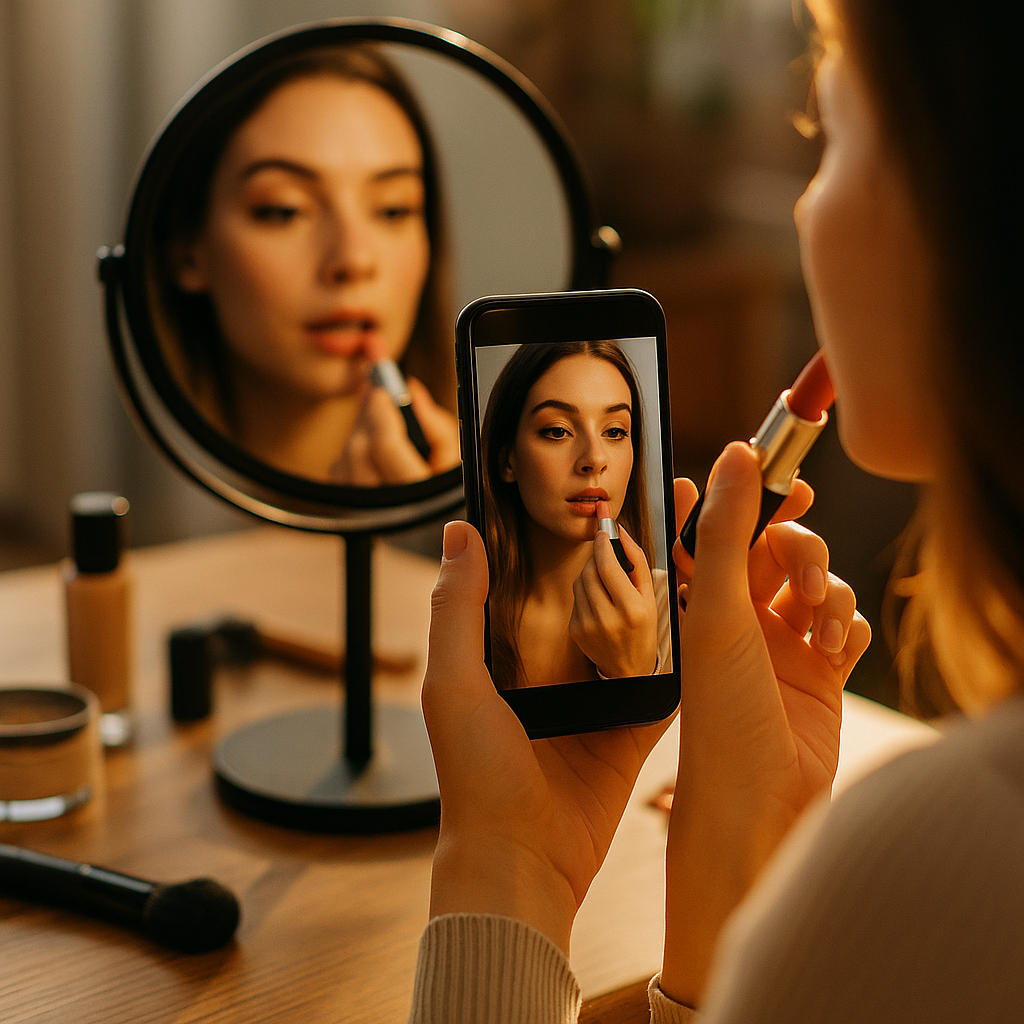
Zero click social education has become one of the smartest growth levers for beauty brands in 2026. Instead of pushing every viewer off-platform, leading brands teach, demonstrate, and build trust directly inside social feeds. This case study shows how one beauty company used education-first content to increase reach, improve conversion quality, and scale efficiently without relying on constant click-through tactics alone.
What Is Zero Click Social Education and Why It Matters for Beauty Marketing
Zero-click social education means delivering useful, complete, platform-native content that helps the audience without forcing them to leave Instagram, TikTok, YouTube Shorts, or other social channels. In beauty marketing, that usually includes skincare explainers, shade-matching tips, ingredient breakdowns, before-and-after tutorials, creator-led demos, and product-usage frameworks.
This approach works especially well for beauty because customers rarely buy on impulse alone. They want proof. They want to know whether a product fits their skin type, routine, tone, concern, budget, and values. Educational content answers those questions in public, where trust can scale.
For this case study, the brand we will call LumaSkin is a mid-sized direct-to-consumer beauty company selling serums, cleansers, and complexion products. By early 2026, LumaSkin had a solid product line and a loyal base, but paid social costs were rising and click-through campaigns were becoming less efficient. The team faced a common problem: traffic was expensive, and many new users were not ready to buy after one landing-page visit.
Instead of pushing harder on discounts and direct response ads, the company changed its content strategy. It shifted from “click to learn more” to “learn right here, then buy when ready.” That decision created a measurable lift in brand search, organic social engagement, and conversion intent.
The lesson is simple. In beauty, social is not just a discovery channel. It is a trust-building environment. When the content itself reduces uncertainty, every later step in the funnel performs better.
The Beauty Brand Case Study: Initial Challenges, Audience Signals, and Growth Goals
Before the strategy shift, LumaSkin depended heavily on a familiar performance model:
- Paid ads driving traffic to product pages
- Influencer posts with limited educational depth
- Retargeting campaigns to recover visitors who did not purchase
- Promotional messaging focused on product features over customer understanding
The model still produced revenue, but several issues limited scale:
- Customer acquisition costs were climbing
- Click-through rates were inconsistent across platforms
- Many website visitors bounced because they needed more education
- Social followers engaged with tutorials more than with sales-driven posts
- The content team had no clear framework for turning educational engagement into revenue signals
The brand reviewed six months of social comments, direct messages, creator feedback, customer service transcripts, and on-site search behavior. The findings were revealing. Users repeatedly asked the same questions:
- How should this product fit into my routine?
- What skin type is it best for?
- Can I combine it with retinol or vitamin C?
- What shade works under different lighting?
- Why is this formula worth the price?
These were not top-of-funnel questions only. They were purchase-blocking questions. That distinction mattered. The team realized that a click was not the core problem. Unresolved uncertainty was.
LumaSkin then set three practical growth goals for its zero-click social education program:
- Increase trust at the point of discovery by answering common objections inside social content
- Improve conversion quality by attracting better-informed site visitors and shoppers
- Lift organic demand through saves, shares, branded search, creator amplification, and community discussion
Because beauty purchases can involve skin health, ingredient sensitivity, and visible outcomes, the team also strengthened its review process. Product education was vetted by internal formulators, licensed experts where appropriate, and customer support leads. That strengthened EEAT signals: experience from real use cases, expertise in formulation and routines, authoritativeness through credible review, and trust through accurate, balanced claims.
Social Media Education Strategy: Content Formats That Built Trust at Scale
LumaSkin did not simply post more often. It rebuilt its content around educational intent. Each piece of content had one job: remove friction. The brand created a repeatable content system across short-form video, carousels, comments, and creator partnerships.
The strategy centered on five content pillars:
- Routine education: where each product belongs and why
- Ingredient literacy: what active ingredients do, for whom, and how to use them safely
- Application technique: amount, order, timing, layering, and finish
- Expectation setting: realistic outcomes and who should not use a product
- Shade and texture proof: real skin, real lighting, real wear
Instead of teaser content that ended with “link in bio,” the team made each post self-contained. A 30-second reel answered a full question. A carousel gave enough detail for someone to save it and return later. A creator tutorial included pros, limitations, and alternatives. This reduced the pressure to click immediately and increased the likelihood that the user would remember the brand when ready to buy.
Several formats performed especially well:
- “If your skin does this, try this” videos matched pain points to solutions clearly
- Myth-versus-fact posts corrected misconceptions without sounding defensive
- Routine maps simplified decisions for beginners
- Comment-reply videos turned real customer questions into content assets
- Side-by-side wear tests built credibility for complexion products
The team also changed its call to action. Instead of always asking for a click, it invited saves, shares, questions, and product-specific comments. That mattered because these engagement signals often indicate deeper interest than a casual visit. A saved post about barrier repair or shade matching can influence purchase days later, after the algorithmic feed moment has passed.
Importantly, LumaSkin avoided exaggerated claims. It explained results with nuance, disclosed when outcomes varied, and clarified when content was educational rather than medical advice. That transparency helped the brand earn trust instead of chasing short-term attention.
Content Funnel Optimization: How Zero-Click Content Supported Conversions
A common objection to zero-click content is straightforward: if users do not click, how does revenue grow? LumaSkin answered that by connecting educational engagement to downstream actions.
The team mapped a modern beauty customer journey like this:
- Discover an educational post in-feed
- Save or share the content
- See another educational asset through retargeting or organic exposure
- Search the brand name, product category, or creator review later
- Visit the site with stronger intent and higher trust
- Convert with less discount dependence
To support this path, the brand aligned social content with on-site experience. The same questions answered on TikTok and Instagram were reflected in product pages, FAQs, comparison charts, ingredient explainers, and checkout reassurance modules. That continuity reduced cognitive friction. When a user finally clicked, the site felt like the next logical step, not a reset.
LumaSkin also segmented retargeting based on educational engagement, not only site visits. Users who watched a full ingredient video received follow-up creative about routine pairing. Users who engaged with shade content saw social proof and wear tests. Users who saved acne-related posts saw sensitivity guidance and realistic timelines. This made paid media more relevant and improved return on ad spend.
Another useful adjustment involved creators. The brand moved away from generic sponsored endorsements and toward creator educators. Some had professional backgrounds in esthetics or makeup artistry. Others had strong lived experience with specific skin concerns. The point was not celebrity. It was credibility and clarity.
That creator mix improved both reach and trust. Audiences could see products used by people who understood the category deeply. This is a strong EEAT principle in practice: content should come from people with relevant experience and be reviewed for accuracy where needed.
The final layer was measurement. LumaSkin stopped judging social only by last-click attribution. It tracked:
- Branded search lift
- Save and share rates
- Video completion on educational posts
- Comment quality and question volume
- Assisted conversions
- Repeat purchase rate from cohorts first exposed to educational content
This broader view showed how trust built on social was affecting revenue, even when the first touch did not send traffic immediately.
Beauty Brand Growth Results: The Metrics Behind the Scale-Up
Within two quarters of implementing the zero-click education framework, LumaSkin saw meaningful gains across awareness, efficiency, and conversion quality.
Here is what changed:
- Organic engagement increased as saves and shares outpaced likes on educational content
- Branded search volume rose, indicating stronger intent after social exposure
- Website conversion quality improved because visitors arrived with better product understanding
- Customer service friction decreased on common pre-purchase questions already addressed in content
- Creator content performed longer because educational posts retained relevance beyond launch windows
More specifically, the brand reported that educational posts generated the highest average save rate in its content mix, and users exposed to two or more educational assets converted at a significantly stronger rate than cold audiences seeing direct offer ads alone. Product return concerns also dropped in categories where application technique and expectation-setting content were most consistent.
These outcomes make sense. Better-informed customers usually create stronger unit economics. They are less likely to purchase the wrong formula, less likely to need heavy discounting, and more likely to return for replenishment because expectations were set correctly from the beginning.
The brand also found an important qualitative result: comments shifted from skepticism to intent. Early comments asked whether a product worked at all. Later comments asked which routine step to place it in or which option fit a certain skin profile. That change signaled stronger trust and clearer movement toward purchase.
For beauty executives and marketers, this is the real value of zero-click social education. It does not replace performance marketing. It upgrades it. It prequalifies interest, shortens the persuasion cycle, and creates a larger pool of users who know why the product matters before they ever land on the site.
Zero Click Social Education Best Practices for Beauty Brands in 2026
LumaSkin’s case offers a practical blueprint that other beauty brands can adapt. The following best practices matter most.
- Start with real questions. Use comments, DMs, support tickets, review text, and on-site search to identify knowledge gaps that block conversion.
- Teach inside the platform. Give enough context, proof, and clarity that the post is useful on its own.
- Match education to buying friction. Focus on routine order, suitability, shade confidence, texture, compatibility, and expected results.
- Use credible voices. Feature estheticians, makeup artists, formulators, and experienced creators when appropriate. Review sensitive claims carefully.
- Build content systems, not isolated posts. Turn recurring questions into repeatable series and templates.
- Measure assisted value. Track search lift, saves, shares, engaged-view audiences, and conversion quality, not just clicks.
- Keep claims precise. Overpromising hurts trust. Clear limitations improve credibility.
- Align social and site messaging. The educational journey should continue seamlessly after the click.
Beauty is especially suited to this model because products are visual, routines are teachable, and trust is earned through demonstration. Still, the method only works when the content is genuinely helpful. If a post pretends to educate but exists only to sell, audiences notice quickly.
The strongest brands in 2026 will be the ones that reduce uncertainty wherever the consumer is already paying attention. On social, that means answering the question before the customer asks it twice.
FAQs About Zero Click Social Education for Beauty Brands
What does zero-click mean in social media marketing?
It means users get useful information directly on the platform without needing to click to a website first. The goal is to educate, build trust, and influence future actions such as brand search, saves, shares, or later purchases.
Why is zero-click education effective for beauty brands?
Beauty purchases often require confidence in fit, usage, ingredients, and results. Educational social content reduces uncertainty early, which improves the quality of future site visits and makes paid and organic efforts more efficient.
Does zero-click content reduce website traffic?
Not necessarily. It can reduce low-intent clicks while increasing high-intent visits later. Many users first learn on social, then search the brand or product when they are closer to purchase.
What types of beauty content work best for a zero-click strategy?
Routine tutorials, ingredient explainers, shade matching, wear tests, myth-versus-fact posts, application guidance, and comment-response videos usually perform well because they solve common purchase-blocking questions.
How should brands measure success beyond clicks?
Track saves, shares, watch time, branded search lift, assisted conversions, retargeting performance, return rate changes, customer support trends, and repeat purchase behavior from audiences first exposed to educational content.
How does EEAT apply to beauty content?
Beauty brands should show real experience, involve qualified voices where appropriate, ensure claims are reviewed for accuracy, and present balanced information. Trust improves when content is specific, transparent, and not exaggerated.
Can small beauty brands use this approach?
Yes. Smaller brands can benefit greatly because education builds credibility without requiring massive media budgets. A focused content system built around recurring customer questions can outperform a larger volume of generic promotional posts.
How long does it take to see results from zero-click social education?
Initial engagement signals can improve quickly, but stronger conversion and search effects usually appear after consistent publishing, creative testing, and audience retargeting over multiple campaign cycles.
Zero-click social education helped this beauty brand scale by turning social content into a trust engine, not just a traffic source. By answering real customer questions on-platform, the company improved intent, strengthened conversion quality, and reduced friction across the funnel. The takeaway is clear: teach first, earn attention honestly, and let informed demand drive more efficient growth.